Category: Blog

Your blog category

  • Opportunities for AI in Accessibility

    Opportunities for AI in Accessibility

    In reading Joe Dolson’s recent piece on the intersection of AI and accessibility, I absolutely appreciated the skepticism that he has for AI in general as well as for the ways that many have been using it. In fact, I’m very skeptical of AI myself, despite my role at Microsoft as an accessibility innovation strategist who helps run the AI for Accessibility grant program. As with any tool, AI can be used in very constructive, inclusive, and accessible ways; and it can also be used in destructive, exclusive, and harmful ones. And there are a ton of uses somewhere in the mediocre middle as well.

    I’d like you to consider this a “yes… and” piece to complement Joe’s post. I’m not trying to refute any of what he’s saying but rather provide some visibility to projects and opportunities where AI can make meaningful differences for people with disabilities. To be clear, I’m not saying that there aren’t real risks or pressing issues with AI that need to be addressed—there are, and we’ve needed to address them, like, yesterday—but I want to take a little time to talk about what’s possible in hopes that we’ll get there one day.

    Alternative text

    Joe’s piece spends a lot of time talking about computer-vision models generating alternative text. He highlights a ton of valid issues with the current state of things. And while computer-vision models continue to improve in the quality and richness of detail in their descriptions, their results aren’t great. As he rightly points out, the current state of image analysis is pretty poor—especially for certain image types—in large part because current AI systems examine images in isolation rather than within the contexts that they’re in (which is a consequence of having separate “foundation” models for text analysis and image analysis). Today’s models aren’t trained to distinguish between images that are contextually relevant (that should probably have descriptions) and those that are purely decorative (which might not need a description) either. Still, I still think there’s potential in this space.

    As Joe mentions, human-in-the-loop authoring of alt text should absolutely be a thing. And if AI can pop in to offer a starting point for alt text—even if that starting point might be a prompt saying What is this BS? That’s not right at all… Let me try to offer a starting point—I think that’s a win.

    Taking things a step further, if we can specifically train a model to analyze image usage in context, it could help us more quickly identify which images are likely to be decorative and which ones likely require a description. That will help reinforce which contexts call for image descriptions and it’ll improve authors’ efficiency toward making their pages more accessible.

    While complex images—like graphs and charts—are challenging to describe in any sort of succinct way (even for humans), the image example shared in the GPT4 announcement points to an interesting opportunity as well. Let’s suppose that you came across a chart whose description was simply the title of the chart and the kind of visualization it was, such as: Pie chart comparing smartphone usage to feature phone usage among US households making under $30,000 a year. (That would be a pretty awful alt text for a chart since that would tend to leave many questions about the data unanswered, but then again, let’s suppose that that was the description that was in place.) If your browser knew that that image was a pie chart (because an onboard model concluded this), imagine a world where users could ask questions like these about the graphic:

    • Do more people use smartphones or feature phones?
    • How many more?
    • Is there a group of people that don’t fall into either of these buckets?
    • How many is that?

    Setting aside the realities of large language model (LLM) hallucinations—where a model just makes up plausible-sounding “facts”—for a moment, the opportunity to learn more about images and data in this way could be revolutionary for blind and low-vision folks as well as for people with various forms of color blindness, cognitive disabilities, and so on. It could also be useful in educational contexts to help people who can see these charts, as is, to understand the data in the charts.

    Taking things a step further: What if you could ask your browser to simplify a complex chart? What if you could ask it to isolate a single line on a line graph? What if you could ask your browser to transpose the colors of the different lines to work better for form of color blindness you have? What if you could ask it to swap colors for patterns? Given these tools’ chat-based interfaces and our existing ability to manipulate images in today’s AI tools, that seems like a possibility.

    Now imagine a purpose-built model that could extract the information from that chart and convert it to another format. For example, perhaps it could turn that pie chart (or better yet, a series of pie charts) into more accessible (and useful) formats, like spreadsheets. That would be amazing!

    Matching algorithms

    Safiya Umoja Noble absolutely hit the nail on the head when she titled her book Algorithms of Oppression. While her book was focused on the ways that search engines reinforce racism, I think that it’s equally true that all computer models have the potential to amplify conflict, bias, and intolerance. Whether it’s Twitter always showing you the latest tweet from a bored billionaire, YouTube sending us into a Q-hole, or Instagram warping our ideas of what natural bodies look like, we know that poorly authored and maintained algorithms are incredibly harmful. A lot of this stems from a lack of diversity among the people who shape and build them. When these platforms are built with inclusively baked in, however, there’s real potential for algorithm development to help people with disabilities.

    Take Mentra, for example. They are an employment network for neurodivergent people. They use an algorithm to match job seekers with potential employers based on over 75 data points. On the job-seeker side of things, it considers each candidate’s strengths, their necessary and preferred workplace accommodations, environmental sensitivities, and so on. On the employer side, it considers each work environment, communication factors related to each job, and the like. As a company run by neurodivergent folks, Mentra made the decision to flip the script when it came to typical employment sites. They use their algorithm to propose available candidates to companies, who can then connect with job seekers that they are interested in; reducing the emotional and physical labor on the job-seeker side of things.

    When more people with disabilities are involved in the creation of algorithms, that can reduce the chances that these algorithms will inflict harm on their communities. That’s why diverse teams are so important.

    Imagine that a social media company’s recommendation engine was tuned to analyze who you’re following and if it was tuned to prioritize follow recommendations for people who talked about similar things but who were different in some key ways from your existing sphere of influence. For example, if you were to follow a bunch of nondisabled white male academics who talk about AI, it could suggest that you follow academics who are disabled or aren’t white or aren’t male who also talk about AI. If you took its recommendations, perhaps you’d get a more holistic and nuanced understanding of what’s happening in the AI field. These same systems should also use their understanding of biases about particular communities—including, for instance, the disability community—to make sure that they aren’t recommending any of their users follow accounts that perpetuate biases against (or, worse, spewing hate toward) those groups.

    Other ways that AI can helps people with disabilities

    If I weren’t trying to put this together between other tasks, I’m sure that I could go on and on, providing all kinds of examples of how AI could be used to help people with disabilities, but I’m going to make this last section into a bit of a lightning round. In no particular order:

    • Voice preservation. You may have seen the VALL-E paper or Apple’s Global Accessibility Awareness Day announcement or you may be familiar with the voice-preservation offerings from Microsoft, Acapela, or others. It’s possible to train an AI model to replicate your voice, which can be a tremendous boon for people who have ALS (Lou Gehrig’s disease) or motor-neuron disease or other medical conditions that can lead to an inability to talk. This is, of course, the same tech that can also be used to create audio deepfakes, so it’s something that we need to approach responsibly, but the tech has truly transformative potential.
    • Voice recognition. Researchers like those in the Speech Accessibility Project are paying people with disabilities for their help in collecting recordings of people with atypical speech. As I type, they are actively recruiting people with Parkinson’s and related conditions, and they have plans to expand this to other conditions as the project progresses. This research will result in more inclusive data sets that will let more people with disabilities use voice assistants, dictation software, and voice-response services as well as control their computers and other devices more easily, using only their voice.
    • Text transformation. The current generation of LLMs is quite capable of adjusting existing text content without injecting hallucinations. This is hugely empowering for people with cognitive disabilities who may benefit from text summaries or simplified versions of text or even text that’s prepped for Bionic Reading.

    The importance of diverse teams and data

    We need to recognize that our differences matter. Our lived experiences are influenced by the intersections of the identities that we exist in. These lived experiences—with all their complexities (and joys and pain)—are valuable inputs to the software, services, and societies that we shape. Our differences need to be represented in the data that we use to train new models, and the folks who contribute that valuable information need to be compensated for sharing it with us. Inclusive data sets yield more robust models that foster more equitable outcomes.

    Want a model that doesn’t demean or patronize or objectify people with disabilities? Make sure that you have content about disabilities that’s authored by people with a range of disabilities, and make sure that that’s well represented in the training data.

    Want a model that doesn’t use ableist language? You may be able to use existing data sets to build a filter that can intercept and remediate ableist language before it reaches readers. That being said, when it comes to sensitivity reading, AI models won’t be replacing human copy editors anytime soon. 

    Want a coding copilot that gives you accessible recommendations from the jump? Train it on code that you know to be accessible.


    I have no doubt that AI can and will harm people… today, tomorrow, and well into the future. But I also believe that we can acknowledge that and, with an eye towards accessibility (and, more broadly, inclusion), make thoughtful, considerate, and intentional changes in our approaches to AI that will reduce harm over time as well. Today, tomorrow, and well into the future.


    Many thanks to Kartik Sawhney for helping me with the development of this piece, Ashley Bischoff for her invaluable editorial assistance, and, of course, Joe Dolson for the prompt.

  • I am a creative.

    I am a creative.

    I am a creative. What I do is alchemy. It is a mystery. I do not so much do it, as let it be done through me.

    I am a creative. Not all creative people like this label. Not all see themselves this way. Some creative people see science in what they do. That is their truth, and I respect it. Maybe I even envy them, a little. But my process is different—my being is different.

    Apologizing and qualifying in advance is a distraction. That’s what my brain does to sabotage me. I set it aside for now. I can come back later to apologize and qualify. After I’ve said what I came to say. Which is hard enough. 

    Except when it is easy and flows like a river of wine.

    Sometimes it does come that way. Sometimes what I need to create comes in an instant. I have learned not to say it at that moment, because if you admit that sometimes the idea just comes and it is the best idea and you know it is the best idea, they think you don’t work hard enough.

    Sometimes I work and work and work until the idea comes. Sometimes it comes instantly and I don’t tell anyone for three days. Sometimes I’m so excited by the idea that came instantly that I blurt it out, can’t help myself. Like a boy who found a prize in his Cracker Jacks. Sometimes I get away with this. Sometimes other people agree: yes, that is the best idea. Most times they don’t and I regret having  given way to enthusiasm. 

    Enthusiasm is best saved for the meeting where it will make a difference. Not the casual get-together that precedes that meeting by two other meetings. Nobody knows why we have all these meetings. We keep saying we’re doing away with them, but then just finding other ways to have them. Sometimes they are even good. But other times they are a distraction from the actual work. The proportion between when meetings are useful, and when they are a pitiful distraction, varies, depending on what you do and where you do it. And who you are and how you do it. Again I digress. I am a creative. That is the theme.

    Sometimes many hours of hard and patient work produce something that is barely serviceable. Sometimes I have to accept that and move on to the next project.

    Don’t ask about process. I am a creative.

    I am a creative. I don’t control my dreams. And I don’t control my best ideas.

    I can hammer away, surround myself with facts or images, and sometimes that works. I can go for a walk, and sometimes that works. I can be making dinner and there’s a Eureka having nothing to do with sizzling oil and bubbling pots. Often I know what to do the instant I wake up. And then, almost as often, as I become conscious and part of the world again, the idea that would have saved me turns to vanishing dust in a mindless wind of oblivion. For creativity, I believe, comes from that other world. The one we enter in dreams, and perhaps, before birth and after death. But that’s for poets to wonder, and I am not a poet. I am a creative. And it’s for theologians to mass armies about in their creative world that they insist is real. But that is another digression. And a depressing one. Maybe on a much more important topic than whether I am a creative or not. But still a digression from what I came here to say.

    Sometimes the process is avoidance. And agony. You know the cliché about the tortured artist? It’s true, even when the artist (and let’s put that noun in quotes) is trying to write a soft drink jingle, a callback in a tired sitcom, a budget request.

    Some people who hate being called creative may be closeted creatives, but that’s between them and their gods. No offense meant. Your truth is true, too. But mine is for me. 

    Creatives recognize creatives.

    Creatives recognize creatives like queers recognize queers, like real rappers recognize real rappers, like cons know cons. Creatives feel massive respect for creatives. We love, honor, emulate, and practically deify the great ones. To deify any human is, of course, a tragic mistake. We have been warned. We know better. We know people are just people. They squabble, they are lonely, they regret their most important decisions, they are poor and hungry, they can be cruel, they can be just as stupid as we can, because, like us, they are clay. But. But. But they make this amazing thing. They birth something that did not exist before them, and could not exist without them. They are the mothers of ideas. And I suppose, since it’s just lying there, I have to add that they are the mothers of invention. Ba dum bum! OK, that’s done. Continue.

    Creatives belittle our own small achievements, because we compare them to those of the great ones. Beautiful animation! Well, I’m no Miyazaki. Now THAT is greatness. That is greatness straight from the mind of God. This half-starved little thing that I made? It more or less fell off the back of the turnip truck. And the turnips weren’t even fresh.

    Creatives knows that, at best, they are Salieri. Even the creatives who are Mozart believe that. 

    I am a creative. I haven’t worked in advertising in 30 years, but in my nightmares, it’s my former creative directors who judge me. And they are right to do so. I am too lazy, too facile, and when it really counts, my mind goes blank. There is no pill for creative dysfunction.

    I am a creative. Every deadline I make is an adventure that makes Indiana Jones look like a pensioner snoring in a deck chair. The longer I remain a creative, the faster I am when I do my work and the longer I brood and walk in circles and stare blankly before I do that work. 

    I am still 10 times faster than people who are not creative, or people who have only been creative a short while, or people who have only been professionally creative a short while. It’s just that, before I work 10 times as fast as they do, I spend twice as long as they do putting the work off. I am that confident in my ability to do a great job when I put my mind to it. I am that addicted to the adrenaline rush of postponement. I am still that afraid of the jump.

    I am not an artist.

    I am a creative. Not an artist. Though I dreamed, as a lad, of someday being that. Some of us belittle our gifts and dislike ourselves because we are not Michelangelos and Warhols. That is narcissism—but at least we aren’t in politics.

    I am a creative. Though I believe in reason and science, I decide by intuition and impulse. And live with what follows—the catastrophes as well as the triumphs. 

    I am a creative. Every word I’ve said here will annoy other creatives, who see things differently. Ask two creatives a question, get three opinions. Our disagreement, our passion about it, and our commitment to our own truth are, at least to me, the proofs that we are creatives, no matter how we may feel about it.

    I am a creative. I lament my lack of taste in the areas about which I know very little, which is to say almost all areas of human knowledge. And I trust my taste above all other things in the areas closest to my heart, or perhaps, more accurately, to my obsessions. Without my obsessions, I would probably have to spend my time looking life in the eye, and almost none of us can do that for long. Not honestly. Not really. Because much in life, if you really look at it, is unbearable.

    I am a creative. I believe, as a parent believes, that when I am gone, some small good part of me will carry on in the mind of at least one other person.

    Working saves me from worrying about work.

    I am a creative. I live in dread of my small gift suddenly going away.

    I am a creative. I am too busy making the next thing to spend too much time deeply considering that almost nothing I make will come anywhere near the greatness I comically aspire to.

    I am a creative. I believe in the ultimate mystery of process. I believe in it so much, I am even fool enough to publish an essay I dictated into a tiny machine and didn’t take time to review or revise. I won’t do this often, I promise. But I did it just now, because, as afraid as I might be of your seeing through my pitiful gestures toward the beautiful, I was even more afraid of forgetting what I came to say. 

    There. I think I’ve said it. 

  • Every Marvel TV Show in the MCU Era Ranked

    Every Marvel TV Show in the MCU Era Ranked

    Look out, here comes Daredevil, the Man Without Fear! Seven years after the Netflix series ended with its third season, Daredevil: Born Again brings back stars Charlie Cox and Vincent D’Onofrio, this time for Disney+. Daredevil’s journey from star of a canceled, violent Netflix series to new entry completely in the Marvel Cinematic Universe highlights […]

    The post Every Marvel TV Show in the MCU Era Ranked appeared first on Den of Geek.

    Look out, here comes Daredevil, the Man Without Fear! Seven years after the Netflix series ended with its third season, Daredevil: Born Again brings back stars Charlie Cox and Vincent D’Onofrio, this time for Disney+.

    Daredevil’s journey from star of a canceled, violent Netflix series to new entry completely in the Marvel Cinematic Universe highlights the strange case of Marvel shows. Although Marvel has been a constant presence on television since the cartoons of the 1960s, the success of the Marvel Cinematic Universe reinvigorated public interest in the characters.

    Yet, while the movies boasted a shared universe, in which Captain America can drop by Asgard (albeit as a Loki projection) in Thor: The Dark World, the TV shows were strangely sequestered. Daredevil, Luke Cage, and Jessica Jones lived on Netflix. Cloak & Dagger and Runaways stayed on Freeform. Characters from the movies got spun off into shows on Disney+.

    However, with Born Again bringing the Netflix series back, it’s time to look at all of the shows produced under the Marvel Cinematic Universe banner… mostly. A few shows that came out during the MCU era fall a bit outside the scope of this list. Legion and Gifted both deal with the X-Men, but they don’t even wink at the MCU and instead tell their own idiosyncratic stories. Likewise, the animated series Spidey and His Amazing Spider-Friends, Hit-Monkey, and M.O.D.O.K. might have some overlap with characters that appear in the MCU, but they have radically different takes and don’t even acknowledge the multiverse like shows that are on this list.

    Even cutting out those shows leaves a ton of superhero action left to cover, some better than others. So let’s dive into the world of Marvel heroes that have been forever changed by the MCU.

    28. Inhumans

    Perhaps the least essential creation of Jack Kirby and Stan Lee, the Inhumans work best as supporting characters within the Fantastic Four franchise. A messy royal family who support eugenics, the Inhumans are hardly the most likable characters from the House of Ideas. Yet, back when the X-Men adaptation rights were with 20th Century Fox instead of Disney/Marvel, then Marvel chief Ike Perlmutter pushed the Inhumans as replacements for the mutants.

    To that end Perlmutter advocated an Inhumans movie, something that Kevin Feige resisted as much as he could, bumping the project to a short ABC miniseries. And what a terrible miniseries it was. Despite some likable actors such as Anson Mount and Ken Leung, Inhumans never justified its own existence. When Medusa (Serinda Swan), a character with the cool power of long hair she can control, gets her head shaved at the start of the series, smart people forgot about Inhuamans until Black Bolt’s delightful death in Doctor Strange in the Multiverse of Madness.

    27. Marvel’s Runaways

    Here’s the thing about the Runaways: they have to run away. By issue #2 of the acclaimed comic book series by Brian K. Vaughan and Adrian Alphona, the primary teens had escaped from home, upon learning that their parents were supervillains. For some reason, the television adaptation kept the kids in the house for almost the entirety of the series. Even when the kids officially left home, they kept breaking into one another’s houses for one reason or another.

    Without actually much running away and with superpower usage limited by television budgets, Runaways only had generic teen angst let to portray. It portrayed the angst ably, but covered the same ground that other shows had done first and better, leaving us viewers wondering why anyone even bothered making Runaways.

    cnx.cmd.push(function() {
    cnx({
    playerId: “106e33c0-3911-473c-b599-b1426db57530”,

    }).render(“0270c398a82f44f49c23c16122516796”);
    });

    26. Helstrom

    The best shows on this list figure out a way to take concepts from Marvel Comics and translate them to the medium of television. The worst get that balance wrong, hoping that the slightest gestures at one end can make up for deficiancies on the other. Case in point, the supernatural crime series Helstrom, starring Tom Austen and Sydney Lemmon as Daimon and Ana Helstrom.

    In the comics, Daimon and Satana Hellstrom are the literal children of Satan and a human woman, who struggle to make sense of their conflicting heritages. The television show turns the two into children of a demon-possessed serial killer and send them to investigate spiritual mysteries, not unlike Supernatural or Lucifer (a show that does a much better job adapting a comic book to procedural television). The result is a show that trades in tired tv tropes that it’s occasional concessions to the comics cannot overcome.

    25. Secret Invasion

    The most damning thing that anyone can say about Secret Invasion is that it doesn’t matter at all. You could skip it and not be confused at all when Nick Fury shows up again in The Marvels, seemingly unfazed by what happened in his own show — a show that included the deaths of strong supporting characters Maria Hill and Talos and revealed that Fury had a wife who was a Skrull.

    Frankly, those who skipped Secret Invasion were probably the happiest with the show. Despite strong work from the reliably great Samuel L. Jackson and Olivia Colman being Olivia Colman, the show couldn’t decide if it was a sci-fi show about aliens, a spy thriller, or a political satire, resulting in a forgettable, sloppy mess.

    24. The Defenders

    As this list will show, the Netflix Marvel series were a mixed bag, never able to balance the superheroics of the characters with the more grounded tone the shows wanted to achieve. It’s fitting, then, that the crossover miniseries The Defenders exemplifies all of the other shows’ problems.

    The eight-episode mini wisely builds out of Daredevil, the strongest of the Netflix shows, with a plot that involves Hand ninjas trying to gain control of a super weapon called Black Sky, which turns out to be Daredevil’s girlfriend Elektra. As much as the Hand leader Alexandria, played by a disinterested Sigourney Weaver, talks about the end of the world, The Defenders feels shockingly tiny, mostly a bunch of people in business suits having conversations in officers.

    23. Iron Fist

    Like The Defenders, Iron Fist also confuses conversations in office buildings with compelling genre television. Somehow, a comic book series about a young man who becomes kung fu master after thrusting his hands into a dragon’s heart transformed into a show about corporate intrigue. Then again, given star Finn Jones’s nothing of a take on the main character Danny Rand, maybe producers didn’t have faith that he could carry the action scenes.

    The show’s second season benefits from a change in showrunner and more of a focus on the strong supporting cast, which includes an outstanding turn by Jessica Henwick as Colleen Wing. However, it was too little too late, and very people even cared enough to tune in for a second season.

    22. Echo

    Unlike the aforementioned Helstrom siblings, at least Maya Lopez had a strong MCU showing before getting spun off into her own miniseries Echo. As portrayed by Alaqua Cox, Lopez made for a compelling antagonist to Clint Barton in Hawkeye. But Maya’s connection to Wilson Fisk, which does exist in the Daredevil comics in which she debuted, overshadowed the character, making her feel like a supporting character in her own show.

    Then again, there’s not much to the show itself. Despite gathering some of the best Native actors working today (including most of the cast of the far superior Reservation Dogs), Echo drags across its five episodes, biding time until Maya can finally face off with Fisk. At least creative leads Marion Dayre, Amy Rardin, and Sydney Freeland work in enough underseen elements of Choctaw culture to give Echo some flavor it would otherwise lack.

    21. She-Hulk: Attorney at Law

    Easily the most divisive show on this list, She-Hulk: Attorney at Law will certainly rank much higher for some and perhaps even lower for others. No one would place the show in the middle. On one hand, the strong reactions speak to the show’s willingness to break the MCU model, something to be applauded. Harnessing the irreverent humor of writer and artist John Byrne’s comic run, She-Hulk stars Tatiana Maslany in a self-aware legal comedy.

    However, the show’s success relies entirely on how much the audience finds the jokes actually funny. If watching She-Hulk twerk with Megan Thee Stallion is the height of comedy, then you probably enjoyed the show. If the series felt like watching the charming Maslany try to sell sub-UCB improv, then everything about the show — including the terrible effects and awkward MCU connections — felt like a drag.

    20. Cloak and Dagger

    Cloak and Dagger are two of the trickier characters to bring out of their genesis as moralizing characters from the “Just Say No” 1980s. Not only does the story of teenage runaways Tyrone Johnson and Tandy Bowen, who gain powers after being subjected to flawed street drugs, feel preachy, but Dagger has one of the most improbable costumes in comics history.

    The television adaptation, starring Aubrey Joseph and Olivia Holt, ditches the costumes and instead plays up the teen drama. As a result, the show works as a melodrama with supernatural elements, gaining a solid following across its two seasons. Fans of weird Marvel characters might be disappointed with the series’ downplaying of the superhero aspects, but those who wanted off-kilter YA tales were pleased.

    19. I Am Groot

    Kids love Groot, so what would be better than a kids’ series about baby Groot getting into misadventures? I Am Groot is beautifully animated and each show’s six-minute runtime meant that the adventures had to stay small and focused.

    And yet, even members of the target demographic get bored after one or two episodes. Ten episodes of the series feel like far too many, especially in the second season, which adds characters like the Watcher and alienates young children even more.

    18. Marvel’s What If…? 

    What If…? might be the most perfect adaptation of a comic book series. Like the long-running comic series, What If…? features alternate reality versions of familiar characters, playing out various thought experiments. And like the comic series, What If…? was occasionally interesting and mostly dull.

    Which isn’t to say that the entire show was a waste of time. What If…? gave us one more chance to see/hear Chadwick Boseman as T’Challa and the series recently featured Storm in her Asgardian armor, a fan favorite from the comics. Moreover, Jeffrey Wright proved to be the ideal person to voice the all-powerful Watcher, thanks to his ability to keep tongue in cheek without sacrificing gravitas. Still, it’s hard to believe that anyone remembers the episodes as soon as the credits roll.

    17. Moon Knight

    One’s enjoyment of Moon Knight might depend entirely on one’s feelings about Oscar Isaac. For those who like Isaac, but see the actor’s limitations, then Moon Knight drags every time he deploys his goofy English accent to portray Steven Grant, and depictions of his alternate (and American) identity Marc Spector didn’t help things. By the time the show ended with a television CG equivalent of a kaiju battle, Moon Knight was a lost cause.

    Yet, for those who love everything that Isaac’s handing out, Moon Knight is a lot of fun. The series wisely adapts the great Moon Knight run by Jeff Lemire and Greg Smallwood, combining psychological exploration with archeological adventure. Even better, May Calamawy steals every single scene she’s in as Layla El-Faouly, leaving us still clamoring for more Silver Scarab.

    16. Luke Cage

    The tragedy of the Neftlix Marvel shows is that they could have been really, really good. Luke Cage brims with potential, thanks to a captivating performance by Mike Colter in the lead and ambitious storytelling from showrunner Cheo Hodari Coker, who did not shy away from the social relevance of the characters. Add in ringers such as Mahershala Ali and Alfre Woodard as villains, and Luke Cage was set to match Daredevil for excitement and intensity.

    Yet, the Netflix shows were mired by some requirement instituted by Marvel, most notably a mandatory minimum of 13 episodes per season. As a result, most of the Netflix shows felt oddly paced, none worse than Luke Cage. The electric charge of the first season fizzled out, even before the show unwisely killed off Ali’s character and replaced him with the much sillier Diamondback (Erik LaRay Harvey). Coming out of The Defenders, the show lost any direction, saddling the series with uninspired team ups and a generic mystery plot.

    15. The Punisher

    The Punisher might be one of the most popular characters in the Marvel Universe, but he’s not one of the richest. The entire appeal of the Punisher comes from the misery of watching broken man Frank Castle inflict all manner of pain on the worst of the worst. So it’s remarkable that the MCU has wrung two seasons of compelling television out of the character and that we’re excited to see the Punisher return for Daredevil: Born Again.

    A lot of the show’s success can be attributed to Jon Bernthal, who first played the character in Daredevil. Bernthal finds empathy for Castle, ensuring that he feels human, even when he goes to incredibly dark lengths in his war on crime. Then again, the show didn’t always match Bernthal’s efforts, too often falling back into the standard doom and gloom of the Punisher’s world. That said, it does have Ebon Moss-Bachrach as Frank’s usual sidekick Microchip, which will probably come up with some wacky multiverse shenanigans in the Fantastic Four.

    14. The Falcon and the Winter Soldier

    At times, The Falcon and the Winter Soldier pays off the promise of the MCU shows. Where the movies have to tell big stories that leave little room for proper character development, the shows could take their time and flesh out the person behind the mask. The Falcon and the Winter Soldier, intended to be the first of the Disney+ series, devotes its best parts to Sam Wilson wrestling with the idea of becoming the next Captain America and to Bucky dealing with the fallout of his crimes as the Winter Soldier.

    And yet, the show doesn’t seem to trust the characters enough to really focus on them. Instead, it borrows from excellent Mark Gruenwald-written Captain America comics from the 1980s to tell a thriller dealing with refugees from the Blip who call themselves the Flag Smashers. Throw in Wyatt Russell as an unstable new Captain America, and there’s very little room left over for character growth. Still, the stuff that’s there is pretty compelling, and the series ends with Sam fully grown into the Captain America role.

    13. Jessica Jones

    Nowhere was the 13-episode requirement of the Netflix shows felt more keenly than midway through the first season of Jessica Jones. The series had a fantastic hook, with a perfectly cast Krysten Ritter as the acerbic private investigator facing off against David Tennant as Kilgrave, the mind-controlling Purple Man. And yet, all of the tension dissipated midway through the first season, when a subplot involving Jessica’s best pal and an unstable cop took the center stage while Jones and Kilgrave bided their time.

    Jessica Jones settled into a better rhythm for its second and third seasons, and Ritter remained strong throughout. But without Tennant’s Kilgrave as the main villain, those later seasons feel solid if unremarkable. Still, that’s all a testament to what a remarkable show Jessica Jones was with Kilgrave as the antagonist, adding a level true menace to the procedural structure and adding true pathos to Ritter’s disaffected exterior.

    12. Agatha All Along

    For its first few episodes Agatha All Along felt like Marvel at its least essential. The draw to the series seemed to be watching the always-delightful Kathryn Hahn pal around with other great actors, including Patti LuPone, Sasheer Zamata, Ali Ahn, and Debra Jo Rupp as back-biting witches, alongside Joe Locke as a mysterious magic user mostly just called “Teen” and Aubrey Plaza as a flirtatious enemy.

    But by the time that the second half of the season kicks in, Agatha All Along finds surprising pathos. It’s not just the depths to Agatha’s backstory, but especially a Doctor Who style twist to LuPone’s time-displaced witch and a tale of displacement and found family with the Teen. What began as a lackluster spin-off became a starting point for one of the Young Avengers, giving the MCU a shared universe boost that once was the franchise’s calling card.

    11. Agents of SHIELD

    It’s hard to judge Agents of SHIELD for what it was, not what it could have been. Agents of SHIELD debuted at the height of Marvel mania, promising more MCU action by following fan-favorite Phil Coulson and his secret agents as they do superhero espionage. Yet, that first season quickly revealed itself as a pretty by-the-numbers procedural with only the slightest MCU trappings. When the movie Captain America: The Winter Soldier ended by completely recreating SHIELD, it seemed like the series would find its footing in season two, but that didn’t happen either.

    And yet, once expectations fell away (and, frankly, a lot of people stopped watching), Agents of SHIELD got room to breathe. It’s likable ensemble cast settled into their roles and the show got room to be more experimental and fun. Kree soldiers, Ghost Rider, and actual supervillains became part of the story. The less that people paid attention to Agents of SHIELD, the more it got to be itself, and the show was better for it.

    10. Werewolf by Night

    By this point, readers have certainly noticed a reoccurring complaint across this list, that some shows waste even good ideas because they stretch their stories across too many episodes. The first of two specials created for Disney+, Werewolf by Night fills every one of its 53 minutes with delightful detail, not wasting a second.

    Directed by composer turned first-time filmmaker Michael Giacchino, Werewolf by Night pairs Gael García Bernal at his most lovable with a flinty Laura Donnelly, the former playing a good man cursed with lycanthropy and the latter the unwilling scion of monster hunters. Giacchino channels the gothic thrills of Universal Horror and even manages to put Man-Thing on screen without generating any guffaws. By the time Werewolf by Night ends, we’re still hungry for more, a rarity among MCU shows.

    9. Agent Carter

    Obviously, Agent Carter isn’t the best show on this list. But Agent Carter does the best job at translating the Marvel Universe to television. The series spun-off Hayley Atwell‘s scene-stealing Peggy Carter from Captain America: The First Avenger and lets her be so much more than the long-lost girlfriend of Steve Rogers.

    Even better, the World War II setting protected Agent Carter from the expectations that hobbled Agents of SHIELD, letting it play in its own corner of the universe. Yes, Edwin Jarvis and Howard Stark show up, but Agent Carter mostly got to be a high-energy spy show. The fact that it lasted just two seasons proves that Marvel didn’t always know what to do with its shows.

    8. Your Friendly Neighborhood Spider-Man

    Given all of the changes that the show experienced in pre-production, given its cast overstuffed with Marvel supporting characters, its remarkable that Your Friendly Neighborhood Spider-Man managed to be as breezy and fresh as it is. Showrunner Jeff Trammell remixes over-familiar story beats to give us a modern-day take on Peter Parker, unlike any version seen in movies, comics, or television.

    All of the changes work. Perennial B-list villain Tombstone gets a tragic arc, Harry feels like proper 2024 rich boy, and Colman Domingo gives us one of the most compelling takes on Norman Osborn ever seen. The entire show comes via stylized animation that recalls both the Spider-Verse films and Steve Ditko’s pop art, capturing the timeless quality of Spider-Man.

    7. Hawkeye

    No one in their right mind would pick Clint Barton as their favorite Avenger. Although played well by Jeremy Renner, he could never shake the fact that he was just a normal guy with bows and arrows among gods. Avengers: Age of Ultron effectively turned Clint’s weaknesses as strengths, but no one expected him to carry a television series.

    Hawkeye works, in part, because he doesn’t have to carry it. The MCU gets a shot in the arm by adding Hailee Steinfeld as Kate Bishop, a rich girl who takes up the mantle of Hawkeye. Bishop’s tangled life, which includes a dashing Tony Dalton as a potential villain and a cameo by Florence Pugh as the White Widow, pairs nicely with Clint’s domestic stress. Plus, the series uses its Christmas setting and gives us Rogers: The Musical. What more could you want?

    6. Loki

    If Loki didn’t come back for a second season, it would have ranked much lower. The first series gave fans more of the MCU’s first real breakout Tom Hiddleston and paired him with the only person he could love, a variation of himself called Sylvie (Sophia Di Martino) as well as a perfectly-cast Owen Wilson as company man Mobius. M. Mobius. Fun, yes, but the multiverse shenanigans muted the show’s emotional stakes.

    To the shock of everyone, Loki’s second season did the exact opposite, amping up the emotional power by leaning into the multiversal elements. Even adding Jonathan Majors, then burdened with scandal and failed franchise plans, doesn’t slow things down, as the second show combines the end of all realities as an existential crisis for the God of Lies. The show sticks the landing, giving Loki something so rare among Marvel characters: a proper ending.

    5. Ms. Marvel

    After Avengers: Endgame, Marvel hoped that younger characters could fill the gaps left by Robert Downey Jr. and Chris Evans. The execution of these new characters has been hit or miss, but Marvel absolutely scored a home run when they got Iman Vellani to play Kamala Khan, the fangirl who becomes superhero Ms. Marvel.

    The idea of making a Marvel superfan into a superhero could be self-congratulatory, but Villani plays it with such a lack of guile that no one feels upset. Grounded by a great ensemble cast playing her friends and family, Ms. Marvel takes surprising chances, from the pop art look of the first two episodes to an episode that depicts the Partition of India to an unexpected X-Men twist. Ms. Marvel could be the future of MCU, if only the franchise would let her lead.

    4. The Guardians of the Galaxy Holiday Special

    Leaving aside the fact that the only holiday celebrated in The Guardians of the Galaxy Holiday Special is Christmas, it’s hard to imagine a more perfect use of the MCU’s Disney+ connection. After two movies and supporting parts in Avengers: Infinity War and Endgame, the Guardians of the Galaxy had become some of the most beloved characters in the Marvel Universe, and that affection helps us forgive some of the clunky setups in the special.

    Even better, the Holiday Special shows off what James Gunn does best, finding an unexpected genuine pathos in what seems like a goofy, somewhat metatextual tale, in which Mantis and Drax kidnap Kevin Bacon to give Starlord some Christmas cheer. And, of course, it has a killer soundtrack.

    3. Daredevil

    Daredevil isn’t exempt from the problems that plagued the other Netflix series. The second season in particular sags under the weight of too many plots and characters, and even the mostly-great first season spends way too much time with Matt Murdock recovering from his injuries. But when Daredevil is working, it’s among the best in superhero television.

    The show establishes itself within its first three episodes. We meet Charlie Cox as Matt Murdock, an endlessly charming man whose tragic history and complicated Catholicism drive him to dress up as a devil and pummel baddies. He’s matched by the Kingpin of Crime Wilson Fisk, whom Vincent D’Onofrio plays as a hurt child in the body of a massive killer. The electricity between the two powered the series not just through its low points, but through seven years after its cancelation, making Daredevil: Born Again the most anticipated show of the year.

    2. X-Men ’97

    X-Men ’97 didn’t have to be this good. It could have just brought back the characters and cast from the ’90s show and make us all feel like kids again. It could have been fantasy escapism, letting us grown ups ignore the problems in the real world.

    X-Men ’97 does the exact opposite. Yes, we have the same characters from the ’90s show, many of whom have the same voice actors. And yes, the series continues to adapt stories from the incredibly popular but artistically questionable X-Men comics of the era. But the series leans hard into our current situation, making the mutant as minority metaphor more explicit than ever before and offering a thrilling vision of resistance.

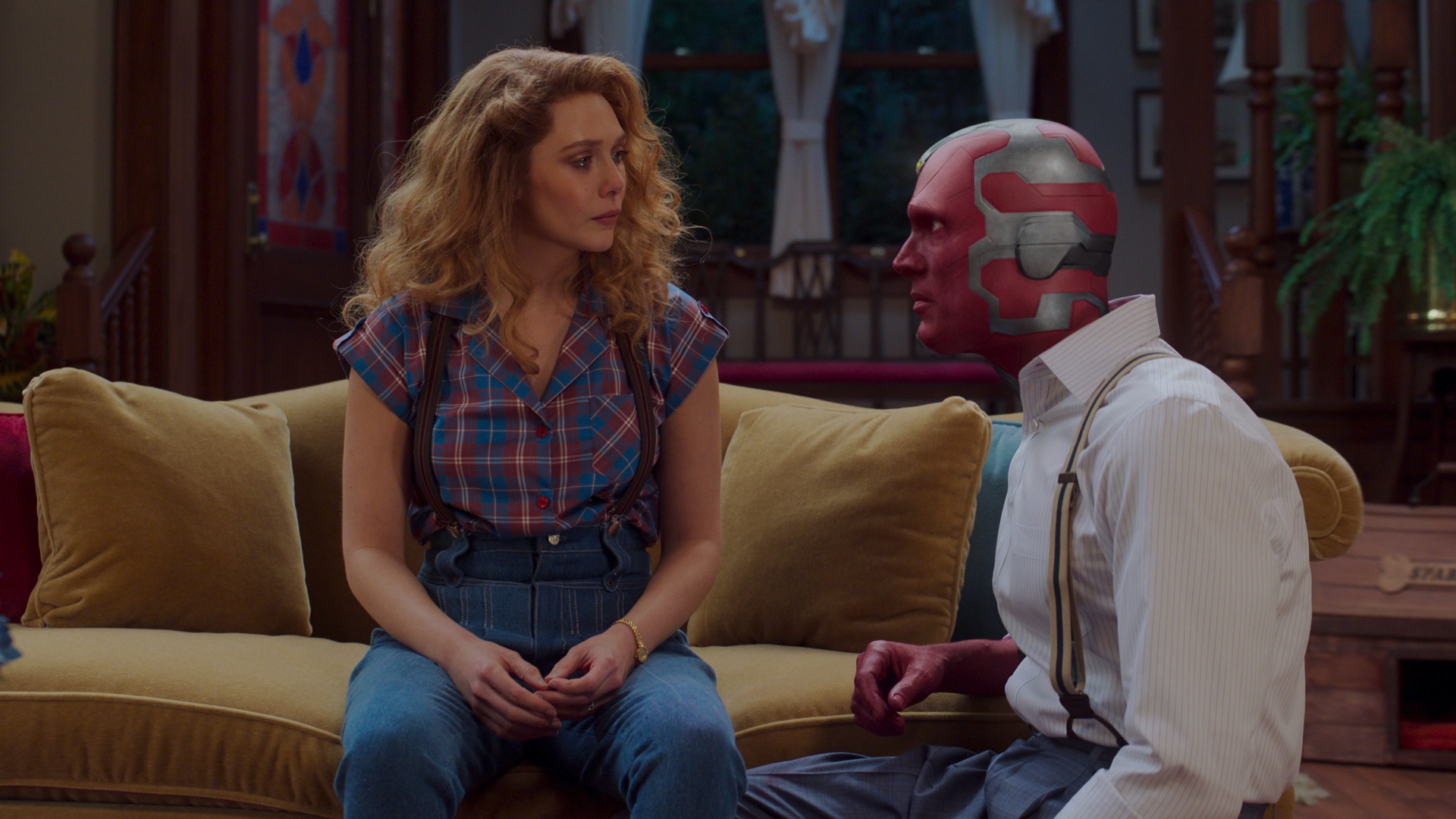
    1. WandaVision

    For a minute, it seemed like Marvel television would be something truly special. Intended to air after The Falcon and the Winter Soldier, WandaVision ended up making it to Disney+ first and announced itself as the ideal television adaptation. For its first two thirds, WandaVision took favorites from the MCU, namely Elizabeth Olsen as Wanda Maximoff and Paul Bettany as her robot husband Vision, and put them in riffs on classic television.

    One could argue that the drops in quality toward the end, when the television aspect falls away and traditional Marvel heroics take over. But the show does an excellent job weaving larger universe mystery throughout those early episodes, earning its big ending. Plus, the show wisely balances Wanda’s CGI off against Agatha with Vision having a deep conversation with himself. By the time it finished, WandaVision set a standard no other MCU show has been able to match. Yet.

    The post Every Marvel TV Show in the MCU Era Ranked appeared first on Den of Geek.

  • Paradise Ending Explained: Who Killed Wildcat and What’s Next for Season 2?

    Paradise Ending Explained: Who Killed Wildcat and What’s Next for Season 2?

    This article contains major spoilers for Paradise season 1 episode 8. In Hulu’s eight-episode post-apocalyptic murder mystery Paradise, Agent Xavier Collins (Sterling K. Brown) is a secret service agent tasked with protecting President Cal Bradford (James Marsden) in a society created under a sealed dome after a series of natural disasters led to the end […]

    The post Paradise Ending Explained: Who Killed Wildcat and What’s Next for Season 2? appeared first on Den of Geek.

    Look out, here comes Daredevil, the Man Without Fear! Seven years after the Netflix series ended with its third season, Daredevil: Born Again brings back stars Charlie Cox and Vincent D’Onofrio, this time for Disney+.

    Daredevil’s journey from star of a canceled, violent Netflix series to new entry completely in the Marvel Cinematic Universe highlights the strange case of Marvel shows. Although Marvel has been a constant presence on television since the cartoons of the 1960s, the success of the Marvel Cinematic Universe reinvigorated public interest in the characters.

    Yet, while the movies boasted a shared universe, in which Captain America can drop by Asgard (albeit as a Loki projection) in Thor: The Dark World, the TV shows were strangely sequestered. Daredevil, Luke Cage, and Jessica Jones lived on Netflix. Cloak & Dagger and Runaways stayed on Freeform. Characters from the movies got spun off into shows on Disney+.

    However, with Born Again bringing the Netflix series back, it’s time to look at all of the shows produced under the Marvel Cinematic Universe banner… mostly. A few shows that came out during the MCU era fall a bit outside the scope of this list. Legion and Gifted both deal with the X-Men, but they don’t even wink at the MCU and instead tell their own idiosyncratic stories. Likewise, the animated series Spidey and His Amazing Spider-Friends, Hit-Monkey, and M.O.D.O.K. might have some overlap with characters that appear in the MCU, but they have radically different takes and don’t even acknowledge the multiverse like shows that are on this list.

    Even cutting out those shows leaves a ton of superhero action left to cover, some better than others. So let’s dive into the world of Marvel heroes that have been forever changed by the MCU.

    28. Inhumans

    Perhaps the least essential creation of Jack Kirby and Stan Lee, the Inhumans work best as supporting characters within the Fantastic Four franchise. A messy royal family who support eugenics, the Inhumans are hardly the most likable characters from the House of Ideas. Yet, back when the X-Men adaptation rights were with 20th Century Fox instead of Disney/Marvel, then Marvel chief Ike Perlmutter pushed the Inhumans as replacements for the mutants.

    To that end Perlmutter advocated an Inhumans movie, something that Kevin Feige resisted as much as he could, bumping the project to a short ABC miniseries. And what a terrible miniseries it was. Despite some likable actors such as Anson Mount and Ken Leung, Inhumans never justified its own existence. When Medusa (Serinda Swan), a character with the cool power of long hair she can control, gets her head shaved at the start of the series, smart people forgot about Inhuamans until Black Bolt’s delightful death in Doctor Strange in the Multiverse of Madness.

    27. Marvel’s Runaways

    Here’s the thing about the Runaways: they have to run away. By issue #2 of the acclaimed comic book series by Brian K. Vaughan and Adrian Alphona, the primary teens had escaped from home, upon learning that their parents were supervillains. For some reason, the television adaptation kept the kids in the house for almost the entirety of the series. Even when the kids officially left home, they kept breaking into one another’s houses for one reason or another.

    Without actually much running away and with superpower usage limited by television budgets, Runaways only had generic teen angst let to portray. It portrayed the angst ably, but covered the same ground that other shows had done first and better, leaving us viewers wondering why anyone even bothered making Runaways.

    cnx.cmd.push(function() {
    cnx({
    playerId: “106e33c0-3911-473c-b599-b1426db57530”,

    }).render(“0270c398a82f44f49c23c16122516796”);
    });

    26. Helstrom

    The best shows on this list figure out a way to take concepts from Marvel Comics and translate them to the medium of television. The worst get that balance wrong, hoping that the slightest gestures at one end can make up for deficiancies on the other. Case in point, the supernatural crime series Helstrom, starring Tom Austen and Sydney Lemmon as Daimon and Ana Helstrom.

    In the comics, Daimon and Satana Hellstrom are the literal children of Satan and a human woman, who struggle to make sense of their conflicting heritages. The television show turns the two into children of a demon-possessed serial killer and send them to investigate spiritual mysteries, not unlike Supernatural or Lucifer (a show that does a much better job adapting a comic book to procedural television). The result is a show that trades in tired tv tropes that it’s occasional concessions to the comics cannot overcome.

    25. Secret Invasion

    The most damning thing that anyone can say about Secret Invasion is that it doesn’t matter at all. You could skip it and not be confused at all when Nick Fury shows up again in The Marvels, seemingly unfazed by what happened in his own show — a show that included the deaths of strong supporting characters Maria Hill and Talos and revealed that Fury had a wife who was a Skrull.

    Frankly, those who skipped Secret Invasion were probably the happiest with the show. Despite strong work from the reliably great Samuel L. Jackson and Olivia Colman being Olivia Colman, the show couldn’t decide if it was a sci-fi show about aliens, a spy thriller, or a political satire, resulting in a forgettable, sloppy mess.

    24. The Defenders

    As this list will show, the Netflix Marvel series were a mixed bag, never able to balance the superheroics of the characters with the more grounded tone the shows wanted to achieve. It’s fitting, then, that the crossover miniseries The Defenders exemplifies all of the other shows’ problems.

    The eight-episode mini wisely builds out of Daredevil, the strongest of the Netflix shows, with a plot that involves Hand ninjas trying to gain control of a super weapon called Black Sky, which turns out to be Daredevil’s girlfriend Elektra. As much as the Hand leader Alexandria, played by a disinterested Sigourney Weaver, talks about the end of the world, The Defenders feels shockingly tiny, mostly a bunch of people in business suits having conversations in officers.

    23. Iron Fist

    Like The Defenders, Iron Fist also confuses conversations in office buildings with compelling genre television. Somehow, a comic book series about a young man who becomes kung fu master after thrusting his hands into a dragon’s heart transformed into a show about corporate intrigue. Then again, given star Finn Jones’s nothing of a take on the main character Danny Rand, maybe producers didn’t have faith that he could carry the action scenes.

    The show’s second season benefits from a change in showrunner and more of a focus on the strong supporting cast, which includes an outstanding turn by Jessica Henwick as Colleen Wing. However, it was too little too late, and very people even cared enough to tune in for a second season.

    22. Echo

    Unlike the aforementioned Helstrom siblings, at least Maya Lopez had a strong MCU showing before getting spun off into her own miniseries Echo. As portrayed by Alaqua Cox, Lopez made for a compelling antagonist to Clint Barton in Hawkeye. But Maya’s connection to Wilson Fisk, which does exist in the Daredevil comics in which she debuted, overshadowed the character, making her feel like a supporting character in her own show.

    Then again, there’s not much to the show itself. Despite gathering some of the best Native actors working today (including most of the cast of the far superior Reservation Dogs), Echo drags across its five episodes, biding time until Maya can finally face off with Fisk. At least creative leads Marion Dayre, Amy Rardin, and Sydney Freeland work in enough underseen elements of Choctaw culture to give Echo some flavor it would otherwise lack.

    21. She-Hulk: Attorney at Law

    Easily the most divisive show on this list, She-Hulk: Attorney at Law will certainly rank much higher for some and perhaps even lower for others. No one would place the show in the middle. On one hand, the strong reactions speak to the show’s willingness to break the MCU model, something to be applauded. Harnessing the irreverent humor of writer and artist John Byrne’s comic run, She-Hulk stars Tatiana Maslany in a self-aware legal comedy.

    However, the show’s success relies entirely on how much the audience finds the jokes actually funny. If watching She-Hulk twerk with Megan Thee Stallion is the height of comedy, then you probably enjoyed the show. If the series felt like watching the charming Maslany try to sell sub-UCB improv, then everything about the show — including the terrible effects and awkward MCU connections — felt like a drag.

    20. Cloak and Dagger

    Cloak and Dagger are two of the trickier characters to bring out of their genesis as moralizing characters from the “Just Say No” 1980s. Not only does the story of teenage runaways Tyrone Johnson and Tandy Bowen, who gain powers after being subjected to flawed street drugs, feel preachy, but Dagger has one of the most improbable costumes in comics history.

    The television adaptation, starring Aubrey Joseph and Olivia Holt, ditches the costumes and instead plays up the teen drama. As a result, the show works as a melodrama with supernatural elements, gaining a solid following across its two seasons. Fans of weird Marvel characters might be disappointed with the series’ downplaying of the superhero aspects, but those who wanted off-kilter YA tales were pleased.

    19. I Am Groot

    Kids love Groot, so what would be better than a kids’ series about baby Groot getting into misadventures? I Am Groot is beautifully animated and each show’s six-minute runtime meant that the adventures had to stay small and focused.

    And yet, even members of the target demographic get bored after one or two episodes. Ten episodes of the series feel like far too many, especially in the second season, which adds characters like the Watcher and alienates young children even more.

    18. Marvel’s What If…? 

    What If…? might be the most perfect adaptation of a comic book series. Like the long-running comic series, What If…? features alternate reality versions of familiar characters, playing out various thought experiments. And like the comic series, What If…? was occasionally interesting and mostly dull.

    Which isn’t to say that the entire show was a waste of time. What If…? gave us one more chance to see/hear Chadwick Boseman as T’Challa and the series recently featured Storm in her Asgardian armor, a fan favorite from the comics. Moreover, Jeffrey Wright proved to be the ideal person to voice the all-powerful Watcher, thanks to his ability to keep tongue in cheek without sacrificing gravitas. Still, it’s hard to believe that anyone remembers the episodes as soon as the credits roll.

    17. Moon Knight

    One’s enjoyment of Moon Knight might depend entirely on one’s feelings about Oscar Isaac. For those who like Isaac, but see the actor’s limitations, then Moon Knight drags every time he deploys his goofy English accent to portray Steven Grant, and depictions of his alternate (and American) identity Marc Spector didn’t help things. By the time the show ended with a television CG equivalent of a kaiju battle, Moon Knight was a lost cause.

    Yet, for those who love everything that Isaac’s handing out, Moon Knight is a lot of fun. The series wisely adapts the great Moon Knight run by Jeff Lemire and Greg Smallwood, combining psychological exploration with archeological adventure. Even better, May Calamawy steals every single scene she’s in as Layla El-Faouly, leaving us still clamoring for more Silver Scarab.

    16. Luke Cage

    The tragedy of the Neftlix Marvel shows is that they could have been really, really good. Luke Cage brims with potential, thanks to a captivating performance by Mike Colter in the lead and ambitious storytelling from showrunner Cheo Hodari Coker, who did not shy away from the social relevance of the characters. Add in ringers such as Mahershala Ali and Alfre Woodard as villains, and Luke Cage was set to match Daredevil for excitement and intensity.

    Yet, the Netflix shows were mired by some requirement instituted by Marvel, most notably a mandatory minimum of 13 episodes per season. As a result, most of the Netflix shows felt oddly paced, none worse than Luke Cage. The electric charge of the first season fizzled out, even before the show unwisely killed off Ali’s character and replaced him with the much sillier Diamondback (Erik LaRay Harvey). Coming out of The Defenders, the show lost any direction, saddling the series with uninspired team ups and a generic mystery plot.

    15. The Punisher

    The Punisher might be one of the most popular characters in the Marvel Universe, but he’s not one of the richest. The entire appeal of the Punisher comes from the misery of watching broken man Frank Castle inflict all manner of pain on the worst of the worst. So it’s remarkable that the MCU has wrung two seasons of compelling television out of the character and that we’re excited to see the Punisher return for Daredevil: Born Again.

    A lot of the show’s success can be attributed to Jon Bernthal, who first played the character in Daredevil. Bernthal finds empathy for Castle, ensuring that he feels human, even when he goes to incredibly dark lengths in his war on crime. Then again, the show didn’t always match Bernthal’s efforts, too often falling back into the standard doom and gloom of the Punisher’s world. That said, it does have Ebon Moss-Bachrach as Frank’s usual sidekick Microchip, which will probably come up with some wacky multiverse shenanigans in the Fantastic Four.

    14. The Falcon and the Winter Soldier

    At times, The Falcon and the Winter Soldier pays off the promise of the MCU shows. Where the movies have to tell big stories that leave little room for proper character development, the shows could take their time and flesh out the person behind the mask. The Falcon and the Winter Soldier, intended to be the first of the Disney+ series, devotes its best parts to Sam Wilson wrestling with the idea of becoming the next Captain America and to Bucky dealing with the fallout of his crimes as the Winter Soldier.

    And yet, the show doesn’t seem to trust the characters enough to really focus on them. Instead, it borrows from excellent Mark Gruenwald-written Captain America comics from the 1980s to tell a thriller dealing with refugees from the Blip who call themselves the Flag Smashers. Throw in Wyatt Russell as an unstable new Captain America, and there’s very little room left over for character growth. Still, the stuff that’s there is pretty compelling, and the series ends with Sam fully grown into the Captain America role.

    13. Jessica Jones

    Nowhere was the 13-episode requirement of the Netflix shows felt more keenly than midway through the first season of Jessica Jones. The series had a fantastic hook, with a perfectly cast Krysten Ritter as the acerbic private investigator facing off against David Tennant as Kilgrave, the mind-controlling Purple Man. And yet, all of the tension dissipated midway through the first season, when a subplot involving Jessica’s best pal and an unstable cop took the center stage while Jones and Kilgrave bided their time.

    Jessica Jones settled into a better rhythm for its second and third seasons, and Ritter remained strong throughout. But without Tennant’s Kilgrave as the main villain, those later seasons feel solid if unremarkable. Still, that’s all a testament to what a remarkable show Jessica Jones was with Kilgrave as the antagonist, adding a level true menace to the procedural structure and adding true pathos to Ritter’s disaffected exterior.

    12. Agatha All Along

    For its first few episodes Agatha All Along felt like Marvel at its least essential. The draw to the series seemed to be watching the always-delightful Kathryn Hahn pal around with other great actors, including Patti LuPone, Sasheer Zamata, Ali Ahn, and Debra Jo Rupp as back-biting witches, alongside Joe Locke as a mysterious magic user mostly just called “Teen” and Aubrey Plaza as a flirtatious enemy.

    But by the time that the second half of the season kicks in, Agatha All Along finds surprising pathos. It’s not just the depths to Agatha’s backstory, but especially a Doctor Who style twist to LuPone’s time-displaced witch and a tale of displacement and found family with the Teen. What began as a lackluster spin-off became a starting point for one of the Young Avengers, giving the MCU a shared universe boost that once was the franchise’s calling card.

    11. Agents of SHIELD

    It’s hard to judge Agents of SHIELD for what it was, not what it could have been. Agents of SHIELD debuted at the height of Marvel mania, promising more MCU action by following fan-favorite Phil Coulson and his secret agents as they do superhero espionage. Yet, that first season quickly revealed itself as a pretty by-the-numbers procedural with only the slightest MCU trappings. When the movie Captain America: The Winter Soldier ended by completely recreating SHIELD, it seemed like the series would find its footing in season two, but that didn’t happen either.

    And yet, once expectations fell away (and, frankly, a lot of people stopped watching), Agents of SHIELD got room to breathe. It’s likable ensemble cast settled into their roles and the show got room to be more experimental and fun. Kree soldiers, Ghost Rider, and actual supervillains became part of the story. The less that people paid attention to Agents of SHIELD, the more it got to be itself, and the show was better for it.

    10. Werewolf by Night

    By this point, readers have certainly noticed a reoccurring complaint across this list, that some shows waste even good ideas because they stretch their stories across too many episodes. The first of two specials created for Disney+, Werewolf by Night fills every one of its 53 minutes with delightful detail, not wasting a second.

    Directed by composer turned first-time filmmaker Michael Giacchino, Werewolf by Night pairs Gael García Bernal at his most lovable with a flinty Laura Donnelly, the former playing a good man cursed with lycanthropy and the latter the unwilling scion of monster hunters. Giacchino channels the gothic thrills of Universal Horror and even manages to put Man-Thing on screen without generating any guffaws. By the time Werewolf by Night ends, we’re still hungry for more, a rarity among MCU shows.

    9. Agent Carter

    Obviously, Agent Carter isn’t the best show on this list. But Agent Carter does the best job at translating the Marvel Universe to television. The series spun-off Hayley Atwell‘s scene-stealing Peggy Carter from Captain America: The First Avenger and lets her be so much more than the long-lost girlfriend of Steve Rogers.

    Even better, the World War II setting protected Agent Carter from the expectations that hobbled Agents of SHIELD, letting it play in its own corner of the universe. Yes, Edwin Jarvis and Howard Stark show up, but Agent Carter mostly got to be a high-energy spy show. The fact that it lasted just two seasons proves that Marvel didn’t always know what to do with its shows.

    8. Your Friendly Neighborhood Spider-Man

    Given all of the changes that the show experienced in pre-production, given its cast overstuffed with Marvel supporting characters, its remarkable that Your Friendly Neighborhood Spider-Man managed to be as breezy and fresh as it is. Showrunner Jeff Trammell remixes over-familiar story beats to give us a modern-day take on Peter Parker, unlike any version seen in movies, comics, or television.

    All of the changes work. Perennial B-list villain Tombstone gets a tragic arc, Harry feels like proper 2024 rich boy, and Colman Domingo gives us one of the most compelling takes on Norman Osborn ever seen. The entire show comes via stylized animation that recalls both the Spider-Verse films and Steve Ditko’s pop art, capturing the timeless quality of Spider-Man.

    7. Hawkeye

    No one in their right mind would pick Clint Barton as their favorite Avenger. Although played well by Jeremy Renner, he could never shake the fact that he was just a normal guy with bows and arrows among gods. Avengers: Age of Ultron effectively turned Clint’s weaknesses as strengths, but no one expected him to carry a television series.

    Hawkeye works, in part, because he doesn’t have to carry it. The MCU gets a shot in the arm by adding Hailee Steinfeld as Kate Bishop, a rich girl who takes up the mantle of Hawkeye. Bishop’s tangled life, which includes a dashing Tony Dalton as a potential villain and a cameo by Florence Pugh as the White Widow, pairs nicely with Clint’s domestic stress. Plus, the series uses its Christmas setting and gives us Rogers: The Musical. What more could you want?

    6. Loki

    If Loki didn’t come back for a second season, it would have ranked much lower. The first series gave fans more of the MCU’s first real breakout Tom Hiddleston and paired him with the only person he could love, a variation of himself called Sylvie (Sophia Di Martino) as well as a perfectly-cast Owen Wilson as company man Mobius. M. Mobius. Fun, yes, but the multiverse shenanigans muted the show’s emotional stakes.

    To the shock of everyone, Loki’s second season did the exact opposite, amping up the emotional power by leaning into the multiversal elements. Even adding Jonathan Majors, then burdened with scandal and failed franchise plans, doesn’t slow things down, as the second show combines the end of all realities as an existential crisis for the God of Lies. The show sticks the landing, giving Loki something so rare among Marvel characters: a proper ending.

    5. Ms. Marvel

    After Avengers: Endgame, Marvel hoped that younger characters could fill the gaps left by Robert Downey Jr. and Chris Evans. The execution of these new characters has been hit or miss, but Marvel absolutely scored a home run when they got Iman Vellani to play Kamala Khan, the fangirl who becomes superhero Ms. Marvel.

    The idea of making a Marvel superfan into a superhero could be self-congratulatory, but Villani plays it with such a lack of guile that no one feels upset. Grounded by a great ensemble cast playing her friends and family, Ms. Marvel takes surprising chances, from the pop art look of the first two episodes to an episode that depicts the Partition of India to an unexpected X-Men twist. Ms. Marvel could be the future of MCU, if only the franchise would let her lead.

    4. The Guardians of the Galaxy Holiday Special

    Leaving aside the fact that the only holiday celebrated in The Guardians of the Galaxy Holiday Special is Christmas, it’s hard to imagine a more perfect use of the MCU’s Disney+ connection. After two movies and supporting parts in Avengers: Infinity War and Endgame, the Guardians of the Galaxy had become some of the most beloved characters in the Marvel Universe, and that affection helps us forgive some of the clunky setups in the special.

    Even better, the Holiday Special shows off what James Gunn does best, finding an unexpected genuine pathos in what seems like a goofy, somewhat metatextual tale, in which Mantis and Drax kidnap Kevin Bacon to give Starlord some Christmas cheer. And, of course, it has a killer soundtrack.

    3. Daredevil

    Daredevil isn’t exempt from the problems that plagued the other Netflix series. The second season in particular sags under the weight of too many plots and characters, and even the mostly-great first season spends way too much time with Matt Murdock recovering from his injuries. But when Daredevil is working, it’s among the best in superhero television.

    The show establishes itself within its first three episodes. We meet Charlie Cox as Matt Murdock, an endlessly charming man whose tragic history and complicated Catholicism drive him to dress up as a devil and pummel baddies. He’s matched by the Kingpin of Crime Wilson Fisk, whom Vincent D’Onofrio plays as a hurt child in the body of a massive killer. The electricity between the two powered the series not just through its low points, but through seven years after its cancelation, making Daredevil: Born Again the most anticipated show of the year.

    2. X-Men ’97

    X-Men ’97 didn’t have to be this good. It could have just brought back the characters and cast from the ’90s show and make us all feel like kids again. It could have been fantasy escapism, letting us grown ups ignore the problems in the real world.

    X-Men ’97 does the exact opposite. Yes, we have the same characters from the ’90s show, many of whom have the same voice actors. And yes, the series continues to adapt stories from the incredibly popular but artistically questionable X-Men comics of the era. But the series leans hard into our current situation, making the mutant as minority metaphor more explicit than ever before and offering a thrilling vision of resistance.

    1. WandaVision

    For a minute, it seemed like Marvel television would be something truly special. Intended to air after The Falcon and the Winter Soldier, WandaVision ended up making it to Disney+ first and announced itself as the ideal television adaptation. For its first two thirds, WandaVision took favorites from the MCU, namely Elizabeth Olsen as Wanda Maximoff and Paul Bettany as her robot husband Vision, and put them in riffs on classic television.

    One could argue that the drops in quality toward the end, when the television aspect falls away and traditional Marvel heroics take over. But the show does an excellent job weaving larger universe mystery throughout those early episodes, earning its big ending. Plus, the show wisely balances Wanda’s CGI off against Agatha with Vision having a deep conversation with himself. By the time it finished, WandaVision set a standard no other MCU show has been able to match. Yet.

    The post Every Marvel TV Show in the MCU Era Ranked appeared first on Den of Geek.

  • Yellowjackets Teased Season 3’s Big Character Death A Long Time Ago

    Yellowjackets Teased Season 3’s Big Character Death A Long Time Ago

    This article contains spoilers through Yellowjackets season 3 episode 4. Yellowjackets’ most recent death has surprised fans and the cast alike. Season 3 episode 4 “12 Angry Girls and 1 Drunk Travis” ended with the reveal that adult Lottie (Simone Kessell) had been found dead in the present at the foot of some creepy looking […]

    The post Yellowjackets Teased Season 3’s Big Character Death A Long Time Ago appeared first on Den of Geek.

    Look out, here comes Daredevil, the Man Without Fear! Seven years after the Netflix series ended with its third season, Daredevil: Born Again brings back stars Charlie Cox and Vincent D’Onofrio, this time for Disney+.

    Daredevil’s journey from star of a canceled, violent Netflix series to new entry completely in the Marvel Cinematic Universe highlights the strange case of Marvel shows. Although Marvel has been a constant presence on television since the cartoons of the 1960s, the success of the Marvel Cinematic Universe reinvigorated public interest in the characters.

    Yet, while the movies boasted a shared universe, in which Captain America can drop by Asgard (albeit as a Loki projection) in Thor: The Dark World, the TV shows were strangely sequestered. Daredevil, Luke Cage, and Jessica Jones lived on Netflix. Cloak & Dagger and Runaways stayed on Freeform. Characters from the movies got spun off into shows on Disney+.

    However, with Born Again bringing the Netflix series back, it’s time to look at all of the shows produced under the Marvel Cinematic Universe banner… mostly. A few shows that came out during the MCU era fall a bit outside the scope of this list. Legion and Gifted both deal with the X-Men, but they don’t even wink at the MCU and instead tell their own idiosyncratic stories. Likewise, the animated series Spidey and His Amazing Spider-Friends, Hit-Monkey, and M.O.D.O.K. might have some overlap with characters that appear in the MCU, but they have radically different takes and don’t even acknowledge the multiverse like shows that are on this list.

    Even cutting out those shows leaves a ton of superhero action left to cover, some better than others. So let’s dive into the world of Marvel heroes that have been forever changed by the MCU.

    28. Inhumans

    Perhaps the least essential creation of Jack Kirby and Stan Lee, the Inhumans work best as supporting characters within the Fantastic Four franchise. A messy royal family who support eugenics, the Inhumans are hardly the most likable characters from the House of Ideas. Yet, back when the X-Men adaptation rights were with 20th Century Fox instead of Disney/Marvel, then Marvel chief Ike Perlmutter pushed the Inhumans as replacements for the mutants.

    To that end Perlmutter advocated an Inhumans movie, something that Kevin Feige resisted as much as he could, bumping the project to a short ABC miniseries. And what a terrible miniseries it was. Despite some likable actors such as Anson Mount and Ken Leung, Inhumans never justified its own existence. When Medusa (Serinda Swan), a character with the cool power of long hair she can control, gets her head shaved at the start of the series, smart people forgot about Inhuamans until Black Bolt’s delightful death in Doctor Strange in the Multiverse of Madness.

    27. Marvel’s Runaways

    Here’s the thing about the Runaways: they have to run away. By issue #2 of the acclaimed comic book series by Brian K. Vaughan and Adrian Alphona, the primary teens had escaped from home, upon learning that their parents were supervillains. For some reason, the television adaptation kept the kids in the house for almost the entirety of the series. Even when the kids officially left home, they kept breaking into one another’s houses for one reason or another.

    Without actually much running away and with superpower usage limited by television budgets, Runaways only had generic teen angst let to portray. It portrayed the angst ably, but covered the same ground that other shows had done first and better, leaving us viewers wondering why anyone even bothered making Runaways.

    cnx.cmd.push(function() {
    cnx({
    playerId: “106e33c0-3911-473c-b599-b1426db57530”,

    }).render(“0270c398a82f44f49c23c16122516796”);
    });

    26. Helstrom

    The best shows on this list figure out a way to take concepts from Marvel Comics and translate them to the medium of television. The worst get that balance wrong, hoping that the slightest gestures at one end can make up for deficiancies on the other. Case in point, the supernatural crime series Helstrom, starring Tom Austen and Sydney Lemmon as Daimon and Ana Helstrom.

    In the comics, Daimon and Satana Hellstrom are the literal children of Satan and a human woman, who struggle to make sense of their conflicting heritages. The television show turns the two into children of a demon-possessed serial killer and send them to investigate spiritual mysteries, not unlike Supernatural or Lucifer (a show that does a much better job adapting a comic book to procedural television). The result is a show that trades in tired tv tropes that it’s occasional concessions to the comics cannot overcome.

    25. Secret Invasion

    The most damning thing that anyone can say about Secret Invasion is that it doesn’t matter at all. You could skip it and not be confused at all when Nick Fury shows up again in The Marvels, seemingly unfazed by what happened in his own show — a show that included the deaths of strong supporting characters Maria Hill and Talos and revealed that Fury had a wife who was a Skrull.

    Frankly, those who skipped Secret Invasion were probably the happiest with the show. Despite strong work from the reliably great Samuel L. Jackson and Olivia Colman being Olivia Colman, the show couldn’t decide if it was a sci-fi show about aliens, a spy thriller, or a political satire, resulting in a forgettable, sloppy mess.

    24. The Defenders

    As this list will show, the Netflix Marvel series were a mixed bag, never able to balance the superheroics of the characters with the more grounded tone the shows wanted to achieve. It’s fitting, then, that the crossover miniseries The Defenders exemplifies all of the other shows’ problems.

    The eight-episode mini wisely builds out of Daredevil, the strongest of the Netflix shows, with a plot that involves Hand ninjas trying to gain control of a super weapon called Black Sky, which turns out to be Daredevil’s girlfriend Elektra. As much as the Hand leader Alexandria, played by a disinterested Sigourney Weaver, talks about the end of the world, The Defenders feels shockingly tiny, mostly a bunch of people in business suits having conversations in officers.

    23. Iron Fist

    Like The Defenders, Iron Fist also confuses conversations in office buildings with compelling genre television. Somehow, a comic book series about a young man who becomes kung fu master after thrusting his hands into a dragon’s heart transformed into a show about corporate intrigue. Then again, given star Finn Jones’s nothing of a take on the main character Danny Rand, maybe producers didn’t have faith that he could carry the action scenes.

    The show’s second season benefits from a change in showrunner and more of a focus on the strong supporting cast, which includes an outstanding turn by Jessica Henwick as Colleen Wing. However, it was too little too late, and very people even cared enough to tune in for a second season.

    22. Echo

    Unlike the aforementioned Helstrom siblings, at least Maya Lopez had a strong MCU showing before getting spun off into her own miniseries Echo. As portrayed by Alaqua Cox, Lopez made for a compelling antagonist to Clint Barton in Hawkeye. But Maya’s connection to Wilson Fisk, which does exist in the Daredevil comics in which she debuted, overshadowed the character, making her feel like a supporting character in her own show.

    Then again, there’s not much to the show itself. Despite gathering some of the best Native actors working today (including most of the cast of the far superior Reservation Dogs), Echo drags across its five episodes, biding time until Maya can finally face off with Fisk. At least creative leads Marion Dayre, Amy Rardin, and Sydney Freeland work in enough underseen elements of Choctaw culture to give Echo some flavor it would otherwise lack.

    21. She-Hulk: Attorney at Law

    Easily the most divisive show on this list, She-Hulk: Attorney at Law will certainly rank much higher for some and perhaps even lower for others. No one would place the show in the middle. On one hand, the strong reactions speak to the show’s willingness to break the MCU model, something to be applauded. Harnessing the irreverent humor of writer and artist John Byrne’s comic run, She-Hulk stars Tatiana Maslany in a self-aware legal comedy.

    However, the show’s success relies entirely on how much the audience finds the jokes actually funny. If watching She-Hulk twerk with Megan Thee Stallion is the height of comedy, then you probably enjoyed the show. If the series felt like watching the charming Maslany try to sell sub-UCB improv, then everything about the show — including the terrible effects and awkward MCU connections — felt like a drag.

    20. Cloak and Dagger

    Cloak and Dagger are two of the trickier characters to bring out of their genesis as moralizing characters from the “Just Say No” 1980s. Not only does the story of teenage runaways Tyrone Johnson and Tandy Bowen, who gain powers after being subjected to flawed street drugs, feel preachy, but Dagger has one of the most improbable costumes in comics history.

    The television adaptation, starring Aubrey Joseph and Olivia Holt, ditches the costumes and instead plays up the teen drama. As a result, the show works as a melodrama with supernatural elements, gaining a solid following across its two seasons. Fans of weird Marvel characters might be disappointed with the series’ downplaying of the superhero aspects, but those who wanted off-kilter YA tales were pleased.

    19. I Am Groot

    Kids love Groot, so what would be better than a kids’ series about baby Groot getting into misadventures? I Am Groot is beautifully animated and each show’s six-minute runtime meant that the adventures had to stay small and focused.

    And yet, even members of the target demographic get bored after one or two episodes. Ten episodes of the series feel like far too many, especially in the second season, which adds characters like the Watcher and alienates young children even more.

    18. Marvel’s What If…? 

    What If…? might be the most perfect adaptation of a comic book series. Like the long-running comic series, What If…? features alternate reality versions of familiar characters, playing out various thought experiments. And like the comic series, What If…? was occasionally interesting and mostly dull.

    Which isn’t to say that the entire show was a waste of time. What If…? gave us one more chance to see/hear Chadwick Boseman as T’Challa and the series recently featured Storm in her Asgardian armor, a fan favorite from the comics. Moreover, Jeffrey Wright proved to be the ideal person to voice the all-powerful Watcher, thanks to his ability to keep tongue in cheek without sacrificing gravitas. Still, it’s hard to believe that anyone remembers the episodes as soon as the credits roll.

    17. Moon Knight

    One’s enjoyment of Moon Knight might depend entirely on one’s feelings about Oscar Isaac. For those who like Isaac, but see the actor’s limitations, then Moon Knight drags every time he deploys his goofy English accent to portray Steven Grant, and depictions of his alternate (and American) identity Marc Spector didn’t help things. By the time the show ended with a television CG equivalent of a kaiju battle, Moon Knight was a lost cause.

    Yet, for those who love everything that Isaac’s handing out, Moon Knight is a lot of fun. The series wisely adapts the great Moon Knight run by Jeff Lemire and Greg Smallwood, combining psychological exploration with archeological adventure. Even better, May Calamawy steals every single scene she’s in as Layla El-Faouly, leaving us still clamoring for more Silver Scarab.

    16. Luke Cage

    The tragedy of the Neftlix Marvel shows is that they could have been really, really good. Luke Cage brims with potential, thanks to a captivating performance by Mike Colter in the lead and ambitious storytelling from showrunner Cheo Hodari Coker, who did not shy away from the social relevance of the characters. Add in ringers such as Mahershala Ali and Alfre Woodard as villains, and Luke Cage was set to match Daredevil for excitement and intensity.

    Yet, the Netflix shows were mired by some requirement instituted by Marvel, most notably a mandatory minimum of 13 episodes per season. As a result, most of the Netflix shows felt oddly paced, none worse than Luke Cage. The electric charge of the first season fizzled out, even before the show unwisely killed off Ali’s character and replaced him with the much sillier Diamondback (Erik LaRay Harvey). Coming out of The Defenders, the show lost any direction, saddling the series with uninspired team ups and a generic mystery plot.

    15. The Punisher

    The Punisher might be one of the most popular characters in the Marvel Universe, but he’s not one of the richest. The entire appeal of the Punisher comes from the misery of watching broken man Frank Castle inflict all manner of pain on the worst of the worst. So it’s remarkable that the MCU has wrung two seasons of compelling television out of the character and that we’re excited to see the Punisher return for Daredevil: Born Again.

    A lot of the show’s success can be attributed to Jon Bernthal, who first played the character in Daredevil. Bernthal finds empathy for Castle, ensuring that he feels human, even when he goes to incredibly dark lengths in his war on crime. Then again, the show didn’t always match Bernthal’s efforts, too often falling back into the standard doom and gloom of the Punisher’s world. That said, it does have Ebon Moss-Bachrach as Frank’s usual sidekick Microchip, which will probably come up with some wacky multiverse shenanigans in the Fantastic Four.

    14. The Falcon and the Winter Soldier

    At times, The Falcon and the Winter Soldier pays off the promise of the MCU shows. Where the movies have to tell big stories that leave little room for proper character development, the shows could take their time and flesh out the person behind the mask. The Falcon and the Winter Soldier, intended to be the first of the Disney+ series, devotes its best parts to Sam Wilson wrestling with the idea of becoming the next Captain America and to Bucky dealing with the fallout of his crimes as the Winter Soldier.

    And yet, the show doesn’t seem to trust the characters enough to really focus on them. Instead, it borrows from excellent Mark Gruenwald-written Captain America comics from the 1980s to tell a thriller dealing with refugees from the Blip who call themselves the Flag Smashers. Throw in Wyatt Russell as an unstable new Captain America, and there’s very little room left over for character growth. Still, the stuff that’s there is pretty compelling, and the series ends with Sam fully grown into the Captain America role.

    13. Jessica Jones

    Nowhere was the 13-episode requirement of the Netflix shows felt more keenly than midway through the first season of Jessica Jones. The series had a fantastic hook, with a perfectly cast Krysten Ritter as the acerbic private investigator facing off against David Tennant as Kilgrave, the mind-controlling Purple Man. And yet, all of the tension dissipated midway through the first season, when a subplot involving Jessica’s best pal and an unstable cop took the center stage while Jones and Kilgrave bided their time.

    Jessica Jones settled into a better rhythm for its second and third seasons, and Ritter remained strong throughout. But without Tennant’s Kilgrave as the main villain, those later seasons feel solid if unremarkable. Still, that’s all a testament to what a remarkable show Jessica Jones was with Kilgrave as the antagonist, adding a level true menace to the procedural structure and adding true pathos to Ritter’s disaffected exterior.

    12. Agatha All Along

    For its first few episodes Agatha All Along felt like Marvel at its least essential. The draw to the series seemed to be watching the always-delightful Kathryn Hahn pal around with other great actors, including Patti LuPone, Sasheer Zamata, Ali Ahn, and Debra Jo Rupp as back-biting witches, alongside Joe Locke as a mysterious magic user mostly just called “Teen” and Aubrey Plaza as a flirtatious enemy.

    But by the time that the second half of the season kicks in, Agatha All Along finds surprising pathos. It’s not just the depths to Agatha’s backstory, but especially a Doctor Who style twist to LuPone’s time-displaced witch and a tale of displacement and found family with the Teen. What began as a lackluster spin-off became a starting point for one of the Young Avengers, giving the MCU a shared universe boost that once was the franchise’s calling card.

    11. Agents of SHIELD

    It’s hard to judge Agents of SHIELD for what it was, not what it could have been. Agents of SHIELD debuted at the height of Marvel mania, promising more MCU action by following fan-favorite Phil Coulson and his secret agents as they do superhero espionage. Yet, that first season quickly revealed itself as a pretty by-the-numbers procedural with only the slightest MCU trappings. When the movie Captain America: The Winter Soldier ended by completely recreating SHIELD, it seemed like the series would find its footing in season two, but that didn’t happen either.

    And yet, once expectations fell away (and, frankly, a lot of people stopped watching), Agents of SHIELD got room to breathe. It’s likable ensemble cast settled into their roles and the show got room to be more experimental and fun. Kree soldiers, Ghost Rider, and actual supervillains became part of the story. The less that people paid attention to Agents of SHIELD, the more it got to be itself, and the show was better for it.

    10. Werewolf by Night

    By this point, readers have certainly noticed a reoccurring complaint across this list, that some shows waste even good ideas because they stretch their stories across too many episodes. The first of two specials created for Disney+, Werewolf by Night fills every one of its 53 minutes with delightful detail, not wasting a second.

    Directed by composer turned first-time filmmaker Michael Giacchino, Werewolf by Night pairs Gael García Bernal at his most lovable with a flinty Laura Donnelly, the former playing a good man cursed with lycanthropy and the latter the unwilling scion of monster hunters. Giacchino channels the gothic thrills of Universal Horror and even manages to put Man-Thing on screen without generating any guffaws. By the time Werewolf by Night ends, we’re still hungry for more, a rarity among MCU shows.

    9. Agent Carter

    Obviously, Agent Carter isn’t the best show on this list. But Agent Carter does the best job at translating the Marvel Universe to television. The series spun-off Hayley Atwell‘s scene-stealing Peggy Carter from Captain America: The First Avenger and lets her be so much more than the long-lost girlfriend of Steve Rogers.

    Even better, the World War II setting protected Agent Carter from the expectations that hobbled Agents of SHIELD, letting it play in its own corner of the universe. Yes, Edwin Jarvis and Howard Stark show up, but Agent Carter mostly got to be a high-energy spy show. The fact that it lasted just two seasons proves that Marvel didn’t always know what to do with its shows.

    8. Your Friendly Neighborhood Spider-Man

    Given all of the changes that the show experienced in pre-production, given its cast overstuffed with Marvel supporting characters, its remarkable that Your Friendly Neighborhood Spider-Man managed to be as breezy and fresh as it is. Showrunner Jeff Trammell remixes over-familiar story beats to give us a modern-day take on Peter Parker, unlike any version seen in movies, comics, or television.

    All of the changes work. Perennial B-list villain Tombstone gets a tragic arc, Harry feels like proper 2024 rich boy, and Colman Domingo gives us one of the most compelling takes on Norman Osborn ever seen. The entire show comes via stylized animation that recalls both the Spider-Verse films and Steve Ditko’s pop art, capturing the timeless quality of Spider-Man.

    7. Hawkeye

    No one in their right mind would pick Clint Barton as their favorite Avenger. Although played well by Jeremy Renner, he could never shake the fact that he was just a normal guy with bows and arrows among gods. Avengers: Age of Ultron effectively turned Clint’s weaknesses as strengths, but no one expected him to carry a television series.

    Hawkeye works, in part, because he doesn’t have to carry it. The MCU gets a shot in the arm by adding Hailee Steinfeld as Kate Bishop, a rich girl who takes up the mantle of Hawkeye. Bishop’s tangled life, which includes a dashing Tony Dalton as a potential villain and a cameo by Florence Pugh as the White Widow, pairs nicely with Clint’s domestic stress. Plus, the series uses its Christmas setting and gives us Rogers: The Musical. What more could you want?

    6. Loki

    If Loki didn’t come back for a second season, it would have ranked much lower. The first series gave fans more of the MCU’s first real breakout Tom Hiddleston and paired him with the only person he could love, a variation of himself called Sylvie (Sophia Di Martino) as well as a perfectly-cast Owen Wilson as company man Mobius. M. Mobius. Fun, yes, but the multiverse shenanigans muted the show’s emotional stakes.

    To the shock of everyone, Loki’s second season did the exact opposite, amping up the emotional power by leaning into the multiversal elements. Even adding Jonathan Majors, then burdened with scandal and failed franchise plans, doesn’t slow things down, as the second show combines the end of all realities as an existential crisis for the God of Lies. The show sticks the landing, giving Loki something so rare among Marvel characters: a proper ending.

    5. Ms. Marvel

    After Avengers: Endgame, Marvel hoped that younger characters could fill the gaps left by Robert Downey Jr. and Chris Evans. The execution of these new characters has been hit or miss, but Marvel absolutely scored a home run when they got Iman Vellani to play Kamala Khan, the fangirl who becomes superhero Ms. Marvel.

    The idea of making a Marvel superfan into a superhero could be self-congratulatory, but Villani plays it with such a lack of guile that no one feels upset. Grounded by a great ensemble cast playing her friends and family, Ms. Marvel takes surprising chances, from the pop art look of the first two episodes to an episode that depicts the Partition of India to an unexpected X-Men twist. Ms. Marvel could be the future of MCU, if only the franchise would let her lead.

    4. The Guardians of the Galaxy Holiday Special

    Leaving aside the fact that the only holiday celebrated in The Guardians of the Galaxy Holiday Special is Christmas, it’s hard to imagine a more perfect use of the MCU’s Disney+ connection. After two movies and supporting parts in Avengers: Infinity War and Endgame, the Guardians of the Galaxy had become some of the most beloved characters in the Marvel Universe, and that affection helps us forgive some of the clunky setups in the special.

    Even better, the Holiday Special shows off what James Gunn does best, finding an unexpected genuine pathos in what seems like a goofy, somewhat metatextual tale, in which Mantis and Drax kidnap Kevin Bacon to give Starlord some Christmas cheer. And, of course, it has a killer soundtrack.

    3. Daredevil

    Daredevil isn’t exempt from the problems that plagued the other Netflix series. The second season in particular sags under the weight of too many plots and characters, and even the mostly-great first season spends way too much time with Matt Murdock recovering from his injuries. But when Daredevil is working, it’s among the best in superhero television.

    The show establishes itself within its first three episodes. We meet Charlie Cox as Matt Murdock, an endlessly charming man whose tragic history and complicated Catholicism drive him to dress up as a devil and pummel baddies. He’s matched by the Kingpin of Crime Wilson Fisk, whom Vincent D’Onofrio plays as a hurt child in the body of a massive killer. The electricity between the two powered the series not just through its low points, but through seven years after its cancelation, making Daredevil: Born Again the most anticipated show of the year.

    2. X-Men ’97

    X-Men ’97 didn’t have to be this good. It could have just brought back the characters and cast from the ’90s show and make us all feel like kids again. It could have been fantasy escapism, letting us grown ups ignore the problems in the real world.

    X-Men ’97 does the exact opposite. Yes, we have the same characters from the ’90s show, many of whom have the same voice actors. And yes, the series continues to adapt stories from the incredibly popular but artistically questionable X-Men comics of the era. But the series leans hard into our current situation, making the mutant as minority metaphor more explicit than ever before and offering a thrilling vision of resistance.

    1. WandaVision

    For a minute, it seemed like Marvel television would be something truly special. Intended to air after The Falcon and the Winter Soldier, WandaVision ended up making it to Disney+ first and announced itself as the ideal television adaptation. For its first two thirds, WandaVision took favorites from the MCU, namely Elizabeth Olsen as Wanda Maximoff and Paul Bettany as her robot husband Vision, and put them in riffs on classic television.

    One could argue that the drops in quality toward the end, when the television aspect falls away and traditional Marvel heroics take over. But the show does an excellent job weaving larger universe mystery throughout those early episodes, earning its big ending. Plus, the show wisely balances Wanda’s CGI off against Agatha with Vision having a deep conversation with himself. By the time it finished, WandaVision set a standard no other MCU show has been able to match. Yet.

    The post Every Marvel TV Show in the MCU Era Ranked appeared first on Den of Geek.

  • Mickey 17 Review: See Robert Pattinson Die, Repeat, and Make You Laugh

    Mickey 17 Review: See Robert Pattinson Die, Repeat, and Make You Laugh

    In Mickey 17, Robert Pattinson plays a frozen meat-sickle. Those are not my words; they’re Pattinson’s inside of the first 60 seconds of the movie, and they’re delivered to the audience with a nasally, conversational voiceover that sounds adrift somewhere between Steve Buscemi and Marisa Tomei in My Cousin Vinny. Absolutely everything about this performance […]

    The post Mickey 17 Review: See Robert Pattinson Die, Repeat, and Make You Laugh appeared first on Den of Geek.

    Look out, here comes Daredevil, the Man Without Fear! Seven years after the Netflix series ended with its third season, Daredevil: Born Again brings back stars Charlie Cox and Vincent D’Onofrio, this time for Disney+.

    Daredevil’s journey from star of a canceled, violent Netflix series to new entry completely in the Marvel Cinematic Universe highlights the strange case of Marvel shows. Although Marvel has been a constant presence on television since the cartoons of the 1960s, the success of the Marvel Cinematic Universe reinvigorated public interest in the characters.

    Yet, while the movies boasted a shared universe, in which Captain America can drop by Asgard (albeit as a Loki projection) in Thor: The Dark World, the TV shows were strangely sequestered. Daredevil, Luke Cage, and Jessica Jones lived on Netflix. Cloak & Dagger and Runaways stayed on Freeform. Characters from the movies got spun off into shows on Disney+.

    However, with Born Again bringing the Netflix series back, it’s time to look at all of the shows produced under the Marvel Cinematic Universe banner… mostly. A few shows that came out during the MCU era fall a bit outside the scope of this list. Legion and Gifted both deal with the X-Men, but they don’t even wink at the MCU and instead tell their own idiosyncratic stories. Likewise, the animated series Spidey and His Amazing Spider-Friends, Hit-Monkey, and M.O.D.O.K. might have some overlap with characters that appear in the MCU, but they have radically different takes and don’t even acknowledge the multiverse like shows that are on this list.

    Even cutting out those shows leaves a ton of superhero action left to cover, some better than others. So let’s dive into the world of Marvel heroes that have been forever changed by the MCU.

    28. Inhumans

    Perhaps the least essential creation of Jack Kirby and Stan Lee, the Inhumans work best as supporting characters within the Fantastic Four franchise. A messy royal family who support eugenics, the Inhumans are hardly the most likable characters from the House of Ideas. Yet, back when the X-Men adaptation rights were with 20th Century Fox instead of Disney/Marvel, then Marvel chief Ike Perlmutter pushed the Inhumans as replacements for the mutants.

    To that end Perlmutter advocated an Inhumans movie, something that Kevin Feige resisted as much as he could, bumping the project to a short ABC miniseries. And what a terrible miniseries it was. Despite some likable actors such as Anson Mount and Ken Leung, Inhumans never justified its own existence. When Medusa (Serinda Swan), a character with the cool power of long hair she can control, gets her head shaved at the start of the series, smart people forgot about Inhuamans until Black Bolt’s delightful death in Doctor Strange in the Multiverse of Madness.

    27. Marvel’s Runaways

    Here’s the thing about the Runaways: they have to run away. By issue #2 of the acclaimed comic book series by Brian K. Vaughan and Adrian Alphona, the primary teens had escaped from home, upon learning that their parents were supervillains. For some reason, the television adaptation kept the kids in the house for almost the entirety of the series. Even when the kids officially left home, they kept breaking into one another’s houses for one reason or another.

    Without actually much running away and with superpower usage limited by television budgets, Runaways only had generic teen angst let to portray. It portrayed the angst ably, but covered the same ground that other shows had done first and better, leaving us viewers wondering why anyone even bothered making Runaways.

    cnx.cmd.push(function() {
    cnx({
    playerId: “106e33c0-3911-473c-b599-b1426db57530”,

    }).render(“0270c398a82f44f49c23c16122516796”);
    });

    26. Helstrom

    The best shows on this list figure out a way to take concepts from Marvel Comics and translate them to the medium of television. The worst get that balance wrong, hoping that the slightest gestures at one end can make up for deficiancies on the other. Case in point, the supernatural crime series Helstrom, starring Tom Austen and Sydney Lemmon as Daimon and Ana Helstrom.

    In the comics, Daimon and Satana Hellstrom are the literal children of Satan and a human woman, who struggle to make sense of their conflicting heritages. The television show turns the two into children of a demon-possessed serial killer and send them to investigate spiritual mysteries, not unlike Supernatural or Lucifer (a show that does a much better job adapting a comic book to procedural television). The result is a show that trades in tired tv tropes that it’s occasional concessions to the comics cannot overcome.

    25. Secret Invasion

    The most damning thing that anyone can say about Secret Invasion is that it doesn’t matter at all. You could skip it and not be confused at all when Nick Fury shows up again in The Marvels, seemingly unfazed by what happened in his own show — a show that included the deaths of strong supporting characters Maria Hill and Talos and revealed that Fury had a wife who was a Skrull.

    Frankly, those who skipped Secret Invasion were probably the happiest with the show. Despite strong work from the reliably great Samuel L. Jackson and Olivia Colman being Olivia Colman, the show couldn’t decide if it was a sci-fi show about aliens, a spy thriller, or a political satire, resulting in a forgettable, sloppy mess.

    24. The Defenders

    As this list will show, the Netflix Marvel series were a mixed bag, never able to balance the superheroics of the characters with the more grounded tone the shows wanted to achieve. It’s fitting, then, that the crossover miniseries The Defenders exemplifies all of the other shows’ problems.

    The eight-episode mini wisely builds out of Daredevil, the strongest of the Netflix shows, with a plot that involves Hand ninjas trying to gain control of a super weapon called Black Sky, which turns out to be Daredevil’s girlfriend Elektra. As much as the Hand leader Alexandria, played by a disinterested Sigourney Weaver, talks about the end of the world, The Defenders feels shockingly tiny, mostly a bunch of people in business suits having conversations in officers.

    23. Iron Fist

    Like The Defenders, Iron Fist also confuses conversations in office buildings with compelling genre television. Somehow, a comic book series about a young man who becomes kung fu master after thrusting his hands into a dragon’s heart transformed into a show about corporate intrigue. Then again, given star Finn Jones’s nothing of a take on the main character Danny Rand, maybe producers didn’t have faith that he could carry the action scenes.

    The show’s second season benefits from a change in showrunner and more of a focus on the strong supporting cast, which includes an outstanding turn by Jessica Henwick as Colleen Wing. However, it was too little too late, and very people even cared enough to tune in for a second season.

    22. Echo

    Unlike the aforementioned Helstrom siblings, at least Maya Lopez had a strong MCU showing before getting spun off into her own miniseries Echo. As portrayed by Alaqua Cox, Lopez made for a compelling antagonist to Clint Barton in Hawkeye. But Maya’s connection to Wilson Fisk, which does exist in the Daredevil comics in which she debuted, overshadowed the character, making her feel like a supporting character in her own show.

    Then again, there’s not much to the show itself. Despite gathering some of the best Native actors working today (including most of the cast of the far superior Reservation Dogs), Echo drags across its five episodes, biding time until Maya can finally face off with Fisk. At least creative leads Marion Dayre, Amy Rardin, and Sydney Freeland work in enough underseen elements of Choctaw culture to give Echo some flavor it would otherwise lack.

    21. She-Hulk: Attorney at Law

    Easily the most divisive show on this list, She-Hulk: Attorney at Law will certainly rank much higher for some and perhaps even lower for others. No one would place the show in the middle. On one hand, the strong reactions speak to the show’s willingness to break the MCU model, something to be applauded. Harnessing the irreverent humor of writer and artist John Byrne’s comic run, She-Hulk stars Tatiana Maslany in a self-aware legal comedy.

    However, the show’s success relies entirely on how much the audience finds the jokes actually funny. If watching She-Hulk twerk with Megan Thee Stallion is the height of comedy, then you probably enjoyed the show. If the series felt like watching the charming Maslany try to sell sub-UCB improv, then everything about the show — including the terrible effects and awkward MCU connections — felt like a drag.

    20. Cloak and Dagger

    Cloak and Dagger are two of the trickier characters to bring out of their genesis as moralizing characters from the “Just Say No” 1980s. Not only does the story of teenage runaways Tyrone Johnson and Tandy Bowen, who gain powers after being subjected to flawed street drugs, feel preachy, but Dagger has one of the most improbable costumes in comics history.

    The television adaptation, starring Aubrey Joseph and Olivia Holt, ditches the costumes and instead plays up the teen drama. As a result, the show works as a melodrama with supernatural elements, gaining a solid following across its two seasons. Fans of weird Marvel characters might be disappointed with the series’ downplaying of the superhero aspects, but those who wanted off-kilter YA tales were pleased.

    19. I Am Groot

    Kids love Groot, so what would be better than a kids’ series about baby Groot getting into misadventures? I Am Groot is beautifully animated and each show’s six-minute runtime meant that the adventures had to stay small and focused.

    And yet, even members of the target demographic get bored after one or two episodes. Ten episodes of the series feel like far too many, especially in the second season, which adds characters like the Watcher and alienates young children even more.

    18. Marvel’s What If…? 

    What If…? might be the most perfect adaptation of a comic book series. Like the long-running comic series, What If…? features alternate reality versions of familiar characters, playing out various thought experiments. And like the comic series, What If…? was occasionally interesting and mostly dull.

    Which isn’t to say that the entire show was a waste of time. What If…? gave us one more chance to see/hear Chadwick Boseman as T’Challa and the series recently featured Storm in her Asgardian armor, a fan favorite from the comics. Moreover, Jeffrey Wright proved to be the ideal person to voice the all-powerful Watcher, thanks to his ability to keep tongue in cheek without sacrificing gravitas. Still, it’s hard to believe that anyone remembers the episodes as soon as the credits roll.

    17. Moon Knight

    One’s enjoyment of Moon Knight might depend entirely on one’s feelings about Oscar Isaac. For those who like Isaac, but see the actor’s limitations, then Moon Knight drags every time he deploys his goofy English accent to portray Steven Grant, and depictions of his alternate (and American) identity Marc Spector didn’t help things. By the time the show ended with a television CG equivalent of a kaiju battle, Moon Knight was a lost cause.

    Yet, for those who love everything that Isaac’s handing out, Moon Knight is a lot of fun. The series wisely adapts the great Moon Knight run by Jeff Lemire and Greg Smallwood, combining psychological exploration with archeological adventure. Even better, May Calamawy steals every single scene she’s in as Layla El-Faouly, leaving us still clamoring for more Silver Scarab.

    16. Luke Cage

    The tragedy of the Neftlix Marvel shows is that they could have been really, really good. Luke Cage brims with potential, thanks to a captivating performance by Mike Colter in the lead and ambitious storytelling from showrunner Cheo Hodari Coker, who did not shy away from the social relevance of the characters. Add in ringers such as Mahershala Ali and Alfre Woodard as villains, and Luke Cage was set to match Daredevil for excitement and intensity.

    Yet, the Netflix shows were mired by some requirement instituted by Marvel, most notably a mandatory minimum of 13 episodes per season. As a result, most of the Netflix shows felt oddly paced, none worse than Luke Cage. The electric charge of the first season fizzled out, even before the show unwisely killed off Ali’s character and replaced him with the much sillier Diamondback (Erik LaRay Harvey). Coming out of The Defenders, the show lost any direction, saddling the series with uninspired team ups and a generic mystery plot.

    15. The Punisher

    The Punisher might be one of the most popular characters in the Marvel Universe, but he’s not one of the richest. The entire appeal of the Punisher comes from the misery of watching broken man Frank Castle inflict all manner of pain on the worst of the worst. So it’s remarkable that the MCU has wrung two seasons of compelling television out of the character and that we’re excited to see the Punisher return for Daredevil: Born Again.

    A lot of the show’s success can be attributed to Jon Bernthal, who first played the character in Daredevil. Bernthal finds empathy for Castle, ensuring that he feels human, even when he goes to incredibly dark lengths in his war on crime. Then again, the show didn’t always match Bernthal’s efforts, too often falling back into the standard doom and gloom of the Punisher’s world. That said, it does have Ebon Moss-Bachrach as Frank’s usual sidekick Microchip, which will probably come up with some wacky multiverse shenanigans in the Fantastic Four.

    14. The Falcon and the Winter Soldier

    At times, The Falcon and the Winter Soldier pays off the promise of the MCU shows. Where the movies have to tell big stories that leave little room for proper character development, the shows could take their time and flesh out the person behind the mask. The Falcon and the Winter Soldier, intended to be the first of the Disney+ series, devotes its best parts to Sam Wilson wrestling with the idea of becoming the next Captain America and to Bucky dealing with the fallout of his crimes as the Winter Soldier.

    And yet, the show doesn’t seem to trust the characters enough to really focus on them. Instead, it borrows from excellent Mark Gruenwald-written Captain America comics from the 1980s to tell a thriller dealing with refugees from the Blip who call themselves the Flag Smashers. Throw in Wyatt Russell as an unstable new Captain America, and there’s very little room left over for character growth. Still, the stuff that’s there is pretty compelling, and the series ends with Sam fully grown into the Captain America role.

    13. Jessica Jones

    Nowhere was the 13-episode requirement of the Netflix shows felt more keenly than midway through the first season of Jessica Jones. The series had a fantastic hook, with a perfectly cast Krysten Ritter as the acerbic private investigator facing off against David Tennant as Kilgrave, the mind-controlling Purple Man. And yet, all of the tension dissipated midway through the first season, when a subplot involving Jessica’s best pal and an unstable cop took the center stage while Jones and Kilgrave bided their time.

    Jessica Jones settled into a better rhythm for its second and third seasons, and Ritter remained strong throughout. But without Tennant’s Kilgrave as the main villain, those later seasons feel solid if unremarkable. Still, that’s all a testament to what a remarkable show Jessica Jones was with Kilgrave as the antagonist, adding a level true menace to the procedural structure and adding true pathos to Ritter’s disaffected exterior.

    12. Agatha All Along

    For its first few episodes Agatha All Along felt like Marvel at its least essential. The draw to the series seemed to be watching the always-delightful Kathryn Hahn pal around with other great actors, including Patti LuPone, Sasheer Zamata, Ali Ahn, and Debra Jo Rupp as back-biting witches, alongside Joe Locke as a mysterious magic user mostly just called “Teen” and Aubrey Plaza as a flirtatious enemy.

    But by the time that the second half of the season kicks in, Agatha All Along finds surprising pathos. It’s not just the depths to Agatha’s backstory, but especially a Doctor Who style twist to LuPone’s time-displaced witch and a tale of displacement and found family with the Teen. What began as a lackluster spin-off became a starting point for one of the Young Avengers, giving the MCU a shared universe boost that once was the franchise’s calling card.

    11. Agents of SHIELD

    It’s hard to judge Agents of SHIELD for what it was, not what it could have been. Agents of SHIELD debuted at the height of Marvel mania, promising more MCU action by following fan-favorite Phil Coulson and his secret agents as they do superhero espionage. Yet, that first season quickly revealed itself as a pretty by-the-numbers procedural with only the slightest MCU trappings. When the movie Captain America: The Winter Soldier ended by completely recreating SHIELD, it seemed like the series would find its footing in season two, but that didn’t happen either.

    And yet, once expectations fell away (and, frankly, a lot of people stopped watching), Agents of SHIELD got room to breathe. It’s likable ensemble cast settled into their roles and the show got room to be more experimental and fun. Kree soldiers, Ghost Rider, and actual supervillains became part of the story. The less that people paid attention to Agents of SHIELD, the more it got to be itself, and the show was better for it.

    10. Werewolf by Night

    By this point, readers have certainly noticed a reoccurring complaint across this list, that some shows waste even good ideas because they stretch their stories across too many episodes. The first of two specials created for Disney+, Werewolf by Night fills every one of its 53 minutes with delightful detail, not wasting a second.

    Directed by composer turned first-time filmmaker Michael Giacchino, Werewolf by Night pairs Gael García Bernal at his most lovable with a flinty Laura Donnelly, the former playing a good man cursed with lycanthropy and the latter the unwilling scion of monster hunters. Giacchino channels the gothic thrills of Universal Horror and even manages to put Man-Thing on screen without generating any guffaws. By the time Werewolf by Night ends, we’re still hungry for more, a rarity among MCU shows.

    9. Agent Carter

    Obviously, Agent Carter isn’t the best show on this list. But Agent Carter does the best job at translating the Marvel Universe to television. The series spun-off Hayley Atwell‘s scene-stealing Peggy Carter from Captain America: The First Avenger and lets her be so much more than the long-lost girlfriend of Steve Rogers.

    Even better, the World War II setting protected Agent Carter from the expectations that hobbled Agents of SHIELD, letting it play in its own corner of the universe. Yes, Edwin Jarvis and Howard Stark show up, but Agent Carter mostly got to be a high-energy spy show. The fact that it lasted just two seasons proves that Marvel didn’t always know what to do with its shows.

    8. Your Friendly Neighborhood Spider-Man

    Given all of the changes that the show experienced in pre-production, given its cast overstuffed with Marvel supporting characters, its remarkable that Your Friendly Neighborhood Spider-Man managed to be as breezy and fresh as it is. Showrunner Jeff Trammell remixes over-familiar story beats to give us a modern-day take on Peter Parker, unlike any version seen in movies, comics, or television.

    All of the changes work. Perennial B-list villain Tombstone gets a tragic arc, Harry feels like proper 2024 rich boy, and Colman Domingo gives us one of the most compelling takes on Norman Osborn ever seen. The entire show comes via stylized animation that recalls both the Spider-Verse films and Steve Ditko’s pop art, capturing the timeless quality of Spider-Man.

    7. Hawkeye

    No one in their right mind would pick Clint Barton as their favorite Avenger. Although played well by Jeremy Renner, he could never shake the fact that he was just a normal guy with bows and arrows among gods. Avengers: Age of Ultron effectively turned Clint’s weaknesses as strengths, but no one expected him to carry a television series.

    Hawkeye works, in part, because he doesn’t have to carry it. The MCU gets a shot in the arm by adding Hailee Steinfeld as Kate Bishop, a rich girl who takes up the mantle of Hawkeye. Bishop’s tangled life, which includes a dashing Tony Dalton as a potential villain and a cameo by Florence Pugh as the White Widow, pairs nicely with Clint’s domestic stress. Plus, the series uses its Christmas setting and gives us Rogers: The Musical. What more could you want?

    6. Loki

    If Loki didn’t come back for a second season, it would have ranked much lower. The first series gave fans more of the MCU’s first real breakout Tom Hiddleston and paired him with the only person he could love, a variation of himself called Sylvie (Sophia Di Martino) as well as a perfectly-cast Owen Wilson as company man Mobius. M. Mobius. Fun, yes, but the multiverse shenanigans muted the show’s emotional stakes.

    To the shock of everyone, Loki’s second season did the exact opposite, amping up the emotional power by leaning into the multiversal elements. Even adding Jonathan Majors, then burdened with scandal and failed franchise plans, doesn’t slow things down, as the second show combines the end of all realities as an existential crisis for the God of Lies. The show sticks the landing, giving Loki something so rare among Marvel characters: a proper ending.

    5. Ms. Marvel

    After Avengers: Endgame, Marvel hoped that younger characters could fill the gaps left by Robert Downey Jr. and Chris Evans. The execution of these new characters has been hit or miss, but Marvel absolutely scored a home run when they got Iman Vellani to play Kamala Khan, the fangirl who becomes superhero Ms. Marvel.

    The idea of making a Marvel superfan into a superhero could be self-congratulatory, but Villani plays it with such a lack of guile that no one feels upset. Grounded by a great ensemble cast playing her friends and family, Ms. Marvel takes surprising chances, from the pop art look of the first two episodes to an episode that depicts the Partition of India to an unexpected X-Men twist. Ms. Marvel could be the future of MCU, if only the franchise would let her lead.

    4. The Guardians of the Galaxy Holiday Special

    Leaving aside the fact that the only holiday celebrated in The Guardians of the Galaxy Holiday Special is Christmas, it’s hard to imagine a more perfect use of the MCU’s Disney+ connection. After two movies and supporting parts in Avengers: Infinity War and Endgame, the Guardians of the Galaxy had become some of the most beloved characters in the Marvel Universe, and that affection helps us forgive some of the clunky setups in the special.

    Even better, the Holiday Special shows off what James Gunn does best, finding an unexpected genuine pathos in what seems like a goofy, somewhat metatextual tale, in which Mantis and Drax kidnap Kevin Bacon to give Starlord some Christmas cheer. And, of course, it has a killer soundtrack.

    3. Daredevil

    Daredevil isn’t exempt from the problems that plagued the other Netflix series. The second season in particular sags under the weight of too many plots and characters, and even the mostly-great first season spends way too much time with Matt Murdock recovering from his injuries. But when Daredevil is working, it’s among the best in superhero television.

    The show establishes itself within its first three episodes. We meet Charlie Cox as Matt Murdock, an endlessly charming man whose tragic history and complicated Catholicism drive him to dress up as a devil and pummel baddies. He’s matched by the Kingpin of Crime Wilson Fisk, whom Vincent D’Onofrio plays as a hurt child in the body of a massive killer. The electricity between the two powered the series not just through its low points, but through seven years after its cancelation, making Daredevil: Born Again the most anticipated show of the year.

    2. X-Men ’97

    X-Men ’97 didn’t have to be this good. It could have just brought back the characters and cast from the ’90s show and make us all feel like kids again. It could have been fantasy escapism, letting us grown ups ignore the problems in the real world.

    X-Men ’97 does the exact opposite. Yes, we have the same characters from the ’90s show, many of whom have the same voice actors. And yes, the series continues to adapt stories from the incredibly popular but artistically questionable X-Men comics of the era. But the series leans hard into our current situation, making the mutant as minority metaphor more explicit than ever before and offering a thrilling vision of resistance.

    1. WandaVision

    For a minute, it seemed like Marvel television would be something truly special. Intended to air after The Falcon and the Winter Soldier, WandaVision ended up making it to Disney+ first and announced itself as the ideal television adaptation. For its first two thirds, WandaVision took favorites from the MCU, namely Elizabeth Olsen as Wanda Maximoff and Paul Bettany as her robot husband Vision, and put them in riffs on classic television.

    One could argue that the drops in quality toward the end, when the television aspect falls away and traditional Marvel heroics take over. But the show does an excellent job weaving larger universe mystery throughout those early episodes, earning its big ending. Plus, the show wisely balances Wanda’s CGI off against Agatha with Vision having a deep conversation with himself. By the time it finished, WandaVision set a standard no other MCU show has been able to match. Yet.

    The post Every Marvel TV Show in the MCU Era Ranked appeared first on Den of Geek.

  • Beware the Cut ‘n’ Paste Persona

    Beware the Cut ‘n’ Paste Persona

    This Person Does Not Exist is a website that uses a machine learning algorithm to create individual heads. It takes actual photos and recombines them into false people faces. We just squinted past a LinkedIn post that claimed this website might be helpful “if you are developing a image and looking for a photo.”

    We agree: the computer-generated heads could be a great fit for personas—but not for the purpose you might think. Ironically, the website highlights the core issue of this very common design method: the person ( a ) does not exist. Personas are deliberately created, much like in the photos. Knowledge is taken out of natural environment and recombined into an isolated preview that’s detached from reality.

    However, it’s odd that designers use personalities to guide their style in the real world.

    Personas: A action up

    Most manufacturers have created, used, or come across personalities at least once in their profession. The Interaction Design Foundation defines profile as “fictional characters, which you create based upon your research in order to represent the various consumer types that might use your company, product, page, or brand” in their article” Personas- A Simple Introduction.” In their most complete expression, personas typically consist of a name, profile picture, quotes, demographics, goals, needs, behavior in relation to a certain service/product, emotions, and motivations ( for example, see Creative Companion’s Persona Core Poster ). According to design firm Designit, the goal of personas is to “make the research relateable, ]and ] easy to communicate, digest, reference, and apply to product and service development.”

    The decontextualization of personalities

    Personas are common because they make “dry” research information more realistic, more people. However, this approach places a cap on the author’s data analysis, making it impossible for the investigated users to be excluded from their particular contexts. As a result, personalities don’t describe important factors that make you know their decision-making method or allow you to connect to users ‘ thoughts and behavior, they lack stories. You are aware of the persona’s actions, but you lack the knowledge to know why. You end up with images of people that are really less people.

    This “decontextualization” we see in identities happens in four way, which we’ll discuss below.

    People are assumed to be dynamic, according to people.

    Although many companies still try to box in their employees and customers with outdated personality tests ( referring to you, Myers-Briggs ), here’s a painfully obvious truth: people are not a fixed set of features. Depending on how you feel, how you act, think, and feeling, you go about doing things. You appear distinct to different people, you may act helpful to some, tough to others. And you change your mind all the time about selections you’ve taken.

    Modern psychology agree that while people typically act in accordance with specific patterns, how they act and make decisions is influenced by a combination of both their environment and background. The context—the atmosphere, the effect of other people, your feelings, the whole story that led up to a situation—determines the kind of person you are in each particular time.

    Personas provide a consumer as a predetermined set of features in an effort to improve reality, but do so without taking this variability into account. Like character testing, personas seize people away from real life. Even worse, individuals are reduced to a brand and categorized as” that kind of guy” with no means to practice their inherent flexibility. This behavior defies stereotypes, diminishes diversity, and doesn’t reveal reality.

    Personas rely on people, not the environment

    In the real world, you’re creating content for a situation, not an entity. Each individual lives in a community, a group, an habitat, where there are environmental, social, and cultural factors you need to consider. A pattern is not meant for a single customer. Instead, you create a product that is intended to be used by a certain number of people. Personas, but, show the customer alone rather than explain how the consumer relates to the environment.

    Do you make the same choice over and over again? Maybe you’re a dedicated vegan but also decide to buy some meats when your family are coming across. As they depend on various situations and characteristics, your decisions—and behavior, thoughts, and comments —are no absolute but extremely contextual. Because it doesn’t explain the grounds for your decisions, the persona that “represents” you doesn’t take into account this interdependence. It doesn’t provide a rationale of why you act the way you do. People practice the well-known attribution error, which states that they too often attribute others ‘ behavior to their personalities and not to the circumstances.

    As mentioned by the Interaction Design Foundation, identities are often placed in a situation that’s a” specific environment with a problem they want to or have to solve “—does that mean environment actually is considered? However, what frequently happens is that you take a hypothetical figure and based on that fiction decide how this character may deal with a specific situation. How could you possibly understand how someone you want to represent behave in new circumstances if you hadn’t even fully investigated and understood the current context of the people you want to represent?

    Personas are meaningless averages

    A persona is depicted as a specific person in Shlomo Goltz’s introduction to Smashing Magazine, according to Shlomo Goltz’s introduction article. It is instead made up of observations from numerous people. A well-known critique to this aspect of personas is that the average person does not exist, as per the famous example of the USA Air Force designing planes based on the average of 140 of their pilots ‘ physical dimensions and not a single pilot actually fitting within that average seat.

    The same limitation applies to mental aspects of people. Have you ever heard a famous person say something like,” They took what I said out of context!” They used my words, but I didn’t mean it like that”. The celebrity’s statement was literally reported, but the reporter failed to explain the context and how the non-verbal expressions were used. As a result, the intended meaning was lost. You do the same when you create personas: you collect somebody’s statement ( or goal, or need, or emotion ), of which the meaning can only be understood if you provide its own specific context, yet report it as an isolated finding.

    However, personas go a step further, combining a decontextualized finding with another decontextualized finding from someone else. The resulting set of findings often does not make sense: it’s unclear, or even contrasting, because it lacks the underlying reasons on why and how that finding has arisen. It lacks any significance. And the persona doesn’t give you the full background of the person ( s ) to uncover this meaning: you would need to dive into the raw data for each single persona item to find it. What, then, is the usefulness of the persona?

    The validity of personas is deceiving.

    To a certain extent, designers realize that a persona is a lifeless average. Designers create “relatable” personas to make them appear like real people in order to overcome this. Nothing captures the absurdity of this better than a sentence by the Interaction Design Foundation:” Add a few fictional personal details to make the persona a realistic character”. In other words, you add non-realism in an attempt to create more realism. Wouldn’t it be much more responsible to emphasize that John is only an abstraction while deliberately obscuring the fact that” John Doe” is an abstract representation of research findings? If something is artificial, let’s present it as such.

    After accepting that people’s personalities are fixed, ignored the importance of their environment, and hidden meaning by joining isolated, non-generalizable findings, designers create new context to create ( their own ) meaning. In doing so, as with everything they create, they introduce a host of biases. As phrased by Designit, as designers we can” contextualize]the persona ] based on our reality and experience. We make connections that are well-known to us. This practice reinforces stereotypes, doesn’t reflect real-world diversity, and gets further away from people’s actual reality with every detail added.

    Everyone should use their own empathy and develop their own interpretation and emotional response if we want to conduct good design research by reporting the reality “as-is” and making it relatable for our audience.

    Dynamic Selves: The alternative to personas

    If we shouldn’t use personas, what should we do instead?

    Designit suggested utilizing mindsets rather than personas. Each Mindset is a” spectrum of attitudes and emotional responses that different people have within the same context or life experience”. It challenges designers to avoid becoming fixated on just one person’s way of being. Unfortunately, while being a step in the right direction, this proposal doesn’t take into account that people are part of an environment that determines their personality, their behavior, and, yes, their mindset. Therefore, Mindsets are also not absolute but change in regard to the situation. What determines a particular Mindset, remains to be seen.

    Another alternative comes from Margaret P., author of the article” Kill Your Personas“, who has argued for replacing personas with persona spectrums that consist of a range of user abilities. For instance, a visual impairment could be permanent ( blindness ), temporary ( recovery from eye surgery ), or situational (screen glare ). Persona spectrums are highly useful for more inclusive and context-based design, as they’re based on the understanding that the context is the pattern, not the personality. Their limitation, however, is that they have a very functional take on users that misses the relatability of a real person taken from within a spectrum.

    We want to change the traditional design process to be context-based by creating an alternative to personas. Contexts are generalizable and have patterns that we can identify, just like we tried to do previously with people. So how do we learn these patterns? How do we ensure truly context-based design?

    Understand real individuals in multiple contexts

    Nothing can be more relatable and inspiring than reality. Therefore, we have to understand real individuals in their multi-faceted contexts, and use this understanding to fuel our design. This approach is known as Dynamic Selves.

    Let’s take a look at what the approach looks like, based on an example of how one of us applied it in a recent project that researched habits of Italians around energy consumption. We drafted a design research plan aimed at investigating people’s attitudes toward energy consumption and sustainable behavior, with a focus on smart thermostats.

    1. Choose the right sample

    We frequently get slammed for saying,” Where are you going to find a single person that encapsulates all the information from one of these advanced personas ]” when we debate personas. The answer is simple: you don’t have to. You don’t need to have information about many people for your insights to be deep and meaningful.

    In qualitative research, accuracy comes from accurate sampling rather than quantity. You select the people that best represent the “population” you’re designing for. If this sample is chosen wisely and you have a deep understanding of the sampled people, you can infer how the rest of the population thinks and acts. There’s no need to study seven Susans and five Yuriys, one of each will do.

    Similarly, you don’t need to understand Susan in fifteen different contexts. Once you’ve seen her in a few different settings, you’ve come to understand how Susan responds to various circumstances. Not Susan as an atomic being but Susan in relation to the surrounding environment: how she might act, feel, and think in different situations.

    It becomes clear why each person should be portrayed as an individual because each already represents an abstraction of a larger group of people in similar circumstances because each person is representative of a portion of the population you’re researching. You don’t want abstractions of abstractions! These selected people need to be understood and shown in their full expression, remaining in their microcosmos—and if you want to identify patterns you can focus on identifying patterns in contexts.

    However, the question persists: how do you choose a sample representative? First of all, you have to consider what’s the target audience of the product or service you are designing: it might be useful to look at the company’s goals and strategy, the current customer base, and/or a possible future target audience.

    We were creating an application for those who already have smart thermostats in our example project. In the future, everyone could have a smart thermostat in their house. Right now, though, only early adopters own one. We had to understand the causes behind these early adopters in order to build a significant sample. We therefore recruited by asking people why they had a smart thermostat and how they got it. There were those who had chosen to purchase it, those who had been influenced by others, and those who had discovered it in their homes. So we selected representatives of these three situations, from different age groups and geographical locations, with an equal balance of tech savvy and non-tech savvy participants.

    2. Conduct your research

    After having chosen and recruited your sample, conduct your research using ethnographic methodologies. This will give you more examples and anecdotes to enrich your qualitative data. In our example project, given COVID-19 restrictions, we converted an in-house ethnographic research effort into remote family interviews, conducted from home and accompanied by diary studies.

    To gain an in-depth understanding of attitudes and decision-making trade-offs, the research focus was not limited to the interviewee alone but deliberately included the whole family. Each interviewee would provide a story that would later become much more interesting and precise with the additions made by their spouses, partners, kids, or occasionally even pets. We also focused on the relationships with other meaningful people ( such as colleagues or distant family ) and all the behaviors that resulted from those relationships. This extensive field of study gave us the ability to create a vivid mental image of dynamic situations involving multiple actors.

    It’s essential that the scope of the research remains broad enough to be able to include all possible actors. Therefore, it normally works best to define broad research areas with macro questions. Interviews should be conducted in a semi-structured manner, with follow-up questions delve into subjects that the interviewee has blatantly mentioned. This open-minded “plan to be surprised” will yield the most insightful findings. One of our participants responded to our question about how his family controlled the house temperature by saying,” My wife has not installed the thermostat’s app; she uses WhatsApp instead. If she wants to turn on the heater and she is not home, she will text me. I am her thermostat”.

    3. Analysis: Create the Dynamic Selves

    You begin to represent each individual with several Dynamic Selves, each” Self” representing one of the circumstances you have examined throughout the research analysis. The core of each Dynamic Self is a quote, which comes supported by a photo and a few relevant demographics that illustrate the wider context. The research findings themselves will show which demographics are relevant to show. The important demographics were family type, number and type of houses owned, economic status, and technological maturity in our case because our research focused on families and their way of life to understand their needs for thermal regulation. ( We also included the individual’s name and age, but they’re optional—we included them to ease the stakeholders ‘ transition from personas and be able to connect multiple actions and contexts to the same person ).

    Interviews must be recorded on video and verbatim whenever possible in order to capture precise quotations. This is essential to the truthfulness of the several Selves of each participant. In the case of real-life ethnographic research, photos of the context and anonymized actors are essential to build realistic Selves. As long as these photos are realistic and depict meaningful actions that you associate with your participants, they should be taken directly from field research, but an evocative and representative image can also work. For example, one of our interviewees told us about his mountain home where he used to spend every weekend with his family. We depicted him hiking with his young daughter as a result.

    At the end of the research analysis, we displayed all of the Selves ‘” cards” on a single canvas, categorized by activities. Each card displayed a situation, represented by a quote and a unique photo. Each participant had several cards about themselves.

    4. Identify potential designs

    Once you have collected all main quotes from the interview transcripts and diaries, and laid them all down as Self cards, you will see patterns emerge. These patterns will highlight the opportunity areas for new product creation, new functionalities, and new services—for new design.

    There was a particularly intriguing insight around the concept of humidity in our example project. We realized that people don’t know what humidity is and why it is important to monitor it for health: an environment that’s too dry or too wet can cause respiratory problems or worsen existing ones. This made clear that our client had a significant opportunity to train users about the concept and work as a health advisor.

    Benefits of Dynamic Selves

    When you use the Dynamic Selves approach in your research, you start to notice unique social relations, peculiar situations real people face and the actions that follow, and that people are surrounded by changing environments. One of the participants in our thermostat project, Davide, is described as a boyfriend, dog lover, and tech nut.

    Davide is an individual we might have once reduced to a persona called “tech enthusiast”. However, there are also those who love technology who have families or are single, who are wealthy or poor. Their motivations and priorities when deciding to purchase a new thermostat can be opposite according to these different frames.

    Once you have understood Davide in multiple situations, and for each situation have understood in sufficient depth the underlying reasons for his behavior, you’re able to generalize how he would act in another situation. You can infer what he would think and do in the circumstances ( or scenarios ) you design for using your understanding of him.

    The Dynamic Selves approach aims to dismiss the conflicted dual purpose of personas—to summarize and empathize at the same time—by separating your research summary from the people you’re seeking to empathize with. This is crucial because scale affects how we feel empathy for people and how difficult it is to do so with other people. We feel the strongest empathy for individuals we can personally relate to.

    If you take a real person as inspiration for your design, you no longer need to create an artificial character. No more creating new plot devices to “realize” the character, no more implausible biases. It’s simply how this person is in real life. We all know that these characters don’t really exist, so in our experience personas quickly turn into nothing more than a name in our priority guides and prototype screens.

    Another powerful benefit of the Dynamic Selves approach is that it raises the stakes of your work: if you mess up your design, someone real, a person you and the team know and have met, is going to feel the consequences. It might stop you from taking shortcuts and will remind you to conduct daily checks on your designs.

    Finally, real people in their specific contexts provide a better foundation for anecdotal storytelling and are thus more effective at persuasion. Documentation of real research is essential in achieving this result. It reinforces your design arguments by adding more weight and urgency:” When I met Alessandra, the conditions of her workplace struck me. Noise, bad ergonomics, lack of light, you name it. If we go for this functionality, I’m afraid we’re going to add complexity to her life”.

    Conclusion

    Designit stated in their article on Mindsets that “design thinking tools offer a shortcut to deal with reality’s complexities, but this process of simplification can occasionally flatten out people’s lives into a few general characteristics.” Unfortunately, personas have been culprits in a crime of oversimplification. They fail to account for the complex nature of our users ‘ decision-making processes and don’t take into account the fact that people are immersed in environments.

    Design needs simplification but not generalization. You have to look at the research elements that stand out: the sentences that captured your attention, the images that struck you, the sounds that linger. Use those to characterize the person in all of their contexts, and portray them. Both insights and people come with a context, they cannot be cut from that context because it would remove meaning.

    It’s high time for design to break away from fiction and use reality as our guide and inspiration, in its messy, surprising, and unquantifiable beauty.

  • Designing for the Unexpected

    Designing for the Unexpected

    I’m not sure when I first heard this quote, but it’s something that has stayed with me over the years. How do you create services for situations you can’t imagine? Or design products that work on devices yet to be invented?

    Flash, Photoshop, and responsive design

    When I first started designing websites, my go-to software was Photoshop. I created a 960px canvas and set about creating a layout that I would later drop content in. The development phase was about attaining pixel-perfect accuracy using fixed widths, fixed heights, and absolute positioning.

    Ethan Marcotte’s talk at An Event Apart and subsequent article “Responsive Web Design” in A List Apart in 2010 changed all this. I was sold on responsive design as soon as I heard about it, but I was also terrified. The pixel-perfect designs full of magic numbers that I had previously prided myself on producing were no longer good enough.

    The fear wasn’t helped by my first experience with responsive design. My first project was to take an existing fixed-width website and make it responsive. What I learned the hard way was that you can’t just add responsiveness at the end of a project. To create fluid layouts, you need to plan throughout the design phase.

    A new way to design

    Designing responsive or fluid sites has always been about removing limitations, producing content that can be viewed on any device. It relies on the use of percentage-based layouts, which I initially achieved with native CSS and utility classes:

    .column-span-6 {
      width: 49%;
      float: left;
      margin-right: 0.5%;
      margin-left: 0.5%;
    }
    
    
    .column-span-4 {
      width: 32%;
      float: left;
      margin-right: 0.5%;
      margin-left: 0.5%;
    }
    
    .column-span-3 {
      width: 24%;
      float: left;
      margin-right: 0.5%;
      margin-left: 0.5%;
    }

    Then with Sass so I could take advantage of @includes to re-use repeated blocks of code and move back to more semantic markup:

    .logo {
      @include colSpan(6);
    }
    
    .search {
      @include colSpan(3);
    }
    
    .social-share {
      @include colSpan(3);
    }

    Media queries

    The second ingredient for responsive design is media queries. Without them, content would shrink to fit the available space regardless of whether that content remained readable (The exact opposite problem occurred with the introduction of a mobile-first approach).

    Media queries prevented this by allowing us to add breakpoints where the design could adapt. Like most people, I started out with three breakpoints: one for desktop, one for tablets, and one for mobile. Over the years, I added more and more for phablets, wide screens, and so on. 

    For years, I happily worked this way and improved both my design and front-end skills in the process. The only problem I encountered was making changes to content, since with our Sass grid system in place, there was no way for the site owners to add content without amending the markup—something a small business owner might struggle with. This is because each row in the grid was defined using a div as a container. Adding content meant creating new row markup, which requires a level of HTML knowledge.

    Row markup was a staple of early responsive design, present in all the widely used frameworks like Bootstrap and Skeleton.

    1 of 7
    2 of 7
    3 of 7
    4 of 7
    5 of 7
    6 of 7
    7 of 7

    Another problem arose as I moved from a design agency building websites for small- to medium-sized businesses, to larger in-house teams where I worked across a suite of related sites. In those roles I started to work much more with reusable components. 

    Our reliance on media queries resulted in components that were tied to common viewport sizes. If the goal of component libraries is reuse, then this is a real problem because you can only use these components if the devices you’re designing for correspond to the viewport sizes used in the pattern library—in the process not really hitting that “devices that don’t yet exist”  goal.

    Then there’s the problem of space. Media queries allow components to adapt based on the viewport size, but what if I put a component into a sidebar, like in the figure below?

    Container queries: our savior or a false dawn?

    Container queries have long been touted as an improvement upon media queries, but at the time of writing are unsupported in most browsers. There are JavaScript workarounds, but they can create dependency and compatibility issues. The basic theory underlying container queries is that elements should change based on the size of their parent container and not the viewport width, as seen in the following illustrations.

    One of the biggest arguments in favor of container queries is that they help us create components or design patterns that are truly reusable because they can be picked up and placed anywhere in a layout. This is an important step in moving toward a form of component-based design that works at any size on any device.

    In other words, responsive components to replace responsive layouts.

    Container queries will help us move from designing pages that respond to the browser or device size to designing components that can be placed in a sidebar or in the main content, and respond accordingly.

    My concern is that we are still using layout to determine when a design needs to adapt. This approach will always be restrictive, as we will still need pre-defined breakpoints. For this reason, my main question with container queries is, How would we decide when to change the CSS used by a component? 

    A component library removed from context and real content is probably not the best place for that decision. 

    As the diagrams below illustrate, we can use container queries to create designs for specific container widths, but what if I want to change the design based on the image size or ratio?

    In this example, the dimensions of the container are not what should dictate the design; rather, the image is.

    It’s hard to say for sure whether container queries will be a success story until we have solid cross-browser support for them. Responsive component libraries would definitely evolve how we design and would improve the possibilities for reuse and design at scale. But maybe we will always need to adjust these components to suit our content.

    CSS is changing

    Whilst the container query debate rumbles on, there have been numerous advances in CSS that change the way we think about design. The days of fixed-width elements measured in pixels and floated div elements used to cobble layouts together are long gone, consigned to history along with table layouts. Flexbox and CSS Grid have revolutionized layouts for the web. We can now create elements that wrap onto new rows when they run out of space, not when the device changes.

    .wrapper {
      display: grid;
      grid-template-columns: repeat(auto-fit, 450px);
      gap: 10px;
    }

    The repeat() function paired with auto-fit or auto-fill allows us to specify how much space each column should use while leaving it up to the browser to decide when to spill the columns onto a new line. Similar things can be achieved with Flexbox, as elements can wrap over multiple rows and “flex” to fill available space. 

    .wrapper {
      display: flex;
      flex-wrap: wrap;
      justify-content: space-between;
    }
    
    .child {
      flex-basis: 32%;
      margin-bottom: 20px;
    }

    The biggest benefit of all this is you don’t need to wrap elements in container rows. Without rows, content isn’t tied to page markup in quite the same way, allowing for removals or additions of content without additional development.

    This is a big step forward when it comes to creating designs that allow for evolving content, but the real game changer for flexible designs is CSS Subgrid. 

    Remember the days of crafting perfectly aligned interfaces, only for the customer to add an unbelievably long header almost as soon as they’re given CMS access, like the illustration below?

    Subgrid allows elements to respond to adjustments in their own content and in the content of sibling elements, helping us create designs more resilient to change.

    .wrapper {
      display: grid;
      grid-template-columns: repeat(auto-fit, minmax(150px, 1fr));
         grid-template-rows: auto 1fr auto;
      gap: 10px;
    }
    
    .sub-grid {
      display: grid;
      grid-row: span 3;
      grid-template-rows: subgrid; /* sets rows to parent grid */
    }

    CSS Grid allows us to separate layout and content, thereby enabling flexible designs. Meanwhile, Subgrid allows us to create designs that can adapt in order to suit morphing content. Subgrid at the time of writing is only supported in Firefox but the above code can be implemented behind an @supports feature query. 

    Intrinsic layouts 

    I’d be remiss not to mention intrinsic layouts, the term created by Jen Simmons to describe a mixture of new and old CSS features used to create layouts that respond to available space. 

    Responsive layouts have flexible columns using percentages. Intrinsic layouts, on the other hand, use the fr unit to create flexible columns that won’t ever shrink so much that they render the content illegible.

    fr units is a way to say I want you to distribute the extra space in this way, but…don’t ever make it smaller than the content that’s inside of it.

    —Jen Simmons, “Designing Intrinsic Layouts”

    Intrinsic layouts can also utilize a mixture of fixed and flexible units, allowing the content to dictate the space it takes up.

    What makes intrinsic design stand out is that it not only creates designs that can withstand future devices but also helps scale design without losing flexibility. Components and patterns can be lifted and reused without the prerequisite of having the same breakpoints or the same amount of content as in the previous implementation. 

    We can now create designs that adapt to the space they have, the content within them, and the content around them. With an intrinsic approach, we can construct responsive components without depending on container queries.

    Another 2010 moment?

    This intrinsic approach should in my view be every bit as groundbreaking as responsive web design was ten years ago. For me, it’s another “everything changed” moment. 

    But it doesn’t seem to be moving quite as fast; I haven’t yet had that same career-changing moment I had with responsive design, despite the widely shared and brilliant talk that brought it to my attention. 

    One reason for that could be that I now work in a large organization, which is quite different from the design agency role I had in 2010. In my agency days, every new project was a clean slate, a chance to try something new. Nowadays, projects use existing tools and frameworks and are often improvements to existing websites with an existing codebase. 

    Another could be that I feel more prepared for change now. In 2010 I was new to design in general; the shift was frightening and required a lot of learning. Also, an intrinsic approach isn’t exactly all-new; it’s about using existing skills and existing CSS knowledge in a different way. 

    You can’t framework your way out of a content problem

    Another reason for the slightly slower adoption of intrinsic design could be the lack of quick-fix framework solutions available to kick-start the change. 

    Responsive grid systems were all over the place ten years ago. With a framework like Bootstrap or Skeleton, you had a responsive design template at your fingertips.

    Intrinsic design and frameworks do not go hand in hand quite so well because the benefit of having a selection of units is a hindrance when it comes to creating layout templates. The beauty of intrinsic design is combining different units and experimenting with techniques to get the best for your content.

    And then there are design tools. We probably all, at some point in our careers, used Photoshop templates for desktop, tablet, and mobile devices to drop designs in and show how the site would look at all three stages.

    How do you do that now, with each component responding to content and layouts flexing as and when they need to? This type of design must happen in the browser, which personally I’m a big fan of. 

    The debate about “whether designers should code” is another that has rumbled on for years. When designing a digital product, we should, at the very least, design for a best- and worst-case scenario when it comes to content. To do this in a graphics-based software package is far from ideal. In code, we can add longer sentences, more radio buttons, and extra tabs, and watch in real time as the design adapts. Does it still work? Is the design too reliant on the current content?

    Personally, I look forward to the day intrinsic design is the standard for design, when a design component can be truly flexible and adapt to both its space and content with no reliance on device or container dimensions.

    Content first 

    Content is not constant. After all, to design for the unknown or unexpected we need to account for content changes like our earlier Subgrid card example that allowed the cards to respond to adjustments to their own content and the content of sibling elements.

    Thankfully, there’s more to CSS than layout, and plenty of properties and values can help us put content first. Subgrid and pseudo-elements like ::first-line and ::first-letter help to separate design from markup so we can create designs that allow for changes.

    Instead of old markup hacks like this—

    First line of text with different styling...

    —we can target content based on where it appears.

    .element::first-line {
      font-size: 1.4em;
    }
    
    .element::first-letter {
      color: red;
    }

    Much bigger additions to CSS include logical properties, which change the way we construct designs using logical dimensions (start and end) instead of physical ones (left and right), something CSS Grid also does with functions like min(), max(), and clamp().

    This flexibility allows for directional changes according to content, a common requirement when we need to present content in multiple languages. In the past, this was often achieved with Sass mixins but was often limited to switching from left-to-right to right-to-left orientation.

    In the Sass version, directional variables need to be set.

    $direction: rtl;
    $opposite-direction: ltr;
    
    $start-direction: right;
    $end-direction: left;

    These variables can be used as values—

    body {
      direction: $direction;
      text-align: $start-direction;
    }

    —or as properties.

    margin-#{$end-direction}: 10px;
    padding-#{$start-direction}: 10px;

    However, now we have native logical properties, removing the reliance on both Sass (or a similar tool) and pre-planning that necessitated using variables throughout a codebase. These properties also start to break apart the tight coupling between a design and strict physical dimensions, creating more flexibility for changes in language and in direction.

    margin-block-end: 10px;
    padding-block-start: 10px;

    There are also native start and end values for properties like text-align, which means we can replace text-align: right with text-align: start.

    Like the earlier examples, these properties help to build out designs that aren’t constrained to one language; the design will reflect the content’s needs.

    Fixed and fluid 

    We briefly covered the power of combining fixed widths with fluid widths with intrinsic layouts. The min() and max() functions are a similar concept, allowing you to specify a fixed value with a flexible alternative. 

    For min() this means setting a fluid minimum value and a maximum fixed value.

    .element {
      width: min(50%, 300px);
    }

    The element in the figure above will be 50% of its container as long as the element’s width doesn’t exceed 300px.

    For max() we can set a flexible max value and a minimum fixed value.

    .element {
      width: max(50%, 300px);
    }

    Now the element will be 50% of its container as long as the element’s width is at least 300px. This means we can set limits but allow content to react to the available space. 

    The clamp() function builds on this by allowing us to set a preferred value with a third parameter. Now we can allow the element to shrink or grow if it needs to without getting to a point where it becomes unusable.

    .element {
      width: clamp(300px, 50%, 600px);
    }

    This time, the element’s width will be 50% (the preferred value) of its container but never less than 300px and never more than 600px.

    With these techniques, we have a content-first approach to responsive design. We can separate content from markup, meaning the changes users make will not affect the design. We can start to future-proof designs by planning for unexpected changes in language or direction. And we can increase flexibility by setting desired dimensions alongside flexible alternatives, allowing for more or less content to be displayed correctly.

    Situation first

    Thanks to what we’ve discussed so far, we can cover device flexibility by changing our approach, designing around content and space instead of catering to devices. But what about that last bit of Jeffrey Zeldman’s quote, “…situations you haven’t imagined”?

    It’s a very different thing to design for someone seated at a desktop computer as opposed to someone using a mobile phone and moving through a crowded street in glaring sunshine. Situations and environments are hard to plan for or predict because they change as people react to their own unique challenges and tasks.

    This is why choice is so important. One size never fits all, so we need to design for multiple scenarios to create equal experiences for all our users.

    Thankfully, there is a lot we can do to provide choice.

    Responsible design 

    “There are parts of the world where mobile data is prohibitively expensive, and where there is little or no broadband infrastructure.”

    I Used the Web for a Day on a 50 MB Budget

    Chris Ashton

    One of the biggest assumptions we make is that people interacting with our designs have a good wifi connection and a wide screen monitor. But in the real world, our users may be commuters traveling on trains or other forms of transport using smaller mobile devices that can experience drops in connectivity. There is nothing more frustrating than a web page that won’t load, but there are ways we can help users use less data or deal with sporadic connectivity.

    The srcset attribute allows the browser to decide which image to serve. This means we can create smaller ‘cropped’ images to display on mobile devices in turn using less bandwidth and less data.

    Image alt text

    The preload attribute can also help us to think about how and when media is downloaded. It can be used to tell a browser about any critical assets that need to be downloaded with high priority, improving perceived performance and the user experience. 


    There’s also native lazy loading, which indicates assets that should only be downloaded when they are needed.

    …

    With srcset, preload, and lazy loading, we can start to tailor a user’s experience based on the situation they find themselves in. What none of this does, however, is allow the user themselves to decide what they want downloaded, as the decision is usually the browser’s to make. 

    So how can we put users in control?

    The return of media queries 

    Media queries have always been about much more than device sizes. They allow content to adapt to different situations, with screen size being just one of them.

    We’ve long been able to check for media types like print and speech and features such as hover, resolution, and color. These checks allow us to provide options that suit more than one scenario; it’s less about one-size-fits-all and more about serving adaptable content. 

    As of this writing, the Media Queries Level 5 spec is still under development. It introduces some really exciting queries that in the future will help us design for multiple other unexpected situations.

    For example, there’s a light-level feature that allows you to modify styles if a user is in sunlight or darkness. Paired with custom properties, these features allow us to quickly create designs or themes for specific environments.

    @media (light-level: normal) {
      --background-color: #fff;
      --text-color: #0b0c0c;  
    }
    
    @media (light-level: dim) {
      --background-color: #efd226;
      --text-color: #0b0c0c;
    }

    Another key feature of the Level 5 spec is personalization. Instead of creating designs that are the same for everyone, users can choose what works for them. This is achieved by using features like prefers-reduced-data, prefers-color-scheme, and prefers-reduced-motion, the latter two of which already enjoy broad browser support. These features tap into preferences set via the operating system or browser so people don’t have to spend time making each site they visit more usable. 

    Media queries like this go beyond choices made by a browser to grant more control to the user.

    Expect the unexpected

    In the end, the one thing we should always expect is for things to change. Devices in particular change faster than we can keep up, with foldable screens already on the market.

    We can’t design the same way we have for this ever-changing landscape, but we can design for content. By putting content first and allowing that content to adapt to whatever space surrounds it, we can create more robust, flexible designs that increase the longevity of our products. 

    A lot of the CSS discussed here is about moving away from layouts and putting content at the heart of design. From responsive components to fixed and fluid units, there is so much more we can do to take a more intrinsic approach. Even better, we can test these techniques during the design phase by designing in-browser and watching how our designs adapt in real-time.

    When it comes to unexpected situations, we need to make sure our products are usable when people need them, whenever and wherever that might be. We can move closer to achieving this by involving users in our design decisions, by creating choice via browsers, and by giving control to our users with user-preference-based media queries. 

    Good design for the unexpected should allow for change, provide choice, and give control to those we serve: our users themselves.

  • Asynchronous Design Critique: Getting Feedback

    Asynchronous Design Critique: Getting Feedback

    ” Any post” you might have? is perhaps one of the worst ways to ask for opinions. It’s obscure and unfocused, and it doesn’t give us a sense of what we’re looking for. Getting good opinions starts sooner than we might hope: it starts with the demand.

    Starting the process of receiving feedback with a question may seem counterintuitive, but it makes sense if we consider that receiving input can be considered a form of pattern research. In the same way that we wouldn’t perform any studies without the correct questions to get the insight that we need, the best way to ask for feedback is also to build strong issues.

    Design criticism is never a one-time procedure. Sure, any great comments process continues until the project is finished, but this is especially true for layout because architecture work continues iteration after iteration, from a high level to the finest details. Each stage requires its unique set of questions.

    And suddenly, as with any great research, we need to examine what we got up, get to the base of its perspectives, and take action. Topic, generation, and analysis. This look at each of those.

    The query

    Being available to input is important, but we need to be specific about what we’re looking for. Any comments,” What do you think,” or” I’d love to hear your mind” at the conclusion of a presentation are likely to garner a lot of different ideas, or worse, to make everyone follow the lead of the first speaker. And next… we get frustrated because vague issues like those can change a high-level moves review into folks rather commenting on the borders of buttons. Which issue may be important, so it might be difficult to get the team to pay attention to it.

    But how do we get into this scenario? A number of elements are involved. One is that we don’t often consider asking as a part of the input approach. Another is how healthy it is to assume that everyone else will agree with the problem and leave it alone. Another is that in nonprofessional debate, there’s usually no need to be that exact. In summary, we tend to undervalue the value of the concerns, so we don’t work to make them better.

    The work of asking good questions guidelines and focuses the criticism. It’s even a form of acceptance because it specifies what kind of comments you’d like to receive and how you’re open to them. It puts people in the right emotional position, especially in situations when they weren’t expecting to provide feedback.

    There isn’t a second best method to request comments. It simply needs to be certain, and sensitivity can take several shapes. The one of stage over level is a concept for design critique that I’ve found to be particularly helpful in my coaching.

    Stage” refers to each of the steps of the process—in our case, the design process. The kind of feedback changes as the user research moves forward to the final design. But within a single step, one might still review whether some assumptions are correct and whether there’s been a proper translation of the amassed feedback into updated designs as the project has evolved. The layers of user experience could serve as a starting point for future inquiries. What do you want to know: Project objectives? user requirements? Functionality? Content? Interaction design? a system of information architecture UI design? navigation planning Visual design? branding?

    Here’re a few example questions that are precise and to the point that refer to different layers:

    • Functionality: Is it desirable to automate account creation?
    • Interaction design: Take a look through the updated flow and let me know whether you see any steps or error states that I might’ve missed.
    • Information architecture: This page contains two competing pieces of information. Is the structure effective in communicating them both?
    • User interface design: What do you think about the top-of-the-page error counter, which makes sure you can see the next error even when the error is outside the viewport?
    • Navigation design: From research, we identified these second-level navigation items, but once you’re on the page, the list feels too long and hard to navigate. Are there any ways to deal with this?
    • Visual design: Are the sticky notifications in the bottom-right corner visible enough?

    The other axis of specificity is determined by how far you would like to go with the presentation. For example, we might have introduced a new end-to-end flow, but there was a specific view that you found particularly challenging and you’d like a detailed review of that. This can be especially helpful from one iteration to the next when it’s crucial to highlight the areas that have changed.

    There are other things that we can consider when we want to achieve more specific—and more effective—questions.

    A quick fix is to get rid of the generic qualifiers from questions like “good”, “well,” “nice,” “bad,” “okay,” and” cool.” For example, asking,” When the block opens and the buttons appear, is this interaction good”? is it possible to look specific, but you can spot the “good” qualifier and make the question” When the block opens and the buttons appear, is it clear what the next action is” look like?

    Sometimes we actually do want broad feedback. That’s uncommon, but it can occur. In that sense, you might still make it explicit that you’re looking for a wide range of opinions, whether at a high level or with details. Or perhaps just say,” At first glance, what do you think”? so that it’s clear that what you’re asking is open ended but focused on someone’s impression after their first five seconds of looking at it.

    Sometimes the project is particularly broad, and some areas may have already been thoroughly explored. In these situations, it might be useful to explicitly say that some parts are already locked in and aren’t open to feedback. Although it’s not something I’d recommend in general, I’ve found it helpful in avoiding falling into rabbit holes like those that could lead to further refinement but aren’t what’s important right now.

    Asking specific questions can completely change the quality of the feedback that you receive. People with less refined criticism will now be able to provide more actionable feedback, and even expert designers will appreciate the clarity and effectiveness gained from concentrating solely on what’s needed. It can save a lot of time and frustration.

    The iteration

    Design iterations are probably the most visible part of the design work, and they provide a natural checkpoint for feedback. Many design tools have inline commenting, but many of them only display changes as a single fluid stream in the same file. These types of design tools cause conversations to end after they are resolved, update shared UI components automatically, and require designers to always display the most recent version unless these would-be useful features were manually disabled. The implied goal that these design tools seem to have is to arrive at just one final copy with all discussions closed, probably because they inherited patterns from how written documents are collaboratively edited. That’s probably not the most effective way to go about designing critiques, but even if I don’t want to be too prescriptive, it might work for some teams.

    The asynchronous design-critique approach that I find most effective is to create explicit checkpoints for discussion. I’m going to use the term iteration post for this. It refers to a write-up or presentation of the design iteration followed by a discussion thread of some kind. Any platform that can accommodate this type of structure can use this. By the way, when I refer to a “write-up or presentation“, I’m including video recordings or other media too: as long as it’s asynchronous, it works.

    Using iteration posts has a number of benefits:

    • It creates a rhythm in the design work so that the designer can review feedback from each iteration and prepare for the next.
    • Decisions are made immediately available for future review, and conversations are also always available.
    • It creates a record of how the design changed over time.
    • It might also make it simpler to collect and act on feedback depending on the tool.

    These posts of course don’t mean that no other feedback approach should be used, just that iteration posts could be the primary rhythm for a remote design team to use. From there, there can be additional feedback techniques ( such as live critique, pair designing, or inline comments ).

    I don’t think there’s a standard format for iteration posts. However, there are a few high-level components that make sense as a baseline:

    1. The goal
    2. The layout
    3. The list of changes
    4. The querys

    Each project is likely to have a goal, and hopefully it’s something that’s already been summarized in a single sentence somewhere else, such as the client brief, the product manager’s outline, or the project owner’s request. Therefore, I would repeat this in every iteration post, literally copy and pasting it. The idea is to provide context and to repeat what’s essential to make each iteration post complete so that there’s no need to find information spread across multiple posts. The most recent iteration post will have everything I need if I want to know about the most recent design.

    This copy-and-paste part introduces another relevant concept: alignment comes from repetition. Therefore, repeating information in posts is actually very effective at ensuring that everyone is on the same page.

    The design is then the actual series of information-architecture outlines, diagrams, flows, maps, wireframes, screens, visuals, and any other kind of design work that’s been done. In essence, it’s any design work. For the final stages of work, I prefer the term blueprint to emphasize that I’ll be showing full flows instead of individual screens to make it easier to understand the bigger picture.

    It might also be helpful to have clear names on the objects since it makes them look better to refer to. Write the post in a way that helps people understand the work. It’s not much different from creating a strong live presentation.

    For an efficient discussion, you should also include a bullet list of the changes from the previous iteration to let people focus on what’s new, which can be especially useful for larger pieces of work where keeping track, iteration after iteration, could become a challenge.

    Finally, as mentioned earlier, it’s crucial that you include a list of the questions to help you guide the design critique in the desired direction. Doing this as a numbered list can also help make it easier to refer to each question by its number.

    Not every iteration is the same. Earlier iterations don’t need to be as tightly focused—they can be more exploratory and experimental, maybe even breaking some of the design-language guidelines to see what’s possible. Then, later, the iterations begin coming to a decision and improving it until the feature development is complete.

    I want to highlight that even if these iteration posts are written and conceived as checkpoints, by no means do they need to be exhaustive. A post might be a draft, just a concept to start a discussion, or it might be a cumulative list of all the features that have been added over the course of each iteration until the full picture is achieved.

    Over time, I also started using specific labels for incremental iterations: i1, i2, i3, and so on. Although this may seem like a minor labeling tip, it can be useful in many ways:

    • Unique—It’s a clear unique marker. One can quickly say,” This was discussed in i4″ with each project, and everyone knows where to go to review things.
    • Unassuming—It works like versions ( such as v1, v2, and v3 ) but in contrast, versions create the impression of something that’s big, exhaustive, and complete. Attempts must be exploratory, incomplete, or partial.
    • Future proof—It resolves the “final” naming problem that you can run into with versions. No more files with the title “final final complete no-really-its-done” Within each project, the largest number always represents the latest iteration.

    The wording release candidate (RC ) could be used to indicate when a design is finished enough to be worked on, even if there are some areas that still need improvement and, in turn, require more iterations, such as” with i8 we reached RC” or “i12 is an RC” to indicate when it is finished.

    The review

    What typically occurs during a design critique is an open discussion that can be very productive between two people. This approach is particularly effective during live, synchronous feedback. However, using a different approach when we work asynchronously is more effective: adopting a user-research mindset. Written feedback from teammates, stakeholders, or others can be treated as if it were the result of user interviews and surveys, and we can analyze it accordingly.

    Asynchronous feedback is particularly effective around these friction points because of this shift’s significant benefits:

    1. It removes the pressure to reply to everyone.
    2. It lessens the annoyance of snoop-by comments.
    3. It lessens our personal stake.

    The first friction point is having to feel pressured to respond to each and every comment. Sometimes we write the iteration post, and we get replies from our team. It’s simple, straightforward, and doesn’t cause any issues. But other times, some solutions might require more in-depth discussions, and the amount of replies can quickly increase, which can create a tension between trying to be a good team player by replying to everyone and doing the next design iteration. This might be especially true if the respondent is a stakeholder or someone directly involved in the project who we feel we need to speak with. We need to accept that this pressure is absolutely normal, and it’s human nature to try to accommodate people who we care about. When responding to all comments, it can be effective, but when we consider a design critique more like user research, we realize that we don’t need to respond to every comment, and there are alternatives in asynchronous spaces:

      One is to let the next iteration speak for itself. That is the response when the design changes and we publish a follow-up iteration. You might tag all the people who were involved in the previous discussion, but even that’s a choice, not a requirement.
    • Another option is to respond politely to acknowledge each comment, such as” Understood. Thank you”,” Good points— I’ll review”, or” Thanks. In the upcoming iteration, I’ll include these. In some cases, this could also be just a single top-level comment along the lines of” Thanks for all the feedback everyone—the next iteration is coming soon”!
    • Another option is to quickly summarize the comments before moving on. Depending on your workflow, this can be particularly useful as it can provide a simplified checklist that you can then use for the next iteration.

    The swoop-by comment, which is the kind of feedback that comes from a member of the project or team who might not be aware of the context, restrictions, decisions, or requirements —or of the discussions from earlier iterations. On their side, there’s something that one can hope that they might learn: they could start to acknowledge that they’re doing this and they could be more conscious in outlining where they’re coming from. Swoop-by comments frequently prompt the simple thought,” We’ve already discussed this,” and it can be frustrating to have to keep coming back and forth.

    Let’s begin by acknowledging again that there’s no need to reply to every comment. However, if responding to a previously litigated point might be helpful, a brief response with a link to the previous discussion for additional information is typically sufficient. Remember, alignment comes from repetition, so it’s okay to repeat things sometimes!

    Swoop-by commenting can still be useful for two reasons: first, they might point out something that isn’t clear, and second, they might have the power to fit in with a user’s perspective when they are seeing the design for the first time. Sure, you’ll still be frustrated, but that might at least help in dealing with it.

    The personal stake we might have in the design could be the third friction point, which might cause us to feel defensive if the review turned into a discussion. Treating feedback as user research helps us create a healthy distance between the people giving us feedback and our ego ( because yes, even if we don’t want to admit it, it’s there ). And in the end, presenting everything in aggregated form helps us to prioritize our work more.

    Always remember that while you need to listen to stakeholders, project owners, and specific advice, you don’t have to accept every piece of feedback. You must examine it and come up with a conclusion that you can support, but sometimes “no” is the best choice.

    As the designer leading the project, you’re in charge of that decision. In the end, everyone has their area of specialization, and the designer has the most background and knowledge to make the best choice. And by listening to the feedback that you’ve received, you’re making sure that it’s also the best and most balanced decision.

    Thanks to Mike Shelton and Brie Anne Demkiw for their contributions to the initial draft of this article.

  • Asynchronous Design Critique: Giving Feedback

    Asynchronous Design Critique: Giving Feedback

    One of the most powerful gentle abilities we have at our disposal is the ability to work together to improve our designs while developing our own abilities and perspectives, regardless of how it is used or what it might be called.

    Feedback is also one of the most underestimated equipment, and generally by assuming that we’re now great at it, we settle, forgetting that it’s a skill that can be trained, grown, and improved. Bad comments can lead to conflict on projects, lower confidence, and long-term, undermine trust and teamwork. Quality opinions can be a revolutionary force.

    Practicing our knowledge is absolutely a good way to enhance, but the learning gets yet faster when it’s paired with a good base that programs and focuses the exercise. What are some fundamental components of providing effective opinions? And how can comments be adjusted for rural and distributed job settings?

    On the web, we may find a long history of sequential comments: code was written and discussed on mailing lists since the beginning of open source. Currently, engineers engage on pull calls, developers post in their favourite design tools, project managers and sprint masters exchange ideas on tickets, and so on.

    Design analysis is often the label used for a type of input that’s provided to make our job better, jointly. So it generally adheres to many of the concepts with comments, but it also has some differences.

    The information

    The material of the feedback serves as the foundation for all effective critiques, so we need to start there. There are many versions that you can use to design your information. The one that I personally like best—because it’s obvious and actionable—is this one from Lara Hogan.

    This formula is typically used to provide feedback to people, but it also fits really well in a pattern criticism because it finally addresses one of the main inquiries that we work on: What? Where? Why? How? Imagine that you’re giving some comments about some pattern function that spans several screens, like an onboard movement: there are some pages shown, a stream blueprint, and an outline of the decisions made. You notice things that needs to be improved. If you keep the three components of the equation in mind, you’ll have a mental unit that can help you become more precise and effective.

    Here is a reply that could be included in some feedback, and it might appear fair at first glance because it appears to partially fulfill the requirements. But does it?

    Not confident about the keys ‘ patterns and hierarchy—it feels off. May you alter them?

    Observation for style feedback doesn’t really mean pointing out which part of the software your input refers to, but it also refers to offering a viewpoint that’s as specific as possible. Do you offer the user’s viewpoint? Your expert perspective? A business perspective? From the perspective of the project manager? A first-time user’s perspective?

    I anticipate one to go forward and the other to go back when I see these two buttons.

    Impact is about the why. Just pointing out a UI element might sometimes be enough if the issue may be obvious, but more often than not, you should add an explanation of what you’re pointing out.

    I anticipate one to go forward and the other to go back when I see these two buttons. But this is the only screen where this happens, as before we just used a single button and an “×” to close. This seems to be breaking the consistency in the flow.

    The question approach is meant to provide open guidance by eliciting the critical thinking in the designer receiving the feedback. Notably, in Lara’s equation she provides a second approach: request, which instead provides guidance toward a specific solution. While that’s generally a viable option for feedback, I’ve found that going back to the question approach typically leads to the best solutions for design critiques because designers are generally more open to experiment in a space.

    The difference between the two can be exemplified with, for the question approach:

    I anticipate one to go forward and the other to go back when I see these two buttons. But this is the only screen where this happens, as before we just used a single button and an “×” to close. This seems to be breaking the consistency in the flow. Would it make sense to unify them?

    Or, for the request approach:

    I anticipate one to go forward and the other to go back when I see these two buttons. But this is the only screen where this happens, as before we just used a single button and an “×” to close. This seems to be breaking the consistency in the flow. Let’s make sure that all screens have the same pair of forward and back buttons.

    At this point in some situations, it might be useful to integrate with an extra why: why you consider the given suggestion to be better.

    I anticipate one to go forward and the other to go back when I see these two buttons. But this is the only screen where this happens, as before we just used a single button and an “×” to close. This seems to be breaking the consistency in the flow. Let’s make sure that all screens have the same two forward and back buttons so that users don’t get confused.

    Choosing the question approach or the request approach can also at times be a matter of personal preference. I spent a while working on improving my feedback, conducting anonymous feedback reviews and sharing feedback with others. After a few rounds of this work and a year later, I got a positive response: my feedback came across as effective and grounded. Until I changed teams. Surprise surprise, my next round of criticism from a specific person wasn’t very positive. The reason is that I had previously tried not to be prescriptive in my advice—because the people who I was previously working with preferred the open-ended question format over the request style of suggestions. However, there was a member of this other team who preferred specific guidance. So I adapted my feedback for them to include requests.

    One comment that I heard come up a few times is that this kind of feedback is quite long, and it doesn’t seem very efficient. Yes, but also no. Let’s explore both sides.

    No, this kind of feedback is actually effective because the length is a byproduct of clarity, and giving this kind of feedback can provide precisely enough information for a sound fix. Also if we zoom out, it can reduce future back-and-forth conversations and misunderstandings, improving the overall efficiency and effectiveness of collaboration beyond the single comment. Imagine that in the example above the feedback were instead just,” Let’s make sure that all screens have the same two forward and back buttons”. Since the designer receiving this feedback wouldn’t have much to go by, they might just make the change. In later iterations, the interface might change or they might introduce new features—and maybe that change might not make sense anymore. The designer might assume that the change is about consistency without the explanation, but what if it wasn’t? So there could now be an underlying concern that changing the buttons would be perceived as a regression.

    Yes, this style of feedback is not always efficient because the points in some comments don’t always need to be exhaustive, sometimes because certain changes may be obvious (” The font used doesn’t follow our guidelines” ) and sometimes because the team may have a lot of internal knowledge such that some of the whys may be implied.

    Therefore, the above equation serves as a mnemonic to reflect and enhance the practice rather than a strict template for feedback. Even after years of active work on my critiques, I still from time to time go back to this formula and reflect on whether what I just wrote is effective.

    The atmosphere

    Well-grounded content is the foundation of feedback, but that’s not really enough. The soft skills of the person who’s providing the critique can multiply the likelihood that the feedback will be well received and understood. It has been demonstrated that only positive feedback can lead to lasting change in people, and tone alone can determine whether content is rejected or welcomed.

    Since our goal is to be understood and to have a positive working environment, tone is essential to work on. Over the years, I’ve tried to summarize the necessary soft skills in a formula that resembles the one for content: the receptivity equation.

    Respectful feedback comes across as grounded, solid, and constructive. It’s the kind of feedback that, whether it’s positive or negative, is perceived as useful and fair.

    Timing refers to the moment when the feedback occurs. To-the-point feedback doesn’t have much hope of being well received if it’s given at the wrong time. When a new feature’s entire high-level information architecture is about to go live, it might still be relevant if the questioning raises a significant blocker that no one saw, but those concerns are much more likely to have to wait for a later revision. So in general, attune your feedback to the stage of the project. Early iteration? Iteration later? Polishing work in progress? Each of these needs a different one. The right timing will make it more likely that your feedback will be well received.

    Attitude is the equivalent of intent, and in the context of person-to-person feedback, it can be referred to as radical candor. Before writing, it’s important to make sure the person we’re writing will actually benefit them and improve the overall project. This might be a hard reflection at times because maybe we don’t want to admit that we don’t really appreciate that person. Hopefully that’s not the case, but it can happen, which is fine. Acknowledging and owning that can help you make up for that: how would I write if I really cared about them? How can I avoid being passive aggressive? How can I encourage constructive behavior?

    Form is relevant especially in a diverse and cross-cultural work environments because having great content, perfect timing, and the right attitude might not come across if the way that we write creates misunderstandings. There could be many reasons for this: some words might cause particular reactions, some non-native speakers might not understand all the nuances of some sentences, and other times our brains might be different and we might perceive the world differently. Neurodiversity must be taken into account. Whatever the reason, it’s important to review not just what we write but how.

    A few years back, I was asking for some feedback on how I give feedback. I was given some helpful advice, but I also found a surprise in my comment. They pointed out that when I wrote” Oh, ]… ]”, I made them feel stupid. That wasn’t my intention at all! I felt really bad, and I just realized that I provided feedback to them for months, and every time I might have made them feel stupid. I was horrified … but also thankful. I quickly changed my spelling mistake by adding “oh” to my list of replaced words (your choice between aText, TextExpander, or others ) so that when I typed “oh,” it was immediately deleted.

    Something to highlight because it’s quite frequent—especially in teams that have a strong group spirit—is that people tend to beat around the bush. It’s important to keep in mind that having a positive attitude doesn’t necessarily mean passing judgment on the feedback; rather, it simply means that you give it constructive and respectful feedback, whether it be difficult or positive. The nicest thing that you can do for someone is to help them grow.

    We have a great advantage in giving feedback in written form: it can be reviewed by another person who isn’t directly involved, which can help to reduce or remove any bias that might be there. The best, most insightful moments for me came when I shared a comment and asked a trusted person how it sounds, how can I do it better, or even” How would you have written it”? I discovered that by seeing the two versions side by side, I’ve learned a lot.

    The format

    Asynchronous feedback also has a significant inherent benefit: we can devote more time to making sure that the suggestions ‘ clarity of communication and actionability fulfill two main objectives.

    Let’s imagine that someone shared a design iteration for a project. You are reviewing it and leaving a comment. There are many ways to accomplish this, and context is of course important, but let’s try to think about some things that might be worthwhile to take into account.

    In terms of clarity, start by grounding the critique that you’re about to give by providing context. This includes specifically describing where you’re coming from: do you know the project well, or do you just see it for the first time? Are you coming from a high-level perspective, or are you figuring out the details? Are there regressions? Which user’s point of view are you addressing when offering your feedback? Is the design iteration at a point where it would be okay to ship this, or are there major things that need to be addressed first?

    Even if you’re giving feedback to a team that already has some project information, providing context is helpful. And context is absolutely essential when giving cross-team feedback. If I were to review a design that might be indirectly related to my work, and if I had no knowledge about how the project arrived at that point, I would say so, highlighting my take as external.

    We frequently concentrate on the negatives and attempt to list every possible improvement. That’s of course important, but it’s just as important—if not more—to focus on the positives, especially if you saw progress from the previous iteration. Although this may seem superfluous, it’s important to keep in mind that design is a field with hundreds of possible solutions for each problem. So pointing out that the design solution that was chosen is good and explaining why it’s good has two major benefits: it confirms that the approach taken was solid, and it helps to ground your negative feedback. In the longer term, sharing positive feedback can help prevent regressions on things that are going well because those things will have been highlighted as important. Positive feedback can also help, as an added bonus, prevent impostor syndrome.

    There’s one powerful approach that combines both context and a focus on the positives: frame how the design is better than the status quo ( compared to a previous iteration, competitors, or benchmarks ) and why, and then on that foundation, you can add what could be improved. This is powerful because there is a big difference between a critique of a design that is already in good shape and one that is critiqued for a design that isn’t quite there yet.

    Another way that you can improve your feedback is to depersonalize the feedback: the comments should always be about the work, never about the person who made it. It’s” This button isn’t well aligned” versus” You haven’t aligned this button well”. This can be changed in your writing very quickly by reviewing it just before sending.

    In terms of actionability, one of the best approaches to help the designer who’s reading through your feedback is to split it into bullet points or paragraphs, which are easier to review and analyze one by one. You might also think about breaking up the feedback into sections or even across multiple comments if it is longer. Of course, adding screenshots or signifying markers of the specific part of the interface you’re referring to can also be especially useful.

    One approach that I’ve personally used effectively in some contexts is to enhance the bullet points with four markers using emojis. A red square indicates that it is something I consider blocking, a yellow diamond indicates that it needs to be changed, and a green circle provides a thorough, positive confirmation. I also use a blue spiral � � for either something that I’m not sure about, an exploration, an open alternative, or just a note. However, I’d only use this strategy on teams where I’ve already established a high level of trust because it might turn out to be quite demoralizing if I deliver a lot of red squares, and I’d have to reframe how I’d communicate that.

    Let’s see how this would work by reusing the example that we used earlier as the first bullet point in this list:

    • 🔶 Navigation—I anticipate one to go forward and the other to go back when I see these two buttons. But this is the only screen where this happens, as before we just used a single button and an “×” to close. This seems to be breaking the consistency in the flow. Let’s make sure that all screens have the same two forward and back buttons so that users don’t get confused.
    • � � Overall— I think the page is solid, and this is good enough to be our release candidate for a version 1.0.
    • � � Metrics—Good improvement in the buttons on the metrics area, the improved contrast and new focus style make them more accessible.
    • Button Style: Using the green accent in this context, which conveys a positive action because green is typically seen as a confirmation color. Do we need to explore a different color?
    • Given the number of items on the page and the overall page hierarchy, it seems to me that the tiles should use Subtitle 2 instead of Subtitle 1. This will keep the visual hierarchy more consistent.
    • � � Background—Using a light texture works well, but I wonder whether it adds too much noise in this kind of page. What is the purpose of using that?

    What about giving feedback directly in Figma or another design tool that allows in-place feedback? These are generally difficult to use because they conceal discussions and are harder to follow, but in the right setting, they can be very effective. Just make sure that each of the comments is separate so that it’s easier to match each discussion to a single task, similar to the idea of splitting mentioned above.

    One final note: say the obvious. Sometimes we might feel good or bad about something, so we don’t say it. Or sometimes we might have a doubt that we don’t express because the question might sound stupid. Say it, that’s fine. You might have to reword it a little bit to make the reader feel more comfortable, but don’t hold it back. Good feedback is transparent, even when it may be obvious.

    Asynchronous feedback also has the benefit of automatically guiding decisions, according to writing. Especially in large projects,” Why did we do this”? There’s nothing better than open, transparent discussions that can be reviewed at any time, which could be a question that arises from time to time. For this reason, I recommend using software that saves these discussions, without hiding them once they are resolved.

    Content, tone, and format. Although each of these subjects offers a useful model, improving eight of the subjects ‘ observation, impact, question, timing, attitude, form, clarity, and actionability is a lot of work to put in all at once. One effective approach is to take them one by one: first identify the area that you lack the most (either from your perspective or from feedback from others ) and start there. Then the second, followed by the third, and so on. At first you’ll have to put in extra time for every piece of feedback that you give, but after a while, it’ll become second nature, and your impact on the work will multiply.

    Thanks to Brie Anne Demkiw and Mike Shelton for reviewing the first draft of this article.