Category: Blog

Your blog category

  • Design for Amiability: Lessons from Vienna

    Design for Amiability: Lessons from Vienna

    Today’s web is not always an amiable place. Sites greet you with a popover that demands assent to their cookie policy, and leave you with Taboola ads promising “One Weird Trick!” to cure your ailments. Social media sites are tuned for engagement, and few things are more engaging than a fight. Today it seems that people want to quarrel; I have seen flame wars among birders.  

    These tensions are often at odds with a site’s goals. If we are providing support and advice to customers, we don’t want those customers to wrangle with each other. If we offer news about the latest research, we want readers to feel at ease; if we promote upcoming marches, we want our core supporters to feel comfortable and we want curious newcomers to feel welcome. 

    In a study for a conference on the History of the Web, I looked to the origins of Computer Science in Vienna (1928-1934)  for a case study of the importance of amiability in a research community and the disastrous consequences of its loss. That story has interesting implications for web environments that promote amiable interaction among disparate, difficult (and sometimes disagreeable) people.

    The Vienna Circle

    Though people had been thinking about calculating engines and thinking machines from antiquity, Computing really got going in Depression-era Vienna.  The people who worked out the theory had no interest in building machines; they wanted to puzzle out the limits of reason in the absence of divine authority. If we could not rely on God or Aristotle to tell us how to think, could we instead build arguments that were self-contained and demonstrably correct? Can we be sure that mathematics is consistent? Are there things that are true but that cannot be expressed in language? 

    The core ideas were worked out in the weekly meetings (Thursdays at 6) of a group remembered as the Vienna Circle. They got together in the office of Professor Moritz Schlick at the University of Vienna to discuss problems in philosophy, math, and language. The intersection of physics and philosophy had long been a specialty of this Vienna department, and this work had placed them among the world leaders.  Schlick’s colleague Hans Hahn was a central participant, and by 1928 Hahn brought along his graduate students Karl Menger and Kurt Gödel. Other frequent participants included philosopher Rudolf Carnap, psychologist Karl Popper, economist Ludwig von Mises (brought by his brother Frederick, a physicist),  graphic designer Otto Neurath (inventor of infographics), and architect Josef Frank (brought by his physicist brother, Phillip).  Out-of-town visitors often joined, including the young Johnny von Neumann, Alfred Tarski, and the irascible Ludwig Wittgenstein. 

    When Schlick’s office grew too dim, participants adjourned to a nearby café for additional discussion with an even larger circle of participants.  This convivial circle was far from unique.  An intersecting circle–Neurath, von Mises, Oskar Morgenstern–established the Austrian School of free-market economics. There were theatrical circles (Peter Lorre, Hedy Lamarr, Max Reinhardt), and literary circles. The café was where things happened.

    The interdisciplinarity of the group posed real challenges of temperament and understanding. Personalities were often a challenge. Gödel was convinced people were trying to poison him. Architect Josef Frank depended on contracts for public housing, which Mises opposed as wasteful. Wittgenstein’s temper had lost him his job as a secondary school teacher, and for some of these years he maintained a detailed list of whom he was willing to meet. Neurath was eager to detect muddled thinking and would interrupt a speaker with a shouted “Metaphysics!” The continuing amity of these meetings was facilitated by the personality of their leader, Moritz Schlick, who would be remembered as notably adept in keeping disagreements from becoming quarrels.

    In the Café

    The Viennese café of this era was long remembered as a particularly good place to argue with your friends, to read, and to write. Built to serve an imperial capital, the cafés found themselves with too much space and too few customers now that the Empire was gone. There was no need to turn tables: a café could only survive by coaxing customers to linger. Perhaps they would order another coffee, or one of their friends might drop by. One could play chess, or billiards, or read newspapers from abroad. Coffee was invariably served with a glass of purified spring water, still a novelty in an era in which most water was still unsafe to drink. That water glass would be refilled indefinitely. 

    In the basement of one café, the poet Jura Soyfer staged “The End Of The World,” a musical comedy in which Professor Peep has discovered a comet heading for earth.

    Prof. Peep: The comet is going to destroy everybody!

    Hitler:  Destroying everybody is my business.

    Of course, coffee can be prepared in many ways, and the Viennese café developed a broad vocabulary to represent precisely how one preferred to drink it: melange, Einspänner, Brauner, Schwarzer, Kapuziner. This extensive customization, with correspondingly esoteric conventions of service, established the café as a comfortable and personal third space, a neutral ground in which anyone who could afford a coffee would be welcome. Viennese of this era were fastidious in their use of personal titles, of which an abundance were in common use. Café waiters greeted regular customers with titles too, but were careful to address their patrons with titles a notch or two greater than they deserved. A graduate student would be Doktor, an unpaid postdoc Professor.  This assurance mattered all the more because so many members of the Circle (and so many other Viennese) came from elsewhere: Carnap from Wuppertal, Gödel from Brno, von Neumann from Budapest. No one was going to make fun of your clothes, mannerisms, or accent. Your friends wouldn’t be bothered by the pram in the hall. Everyone shared a Germanic Austrian literary and philosophical culture, not least those whose ancestors had been Eastern European Jews who knew that culture well, having read all about it in books.

    The amiability of the café circle was enhanced by its openness. Because the circle sometimes extended to architects and actors, people could feel less constrained to admit shortfalls in their understanding. It was soon discovered that marble tabletops made a useful surface for pencil sketches, serving all as an improvised and accessible blackboard.

    Comedies like “The End Of The World” and fictional newspaper sketches or feuilletons of writers like Joseph Roth and Stefan Zweig served as a second defense against disagreeable or churlish behavior. The knowledge that, if one got carried away, a parody of one’s remarks might shortly appear in Neue Freie Presse surely helped Professor Schlick keep matters in hand.

    The End Of Red Vienna

    Though Austria’s government drifted to the right after the War, Vienna’s city council had been Socialist, dedicated to public housing based on user-centered design, and embracing  ambitious programs of public outreach and adult education. In 1934 the Socialists lost a local election, and this era soon came to its end as the new administration focused on the imagined threat of the International Jewish Conspiracy. Most members of the Circle fled within months: von Neumann to Princeton, Neurath to Holland and Oxford, Popper to New Zealand, Carnap to Chicago. Prof. Schlick was murdered on the steps of the University by a student outraged by his former association with Jews.  Jura Soyfer, who wrote “The End Of The World,” died in Buchenwald.

    In 1939, von Neumann finally convinced Gödel to accept a job in Princeton. Gödel was required to pay large fines to emigrate. The officer in charge of these fees would look back on this as the best posting of his career; his name was Eichmann.

    Design for Amiability

    An impressive literature recounts those discussions and the environment that facilitated the development of computing. How can we design for amiability?  This is not just a matter of choosing rounded typefaces and a cheerful pastel palette. I believe we may identify eight distinct issues that exert design forces in usefully amiable directions.

    Seriousness: The Vienna Circle was wrestling with a notoriously difficult book—Wittgenstein’s Tractus Logico-Philosophicus—and a catalog of outstanding open questions in mathematics. They were concerned with consequential problems, not merely scoring points for debating. Constant reminders that the questions you are considering matter—not only that they are consequential or that those opposing you are scoundrels—help promote amity.

    Empiricism: The characteristic approach of the Vienna Circle demanded that knowledge be grounded either in direct observation or in rigorous reasoning. Disagreement, when it arose, could be settled by observation or by proof. If neither seemed ready to hand, the matter could not be settled. On these terms, one can seldom if ever demolish an opposing argument, and trolling is pointless.

    Abstraction: Disputes grow worse when losing the argument entails lost face or lost jobs. The Vienna Circle’s focus on theory—the limits of mathematics, the capability of language—promoted amity. Without seriousness, abstraction could have been merely academic, but the limits of reason and the consistency of mathematics were clearly serious.

    Formality: The punctilious demeanor of waiters and the elaborated rituals of coffee service helped to establish orderly attitudes amongst the argumentative participants. This stands in contrast to the contemptuous sneer that now dominates social media.  

    Schlamperei: Members of the Vienna Circle maintained a global correspondence, and they knew their work was at the frontier of research. Still, this was Vienna, at the margins of Europe: old-fashioned, frumpy, and dingy. Many participants came from even more obscure backwaters. Most or all harbored the suspicion that they were really schleppers, and a tinge of the ridiculous helped to moderate tempers. The director of “The End Of The World” had to pass the hat for money to purchase a moon for the set, and thought it was funny enough to write up for publication.

    Openness: All sorts of people were involved in discussion, anyone might join in. Each week would bring different participants. Fluid borders reduce tension, and provide opportunities to broaden the range of discussion and the terms of engagement. Low entrance friction was characteristic of the café: anyone could come, and if you came twice you were virtually a regular. Permeable boundaries and café culture made it easier for moderating influences to draw in raconteurs and storytellers to defuse awkward moments, and Vienna’s cafés had no shortage of humorists. Openness counteracts the suspicion that promoters of amiability are exerting censorship.

    Parody: The environs of the Circle—the university office and the café—were unmistakably public. There were writers about, some of them renowned humorists. The prospect that one’s bad taste or bad behavior might be ridiculed in print kept discussion within bounds. The sanction of public humiliation, however, was itself made mild by the veneer of fiction; even if you got a little carried away and a character based on you made a splash in some newspaper fiction, it wasn’t the end of the world.

    Engagement: The subject matter was important to the participants, but it was esoteric: it did not matter very much to their mothers or their siblings. A small stumble or a minor humiliation could be shrugged off in ways that major media confrontations cannot.

    I believe it is notable that this environment was designed to promote amiability through several different voices.  The café waiter flattered each newcomer and served everyone, and also kept out local pickpockets and drunks who would be mere disruptions. Schlick and other regulars kept discussion moving and on track. The fiction writers and raconteurs—perhaps the most peripheral of the participants—kept people in a good mood and reminded them that bad behavior could make anyone ridiculous.  Crucially, each of these voices were human: you could reason with them. Algorithmic or AI moderators, however clever, are seldom perceived as reasonable. The café circles had no central authority or Moderator against whom everyone’s resentments might be focused. Even after the disaster of 1934, what people remembered were those cheerful arguments.

  • 15 Funny Bar Jokes to Tell the Dude on the Stool Next to You

    15 Funny Bar Jokes to Tell the Dude on the Stool Next to You

    There’s something about sitting at a bar that makes talking to strangers feel a little easier. Maybe it’s the music, the relaxed atmosphere, or the fact that everyone has a story worth hearing after a drink or two. A good joke can turn an awkward silence into a conversation, especially when it’s short enough to deliver without losing the bartender’s attention. The trick is finding something silly, unexpected, and just clever enough to get a laugh. Whether you’re chatting with a regular or making conversation with the guy beside you, these jokes are ready for your next night out.

    The post 15 Funny Bar Jokes to Tell the Dude on the Stool Next to You appeared first on Den of Geek.

    Saturday Night Live‘s cultural imprint is unquestionably massive, as is the list of comedy stars who have come through the show in its 52 seasons. But the new documentary, SCTV: The Greatest Show You’ve Never Heard Of, reminds us of a lesser-known legacy: the many competing shows it inspired.

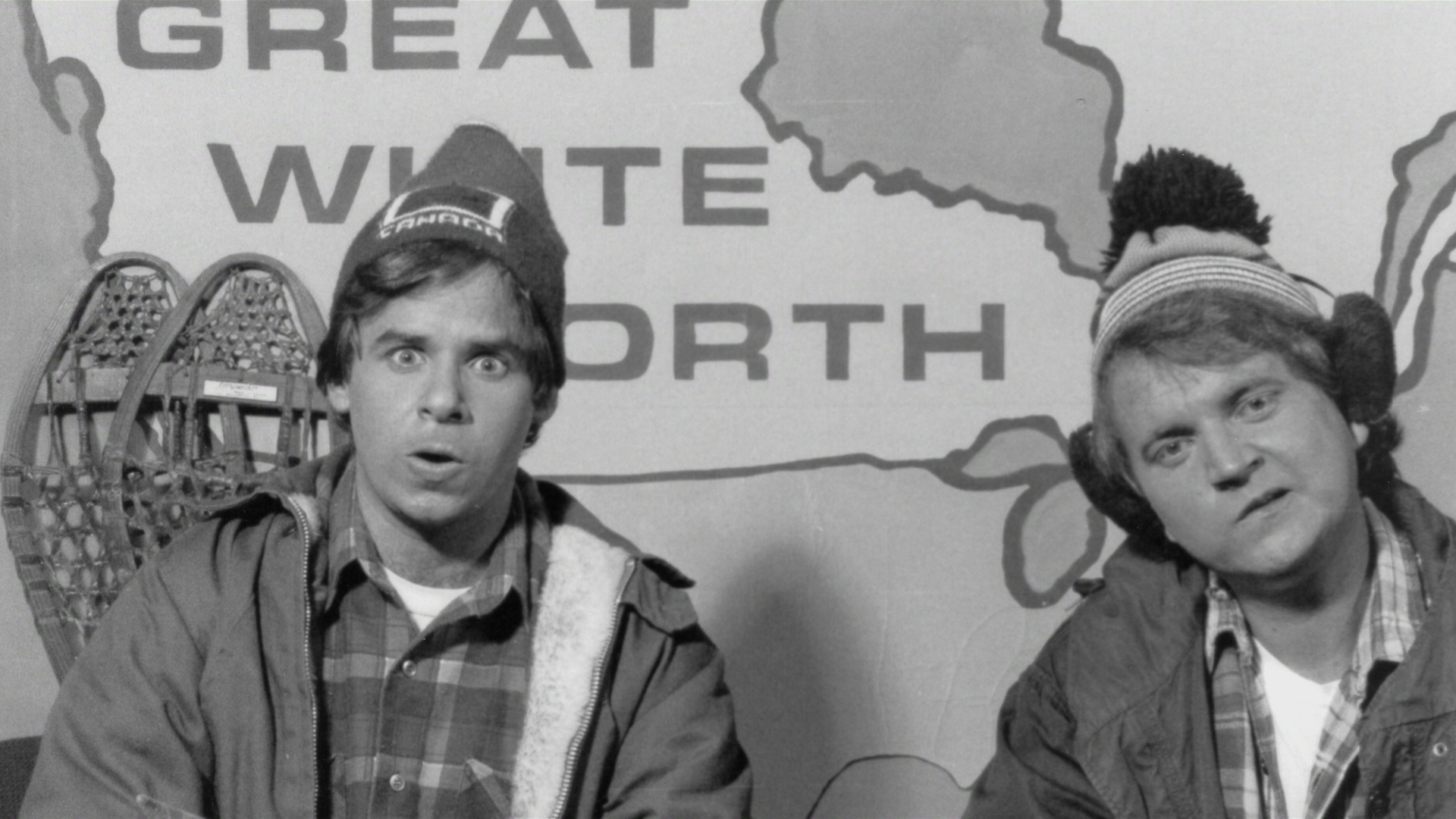
    Launched in 1975, SNL took the world by storm with the help of Second City Toronto alums Dan Aykroyd and Gilda Radner. Second City Television (eventually shortened to SCTV) started a year later in response, giving remaining troupe members an outlet. But the two shows were vastly different. 

    With its “live from New York” setting, celebrity hosts, and musical guests, SNL presented as a high-wire spectacle with a weekly hook. SCTV, on the other hand, was taped from Toronto without the added star power or crossover appeal. A smaller-scale alternative driven solely by comedy, it was felt more deeply than widely, with interconnected sketches lampooning cheesy pop culture conventions. 

    Though SCTV launched to keep Toronto’s finest comedy minds from migrating south, SNL still looked at it as a possible talent pool. There’s a story in the doc about a “disaster” of an audition in which SNL creator Lorne Michaels brought in SCTV stars John Candy, Joe Flaherty, and Dave Thomas. It did not go well. “After this horrible set, we went to Lorne’s table. He didn’t say anything,” recounts Thomas in the doc before archival footage shows a Candy interview where he jokes that there must have been “something wrong with [Michaels’] throat because he couldn’t talk. Either that or he was very rude.” It’s a rejection that SCTV co-creator and producer Andrew Alexander says Candy was “stung deeply by.” 

    Michaels would have a much stronger connection with the next great sketch group to hail from his native Canada. 

    The New Kids And Lorne’s Growing Influence

    When Michaels returned to run SNL in its 11th season, he brought “Kids in the Hall” troupe members Bruce McCulloch and Mark McKinney with him as writers. And while that didn’t take, Michaels later produced the full group’s sketch series. The Kids in the Hall had a vastly different sensibility than SNL; daring, dark, and occasionally cinematic in its influences and output. 

    cnx.cmd.push(function() {
    cnx({
    playerId: “106e33c0-3911-473c-b599-b1426db57530”,

    }).render(“0270c398a82f44f49c23c16122516796”);
    });

    Like SCTV, the Kids In The Hall series didn’t qualify as a ratings hit, but it inspired religious devotion among its fans in the early ‘90s (and beyond). 

    While not a sketch show, the Michaels-produced Late Night with Conan O’Brien warrants a mention for its connections to SNL (O’Brien and head writer Robert Smigel), its penchant for using sketches and characters to establish its absurdist tone, and the role it played in introducing Amy Poehler and the Upright Citizens Brigade to audiences.

    An Era Of Controversy And Competition

    From Andrew Dice Clay-inspired boycotts to the Sinead O’Connor pope photo tearing, and a blistering New York Magazine takedown, the ‘90s were SNL’s toughest decade. 

    High-profile cast members like Adam Sandler, Chris Farley, and Norm Macdonald were pushed out at the insistence of network execs. Other big-name additions to the cast proved underutilized or a poor fit, like Janeane Garofalo, Sarah Silverman, and Chris Rock.

    The ‘90s also opened the floodgates, and SNL faced real competition from numerous comers.

    With its focus on obscure pop culture references, The Ben Stiller Show shares more stylistic DNA with SCTV than SNL, but the connection remained. Stiller had left the mothership after just four episodes because he wanted to direct short filmed sketches. Ben Stiller Show cast member and writer Bob Odenkirk had a much longer, though somewhat tumultuous, run as a writer on SNL. 

    Despite winning an Emmy, the short-lived Ben Stiller Show’s most enduring legacy may be that it’s where Odenkirk first teamed up with his Mr. Show partner, David Cross. That show, which featured eventual alt-comedy stars like Scott Aukerman, Brian Posehn, Paul F. Tompkins, Jack Black, and Silverman, often ranks near the top of lists of the best sketch shows of all time. 

    The State is another ‘90s gem with long-lasting influence thanks to the work of David Wain and Michael Showalter as filmmakers. While the show seemed more traditional than Stiller’s creation, it was sneakily subversive. The State targeted the same younger audience as SNL, but it had substantially more bite. 

    While cable showed the greatest appetite for boundary-pushing sketch comedy, Fox was also heavily invested in taking the fight to NBC and SNL. Created in 1990 by Keenen Ivory Wayans, In Living Color broadened the opportunities and storytelling present in a genre often distressingly devoid of non-white male actors and writers. Starring Wayans, his sister Kim, his brother Damon (who had previously been fired by SNL), David Alan Grier, and Jim Carrey, the show flourished.

    With uproarious comedy and recurring characters like Homey D. Clown and Fire Marshal Bill, In Living Color was better at being SNL than SNL, particularly to anyone under age 30. It was also an incredible launchpad, with Carrey (who had failed to land SNL in multiple auditions) becoming the biggest box-office star in the world. This was followed by Sandler stepping into his own as a movie star and Rock becoming the most relevant stand-up comic in the game. SNL’s misses and early exits were making a lot of noise. 

    While In Living Color earned praise and buzz at the start of the ‘90s, Mad TV came in mid-decade as its replacement, a direct competitor to SNL airing on Saturdays at 11 p.m. While the show had its fans and success stories (namely Keegan-Michael Key and Jordan Peele, who went on to create Key & Peele), it’s not on the same comedic level as these other shows. Still, its original run lasted 14 seasons, and it definitely pushed SNL. 

    Chappelle, I Think You Should Leave, And SNL’s Relic Phase

    Rivaling the kind of provocative comedy SNL practiced at its inception, Chappelle’s Show also had a rare gift for driving word of mouth with memorable sketches. Clayton Bigsby, The Player Haters’ Ball, and Charlie Murphy’s True Hollywood Stories all hit before the advent of YouTube and social media. That ability to travel and endure speaks to the quality of sketches that could have never found a place on a more conservative show like SNL. 

    Former SNL cast member Tim Robinson’s I Think You Should Leave is the closest thing to Chappelle’s Show in terms of virality, leaning on Robinson’s specific comedic awkwardness. In an era where reaching a niche audience is more permissible than ever, something like I Think You Should Leave has a level of cachet that something mainstream like SNL can’t hope to attain. Especially when its tools are limited to stunt casting, shock value, and uninspired political comedy in an era of unmatched real political absurdity. Add sponcon sketches, and myriad ways for young comics to get exposure outside the SNL pipeline, and it’s clear SNL needs some kind of reinvention. Even its U.K. spinoff seems fresher and livelier by comparison. 

    That said, I want to be a little kind to SNL in the end. David Letterman’s Late Night was a response to Johnny Carson’s Tonight Show. The result was a chaotic, rule-breaking form of comedy that has influenced everything from the shows in this article to Hot Ones.

    Similarly, none of these additional sketch shows get the chance to impact comedy culture without an SNL to react to and rebel against. While that sounds like a slight, it’s actually a tribute to SNL, extending its legacy beyond its own (still impressive) historical output and making it part of a larger portrait of comedy in the 20th and 21st centuries.

    SCTV: The Greatest Show You’ve Never Heard Of is available to stream on Netflix now.

    The post SNL’s Greatest Legacy May Be In The Competition It Inspired appeared first on Den of Geek.

  • 15 Careers That Aren’t Worth Much Anymore

    15 Careers That Aren’t Worth Much Anymore

    Some careers used to look like a safe bet: get the right degree, build your skills, and a stable future would follow. Today, that promise feels less certain in several fields. Technology is changing how companies work, traditional industries are shrinking, and some jobs that once carried prestige now come with lower pay, fewer openings, or growing uncertainty. A recent Reddit discussion brought up professions people believe have lost some of their former appeal. These experiences are personal, and no career is doomed for everyone, but they reveal why many workers are reconsidering paths that once seemed promising.

    The post 15 Careers That Aren’t Worth Much Anymore appeared first on Den of Geek.

    Saturday Night Live‘s cultural imprint is unquestionably massive, as is the list of comedy stars who have come through the show in its 52 seasons. But the new documentary, SCTV: The Greatest Show You’ve Never Heard Of, reminds us of a lesser-known legacy: the many competing shows it inspired.

    Launched in 1975, SNL took the world by storm with the help of Second City Toronto alums Dan Aykroyd and Gilda Radner. Second City Television (eventually shortened to SCTV) started a year later in response, giving remaining troupe members an outlet. But the two shows were vastly different. 

    With its “live from New York” setting, celebrity hosts, and musical guests, SNL presented as a high-wire spectacle with a weekly hook. SCTV, on the other hand, was taped from Toronto without the added star power or crossover appeal. A smaller-scale alternative driven solely by comedy, it was felt more deeply than widely, with interconnected sketches lampooning cheesy pop culture conventions. 

    Though SCTV launched to keep Toronto’s finest comedy minds from migrating south, SNL still looked at it as a possible talent pool. There’s a story in the doc about a “disaster” of an audition in which SNL creator Lorne Michaels brought in SCTV stars John Candy, Joe Flaherty, and Dave Thomas. It did not go well. “After this horrible set, we went to Lorne’s table. He didn’t say anything,” recounts Thomas in the doc before archival footage shows a Candy interview where he jokes that there must have been “something wrong with [Michaels’] throat because he couldn’t talk. Either that or he was very rude.” It’s a rejection that SCTV co-creator and producer Andrew Alexander says Candy was “stung deeply by.” 

    Michaels would have a much stronger connection with the next great sketch group to hail from his native Canada. 

    The New Kids And Lorne’s Growing Influence

    When Michaels returned to run SNL in its 11th season, he brought “Kids in the Hall” troupe members Bruce McCulloch and Mark McKinney with him as writers. And while that didn’t take, Michaels later produced the full group’s sketch series. The Kids in the Hall had a vastly different sensibility than SNL; daring, dark, and occasionally cinematic in its influences and output. 

    cnx.cmd.push(function() {
    cnx({
    playerId: “106e33c0-3911-473c-b599-b1426db57530”,

    }).render(“0270c398a82f44f49c23c16122516796”);
    });

    Like SCTV, the Kids In The Hall series didn’t qualify as a ratings hit, but it inspired religious devotion among its fans in the early ‘90s (and beyond). 

    While not a sketch show, the Michaels-produced Late Night with Conan O’Brien warrants a mention for its connections to SNL (O’Brien and head writer Robert Smigel), its penchant for using sketches and characters to establish its absurdist tone, and the role it played in introducing Amy Poehler and the Upright Citizens Brigade to audiences.

    An Era Of Controversy And Competition

    From Andrew Dice Clay-inspired boycotts to the Sinead O’Connor pope photo tearing, and a blistering New York Magazine takedown, the ‘90s were SNL’s toughest decade. 

    High-profile cast members like Adam Sandler, Chris Farley, and Norm Macdonald were pushed out at the insistence of network execs. Other big-name additions to the cast proved underutilized or a poor fit, like Janeane Garofalo, Sarah Silverman, and Chris Rock.

    The ‘90s also opened the floodgates, and SNL faced real competition from numerous comers.

    With its focus on obscure pop culture references, The Ben Stiller Show shares more stylistic DNA with SCTV than SNL, but the connection remained. Stiller had left the mothership after just four episodes because he wanted to direct short filmed sketches. Ben Stiller Show cast member and writer Bob Odenkirk had a much longer, though somewhat tumultuous, run as a writer on SNL. 

    Despite winning an Emmy, the short-lived Ben Stiller Show’s most enduring legacy may be that it’s where Odenkirk first teamed up with his Mr. Show partner, David Cross. That show, which featured eventual alt-comedy stars like Scott Aukerman, Brian Posehn, Paul F. Tompkins, Jack Black, and Silverman, often ranks near the top of lists of the best sketch shows of all time. 

    The State is another ‘90s gem with long-lasting influence thanks to the work of David Wain and Michael Showalter as filmmakers. While the show seemed more traditional than Stiller’s creation, it was sneakily subversive. The State targeted the same younger audience as SNL, but it had substantially more bite. 

    While cable showed the greatest appetite for boundary-pushing sketch comedy, Fox was also heavily invested in taking the fight to NBC and SNL. Created in 1990 by Keenen Ivory Wayans, In Living Color broadened the opportunities and storytelling present in a genre often distressingly devoid of non-white male actors and writers. Starring Wayans, his sister Kim, his brother Damon (who had previously been fired by SNL), David Alan Grier, and Jim Carrey, the show flourished.

    With uproarious comedy and recurring characters like Homey D. Clown and Fire Marshal Bill, In Living Color was better at being SNL than SNL, particularly to anyone under age 30. It was also an incredible launchpad, with Carrey (who had failed to land SNL in multiple auditions) becoming the biggest box-office star in the world. This was followed by Sandler stepping into his own as a movie star and Rock becoming the most relevant stand-up comic in the game. SNL’s misses and early exits were making a lot of noise. 

    While In Living Color earned praise and buzz at the start of the ‘90s, Mad TV came in mid-decade as its replacement, a direct competitor to SNL airing on Saturdays at 11 p.m. While the show had its fans and success stories (namely Keegan-Michael Key and Jordan Peele, who went on to create Key & Peele), it’s not on the same comedic level as these other shows. Still, its original run lasted 14 seasons, and it definitely pushed SNL. 

    Chappelle, I Think You Should Leave, And SNL’s Relic Phase

    Rivaling the kind of provocative comedy SNL practiced at its inception, Chappelle’s Show also had a rare gift for driving word of mouth with memorable sketches. Clayton Bigsby, The Player Haters’ Ball, and Charlie Murphy’s True Hollywood Stories all hit before the advent of YouTube and social media. That ability to travel and endure speaks to the quality of sketches that could have never found a place on a more conservative show like SNL. 

    Former SNL cast member Tim Robinson’s I Think You Should Leave is the closest thing to Chappelle’s Show in terms of virality, leaning on Robinson’s specific comedic awkwardness. In an era where reaching a niche audience is more permissible than ever, something like I Think You Should Leave has a level of cachet that something mainstream like SNL can’t hope to attain. Especially when its tools are limited to stunt casting, shock value, and uninspired political comedy in an era of unmatched real political absurdity. Add sponcon sketches, and myriad ways for young comics to get exposure outside the SNL pipeline, and it’s clear SNL needs some kind of reinvention. Even its U.K. spinoff seems fresher and livelier by comparison. 

    That said, I want to be a little kind to SNL in the end. David Letterman’s Late Night was a response to Johnny Carson’s Tonight Show. The result was a chaotic, rule-breaking form of comedy that has influenced everything from the shows in this article to Hot Ones.

    Similarly, none of these additional sketch shows get the chance to impact comedy culture without an SNL to react to and rebel against. While that sounds like a slight, it’s actually a tribute to SNL, extending its legacy beyond its own (still impressive) historical output and making it part of a larger portrait of comedy in the 20th and 21st centuries.

    SCTV: The Greatest Show You’ve Never Heard Of is available to stream on Netflix now.

    The post SNL’s Greatest Legacy May Be In The Competition It Inspired appeared first on Den of Geek.

  • 14 Times History Went in an Unexpected Direction

    14 Times History Went in an Unexpected Direction

    History is full of moments when events took a turn that few people could have predicted. A small decision changed the fate of a nation, an ordinary mistake led to a major discovery, or a plan that looked unstoppable suddenly fell apart. These twists often came from bad timing, unexpected weather, overlooked warnings, or people making choices under pressure. Looking back, the outcome can seem almost inevitable, but the people living through it had no way of knowing what would happen next. These fifteen moments show how quickly history can change course, sometimes because of one tiny, surprising detail.

    The post 14 Times History Went in an Unexpected Direction appeared first on Den of Geek.

    Saturday Night Live‘s cultural imprint is unquestionably massive, as is the list of comedy stars who have come through the show in its 52 seasons. But the new documentary, SCTV: The Greatest Show You’ve Never Heard Of, reminds us of a lesser-known legacy: the many competing shows it inspired.

    Launched in 1975, SNL took the world by storm with the help of Second City Toronto alums Dan Aykroyd and Gilda Radner. Second City Television (eventually shortened to SCTV) started a year later in response, giving remaining troupe members an outlet. But the two shows were vastly different. 

    With its “live from New York” setting, celebrity hosts, and musical guests, SNL presented as a high-wire spectacle with a weekly hook. SCTV, on the other hand, was taped from Toronto without the added star power or crossover appeal. A smaller-scale alternative driven solely by comedy, it was felt more deeply than widely, with interconnected sketches lampooning cheesy pop culture conventions. 

    Though SCTV launched to keep Toronto’s finest comedy minds from migrating south, SNL still looked at it as a possible talent pool. There’s a story in the doc about a “disaster” of an audition in which SNL creator Lorne Michaels brought in SCTV stars John Candy, Joe Flaherty, and Dave Thomas. It did not go well. “After this horrible set, we went to Lorne’s table. He didn’t say anything,” recounts Thomas in the doc before archival footage shows a Candy interview where he jokes that there must have been “something wrong with [Michaels’] throat because he couldn’t talk. Either that or he was very rude.” It’s a rejection that SCTV co-creator and producer Andrew Alexander says Candy was “stung deeply by.” 

    Michaels would have a much stronger connection with the next great sketch group to hail from his native Canada. 

    The New Kids And Lorne’s Growing Influence

    When Michaels returned to run SNL in its 11th season, he brought “Kids in the Hall” troupe members Bruce McCulloch and Mark McKinney with him as writers. And while that didn’t take, Michaels later produced the full group’s sketch series. The Kids in the Hall had a vastly different sensibility than SNL; daring, dark, and occasionally cinematic in its influences and output. 

    cnx.cmd.push(function() {
    cnx({
    playerId: “106e33c0-3911-473c-b599-b1426db57530”,

    }).render(“0270c398a82f44f49c23c16122516796”);
    });

    Like SCTV, the Kids In The Hall series didn’t qualify as a ratings hit, but it inspired religious devotion among its fans in the early ‘90s (and beyond). 

    While not a sketch show, the Michaels-produced Late Night with Conan O’Brien warrants a mention for its connections to SNL (O’Brien and head writer Robert Smigel), its penchant for using sketches and characters to establish its absurdist tone, and the role it played in introducing Amy Poehler and the Upright Citizens Brigade to audiences.

    An Era Of Controversy And Competition

    From Andrew Dice Clay-inspired boycotts to the Sinead O’Connor pope photo tearing, and a blistering New York Magazine takedown, the ‘90s were SNL’s toughest decade. 

    High-profile cast members like Adam Sandler, Chris Farley, and Norm Macdonald were pushed out at the insistence of network execs. Other big-name additions to the cast proved underutilized or a poor fit, like Janeane Garofalo, Sarah Silverman, and Chris Rock.

    The ‘90s also opened the floodgates, and SNL faced real competition from numerous comers.

    With its focus on obscure pop culture references, The Ben Stiller Show shares more stylistic DNA with SCTV than SNL, but the connection remained. Stiller had left the mothership after just four episodes because he wanted to direct short filmed sketches. Ben Stiller Show cast member and writer Bob Odenkirk had a much longer, though somewhat tumultuous, run as a writer on SNL. 

    Despite winning an Emmy, the short-lived Ben Stiller Show’s most enduring legacy may be that it’s where Odenkirk first teamed up with his Mr. Show partner, David Cross. That show, which featured eventual alt-comedy stars like Scott Aukerman, Brian Posehn, Paul F. Tompkins, Jack Black, and Silverman, often ranks near the top of lists of the best sketch shows of all time. 

    The State is another ‘90s gem with long-lasting influence thanks to the work of David Wain and Michael Showalter as filmmakers. While the show seemed more traditional than Stiller’s creation, it was sneakily subversive. The State targeted the same younger audience as SNL, but it had substantially more bite. 

    While cable showed the greatest appetite for boundary-pushing sketch comedy, Fox was also heavily invested in taking the fight to NBC and SNL. Created in 1990 by Keenen Ivory Wayans, In Living Color broadened the opportunities and storytelling present in a genre often distressingly devoid of non-white male actors and writers. Starring Wayans, his sister Kim, his brother Damon (who had previously been fired by SNL), David Alan Grier, and Jim Carrey, the show flourished.

    With uproarious comedy and recurring characters like Homey D. Clown and Fire Marshal Bill, In Living Color was better at being SNL than SNL, particularly to anyone under age 30. It was also an incredible launchpad, with Carrey (who had failed to land SNL in multiple auditions) becoming the biggest box-office star in the world. This was followed by Sandler stepping into his own as a movie star and Rock becoming the most relevant stand-up comic in the game. SNL’s misses and early exits were making a lot of noise. 

    While In Living Color earned praise and buzz at the start of the ‘90s, Mad TV came in mid-decade as its replacement, a direct competitor to SNL airing on Saturdays at 11 p.m. While the show had its fans and success stories (namely Keegan-Michael Key and Jordan Peele, who went on to create Key & Peele), it’s not on the same comedic level as these other shows. Still, its original run lasted 14 seasons, and it definitely pushed SNL. 

    Chappelle, I Think You Should Leave, And SNL’s Relic Phase

    Rivaling the kind of provocative comedy SNL practiced at its inception, Chappelle’s Show also had a rare gift for driving word of mouth with memorable sketches. Clayton Bigsby, The Player Haters’ Ball, and Charlie Murphy’s True Hollywood Stories all hit before the advent of YouTube and social media. That ability to travel and endure speaks to the quality of sketches that could have never found a place on a more conservative show like SNL. 

    Former SNL cast member Tim Robinson’s I Think You Should Leave is the closest thing to Chappelle’s Show in terms of virality, leaning on Robinson’s specific comedic awkwardness. In an era where reaching a niche audience is more permissible than ever, something like I Think You Should Leave has a level of cachet that something mainstream like SNL can’t hope to attain. Especially when its tools are limited to stunt casting, shock value, and uninspired political comedy in an era of unmatched real political absurdity. Add sponcon sketches, and myriad ways for young comics to get exposure outside the SNL pipeline, and it’s clear SNL needs some kind of reinvention. Even its U.K. spinoff seems fresher and livelier by comparison. 

    That said, I want to be a little kind to SNL in the end. David Letterman’s Late Night was a response to Johnny Carson’s Tonight Show. The result was a chaotic, rule-breaking form of comedy that has influenced everything from the shows in this article to Hot Ones.

    Similarly, none of these additional sketch shows get the chance to impact comedy culture without an SNL to react to and rebel against. While that sounds like a slight, it’s actually a tribute to SNL, extending its legacy beyond its own (still impressive) historical output and making it part of a larger portrait of comedy in the 20th and 21st centuries.

    SCTV: The Greatest Show You’ve Never Heard Of is available to stream on Netflix now.

    The post SNL’s Greatest Legacy May Be In The Competition It Inspired appeared first on Den of Geek.

  • 15 Introverts Share How They Met Their Wife

    15 Introverts Share How They Met Their Wife

    Meeting someone can be complicated when you prefer quiet nights, small circles, and time to think before speaking. But the stories introverted men shared online show that relationships rarely follow one script. Some met their wives through friends who took matters into their own hands, while others found connection at work, in class, or through dating apps. A few stories began with awkward introductions, unexpected conversations, or courage at the right moment. These accounts are funny, touching, and sometimes completely unexpected, showing that finding a partner does not always require becoming the loudest person in the room.

    The post 15 Introverts Share How They Met Their Wife appeared first on Den of Geek.

    Saturday Night Live‘s cultural imprint is unquestionably massive, as is the list of comedy stars who have come through the show in its 52 seasons. But the new documentary, SCTV: The Greatest Show You’ve Never Heard Of, reminds us of a lesser-known legacy: the many competing shows it inspired.

    Launched in 1975, SNL took the world by storm with the help of Second City Toronto alums Dan Aykroyd and Gilda Radner. Second City Television (eventually shortened to SCTV) started a year later in response, giving remaining troupe members an outlet. But the two shows were vastly different. 

    With its “live from New York” setting, celebrity hosts, and musical guests, SNL presented as a high-wire spectacle with a weekly hook. SCTV, on the other hand, was taped from Toronto without the added star power or crossover appeal. A smaller-scale alternative driven solely by comedy, it was felt more deeply than widely, with interconnected sketches lampooning cheesy pop culture conventions. 

    Though SCTV launched to keep Toronto’s finest comedy minds from migrating south, SNL still looked at it as a possible talent pool. There’s a story in the doc about a “disaster” of an audition in which SNL creator Lorne Michaels brought in SCTV stars John Candy, Joe Flaherty, and Dave Thomas. It did not go well. “After this horrible set, we went to Lorne’s table. He didn’t say anything,” recounts Thomas in the doc before archival footage shows a Candy interview where he jokes that there must have been “something wrong with [Michaels’] throat because he couldn’t talk. Either that or he was very rude.” It’s a rejection that SCTV co-creator and producer Andrew Alexander says Candy was “stung deeply by.” 

    Michaels would have a much stronger connection with the next great sketch group to hail from his native Canada. 

    The New Kids And Lorne’s Growing Influence

    When Michaels returned to run SNL in its 11th season, he brought “Kids in the Hall” troupe members Bruce McCulloch and Mark McKinney with him as writers. And while that didn’t take, Michaels later produced the full group’s sketch series. The Kids in the Hall had a vastly different sensibility than SNL; daring, dark, and occasionally cinematic in its influences and output. 

    cnx.cmd.push(function() {
    cnx({
    playerId: “106e33c0-3911-473c-b599-b1426db57530”,

    }).render(“0270c398a82f44f49c23c16122516796”);
    });

    Like SCTV, the Kids In The Hall series didn’t qualify as a ratings hit, but it inspired religious devotion among its fans in the early ‘90s (and beyond). 

    While not a sketch show, the Michaels-produced Late Night with Conan O’Brien warrants a mention for its connections to SNL (O’Brien and head writer Robert Smigel), its penchant for using sketches and characters to establish its absurdist tone, and the role it played in introducing Amy Poehler and the Upright Citizens Brigade to audiences.

    An Era Of Controversy And Competition

    From Andrew Dice Clay-inspired boycotts to the Sinead O’Connor pope photo tearing, and a blistering New York Magazine takedown, the ‘90s were SNL’s toughest decade. 

    High-profile cast members like Adam Sandler, Chris Farley, and Norm Macdonald were pushed out at the insistence of network execs. Other big-name additions to the cast proved underutilized or a poor fit, like Janeane Garofalo, Sarah Silverman, and Chris Rock.

    The ‘90s also opened the floodgates, and SNL faced real competition from numerous comers.

    With its focus on obscure pop culture references, The Ben Stiller Show shares more stylistic DNA with SCTV than SNL, but the connection remained. Stiller had left the mothership after just four episodes because he wanted to direct short filmed sketches. Ben Stiller Show cast member and writer Bob Odenkirk had a much longer, though somewhat tumultuous, run as a writer on SNL. 

    Despite winning an Emmy, the short-lived Ben Stiller Show’s most enduring legacy may be that it’s where Odenkirk first teamed up with his Mr. Show partner, David Cross. That show, which featured eventual alt-comedy stars like Scott Aukerman, Brian Posehn, Paul F. Tompkins, Jack Black, and Silverman, often ranks near the top of lists of the best sketch shows of all time. 

    The State is another ‘90s gem with long-lasting influence thanks to the work of David Wain and Michael Showalter as filmmakers. While the show seemed more traditional than Stiller’s creation, it was sneakily subversive. The State targeted the same younger audience as SNL, but it had substantially more bite. 

    While cable showed the greatest appetite for boundary-pushing sketch comedy, Fox was also heavily invested in taking the fight to NBC and SNL. Created in 1990 by Keenen Ivory Wayans, In Living Color broadened the opportunities and storytelling present in a genre often distressingly devoid of non-white male actors and writers. Starring Wayans, his sister Kim, his brother Damon (who had previously been fired by SNL), David Alan Grier, and Jim Carrey, the show flourished.

    With uproarious comedy and recurring characters like Homey D. Clown and Fire Marshal Bill, In Living Color was better at being SNL than SNL, particularly to anyone under age 30. It was also an incredible launchpad, with Carrey (who had failed to land SNL in multiple auditions) becoming the biggest box-office star in the world. This was followed by Sandler stepping into his own as a movie star and Rock becoming the most relevant stand-up comic in the game. SNL’s misses and early exits were making a lot of noise. 

    While In Living Color earned praise and buzz at the start of the ‘90s, Mad TV came in mid-decade as its replacement, a direct competitor to SNL airing on Saturdays at 11 p.m. While the show had its fans and success stories (namely Keegan-Michael Key and Jordan Peele, who went on to create Key & Peele), it’s not on the same comedic level as these other shows. Still, its original run lasted 14 seasons, and it definitely pushed SNL. 

    Chappelle, I Think You Should Leave, And SNL’s Relic Phase

    Rivaling the kind of provocative comedy SNL practiced at its inception, Chappelle’s Show also had a rare gift for driving word of mouth with memorable sketches. Clayton Bigsby, The Player Haters’ Ball, and Charlie Murphy’s True Hollywood Stories all hit before the advent of YouTube and social media. That ability to travel and endure speaks to the quality of sketches that could have never found a place on a more conservative show like SNL. 

    Former SNL cast member Tim Robinson’s I Think You Should Leave is the closest thing to Chappelle’s Show in terms of virality, leaning on Robinson’s specific comedic awkwardness. In an era where reaching a niche audience is more permissible than ever, something like I Think You Should Leave has a level of cachet that something mainstream like SNL can’t hope to attain. Especially when its tools are limited to stunt casting, shock value, and uninspired political comedy in an era of unmatched real political absurdity. Add sponcon sketches, and myriad ways for young comics to get exposure outside the SNL pipeline, and it’s clear SNL needs some kind of reinvention. Even its U.K. spinoff seems fresher and livelier by comparison. 

    That said, I want to be a little kind to SNL in the end. David Letterman’s Late Night was a response to Johnny Carson’s Tonight Show. The result was a chaotic, rule-breaking form of comedy that has influenced everything from the shows in this article to Hot Ones.

    Similarly, none of these additional sketch shows get the chance to impact comedy culture without an SNL to react to and rebel against. While that sounds like a slight, it’s actually a tribute to SNL, extending its legacy beyond its own (still impressive) historical output and making it part of a larger portrait of comedy in the 20th and 21st centuries.

    SCTV: The Greatest Show You’ve Never Heard Of is available to stream on Netflix now.

    The post SNL’s Greatest Legacy May Be In The Competition It Inspired appeared first on Den of Geek.

  • Patrick Stewart Finally Became a Star Trek Captain in TNG’s First Great Episode

    Patrick Stewart Finally Became a Star Trek Captain in TNG’s First Great Episode

    The Captain has left the bridge. Patrick Stewart has died at the age of 86. With his passing comes the opportunity to remember the remarkable body of work that he left behind, including roles on the stage and screen, ranging from genre works like Dune and X-Men to stirring reinterpretations of Ebenezer Scrooge and King […]

    The post Patrick Stewart Finally Became a Star Trek Captain in TNG’s First Great Episode appeared first on Den of Geek.

    Saturday Night Live‘s cultural imprint is unquestionably massive, as is the list of comedy stars who have come through the show in its 52 seasons. But the new documentary, SCTV: The Greatest Show You’ve Never Heard Of, reminds us of a lesser-known legacy: the many competing shows it inspired.

    Launched in 1975, SNL took the world by storm with the help of Second City Toronto alums Dan Aykroyd and Gilda Radner. Second City Television (eventually shortened to SCTV) started a year later in response, giving remaining troupe members an outlet. But the two shows were vastly different. 

    With its “live from New York” setting, celebrity hosts, and musical guests, SNL presented as a high-wire spectacle with a weekly hook. SCTV, on the other hand, was taped from Toronto without the added star power or crossover appeal. A smaller-scale alternative driven solely by comedy, it was felt more deeply than widely, with interconnected sketches lampooning cheesy pop culture conventions. 

    Though SCTV launched to keep Toronto’s finest comedy minds from migrating south, SNL still looked at it as a possible talent pool. There’s a story in the doc about a “disaster” of an audition in which SNL creator Lorne Michaels brought in SCTV stars John Candy, Joe Flaherty, and Dave Thomas. It did not go well. “After this horrible set, we went to Lorne’s table. He didn’t say anything,” recounts Thomas in the doc before archival footage shows a Candy interview where he jokes that there must have been “something wrong with [Michaels’] throat because he couldn’t talk. Either that or he was very rude.” It’s a rejection that SCTV co-creator and producer Andrew Alexander says Candy was “stung deeply by.” 

    Michaels would have a much stronger connection with the next great sketch group to hail from his native Canada. 

    The New Kids And Lorne’s Growing Influence

    When Michaels returned to run SNL in its 11th season, he brought “Kids in the Hall” troupe members Bruce McCulloch and Mark McKinney with him as writers. And while that didn’t take, Michaels later produced the full group’s sketch series. The Kids in the Hall had a vastly different sensibility than SNL; daring, dark, and occasionally cinematic in its influences and output. 

    cnx.cmd.push(function() {
    cnx({
    playerId: “106e33c0-3911-473c-b599-b1426db57530”,

    }).render(“0270c398a82f44f49c23c16122516796”);
    });

    Like SCTV, the Kids In The Hall series didn’t qualify as a ratings hit, but it inspired religious devotion among its fans in the early ‘90s (and beyond). 

    While not a sketch show, the Michaels-produced Late Night with Conan O’Brien warrants a mention for its connections to SNL (O’Brien and head writer Robert Smigel), its penchant for using sketches and characters to establish its absurdist tone, and the role it played in introducing Amy Poehler and the Upright Citizens Brigade to audiences.

    An Era Of Controversy And Competition

    From Andrew Dice Clay-inspired boycotts to the Sinead O’Connor pope photo tearing, and a blistering New York Magazine takedown, the ‘90s were SNL’s toughest decade. 

    High-profile cast members like Adam Sandler, Chris Farley, and Norm Macdonald were pushed out at the insistence of network execs. Other big-name additions to the cast proved underutilized or a poor fit, like Janeane Garofalo, Sarah Silverman, and Chris Rock.

    The ‘90s also opened the floodgates, and SNL faced real competition from numerous comers.

    With its focus on obscure pop culture references, The Ben Stiller Show shares more stylistic DNA with SCTV than SNL, but the connection remained. Stiller had left the mothership after just four episodes because he wanted to direct short filmed sketches. Ben Stiller Show cast member and writer Bob Odenkirk had a much longer, though somewhat tumultuous, run as a writer on SNL. 

    Despite winning an Emmy, the short-lived Ben Stiller Show’s most enduring legacy may be that it’s where Odenkirk first teamed up with his Mr. Show partner, David Cross. That show, which featured eventual alt-comedy stars like Scott Aukerman, Brian Posehn, Paul F. Tompkins, Jack Black, and Silverman, often ranks near the top of lists of the best sketch shows of all time. 

    The State is another ‘90s gem with long-lasting influence thanks to the work of David Wain and Michael Showalter as filmmakers. While the show seemed more traditional than Stiller’s creation, it was sneakily subversive. The State targeted the same younger audience as SNL, but it had substantially more bite. 

    While cable showed the greatest appetite for boundary-pushing sketch comedy, Fox was also heavily invested in taking the fight to NBC and SNL. Created in 1990 by Keenen Ivory Wayans, In Living Color broadened the opportunities and storytelling present in a genre often distressingly devoid of non-white male actors and writers. Starring Wayans, his sister Kim, his brother Damon (who had previously been fired by SNL), David Alan Grier, and Jim Carrey, the show flourished.

    With uproarious comedy and recurring characters like Homey D. Clown and Fire Marshal Bill, In Living Color was better at being SNL than SNL, particularly to anyone under age 30. It was also an incredible launchpad, with Carrey (who had failed to land SNL in multiple auditions) becoming the biggest box-office star in the world. This was followed by Sandler stepping into his own as a movie star and Rock becoming the most relevant stand-up comic in the game. SNL’s misses and early exits were making a lot of noise. 

    While In Living Color earned praise and buzz at the start of the ‘90s, Mad TV came in mid-decade as its replacement, a direct competitor to SNL airing on Saturdays at 11 p.m. While the show had its fans and success stories (namely Keegan-Michael Key and Jordan Peele, who went on to create Key & Peele), it’s not on the same comedic level as these other shows. Still, its original run lasted 14 seasons, and it definitely pushed SNL. 

    Chappelle, I Think You Should Leave, And SNL’s Relic Phase

    Rivaling the kind of provocative comedy SNL practiced at its inception, Chappelle’s Show also had a rare gift for driving word of mouth with memorable sketches. Clayton Bigsby, The Player Haters’ Ball, and Charlie Murphy’s True Hollywood Stories all hit before the advent of YouTube and social media. That ability to travel and endure speaks to the quality of sketches that could have never found a place on a more conservative show like SNL. 

    Former SNL cast member Tim Robinson’s I Think You Should Leave is the closest thing to Chappelle’s Show in terms of virality, leaning on Robinson’s specific comedic awkwardness. In an era where reaching a niche audience is more permissible than ever, something like I Think You Should Leave has a level of cachet that something mainstream like SNL can’t hope to attain. Especially when its tools are limited to stunt casting, shock value, and uninspired political comedy in an era of unmatched real political absurdity. Add sponcon sketches, and myriad ways for young comics to get exposure outside the SNL pipeline, and it’s clear SNL needs some kind of reinvention. Even its U.K. spinoff seems fresher and livelier by comparison. 

    That said, I want to be a little kind to SNL in the end. David Letterman’s Late Night was a response to Johnny Carson’s Tonight Show. The result was a chaotic, rule-breaking form of comedy that has influenced everything from the shows in this article to Hot Ones.

    Similarly, none of these additional sketch shows get the chance to impact comedy culture without an SNL to react to and rebel against. While that sounds like a slight, it’s actually a tribute to SNL, extending its legacy beyond its own (still impressive) historical output and making it part of a larger portrait of comedy in the 20th and 21st centuries.

    SCTV: The Greatest Show You’ve Never Heard Of is available to stream on Netflix now.

    The post SNL’s Greatest Legacy May Be In The Competition It Inspired appeared first on Den of Geek.

  • Mama Bear Explained: What Curry Barker’s New Horror Short Is Really About

    Mama Bear Explained: What Curry Barker’s New Horror Short Is Really About

    This article contains spoilers for Mama Bear. Horror fans’ latest obsession is back with a new short film. Just days before Halloween, Obsession director Curry Barker returned to his original format with Mama Bear, a five-minute short film that once again deals with the supernatural and a cursed relationship. But unlike Obsession, Mama Bear isn’t […]

    The post Mama Bear Explained: What Curry Barker’s New Horror Short Is Really About appeared first on Den of Geek.

    Saturday Night Live‘s cultural imprint is unquestionably massive, as is the list of comedy stars who have come through the show in its 52 seasons. But the new documentary, SCTV: The Greatest Show You’ve Never Heard Of, reminds us of a lesser-known legacy: the many competing shows it inspired.

    Launched in 1975, SNL took the world by storm with the help of Second City Toronto alums Dan Aykroyd and Gilda Radner. Second City Television (eventually shortened to SCTV) started a year later in response, giving remaining troupe members an outlet. But the two shows were vastly different. 

    With its “live from New York” setting, celebrity hosts, and musical guests, SNL presented as a high-wire spectacle with a weekly hook. SCTV, on the other hand, was taped from Toronto without the added star power or crossover appeal. A smaller-scale alternative driven solely by comedy, it was felt more deeply than widely, with interconnected sketches lampooning cheesy pop culture conventions. 

    Though SCTV launched to keep Toronto’s finest comedy minds from migrating south, SNL still looked at it as a possible talent pool. There’s a story in the doc about a “disaster” of an audition in which SNL creator Lorne Michaels brought in SCTV stars John Candy, Joe Flaherty, and Dave Thomas. It did not go well. “After this horrible set, we went to Lorne’s table. He didn’t say anything,” recounts Thomas in the doc before archival footage shows a Candy interview where he jokes that there must have been “something wrong with [Michaels’] throat because he couldn’t talk. Either that or he was very rude.” It’s a rejection that SCTV co-creator and producer Andrew Alexander says Candy was “stung deeply by.” 

    Michaels would have a much stronger connection with the next great sketch group to hail from his native Canada. 

    The New Kids And Lorne’s Growing Influence

    When Michaels returned to run SNL in its 11th season, he brought “Kids in the Hall” troupe members Bruce McCulloch and Mark McKinney with him as writers. And while that didn’t take, Michaels later produced the full group’s sketch series. The Kids in the Hall had a vastly different sensibility than SNL; daring, dark, and occasionally cinematic in its influences and output. 

    cnx.cmd.push(function() {
    cnx({
    playerId: “106e33c0-3911-473c-b599-b1426db57530”,

    }).render(“0270c398a82f44f49c23c16122516796”);
    });

    Like SCTV, the Kids In The Hall series didn’t qualify as a ratings hit, but it inspired religious devotion among its fans in the early ‘90s (and beyond). 

    While not a sketch show, the Michaels-produced Late Night with Conan O’Brien warrants a mention for its connections to SNL (O’Brien and head writer Robert Smigel), its penchant for using sketches and characters to establish its absurdist tone, and the role it played in introducing Amy Poehler and the Upright Citizens Brigade to audiences.

    An Era Of Controversy And Competition

    From Andrew Dice Clay-inspired boycotts to the Sinead O’Connor pope photo tearing, and a blistering New York Magazine takedown, the ‘90s were SNL’s toughest decade. 

    High-profile cast members like Adam Sandler, Chris Farley, and Norm Macdonald were pushed out at the insistence of network execs. Other big-name additions to the cast proved underutilized or a poor fit, like Janeane Garofalo, Sarah Silverman, and Chris Rock.

    The ‘90s also opened the floodgates, and SNL faced real competition from numerous comers.

    With its focus on obscure pop culture references, The Ben Stiller Show shares more stylistic DNA with SCTV than SNL, but the connection remained. Stiller had left the mothership after just four episodes because he wanted to direct short filmed sketches. Ben Stiller Show cast member and writer Bob Odenkirk had a much longer, though somewhat tumultuous, run as a writer on SNL. 

    Despite winning an Emmy, the short-lived Ben Stiller Show’s most enduring legacy may be that it’s where Odenkirk first teamed up with his Mr. Show partner, David Cross. That show, which featured eventual alt-comedy stars like Scott Aukerman, Brian Posehn, Paul F. Tompkins, Jack Black, and Silverman, often ranks near the top of lists of the best sketch shows of all time. 

    The State is another ‘90s gem with long-lasting influence thanks to the work of David Wain and Michael Showalter as filmmakers. While the show seemed more traditional than Stiller’s creation, it was sneakily subversive. The State targeted the same younger audience as SNL, but it had substantially more bite. 

    While cable showed the greatest appetite for boundary-pushing sketch comedy, Fox was also heavily invested in taking the fight to NBC and SNL. Created in 1990 by Keenen Ivory Wayans, In Living Color broadened the opportunities and storytelling present in a genre often distressingly devoid of non-white male actors and writers. Starring Wayans, his sister Kim, his brother Damon (who had previously been fired by SNL), David Alan Grier, and Jim Carrey, the show flourished.

    With uproarious comedy and recurring characters like Homey D. Clown and Fire Marshal Bill, In Living Color was better at being SNL than SNL, particularly to anyone under age 30. It was also an incredible launchpad, with Carrey (who had failed to land SNL in multiple auditions) becoming the biggest box-office star in the world. This was followed by Sandler stepping into his own as a movie star and Rock becoming the most relevant stand-up comic in the game. SNL’s misses and early exits were making a lot of noise. 

    While In Living Color earned praise and buzz at the start of the ‘90s, Mad TV came in mid-decade as its replacement, a direct competitor to SNL airing on Saturdays at 11 p.m. While the show had its fans and success stories (namely Keegan-Michael Key and Jordan Peele, who went on to create Key & Peele), it’s not on the same comedic level as these other shows. Still, its original run lasted 14 seasons, and it definitely pushed SNL. 

    Chappelle, I Think You Should Leave, And SNL’s Relic Phase

    Rivaling the kind of provocative comedy SNL practiced at its inception, Chappelle’s Show also had a rare gift for driving word of mouth with memorable sketches. Clayton Bigsby, The Player Haters’ Ball, and Charlie Murphy’s True Hollywood Stories all hit before the advent of YouTube and social media. That ability to travel and endure speaks to the quality of sketches that could have never found a place on a more conservative show like SNL. 

    Former SNL cast member Tim Robinson’s I Think You Should Leave is the closest thing to Chappelle’s Show in terms of virality, leaning on Robinson’s specific comedic awkwardness. In an era where reaching a niche audience is more permissible than ever, something like I Think You Should Leave has a level of cachet that something mainstream like SNL can’t hope to attain. Especially when its tools are limited to stunt casting, shock value, and uninspired political comedy in an era of unmatched real political absurdity. Add sponcon sketches, and myriad ways for young comics to get exposure outside the SNL pipeline, and it’s clear SNL needs some kind of reinvention. Even its U.K. spinoff seems fresher and livelier by comparison. 

    That said, I want to be a little kind to SNL in the end. David Letterman’s Late Night was a response to Johnny Carson’s Tonight Show. The result was a chaotic, rule-breaking form of comedy that has influenced everything from the shows in this article to Hot Ones.

    Similarly, none of these additional sketch shows get the chance to impact comedy culture without an SNL to react to and rebel against. While that sounds like a slight, it’s actually a tribute to SNL, extending its legacy beyond its own (still impressive) historical output and making it part of a larger portrait of comedy in the 20th and 21st centuries.

    SCTV: The Greatest Show You’ve Never Heard Of is available to stream on Netflix now.

    The post SNL’s Greatest Legacy May Be In The Competition It Inspired appeared first on Den of Geek.

  • Patrick Stewart: A Man Who Bridged Our Past with the Future

    Patrick Stewart: A Man Who Bridged Our Past with the Future

    I only ever saw Sir Patrick Stewart once in person. It was on stage at the Cort Theatre in New York City, where he starred opposite his late-in-life best friend Sir Ian McKellen. Rife with humor, but also the crushing existential misery that makes Samuel Beckett’s Waiting for Godot such a challenge, both for performers […]

    The post Patrick Stewart: A Man Who Bridged Our Past with the Future appeared first on Den of Geek.

    Saturday Night Live‘s cultural imprint is unquestionably massive, as is the list of comedy stars who have come through the show in its 52 seasons. But the new documentary, SCTV: The Greatest Show You’ve Never Heard Of, reminds us of a lesser-known legacy: the many competing shows it inspired.

    Launched in 1975, SNL took the world by storm with the help of Second City Toronto alums Dan Aykroyd and Gilda Radner. Second City Television (eventually shortened to SCTV) started a year later in response, giving remaining troupe members an outlet. But the two shows were vastly different. 

    With its “live from New York” setting, celebrity hosts, and musical guests, SNL presented as a high-wire spectacle with a weekly hook. SCTV, on the other hand, was taped from Toronto without the added star power or crossover appeal. A smaller-scale alternative driven solely by comedy, it was felt more deeply than widely, with interconnected sketches lampooning cheesy pop culture conventions. 

    Though SCTV launched to keep Toronto’s finest comedy minds from migrating south, SNL still looked at it as a possible talent pool. There’s a story in the doc about a “disaster” of an audition in which SNL creator Lorne Michaels brought in SCTV stars John Candy, Joe Flaherty, and Dave Thomas. It did not go well. “After this horrible set, we went to Lorne’s table. He didn’t say anything,” recounts Thomas in the doc before archival footage shows a Candy interview where he jokes that there must have been “something wrong with [Michaels’] throat because he couldn’t talk. Either that or he was very rude.” It’s a rejection that SCTV co-creator and producer Andrew Alexander says Candy was “stung deeply by.” 

    Michaels would have a much stronger connection with the next great sketch group to hail from his native Canada. 

    The New Kids And Lorne’s Growing Influence

    When Michaels returned to run SNL in its 11th season, he brought “Kids in the Hall” troupe members Bruce McCulloch and Mark McKinney with him as writers. And while that didn’t take, Michaels later produced the full group’s sketch series. The Kids in the Hall had a vastly different sensibility than SNL; daring, dark, and occasionally cinematic in its influences and output. 

    cnx.cmd.push(function() {
    cnx({
    playerId: “106e33c0-3911-473c-b599-b1426db57530”,

    }).render(“0270c398a82f44f49c23c16122516796”);
    });

    Like SCTV, the Kids In The Hall series didn’t qualify as a ratings hit, but it inspired religious devotion among its fans in the early ‘90s (and beyond). 

    While not a sketch show, the Michaels-produced Late Night with Conan O’Brien warrants a mention for its connections to SNL (O’Brien and head writer Robert Smigel), its penchant for using sketches and characters to establish its absurdist tone, and the role it played in introducing Amy Poehler and the Upright Citizens Brigade to audiences.

    An Era Of Controversy And Competition

    From Andrew Dice Clay-inspired boycotts to the Sinead O’Connor pope photo tearing, and a blistering New York Magazine takedown, the ‘90s were SNL’s toughest decade. 

    High-profile cast members like Adam Sandler, Chris Farley, and Norm Macdonald were pushed out at the insistence of network execs. Other big-name additions to the cast proved underutilized or a poor fit, like Janeane Garofalo, Sarah Silverman, and Chris Rock.

    The ‘90s also opened the floodgates, and SNL faced real competition from numerous comers.

    With its focus on obscure pop culture references, The Ben Stiller Show shares more stylistic DNA with SCTV than SNL, but the connection remained. Stiller had left the mothership after just four episodes because he wanted to direct short filmed sketches. Ben Stiller Show cast member and writer Bob Odenkirk had a much longer, though somewhat tumultuous, run as a writer on SNL. 

    Despite winning an Emmy, the short-lived Ben Stiller Show’s most enduring legacy may be that it’s where Odenkirk first teamed up with his Mr. Show partner, David Cross. That show, which featured eventual alt-comedy stars like Scott Aukerman, Brian Posehn, Paul F. Tompkins, Jack Black, and Silverman, often ranks near the top of lists of the best sketch shows of all time. 

    The State is another ‘90s gem with long-lasting influence thanks to the work of David Wain and Michael Showalter as filmmakers. While the show seemed more traditional than Stiller’s creation, it was sneakily subversive. The State targeted the same younger audience as SNL, but it had substantially more bite. 

    While cable showed the greatest appetite for boundary-pushing sketch comedy, Fox was also heavily invested in taking the fight to NBC and SNL. Created in 1990 by Keenen Ivory Wayans, In Living Color broadened the opportunities and storytelling present in a genre often distressingly devoid of non-white male actors and writers. Starring Wayans, his sister Kim, his brother Damon (who had previously been fired by SNL), David Alan Grier, and Jim Carrey, the show flourished.

    With uproarious comedy and recurring characters like Homey D. Clown and Fire Marshal Bill, In Living Color was better at being SNL than SNL, particularly to anyone under age 30. It was also an incredible launchpad, with Carrey (who had failed to land SNL in multiple auditions) becoming the biggest box-office star in the world. This was followed by Sandler stepping into his own as a movie star and Rock becoming the most relevant stand-up comic in the game. SNL’s misses and early exits were making a lot of noise. 

    While In Living Color earned praise and buzz at the start of the ‘90s, Mad TV came in mid-decade as its replacement, a direct competitor to SNL airing on Saturdays at 11 p.m. While the show had its fans and success stories (namely Keegan-Michael Key and Jordan Peele, who went on to create Key & Peele), it’s not on the same comedic level as these other shows. Still, its original run lasted 14 seasons, and it definitely pushed SNL. 

    Chappelle, I Think You Should Leave, And SNL’s Relic Phase

    Rivaling the kind of provocative comedy SNL practiced at its inception, Chappelle’s Show also had a rare gift for driving word of mouth with memorable sketches. Clayton Bigsby, The Player Haters’ Ball, and Charlie Murphy’s True Hollywood Stories all hit before the advent of YouTube and social media. That ability to travel and endure speaks to the quality of sketches that could have never found a place on a more conservative show like SNL. 

    Former SNL cast member Tim Robinson’s I Think You Should Leave is the closest thing to Chappelle’s Show in terms of virality, leaning on Robinson’s specific comedic awkwardness. In an era where reaching a niche audience is more permissible than ever, something like I Think You Should Leave has a level of cachet that something mainstream like SNL can’t hope to attain. Especially when its tools are limited to stunt casting, shock value, and uninspired political comedy in an era of unmatched real political absurdity. Add sponcon sketches, and myriad ways for young comics to get exposure outside the SNL pipeline, and it’s clear SNL needs some kind of reinvention. Even its U.K. spinoff seems fresher and livelier by comparison. 

    That said, I want to be a little kind to SNL in the end. David Letterman’s Late Night was a response to Johnny Carson’s Tonight Show. The result was a chaotic, rule-breaking form of comedy that has influenced everything from the shows in this article to Hot Ones.

    Similarly, none of these additional sketch shows get the chance to impact comedy culture without an SNL to react to and rebel against. While that sounds like a slight, it’s actually a tribute to SNL, extending its legacy beyond its own (still impressive) historical output and making it part of a larger portrait of comedy in the 20th and 21st centuries.

    SCTV: The Greatest Show You’ve Never Heard Of is available to stream on Netflix now.

    The post SNL’s Greatest Legacy May Be In The Competition It Inspired appeared first on Den of Geek.

  • The eBay Most Wanted Collection Auction Celebrates Car Culture in Gaming

    The eBay Most Wanted Collection Auction Celebrates Car Culture in Gaming

    eBay Live is expanding into automotive sales while celebrating the history of cars in video games, including titles like the upcoming Grand Theft Auto VI. To commemorate this, eBay Live has unveiled its eBay Most Wanted Collection, four cars going up for auction in a livestream hosted by Fast & Furious star and noted automotive […]

    The post The eBay Most Wanted Collection Auction Celebrates Car Culture in Gaming appeared first on Den of Geek.

    Saturday Night Live‘s cultural imprint is unquestionably massive, as is the list of comedy stars who have come through the show in its 52 seasons. But the new documentary, SCTV: The Greatest Show You’ve Never Heard Of, reminds us of a lesser-known legacy: the many competing shows it inspired.

    Launched in 1975, SNL took the world by storm with the help of Second City Toronto alums Dan Aykroyd and Gilda Radner. Second City Television (eventually shortened to SCTV) started a year later in response, giving remaining troupe members an outlet. But the two shows were vastly different. 

    With its “live from New York” setting, celebrity hosts, and musical guests, SNL presented as a high-wire spectacle with a weekly hook. SCTV, on the other hand, was taped from Toronto without the added star power or crossover appeal. A smaller-scale alternative driven solely by comedy, it was felt more deeply than widely, with interconnected sketches lampooning cheesy pop culture conventions. 

    Though SCTV launched to keep Toronto’s finest comedy minds from migrating south, SNL still looked at it as a possible talent pool. There’s a story in the doc about a “disaster” of an audition in which SNL creator Lorne Michaels brought in SCTV stars John Candy, Joe Flaherty, and Dave Thomas. It did not go well. “After this horrible set, we went to Lorne’s table. He didn’t say anything,” recounts Thomas in the doc before archival footage shows a Candy interview where he jokes that there must have been “something wrong with [Michaels’] throat because he couldn’t talk. Either that or he was very rude.” It’s a rejection that SCTV co-creator and producer Andrew Alexander says Candy was “stung deeply by.” 

    Michaels would have a much stronger connection with the next great sketch group to hail from his native Canada. 

    The New Kids And Lorne’s Growing Influence

    When Michaels returned to run SNL in its 11th season, he brought “Kids in the Hall” troupe members Bruce McCulloch and Mark McKinney with him as writers. And while that didn’t take, Michaels later produced the full group’s sketch series. The Kids in the Hall had a vastly different sensibility than SNL; daring, dark, and occasionally cinematic in its influences and output. 

    cnx.cmd.push(function() {
    cnx({
    playerId: “106e33c0-3911-473c-b599-b1426db57530”,

    }).render(“0270c398a82f44f49c23c16122516796”);
    });

    Like SCTV, the Kids In The Hall series didn’t qualify as a ratings hit, but it inspired religious devotion among its fans in the early ‘90s (and beyond). 

    While not a sketch show, the Michaels-produced Late Night with Conan O’Brien warrants a mention for its connections to SNL (O’Brien and head writer Robert Smigel), its penchant for using sketches and characters to establish its absurdist tone, and the role it played in introducing Amy Poehler and the Upright Citizens Brigade to audiences.

    An Era Of Controversy And Competition

    From Andrew Dice Clay-inspired boycotts to the Sinead O’Connor pope photo tearing, and a blistering New York Magazine takedown, the ‘90s were SNL’s toughest decade. 

    High-profile cast members like Adam Sandler, Chris Farley, and Norm Macdonald were pushed out at the insistence of network execs. Other big-name additions to the cast proved underutilized or a poor fit, like Janeane Garofalo, Sarah Silverman, and Chris Rock.

    The ‘90s also opened the floodgates, and SNL faced real competition from numerous comers.

    With its focus on obscure pop culture references, The Ben Stiller Show shares more stylistic DNA with SCTV than SNL, but the connection remained. Stiller had left the mothership after just four episodes because he wanted to direct short filmed sketches. Ben Stiller Show cast member and writer Bob Odenkirk had a much longer, though somewhat tumultuous, run as a writer on SNL. 

    Despite winning an Emmy, the short-lived Ben Stiller Show’s most enduring legacy may be that it’s where Odenkirk first teamed up with his Mr. Show partner, David Cross. That show, which featured eventual alt-comedy stars like Scott Aukerman, Brian Posehn, Paul F. Tompkins, Jack Black, and Silverman, often ranks near the top of lists of the best sketch shows of all time. 

    The State is another ‘90s gem with long-lasting influence thanks to the work of David Wain and Michael Showalter as filmmakers. While the show seemed more traditional than Stiller’s creation, it was sneakily subversive. The State targeted the same younger audience as SNL, but it had substantially more bite. 

    While cable showed the greatest appetite for boundary-pushing sketch comedy, Fox was also heavily invested in taking the fight to NBC and SNL. Created in 1990 by Keenen Ivory Wayans, In Living Color broadened the opportunities and storytelling present in a genre often distressingly devoid of non-white male actors and writers. Starring Wayans, his sister Kim, his brother Damon (who had previously been fired by SNL), David Alan Grier, and Jim Carrey, the show flourished.

    With uproarious comedy and recurring characters like Homey D. Clown and Fire Marshal Bill, In Living Color was better at being SNL than SNL, particularly to anyone under age 30. It was also an incredible launchpad, with Carrey (who had failed to land SNL in multiple auditions) becoming the biggest box-office star in the world. This was followed by Sandler stepping into his own as a movie star and Rock becoming the most relevant stand-up comic in the game. SNL’s misses and early exits were making a lot of noise. 

    While In Living Color earned praise and buzz at the start of the ‘90s, Mad TV came in mid-decade as its replacement, a direct competitor to SNL airing on Saturdays at 11 p.m. While the show had its fans and success stories (namely Keegan-Michael Key and Jordan Peele, who went on to create Key & Peele), it’s not on the same comedic level as these other shows. Still, its original run lasted 14 seasons, and it definitely pushed SNL. 

    Chappelle, I Think You Should Leave, And SNL’s Relic Phase

    Rivaling the kind of provocative comedy SNL practiced at its inception, Chappelle’s Show also had a rare gift for driving word of mouth with memorable sketches. Clayton Bigsby, The Player Haters’ Ball, and Charlie Murphy’s True Hollywood Stories all hit before the advent of YouTube and social media. That ability to travel and endure speaks to the quality of sketches that could have never found a place on a more conservative show like SNL. 

    Former SNL cast member Tim Robinson’s I Think You Should Leave is the closest thing to Chappelle’s Show in terms of virality, leaning on Robinson’s specific comedic awkwardness. In an era where reaching a niche audience is more permissible than ever, something like I Think You Should Leave has a level of cachet that something mainstream like SNL can’t hope to attain. Especially when its tools are limited to stunt casting, shock value, and uninspired political comedy in an era of unmatched real political absurdity. Add sponcon sketches, and myriad ways for young comics to get exposure outside the SNL pipeline, and it’s clear SNL needs some kind of reinvention. Even its U.K. spinoff seems fresher and livelier by comparison. 

    That said, I want to be a little kind to SNL in the end. David Letterman’s Late Night was a response to Johnny Carson’s Tonight Show. The result was a chaotic, rule-breaking form of comedy that has influenced everything from the shows in this article to Hot Ones.

    Similarly, none of these additional sketch shows get the chance to impact comedy culture without an SNL to react to and rebel against. While that sounds like a slight, it’s actually a tribute to SNL, extending its legacy beyond its own (still impressive) historical output and making it part of a larger portrait of comedy in the 20th and 21st centuries.

    SCTV: The Greatest Show You’ve Never Heard Of is available to stream on Netflix now.

    The post SNL’s Greatest Legacy May Be In The Competition It Inspired appeared first on Den of Geek.

  • SNL’s Greatest Legacy May Be In The Competition It Inspired

    SNL’s Greatest Legacy May Be In The Competition It Inspired

    Saturday Night Live‘s cultural imprint is unquestionably massive, as is the list of comedy stars who have come through the show in its 52 seasons. But the new documentary, SCTV: The Greatest Show You’ve Never Heard Of, reminds us of a lesser-known legacy: the many competing shows it inspired. Launched in 1975, SNL took the […]

    The post SNL’s Greatest Legacy May Be In The Competition It Inspired appeared first on Den of Geek.

    Saturday Night Live‘s cultural imprint is unquestionably massive, as is the list of comedy stars who have come through the show in its 52 seasons. But the new documentary, SCTV: The Greatest Show You’ve Never Heard Of, reminds us of a lesser-known legacy: the many competing shows it inspired.

    Launched in 1975, SNL took the world by storm with the help of Second City Toronto alums Dan Aykroyd and Gilda Radner. Second City Television (eventually shortened to SCTV) started a year later in response, giving remaining troupe members an outlet. But the two shows were vastly different. 

    With its “live from New York” setting, celebrity hosts, and musical guests, SNL presented as a high-wire spectacle with a weekly hook. SCTV, on the other hand, was taped from Toronto without the added star power or crossover appeal. A smaller-scale alternative driven solely by comedy, it was felt more deeply than widely, with interconnected sketches lampooning cheesy pop culture conventions. 

    Though SCTV launched to keep Toronto’s finest comedy minds from migrating south, SNL still looked at it as a possible talent pool. There’s a story in the doc about a “disaster” of an audition in which SNL creator Lorne Michaels brought in SCTV stars John Candy, Joe Flaherty, and Dave Thomas. It did not go well. “After this horrible set, we went to Lorne’s table. He didn’t say anything,” recounts Thomas in the doc before archival footage shows a Candy interview where he jokes that there must have been “something wrong with [Michaels’] throat because he couldn’t talk. Either that or he was very rude.” It’s a rejection that SCTV co-creator and producer Andrew Alexander says Candy was “stung deeply by.” 

    Michaels would have a much stronger connection with the next great sketch group to hail from his native Canada. 

    The New Kids And Lorne’s Growing Influence

    When Michaels returned to run SNL in its 11th season, he brought “Kids in the Hall” troupe members Bruce McCulloch and Mark McKinney with him as writers. And while that didn’t take, Michaels later produced the full group’s sketch series. The Kids in the Hall had a vastly different sensibility than SNL; daring, dark, and occasionally cinematic in its influences and output. 

    cnx.cmd.push(function() {
    cnx({
    playerId: “106e33c0-3911-473c-b599-b1426db57530”,

    }).render(“0270c398a82f44f49c23c16122516796”);
    });

    Like SCTV, the Kids In The Hall series didn’t qualify as a ratings hit, but it inspired religious devotion among its fans in the early ‘90s (and beyond). 

    While not a sketch show, the Michaels-produced Late Night with Conan O’Brien warrants a mention for its connections to SNL (O’Brien and head writer Robert Smigel), its penchant for using sketches and characters to establish its absurdist tone, and the role it played in introducing Amy Poehler and the Upright Citizens Brigade to audiences.

    An Era Of Controversy And Competition

    From Andrew Dice Clay-inspired boycotts to the Sinead O’Connor pope photo tearing, and a blistering New York Magazine takedown, the ‘90s were SNL’s toughest decade. 

    High-profile cast members like Adam Sandler, Chris Farley, and Norm Macdonald were pushed out at the insistence of network execs. Other big-name additions to the cast proved underutilized or a poor fit, like Janeane Garofalo, Sarah Silverman, and Chris Rock.

    The ‘90s also opened the floodgates, and SNL faced real competition from numerous comers.

    With its focus on obscure pop culture references, The Ben Stiller Show shares more stylistic DNA with SCTV than SNL, but the connection remained. Stiller had left the mothership after just four episodes because he wanted to direct short filmed sketches. Ben Stiller Show cast member and writer Bob Odenkirk had a much longer, though somewhat tumultuous, run as a writer on SNL. 

    Despite winning an Emmy, the short-lived Ben Stiller Show’s most enduring legacy may be that it’s where Odenkirk first teamed up with his Mr. Show partner, David Cross. That show, which featured eventual alt-comedy stars like Scott Aukerman, Brian Posehn, Paul F. Tompkins, Jack Black, and Silverman, often ranks near the top of lists of the best sketch shows of all time. 

    The State is another ‘90s gem with long-lasting influence thanks to the work of David Wain and Michael Showalter as filmmakers. While the show seemed more traditional than Stiller’s creation, it was sneakily subversive. The State targeted the same younger audience as SNL, but it had substantially more bite. 

    While cable showed the greatest appetite for boundary-pushing sketch comedy, Fox was also heavily invested in taking the fight to NBC and SNL. Created in 1990 by Keenen Ivory Wayans, In Living Color broadened the opportunities and storytelling present in a genre often distressingly devoid of non-white male actors and writers. Starring Wayans, his sister Kim, his brother Damon (who had previously been fired by SNL), David Alan Grier, and Jim Carrey, the show flourished.

    With uproarious comedy and recurring characters like Homey D. Clown and Fire Marshal Bill, In Living Color was better at being SNL than SNL, particularly to anyone under age 30. It was also an incredible launchpad, with Carrey (who had failed to land SNL in multiple auditions) becoming the biggest box-office star in the world. This was followed by Sandler stepping into his own as a movie star and Rock becoming the most relevant stand-up comic in the game. SNL’s misses and early exits were making a lot of noise. 

    While In Living Color earned praise and buzz at the start of the ‘90s, Mad TV came in mid-decade as its replacement, a direct competitor to SNL airing on Saturdays at 11 p.m. While the show had its fans and success stories (namely Keegan-Michael Key and Jordan Peele, who went on to create Key & Peele), it’s not on the same comedic level as these other shows. Still, its original run lasted 14 seasons, and it definitely pushed SNL. 

    Chappelle, I Think You Should Leave, And SNL’s Relic Phase

    Rivaling the kind of provocative comedy SNL practiced at its inception, Chappelle’s Show also had a rare gift for driving word of mouth with memorable sketches. Clayton Bigsby, The Player Haters’ Ball, and Charlie Murphy’s True Hollywood Stories all hit before the advent of YouTube and social media. That ability to travel and endure speaks to the quality of sketches that could have never found a place on a more conservative show like SNL. 

    Former SNL cast member Tim Robinson’s I Think You Should Leave is the closest thing to Chappelle’s Show in terms of virality, leaning on Robinson’s specific comedic awkwardness. In an era where reaching a niche audience is more permissible than ever, something like I Think You Should Leave has a level of cachet that something mainstream like SNL can’t hope to attain. Especially when its tools are limited to stunt casting, shock value, and uninspired political comedy in an era of unmatched real political absurdity. Add sponcon sketches, and myriad ways for young comics to get exposure outside the SNL pipeline, and it’s clear SNL needs some kind of reinvention. Even its U.K. spinoff seems fresher and livelier by comparison. 

    That said, I want to be a little kind to SNL in the end. David Letterman’s Late Night was a response to Johnny Carson’s Tonight Show. The result was a chaotic, rule-breaking form of comedy that has influenced everything from the shows in this article to Hot Ones.

    Similarly, none of these additional sketch shows get the chance to impact comedy culture without an SNL to react to and rebel against. While that sounds like a slight, it’s actually a tribute to SNL, extending its legacy beyond its own (still impressive) historical output and making it part of a larger portrait of comedy in the 20th and 21st centuries.

    SCTV: The Greatest Show You’ve Never Heard Of is available to stream on Netflix now.

    The post SNL’s Greatest Legacy May Be In The Competition It Inspired appeared first on Den of Geek.