Category: Blog

Your blog category

  • Design Dialects: Breaking the Rules, Not the System

    Design Dialects: Breaking the Rules, Not the System

    “Language is not merely a set of unrelated sounds, clauses, rules, and meanings; it is a totally coherent system bound to context and behavior.” — Kenneth L. Pike

    The web has accents. So should our design systems.

    Design Systems as Living Languages

    Design systems aren’t component libraries—they’re living languages. Tokens are phonemes, components are words, patterns are phrases, layouts are sentences. The conversations we build with users become the stories our products tell.

    But here’s what we’ve forgotten: the more fluently a language is spoken, the more accents it can support without losing meaning. English in Scotland differs from English in Sydney, yet both are unmistakably English. The language adapts to context while preserving core meaning. This couldn’t be more obvious to me, a Brazilian Portuguese speaker, who learned English with an American accent, and lives in Sydney.

    Our design systems must work the same way. Rigid adherence to visual rules creates brittle systems that break under contextual pressure. Fluent systems bend without breaking.

    Consistency becomes a prison

    The promise of design systems was simple: consistent components would accelerate development and unify experiences. But as systems matured and products grew more complex, that promise has become a prison. Teams file “exception” requests by the hundreds. Products launch with workarounds instead of system components. Designers spend more time defending consistency than solving user problems.

    Our design systems must learn to speak dialects.

    A design dialect is a systematic adaptation of a design system that maintains core principles while developing new patterns for specific contexts. Unlike one-off customizations or brand themes, dialects preserve the system’s essential grammar while expanding its vocabulary to serve different users, environments, or constraints.

    When Perfect Consistency Fails

    At Booking.com, I learned this lesson the hard way. We A/B-tested everything—color, copy, button shapes, even logo colors. As a professional with a graphic design education and experience building brand style guides, I found this shocking. While everyone fell in love with Airbnb’s pristine design system, Booking grew into a giant without ever considering visual consistency.  

    The chaos taught me something profound: consistency isn’t ROI; solved problems are.

    At Shopify. Polaris () was our crown jewel—a mature design language perfect for merchants on laptops. As a product team, we were expected to adopt Polaris as-is. Then my fulfillment team hit an “Oh, Ship!” moment, as we faced the challenge of building an app for warehouse pickers using our interface on shared, battered Android scanners in dim aisles, wearing thick gloves, scanning dozens of items per minute, many with limited levels of English understanding.

    Task completion with standard Polaris: 0%.

    Every component that worked beautifully for merchants failed completely for pickers. White backgrounds created glare. 44px tap targets were invisible to gloved fingers. Sentence-case labels took too long to parse. Multi-step flows confused non-native speakers.

    We faced a choice: abandon Polaris entirely, or teach it to speak warehouse.

    The Birth of a Dialect

    We chose evolution over revolution. Working within Polaris’s core principles—clarity, efficiency, consistency—we developed what we now call a design dialect:

    ConstraintFluent MoveRationale
    Glare & low lightDark surfaces + light textReduce glare on low-DPI screens
    Gloves & haste90px tap targets (~2cm)Accommodate thick gloves
    MultilingualSingle-task screens, plain languageReduce cognitive load

    Result: Task completion jumped from 0% to 100%. Onboarding time dropped from three weeks to one shift.

    This wasn’t customization or theming—this was a dialect: a systematic adaptation that maintained Polaris’s core grammar while developing new vocabulary for a specific context. Polaris hadn’t failed; it had learned to speak warehouse.

    The Flexibility Framework

    At Atlassian, working on the Jira platform—itself a system within the larger Atlassian system—I pushed for formalizing this insight. With dozens of products sharing a design language across different codebases, we needed systematic flexibility so we built directly into our ways of working. The old model—exception requests and special approvals—was failing at scale.

    We developed the Flexibility Framework to help designers define how flexible they wanted their components to be:

    TierActionOwnership
    ConsistentAdopt unchangedPlatform locks design + code
    OpinionatedAdapt within boundsPlatform provides smart defaults, products customize
    FlexibleExtend freelyPlatform defines behavior, products own presentation

    During a navigation redesign, we tiered every element. Logo and global search stayed Consistent. Breadcrumbs and contextual actions became Flexible. Product teams could immediately see where innovation was welcome and where consistency mattered.

    The Decision Ladder

    Flexibility needs boundaries. We created a simple ladder for evaluating when rules should bend:

    Good: Ship with existing system components. Fast, consistent, proven.

    Better: Stretch a component slightly. Document the change. Contribute improvements back to the system for all to use.

    Best: Prototype the ideal experience first. If user testing validates the benefit, update the system to support it.

    The key question: “Which option lets users succeed fastest?”

    Rules are tools, not relics.

    Unity Beats Uniformity

    Gmail, Drive, and Maps are unmistakably Google—yet each speaks with its own accent. They achieve unity through shared principles, not cloned components. One extra week of debate over button color costs roughly $30K in engineer time.

    Unity is a brand outcome; fluency is a user outcome. When the two clash, side with the user.

    Governance Without Gates

    How do you maintain coherence while enabling dialects? Treat your system like a living vocabulary:

    Document every deviation – e.g., dialects/warehouse.md with before/after screenshots and rationale.

    Promote shared patterns – when three teams adopt a dialect independently, review it for core inclusion.

    Deprecate with context – retire old idioms via flags and migration notes, never a big-bang purge.

    A living dictionary scales better than a frozen rulebook.

    Start Small: Your First Dialect

    Ready to introduce dialects? Start with one broken experience:

    This week: Find one user flow where perfect consistency blocks task completion. Could be mobile users struggling with desktop-sized components, or accessibility needs your standard patterns don’t address.

    Document the context: What makes standard patterns fail here? Environmental constraints? User capabilities? Task urgency?

    Design one systematic change: Focus on behavior over aesthetics. If gloves are the problem, bigger targets aren’t “”breaking the system””—they’re serving the user. Earn the variations and make them intentional.

    Test and measure: Does the change improve task completion? Time to productivity? User satisfaction?

    Show the savings: If that dialect frees even half a sprint, fluency has paid for itself.

    Beyond the Component Library

    We’re not managing design systems anymore—we’re cultivating design languages. Languages that grow with their speakers. Languages that develop accents without losing meaning. Languages that serve human needs over aesthetic ideals.

    The warehouse workers who went from 0% to 100% task completion didn’t care that our buttons broke the style guide. They cared that the buttons finally worked.

    Your users feel the same way. Give your system permission to speak their language.
  • An Holistic Framework for Shared Design Leadership

    An Holistic Framework for Shared Design Leadership

    Picture this: You’re in a meeting room at your tech company, and two people are having what looks like the same conversation about the same design problem. One is talking about whether the team has the right skills to tackle it. The other is diving deep into whether the solution actually solves the user’s problem. Same room, same problem, completely different lenses.

    This is the beautiful, sometimes messy reality of having both a Design Manager and a Lead Designer on the same team. And if you’re wondering how to make this work without creating confusion, overlap, or the dreaded “too many cooks” scenario, you’re asking the right question.

    The traditional answer has been to draw clean lines on an org chart. The Design Manager handles people, the Lead Designer handles craft. Problem solved, right? Except clean org charts are fantasy. In reality, both roles care deeply about team health, design quality, and shipping great work. 

    The magic happens when you embrace the overlap instead of fighting it—when you start thinking of your design org as a design organism.

    The Anatomy of a Healthy Design Team

    Here’s what I’ve learned from years of being on both sides of this equation: think of your design team as a living organism. The Design Manager tends to the mind (the psychological safety, the career growth, the team dynamics). The Lead Designer tends to the body (the craft skills, the design standards, the hands-on work that ships to users).

    But just like mind and body aren’t completely separate systems, so, too, do these roles overlap in important ways. You can’t have a healthy person without both working in harmony. The trick is knowing where those overlaps are and how to navigate them gracefully.

    When we look at how healthy teams actually function, three critical systems emerge. Each requires both roles to work together, but with one taking primary responsibility for keeping that system strong.

    The Nervous System: People & Psychology

    Primary caretaker: Design Manager
    Supporting role: Lead Designer

    The nervous system is all about signals, feedback, and psychological safety. When this system is healthy, information flows freely, people feel safe to take risks, and the team can adapt quickly to new challenges.

    The Design Manager is the primary caretaker here. They’re monitoring the team’s psychological pulse, ensuring feedback loops are healthy, and creating the conditions for people to grow. They’re hosting career conversations, managing workload, and making sure no one burns out.

    But the Lead Designer plays a crucial supporting role. They’re providing sensory input about craft development needs, spotting when someone’s design skills are stagnating, and helping identify growth opportunities that the Design Manager might miss.

    Design Manager tends to:

    • Career conversations and growth planning
    • Team psychological safety and dynamics
    • Workload management and resource allocation
    • Performance reviews and feedback systems
    • Creating learning opportunities

    Lead Designer supports by:

    • Providing craft-specific feedback on team member development
    • Identifying design skill gaps and growth opportunities
    • Offering design mentorship and guidance
    • Signaling when team members are ready for more complex challenges

    The Muscular System: Craft & Execution

    Primary caretaker: Lead Designer
    Supporting role: Design Manager

    The muscular system is about strength, coordination, and skill development. When this system is healthy, the team can execute complex design work with precision, maintain consistent quality, and adapt their craft to new challenges.

    The Lead Designer is the primary caretaker here. They’re setting design standards, providing craft coaching, and ensuring that shipping work meets the quality bar. They’re the ones who can tell you if a design decision is sound or if we’re solving the right problem.

    But the Design Manager plays a crucial supporting role. They’re ensuring the team has the resources and support to do their best craft work, like proper nutrition and recovery time for an athlete.

    Lead Designer tends to:

    • Definition of design standards and system usage
    • Feedback on what design work meets the standard
    • Experience direction for the product
    • Design decisions and product-wide alignment
    • Innovation and craft advancement

    Design Manager supports by:

    • Ensuring design standards are understood and adopted across the team
    • Confirming experience direction is being followed
    • Supporting practices and systems that scale without bottlenecking
    • Facilitating design alignment across teams
    • Providing resources and removing obstacles to great craft work

    The Circulatory System: Strategy & Flow

    Shared caretakers: Both Design Manager and Lead Designer

    The circulatory system is about how information, decisions, and energy flow through the team. When this system is healthy, strategic direction is clear, priorities are aligned, and the team can respond quickly to new opportunities or challenges.

    This is where true partnership happens. Both roles are responsible for keeping the circulation strong, but they’re bringing different perspectives to the table.

    Lead Designer contributes:

    • User needs are met by the product
    • Overall product quality and experience
    • Strategic design initiatives
    • Research-based user needs for each initiative

    Design Manager contributes:

    • Communication to team and stakeholders
    • Stakeholder management and alignment
    • Cross-functional team accountability
    • Strategic business initiatives

    Both collaborate on:

    • Co-creation of strategy with leadership
    • Team goals and prioritization approach
    • Organizational structure decisions
    • Success measures and frameworks

    Keeping the Organism Healthy

    The key to making this partnership sing is understanding that all three systems need to work together. A team with great craft skills but poor psychological safety will burn out. A team with great culture but weak craft execution will ship mediocre work. A team with both but poor strategic circulation will work hard on the wrong things.

    Be Explicit About Which System You’re Tending

    When you’re in a meeting about a design problem, it helps to acknowledge which system you’re primarily focused on. “I’m thinking about this from a team capacity perspective” (nervous system) or “I’m looking at this through the lens of user needs” (muscular system) gives everyone context for your input.

    This isn’t about staying in your lane. It’s about being transparent as to which lens you’re using, so the other person knows how to best add their perspective.

    Create Healthy Feedback Loops

    The most successful partnerships I’ve seen establish clear feedback loops between the systems:

    Nervous system signals to muscular system: “The team is struggling with confidence in their design skills” → Lead Designer provides more craft coaching and clearer standards.

    Muscular system signals to nervous system: “The team’s craft skills are advancing faster than their project complexity” → Design Manager finds more challenging growth opportunities.

    Both systems signal to circulatory system: “We’re seeing patterns in team health and craft development that suggest we need to adjust our strategic priorities.”

    Handle Handoffs Gracefully

    The most critical moments in this partnership are when something moves from one system to another. This might be when a design standard (muscular system) needs to be rolled out across the team (nervous system), or when a strategic initiative (circulatory system) needs specific craft execution (muscular system).

    Make these transitions explicit. “I’ve defined the new component standards. Can you help me think through how to get the team up to speed?” or “We’ve agreed on this strategic direction. I’m going to focus on the specific user experience approach from here.”

    Stay Curious, Not Territorial

    The Design Manager who never thinks about craft, or the Lead Designer who never considers team dynamics, is like a doctor who only looks at one body system. Great design leadership requires both people to care about the whole organism, even when they’re not the primary caretaker.

    This means asking questions rather than making assumptions. “What do you think about the team’s craft development in this area?” or “How do you see this impacting team morale and workload?” keeps both perspectives active in every decision.

    When the Organism Gets Sick

    Even with clear roles, this partnership can go sideways. Here are the most common failure modes I’ve seen:

    System Isolation

    The Design Manager focuses only on the nervous system and ignores craft development. The Lead Designer focuses only on the muscular system and ignores team dynamics. Both people retreat to their comfort zones and stop collaborating.

    The symptoms: Team members get mixed messages, work quality suffers, morale drops.

    The treatment: Reconnect around shared outcomes. What are you both trying to achieve? Usually it’s great design work that ships on time from a healthy team. Figure out how both systems serve that goal.

    Poor Circulation

    Strategic direction is unclear, priorities keep shifting, and neither role is taking responsibility for keeping information flowing.

    The symptoms: Team members are confused about priorities, work gets duplicated or dropped, deadlines are missed.

    The treatment: Explicitly assign responsibility for circulation. Who’s communicating what to whom? How often? What’s the feedback loop?

    Autoimmune Response

    One person feels threatened by the other’s expertise. The Design Manager thinks the Lead Designer is undermining their authority. The Lead Designer thinks the Design Manager doesn’t understand craft.

    The symptoms: Defensive behavior, territorial disputes, team members caught in the middle.

    The treatment: Remember that you’re both caretakers of the same organism. When one system fails, the whole team suffers. When both systems are healthy, the team thrives.

    The Payoff

    Yes, this model requires more communication. Yes, it requires both people to be secure enough to share responsibility for team health. But the payoff is worth it: better decisions, stronger teams, and design work that’s both excellent and sustainable.

    When both roles are healthy and working well together, you get the best of both worlds: deep craft expertise and strong people leadership. When one person is out sick, on vacation, or overwhelmed, the other can help maintain the team’s health. When a decision requires both the people perspective and the craft perspective, you’ve got both right there in the room.

    Most importantly, the framework scales. As your team grows, you can apply the same system thinking to new challenges. Need to launch a design system? Lead Designer tends to the muscular system (standards and implementation), Design Manager tends to the nervous system (team adoption and change management), and both tend to circulation (communication and stakeholder alignment).

    The Bottom Line

    The relationship between a Design Manager and Lead Designer isn’t about dividing territories. It’s about multiplying impact. When both roles understand they’re tending to different aspects of the same healthy organism, magic happens.

    The mind and body work together. The team gets both the strategic thinking and the craft excellence they need. And most importantly, the work that ships to users benefits from both perspectives.

    So the next time you’re in that meeting room, wondering why two people are talking about the same problem from different angles, remember: you’re watching shared leadership in action. And if it’s working well, both the mind and body of your design team are getting stronger.

  • The 5 Stages From Operator to Owner

    The 5 Stages From Operator to Owner

    The 5 Stages From Operator to Owner written by John Jantsch read more at Duct Tape Marketing

    Catch the Full Episode: Overview Most agency founders think becoming CEO is the finish line. Jason Swenk says it is actually one of the traps. In this episode, John Jantsch sits down with Jason Swenk, founder of Agency Mastery and author of Operator to Owner, to walk through the five stages every agency founder has […]

    The 5 Stages From Operator to Owner written by John Jantsch read more at Duct Tape Marketing

    Catch the Full Episode:

    Overview

    Most agency founders think becoming CEO is the finish line. Jason Swenk says it is actually one of the traps. In this episode, John Jantsch sits down with Jason Swenk, founder of Agency Mastery and author of Operator to Owner, to walk through the five stages every agency founder has to climb and why so many get stuck long before they reach the top.

    Jason built and sold his own digital agency after working with brands like AT&T, Hitachi, and LegalZoom. Now he works with seven and eight figure agency founders who are still doing too much, holding on too long, and wondering why the business cannot run without them. The conversation covers the identity shift required at each stage, why founders are usually the worst managers, and what it actually looks like when you finally get out of your own way.

    This one is for agency owners and consultants who know the business depends on them too much and are ready to do something about it.

    About Jason Swenk

    Jason Swenk is the founder of Agency Mastery and host of the Smart Agency Masterclass Podcast. He built his own digital agency from scratch, working with clients including AT&T, Hitachi, and LegalZoom, before selling it. He now advises seven and eight figure agency founders on building businesses that run without them. His book, Operator to Owner, maps the five stages every agency founder must navigate to build a business they actually own. Find the book and a free diagnostic at operator2ownerrevolution.com.

    Key Takeaways

    • Being the CEO is not the finish line. Most founders mistake the operator or manager stage for success and never push through to genuine ownership.
    • The agency owning you is a choice you keep making. You started a business to escape the nine to five and accidentally created a 24 by seven. Getting out requires an intentional identity shift, not just better systems.
    • Founders are usually terrible managers. Hiring people without systems, clarity, or defined outcomes is why you end up doing their work on top of your own.
    • The bottleneck is almost always the founder. Until you build decision-making layers that let your team act without coming to you, you are the ceiling on your own growth.
    • You held on to sales too long. Almost every agency founder does. And competing with your own sales team for leads is not a strategy.
    • Do not hire a salesperson before you have a system. Giving someone a quota with no context, no stories, and no process is like prompting an AI with no instructions.
    • You do not have to reach owner level. Architect is a legitimate destination. Know what stage you want to reach and build toward that intentionally.
    • Picking a niche takes time and that is fine. Treat it like a Vegas buffet. Try things, notice what works, and ask yourself who you would serve on a performance-only basis.
    • AI adds work before it removes it. If you do not build decision systems and layers first, AI will amplify your bottleneck, not eliminate it.

    Timestamps

    [00:01] Opening hook: being CEO of your agency might be the trap you mistook for the finish line.

    [00:40] The moment Jason’s wife told him to shut the agency down and get a job, and the two questions from a NASCAR interview that changed everything.

    [02:25] The five stages: operator, manager, architect, CEO, and owner, and why most founders stall in the first two.

    [04:24] The rubber band effect: why founders sabotage their own teams to feel important again.

    [06:20] What the agency actually needs from you at each stage changes. Most founders never update their job description.

    [08:29] Why hiring a salesperson never works until you have systems and stories behind them.

    [11:34] Throwing your team into the deep end without floaties, and why fender benders are acceptable but train wrecks are not.

    [13:34] The E-Myth reference and why most agency owners start a business to be free and end up less free than before.

    [14:08] The niche question: why forcing a niche too early backfires and how to find the right one over time.

    [16:11] What a true owner’s week actually looks like day to day.

    [17:52] The one thing Jason held on to too long and what finally changed when he let it go.

    [19:46] One move agency owners can make in the next 30 days based on which stage they are in right now.

    Memorable Quotes

    “We start an agency to leave the nine to five and end up starting a 24 by seven. It does not make any sense.”

    “It is not about who you need to hire. It is about who you need to become.”

    “If you are not evolving, you are not doing anything. Especially now, more than ever.”

    “I held on to sales too long. I was even competing with my own sales team, which is completely unfair.”

    “If you had to be paid on performance only, who would you do it for and what would you do for them? That is how you find your niche.”


    Get the book and take the free stage diagnostic at operator2ownerrevolution.com.

  • Sinner Supper Club Is a Queer Mumblecore Movie About the Imperfections of Grief

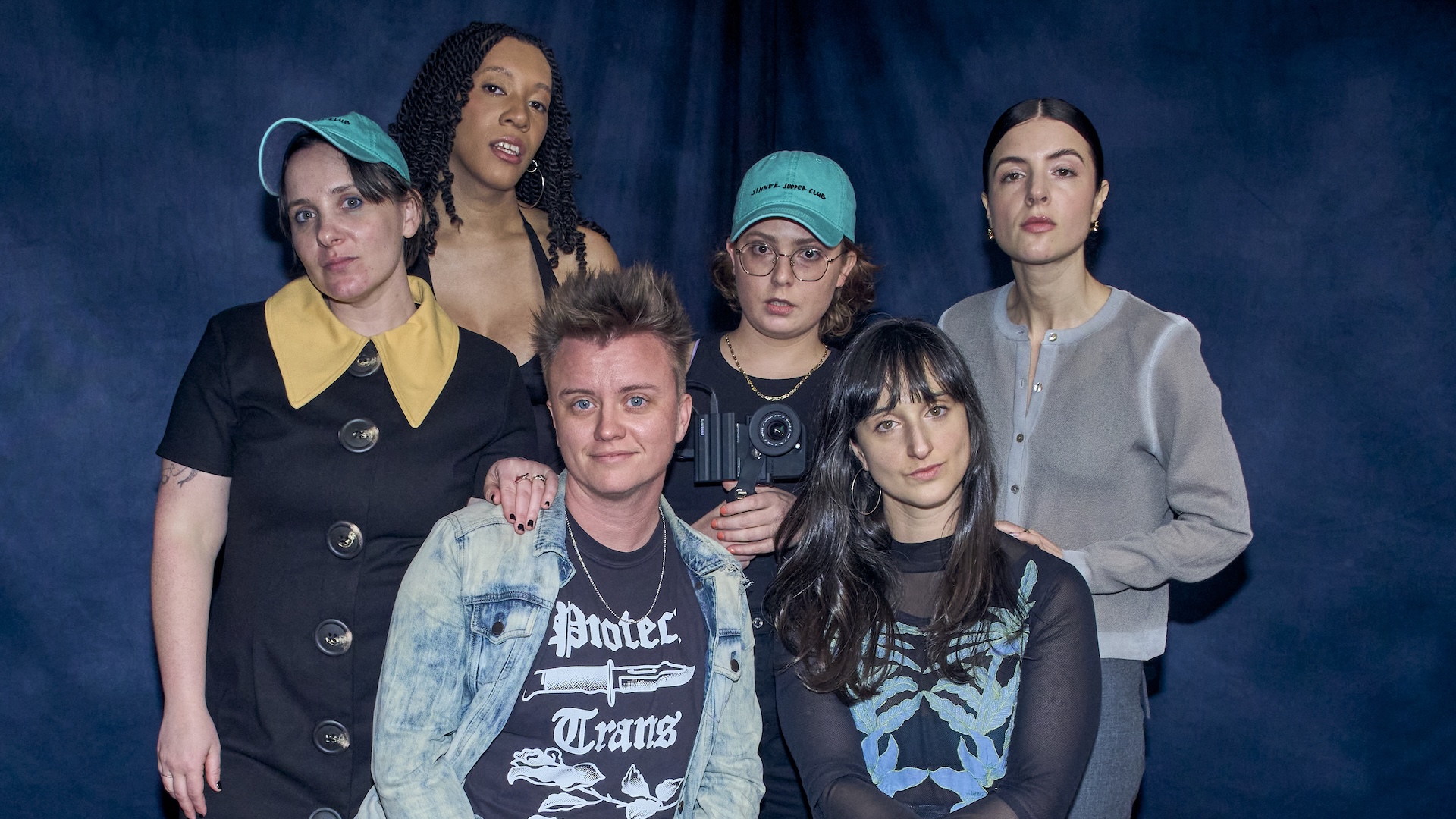
    Sinner Supper Club Is a Queer Mumblecore Movie About the Imperfections of Grief

    Mumblecore continues to grow into new genre offshoots. This year’s Sinner Supper Club has already been called both “mumblegore” and “mumblequeer,” but Nora Kaye and Daisy Rosato, who co-wrote and directed the movie, seem happy to embrace all the mumbles while taking things in a different direction. “Mumblecore is a movement that kind of started […]

    The post Sinner Supper Club Is a Queer Mumblecore Movie About the Imperfections of Grief appeared first on Den of Geek.

    Spider-Noir is a strange mix of the familiar and the strange. On one hand, you have a web-spinner doing battle against classic villains like Sandman and Tombstone. On the other, the hero here is Ben Reilly a.k.a. the Spider, a superhero who turned private investigator after a tragedy took away the love of his life. And that doesn’t even get into how the series nods to classic film noirs, starting with Humphrey Bogart staples The Big Sleep and The Maltese Falcon.

    For star Nicolas Cage, Bogart is the best guide to mixing hard-boiled detective fiction with spectacular superhero adventures. “The thing I always enjoyed about watching Bogart, especially in movies like The Big Sleep, is that he seemed amused by other people’s bad behavior,” Cage tells Den of Geek. “He would start to laugh at other people’s wickedness, he got tickled by it.

    “I tried to put a little of that into Spider-Noir. If Li Jun Li’s character Cat Hardy was doing something dangerous, it would amuse Ben Reilly. He’d think, ‘Oh, I know this is so much fun,’ just like Bogart would be doing.”

    Cage’s commitment to film noir impressed showrunner Oren Uziel, who recalls a particularly memorable table read.

    “We were out to lunch at a restaurant in Los Angeles, long before we had started shooting and he had already memorized half the script. He suddenly said, ‘I’m going to do this one like Edward G. Robinson,’ and he just did an entire scene.”

    Performing the script in the manner of the star of greats such as Little Caesar, Scarlet Street, and Double Indemnity only further endeared Cage to Uziel, who got to combine several of his passions while making Spider-Noir.

    “I always loved Spider-Man, but I’ve always also loved noir. So when they came to me with the idea of making a standalone Spider-Man show set in 1930s New York City that’s film noir, I felt like I was the obvious person they should be talking to,” confesses Uziel. “I asked them to please let me do this.”

    Uziel cites 1949’s The Third Man as a particular favorite. Directed by Carol Reed and written by Graham Greene, with a memorable zither score by Anton Karas, The Third Man stars Joseph Cotton as an American who comes to postwar Vienna in search of his friend Harry Lime (Orson Welles), now a criminal running the underground.

    Uziel’s fandom comes through when he gushes about his favorite parts of The Third Man. “Orson Welles, and the way it’s shot, the relationships, the intrigue, all in postwar Vienna,” he says with an enthusiastic grin. “It’s just so romantic. There are shots we stole from all our favorite noirs… Well, lovingly homaged.”

    For Lamorne Morris, the exciting part is getting to play Joseph “Robbie” Robertson, a vital part of Spider-Man’s supporting cast who has rarely appeared in live action. “He’s the voice of reason,” Morris says of his character, who is not a top-ranking editor in Spider-Noir, but rather a principled journalist.

    “This Spider-Man is a little bit different than the ones we’ve seen before. He’s faced with this dilemma where he’s over being a hero. He saved millions of lives already, and he’s just ready to be done with it,” Morris explains. “But the city still needs a hero, and so this is the first time Spider-Man has someone in his ear. As reporter for the Daily Bugle, Robbie really understands the pulse of New York. He understands what’s happening with crime and depression in the city, and in the mayoral race.

    “So the fate of the city is in the Spider’s hands, and Robbie knows that. He understands the weight of it. And he’s trying to convince Ben that the city could use him.”

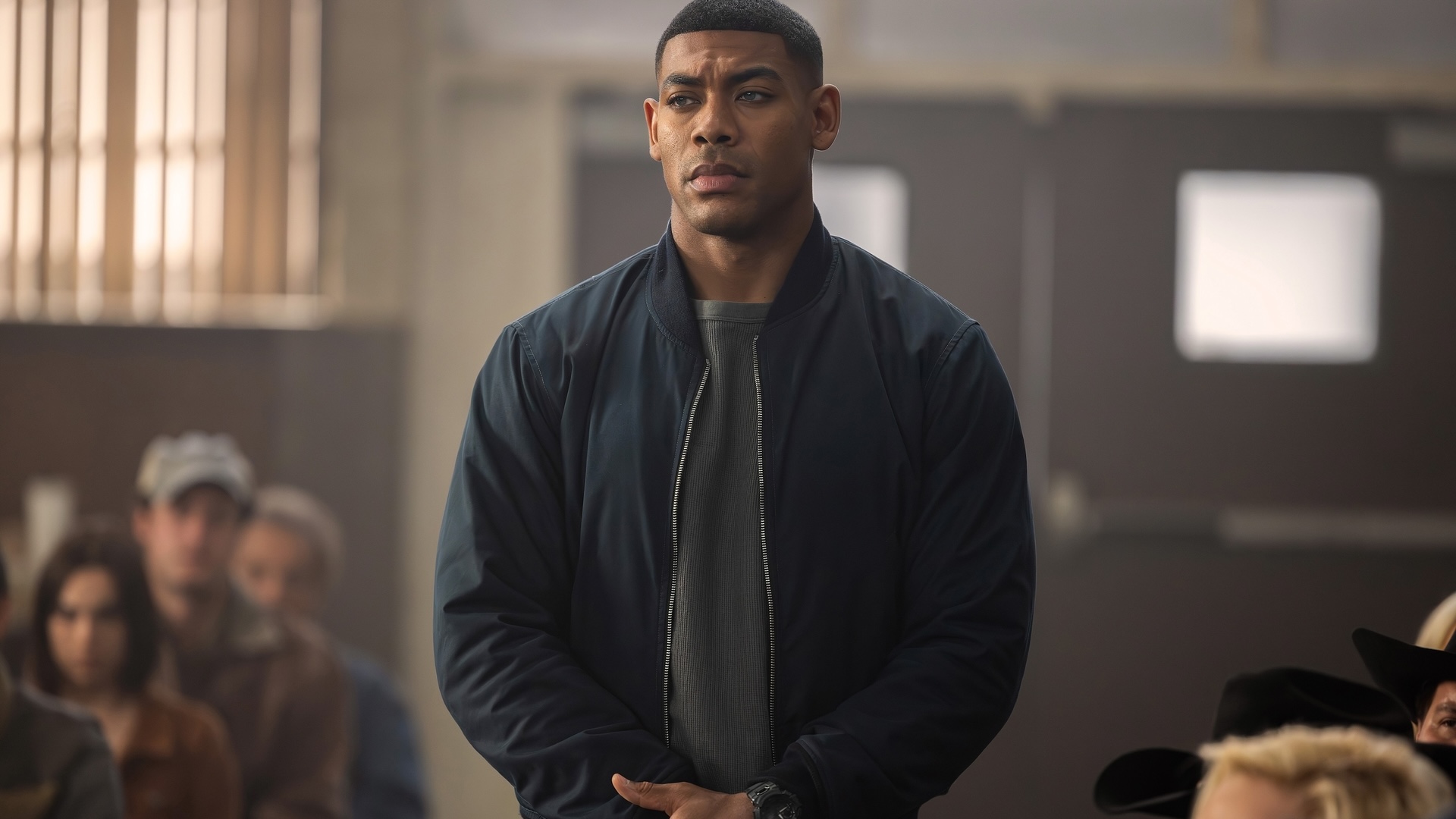
    While Morris gets to create his live-action Robbie with little interference, his co-star Abraham Popoola has immediate competition for his character Lonnie Lincoln, better known as the villain Tombstone. Just months after Popoola debuts his Tombstone in Spider-Noir, Marvin Jones III will play the MCU version of the crime lord in Spider-Man: Brand New Day. But instead of feeling any sense of jealousy, Popoola has nothing but respect for his fellow Lonnie.

    “I would love to talk with him about playing Lonnie,” he admits. “Marvin also plays Tombstone in the Spider-Man video game, and he’s amazing. I can’t wait to see what he does with the character in live-action.

    “I didn’t take anything directly from the PlayStation video game, but I was definitely inspired by the essence of the story. I still play it now.”

    Popoola’s love goes back further than the days of the PS4, back when he was voiced by Dorian Harewood. “Tombstone’s a character I’ve known since he was on the Fox Kids animated series from the ’90s,” Popoola notes. “I’m still processing the fact that I got this role. There’s one moment toward the end of the series where I was like, ‘This can’t be happening!’” he teases. “You’ll have to see it.”

    cnx.cmd.push(function() {
    cnx({
    playerId: “106e33c0-3911-473c-b599-b1426db57530”,

    }).render(“0270c398a82f44f49c23c16122516796”);
    });

    Modern though his touchstones may be, Popoola understands the spirit of noir necessary for his character’s milieu. “The most noir thing you can do is to brood in a corner with the brim of a hat making a shadow over your eyes, watching people across the room,” he contends.

    “I think it’s to just pop up,” jokes Morris. “In noir, they’re always just popping up. You never know what’s around the corner.”

    But fittingly enough, it’s the show’s writer and creative guide who best understands the genre. “The most noir thing you can do is get your heart broken,” Uziel says. It’s a perfect answer, whether you’re talking about Humphrey Bogart, Spider-Man, or combing them together for Spider-Noir.

    Spider-Noir premieres on MGM+ on May 25, 2026, and on Prime Video on May 27, 2026.

    The post Nicolas Cage and Spider-Noir Team Talk Hard-Boiled Inspirations for Spider-Man Series appeared first on Den of Geek.

  • 15 Horror Movies That Were Somehow Based on Children’s Books

    15 Horror Movies That Were Somehow Based on Children’s Books

    Children’s books are usually associated with imagination, adventure, and comforting bedtime stories, but some of them contain surprisingly dark ideas beneath the surface. Over the years, filmmakers have taken those eerie themes and transformed them into full horror movies filled with monsters, nightmares, and psychological terror. In some cases, the connection is obvious, while others only loosely borrow characters, creatures, or unsettling concepts from stories originally written for younger readers. That strange contrast between childhood innocence and horror often makes these movies even more disturbing. Here are 15 horror movies that were somehow inspired by children’s books and stories meant for younger audiences.

    The post 15 Horror Movies That Were Somehow Based on Children’s Books appeared first on Den of Geek.

    Spider-Noir is a strange mix of the familiar and the strange. On one hand, you have a web-spinner doing battle against classic villains like Sandman and Tombstone. On the other, the hero here is Ben Reilly a.k.a. the Spider, a superhero who turned private investigator after a tragedy took away the love of his life. And that doesn’t even get into how the series nods to classic film noirs, starting with Humphrey Bogart staples The Big Sleep and The Maltese Falcon.

    For star Nicolas Cage, Bogart is the best guide to mixing hard-boiled detective fiction with spectacular superhero adventures. “The thing I always enjoyed about watching Bogart, especially in movies like The Big Sleep, is that he seemed amused by other people’s bad behavior,” Cage tells Den of Geek. “He would start to laugh at other people’s wickedness, he got tickled by it.

    “I tried to put a little of that into Spider-Noir. If Li Jun Li’s character Cat Hardy was doing something dangerous, it would amuse Ben Reilly. He’d think, ‘Oh, I know this is so much fun,’ just like Bogart would be doing.”

    Cage’s commitment to film noir impressed showrunner Oren Uziel, who recalls a particularly memorable table read.

    “We were out to lunch at a restaurant in Los Angeles, long before we had started shooting and he had already memorized half the script. He suddenly said, ‘I’m going to do this one like Edward G. Robinson,’ and he just did an entire scene.”

    Performing the script in the manner of the star of greats such as Little Caesar, Scarlet Street, and Double Indemnity only further endeared Cage to Uziel, who got to combine several of his passions while making Spider-Noir.

    “I always loved Spider-Man, but I’ve always also loved noir. So when they came to me with the idea of making a standalone Spider-Man show set in 1930s New York City that’s film noir, I felt like I was the obvious person they should be talking to,” confesses Uziel. “I asked them to please let me do this.”

    Uziel cites 1949’s The Third Man as a particular favorite. Directed by Carol Reed and written by Graham Greene, with a memorable zither score by Anton Karas, The Third Man stars Joseph Cotton as an American who comes to postwar Vienna in search of his friend Harry Lime (Orson Welles), now a criminal running the underground.

    Uziel’s fandom comes through when he gushes about his favorite parts of The Third Man. “Orson Welles, and the way it’s shot, the relationships, the intrigue, all in postwar Vienna,” he says with an enthusiastic grin. “It’s just so romantic. There are shots we stole from all our favorite noirs… Well, lovingly homaged.”

    For Lamorne Morris, the exciting part is getting to play Joseph “Robbie” Robertson, a vital part of Spider-Man’s supporting cast who has rarely appeared in live action. “He’s the voice of reason,” Morris says of his character, who is not a top-ranking editor in Spider-Noir, but rather a principled journalist.

    “This Spider-Man is a little bit different than the ones we’ve seen before. He’s faced with this dilemma where he’s over being a hero. He saved millions of lives already, and he’s just ready to be done with it,” Morris explains. “But the city still needs a hero, and so this is the first time Spider-Man has someone in his ear. As reporter for the Daily Bugle, Robbie really understands the pulse of New York. He understands what’s happening with crime and depression in the city, and in the mayoral race.

    “So the fate of the city is in the Spider’s hands, and Robbie knows that. He understands the weight of it. And he’s trying to convince Ben that the city could use him.”

    While Morris gets to create his live-action Robbie with little interference, his co-star Abraham Popoola has immediate competition for his character Lonnie Lincoln, better known as the villain Tombstone. Just months after Popoola debuts his Tombstone in Spider-Noir, Marvin Jones III will play the MCU version of the crime lord in Spider-Man: Brand New Day. But instead of feeling any sense of jealousy, Popoola has nothing but respect for his fellow Lonnie.

    “I would love to talk with him about playing Lonnie,” he admits. “Marvin also plays Tombstone in the Spider-Man video game, and he’s amazing. I can’t wait to see what he does with the character in live-action.

    “I didn’t take anything directly from the PlayStation video game, but I was definitely inspired by the essence of the story. I still play it now.”

    Popoola’s love goes back further than the days of the PS4, back when he was voiced by Dorian Harewood. “Tombstone’s a character I’ve known since he was on the Fox Kids animated series from the ’90s,” Popoola notes. “I’m still processing the fact that I got this role. There’s one moment toward the end of the series where I was like, ‘This can’t be happening!’” he teases. “You’ll have to see it.”

    cnx.cmd.push(function() {
    cnx({
    playerId: “106e33c0-3911-473c-b599-b1426db57530”,

    }).render(“0270c398a82f44f49c23c16122516796”);
    });

    Modern though his touchstones may be, Popoola understands the spirit of noir necessary for his character’s milieu. “The most noir thing you can do is to brood in a corner with the brim of a hat making a shadow over your eyes, watching people across the room,” he contends.

    “I think it’s to just pop up,” jokes Morris. “In noir, they’re always just popping up. You never know what’s around the corner.”

    But fittingly enough, it’s the show’s writer and creative guide who best understands the genre. “The most noir thing you can do is get your heart broken,” Uziel says. It’s a perfect answer, whether you’re talking about Humphrey Bogart, Spider-Man, or combing them together for Spider-Noir.

    Spider-Noir premieres on MGM+ on May 25, 2026, and on Prime Video on May 27, 2026.

    The post Nicolas Cage and Spider-Noir Team Talk Hard-Boiled Inspirations for Spider-Man Series appeared first on Den of Geek.

  • Spider-Man Teases a Brand New Day for Marvel Effects

    Spider-Man Teases a Brand New Day for Marvel Effects

    At the end of Spider-Man: No Way Home, Peter Parker went back to basics. Gone was his Iron Spider costume, gone was Tony Stark’s suit-fabricating machine, gone were his EDITH AI glasses. All Peter had was a sewing machine in a crappy apartment, stitching together a homemade Spider-Man outfit. Spider-Man: Brand New Day will explore […]

    The post Spider-Man Teases a Brand New Day for Marvel Effects appeared first on Den of Geek.

    Spider-Noir is a strange mix of the familiar and the strange. On one hand, you have a web-spinner doing battle against classic villains like Sandman and Tombstone. On the other, the hero here is Ben Reilly a.k.a. the Spider, a superhero who turned private investigator after a tragedy took away the love of his life. And that doesn’t even get into how the series nods to classic film noirs, starting with Humphrey Bogart staples The Big Sleep and The Maltese Falcon.

    For star Nicolas Cage, Bogart is the best guide to mixing hard-boiled detective fiction with spectacular superhero adventures. “The thing I always enjoyed about watching Bogart, especially in movies like The Big Sleep, is that he seemed amused by other people’s bad behavior,” Cage tells Den of Geek. “He would start to laugh at other people’s wickedness, he got tickled by it.

    “I tried to put a little of that into Spider-Noir. If Li Jun Li’s character Cat Hardy was doing something dangerous, it would amuse Ben Reilly. He’d think, ‘Oh, I know this is so much fun,’ just like Bogart would be doing.”

    Cage’s commitment to film noir impressed showrunner Oren Uziel, who recalls a particularly memorable table read.

    “We were out to lunch at a restaurant in Los Angeles, long before we had started shooting and he had already memorized half the script. He suddenly said, ‘I’m going to do this one like Edward G. Robinson,’ and he just did an entire scene.”

    Performing the script in the manner of the star of greats such as Little Caesar, Scarlet Street, and Double Indemnity only further endeared Cage to Uziel, who got to combine several of his passions while making Spider-Noir.

    “I always loved Spider-Man, but I’ve always also loved noir. So when they came to me with the idea of making a standalone Spider-Man show set in 1930s New York City that’s film noir, I felt like I was the obvious person they should be talking to,” confesses Uziel. “I asked them to please let me do this.”

    Uziel cites 1949’s The Third Man as a particular favorite. Directed by Carol Reed and written by Graham Greene, with a memorable zither score by Anton Karas, The Third Man stars Joseph Cotton as an American who comes to postwar Vienna in search of his friend Harry Lime (Orson Welles), now a criminal running the underground.

    Uziel’s fandom comes through when he gushes about his favorite parts of The Third Man. “Orson Welles, and the way it’s shot, the relationships, the intrigue, all in postwar Vienna,” he says with an enthusiastic grin. “It’s just so romantic. There are shots we stole from all our favorite noirs… Well, lovingly homaged.”

    For Lamorne Morris, the exciting part is getting to play Joseph “Robbie” Robertson, a vital part of Spider-Man’s supporting cast who has rarely appeared in live action. “He’s the voice of reason,” Morris says of his character, who is not a top-ranking editor in Spider-Noir, but rather a principled journalist.

    “This Spider-Man is a little bit different than the ones we’ve seen before. He’s faced with this dilemma where he’s over being a hero. He saved millions of lives already, and he’s just ready to be done with it,” Morris explains. “But the city still needs a hero, and so this is the first time Spider-Man has someone in his ear. As reporter for the Daily Bugle, Robbie really understands the pulse of New York. He understands what’s happening with crime and depression in the city, and in the mayoral race.

    “So the fate of the city is in the Spider’s hands, and Robbie knows that. He understands the weight of it. And he’s trying to convince Ben that the city could use him.”

    While Morris gets to create his live-action Robbie with little interference, his co-star Abraham Popoola has immediate competition for his character Lonnie Lincoln, better known as the villain Tombstone. Just months after Popoola debuts his Tombstone in Spider-Noir, Marvin Jones III will play the MCU version of the crime lord in Spider-Man: Brand New Day. But instead of feeling any sense of jealousy, Popoola has nothing but respect for his fellow Lonnie.

    “I would love to talk with him about playing Lonnie,” he admits. “Marvin also plays Tombstone in the Spider-Man video game, and he’s amazing. I can’t wait to see what he does with the character in live-action.

    “I didn’t take anything directly from the PlayStation video game, but I was definitely inspired by the essence of the story. I still play it now.”

    Popoola’s love goes back further than the days of the PS4, back when he was voiced by Dorian Harewood. “Tombstone’s a character I’ve known since he was on the Fox Kids animated series from the ’90s,” Popoola notes. “I’m still processing the fact that I got this role. There’s one moment toward the end of the series where I was like, ‘This can’t be happening!’” he teases. “You’ll have to see it.”

    cnx.cmd.push(function() {
    cnx({
    playerId: “106e33c0-3911-473c-b599-b1426db57530”,

    }).render(“0270c398a82f44f49c23c16122516796”);
    });

    Modern though his touchstones may be, Popoola understands the spirit of noir necessary for his character’s milieu. “The most noir thing you can do is to brood in a corner with the brim of a hat making a shadow over your eyes, watching people across the room,” he contends.

    “I think it’s to just pop up,” jokes Morris. “In noir, they’re always just popping up. You never know what’s around the corner.”

    But fittingly enough, it’s the show’s writer and creative guide who best understands the genre. “The most noir thing you can do is get your heart broken,” Uziel says. It’s a perfect answer, whether you’re talking about Humphrey Bogart, Spider-Man, or combing them together for Spider-Noir.

    Spider-Noir premieres on MGM+ on May 25, 2026, and on Prime Video on May 27, 2026.

    The post Nicolas Cage and Spider-Noir Team Talk Hard-Boiled Inspirations for Spider-Man Series appeared first on Den of Geek.

  • Laika’s Wildwood Trailer Is a Love Letter to Human Animation

    Laika’s Wildwood Trailer Is a Love Letter to Human Animation

    In an industry that’s being rapidly taken over by computer-animated projects and various forms of AI slop, the work of Laika Studios still feels like a breath of fresh air. Probably best known for its (excellent) adaptation of Neil Gaiman’s Coraline, the studio has had a remarkable run of success in recent years, earning an […]

    The post Laika’s Wildwood Trailer Is a Love Letter to Human Animation appeared first on Den of Geek.

    Spider-Noir is a strange mix of the familiar and the strange. On one hand, you have a web-spinner doing battle against classic villains like Sandman and Tombstone. On the other, the hero here is Ben Reilly a.k.a. the Spider, a superhero who turned private investigator after a tragedy took away the love of his life. And that doesn’t even get into how the series nods to classic film noirs, starting with Humphrey Bogart staples The Big Sleep and The Maltese Falcon.

    For star Nicolas Cage, Bogart is the best guide to mixing hard-boiled detective fiction with spectacular superhero adventures. “The thing I always enjoyed about watching Bogart, especially in movies like The Big Sleep, is that he seemed amused by other people’s bad behavior,” Cage tells Den of Geek. “He would start to laugh at other people’s wickedness, he got tickled by it.

    “I tried to put a little of that into Spider-Noir. If Li Jun Li’s character Cat Hardy was doing something dangerous, it would amuse Ben Reilly. He’d think, ‘Oh, I know this is so much fun,’ just like Bogart would be doing.”

    Cage’s commitment to film noir impressed showrunner Oren Uziel, who recalls a particularly memorable table read.

    “We were out to lunch at a restaurant in Los Angeles, long before we had started shooting and he had already memorized half the script. He suddenly said, ‘I’m going to do this one like Edward G. Robinson,’ and he just did an entire scene.”

    Performing the script in the manner of the star of greats such as Little Caesar, Scarlet Street, and Double Indemnity only further endeared Cage to Uziel, who got to combine several of his passions while making Spider-Noir.

    “I always loved Spider-Man, but I’ve always also loved noir. So when they came to me with the idea of making a standalone Spider-Man show set in 1930s New York City that’s film noir, I felt like I was the obvious person they should be talking to,” confesses Uziel. “I asked them to please let me do this.”

    Uziel cites 1949’s The Third Man as a particular favorite. Directed by Carol Reed and written by Graham Greene, with a memorable zither score by Anton Karas, The Third Man stars Joseph Cotton as an American who comes to postwar Vienna in search of his friend Harry Lime (Orson Welles), now a criminal running the underground.

    Uziel’s fandom comes through when he gushes about his favorite parts of The Third Man. “Orson Welles, and the way it’s shot, the relationships, the intrigue, all in postwar Vienna,” he says with an enthusiastic grin. “It’s just so romantic. There are shots we stole from all our favorite noirs… Well, lovingly homaged.”

    For Lamorne Morris, the exciting part is getting to play Joseph “Robbie” Robertson, a vital part of Spider-Man’s supporting cast who has rarely appeared in live action. “He’s the voice of reason,” Morris says of his character, who is not a top-ranking editor in Spider-Noir, but rather a principled journalist.

    “This Spider-Man is a little bit different than the ones we’ve seen before. He’s faced with this dilemma where he’s over being a hero. He saved millions of lives already, and he’s just ready to be done with it,” Morris explains. “But the city still needs a hero, and so this is the first time Spider-Man has someone in his ear. As reporter for the Daily Bugle, Robbie really understands the pulse of New York. He understands what’s happening with crime and depression in the city, and in the mayoral race.

    “So the fate of the city is in the Spider’s hands, and Robbie knows that. He understands the weight of it. And he’s trying to convince Ben that the city could use him.”

    While Morris gets to create his live-action Robbie with little interference, his co-star Abraham Popoola has immediate competition for his character Lonnie Lincoln, better known as the villain Tombstone. Just months after Popoola debuts his Tombstone in Spider-Noir, Marvin Jones III will play the MCU version of the crime lord in Spider-Man: Brand New Day. But instead of feeling any sense of jealousy, Popoola has nothing but respect for his fellow Lonnie.

    “I would love to talk with him about playing Lonnie,” he admits. “Marvin also plays Tombstone in the Spider-Man video game, and he’s amazing. I can’t wait to see what he does with the character in live-action.

    “I didn’t take anything directly from the PlayStation video game, but I was definitely inspired by the essence of the story. I still play it now.”

    Popoola’s love goes back further than the days of the PS4, back when he was voiced by Dorian Harewood. “Tombstone’s a character I’ve known since he was on the Fox Kids animated series from the ’90s,” Popoola notes. “I’m still processing the fact that I got this role. There’s one moment toward the end of the series where I was like, ‘This can’t be happening!’” he teases. “You’ll have to see it.”

    cnx.cmd.push(function() {
    cnx({
    playerId: “106e33c0-3911-473c-b599-b1426db57530”,

    }).render(“0270c398a82f44f49c23c16122516796”);
    });

    Modern though his touchstones may be, Popoola understands the spirit of noir necessary for his character’s milieu. “The most noir thing you can do is to brood in a corner with the brim of a hat making a shadow over your eyes, watching people across the room,” he contends.

    “I think it’s to just pop up,” jokes Morris. “In noir, they’re always just popping up. You never know what’s around the corner.”

    But fittingly enough, it’s the show’s writer and creative guide who best understands the genre. “The most noir thing you can do is get your heart broken,” Uziel says. It’s a perfect answer, whether you’re talking about Humphrey Bogart, Spider-Man, or combing them together for Spider-Noir.

    Spider-Noir premieres on MGM+ on May 25, 2026, and on Prime Video on May 27, 2026.

    The post Nicolas Cage and Spider-Noir Team Talk Hard-Boiled Inspirations for Spider-Man Series appeared first on Den of Geek.

  • My Adventures with Superman Season 3 Trailer Settles a Sartorial Debate

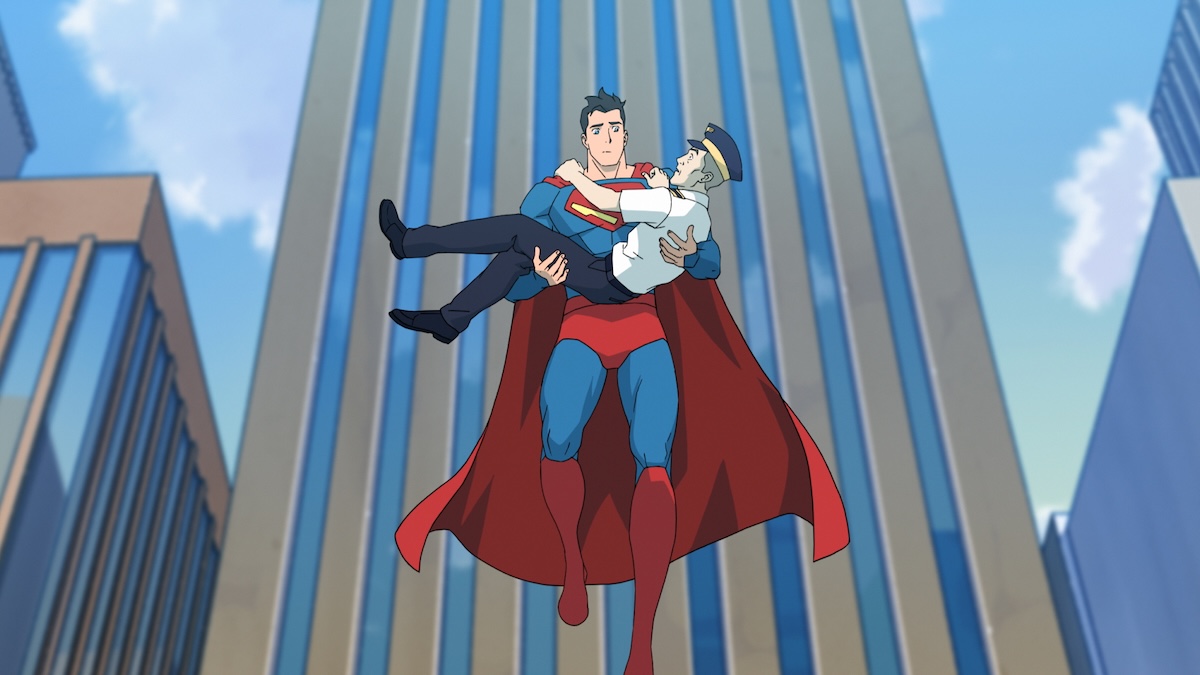
    My Adventures with Superman Season 3 Trailer Settles a Sartorial Debate

    The past few years have been strange for Superman fans. On the big screen, you had David Corenswet famously convincing James Gunn to put the Man of Tomorrow’s underwear on the outside for 2024’s Superman. On the small screen, the second season of My Adventures with Superman gave Kal-El new duds with undies on the […]

    The post My Adventures with Superman Season 3 Trailer Settles a Sartorial Debate appeared first on Den of Geek.

    Spider-Noir is a strange mix of the familiar and the strange. On one hand, you have a web-spinner doing battle against classic villains like Sandman and Tombstone. On the other, the hero here is Ben Reilly a.k.a. the Spider, a superhero who turned private investigator after a tragedy took away the love of his life. And that doesn’t even get into how the series nods to classic film noirs, starting with Humphrey Bogart staples The Big Sleep and The Maltese Falcon.

    For star Nicolas Cage, Bogart is the best guide to mixing hard-boiled detective fiction with spectacular superhero adventures. “The thing I always enjoyed about watching Bogart, especially in movies like The Big Sleep, is that he seemed amused by other people’s bad behavior,” Cage tells Den of Geek. “He would start to laugh at other people’s wickedness, he got tickled by it.

    “I tried to put a little of that into Spider-Noir. If Li Jun Li’s character Cat Hardy was doing something dangerous, it would amuse Ben Reilly. He’d think, ‘Oh, I know this is so much fun,’ just like Bogart would be doing.”

    Cage’s commitment to film noir impressed showrunner Oren Uziel, who recalls a particularly memorable table read.

    “We were out to lunch at a restaurant in Los Angeles, long before we had started shooting and he had already memorized half the script. He suddenly said, ‘I’m going to do this one like Edward G. Robinson,’ and he just did an entire scene.”

    Performing the script in the manner of the star of greats such as Little Caesar, Scarlet Street, and Double Indemnity only further endeared Cage to Uziel, who got to combine several of his passions while making Spider-Noir.

    “I always loved Spider-Man, but I’ve always also loved noir. So when they came to me with the idea of making a standalone Spider-Man show set in 1930s New York City that’s film noir, I felt like I was the obvious person they should be talking to,” confesses Uziel. “I asked them to please let me do this.”

    Uziel cites 1949’s The Third Man as a particular favorite. Directed by Carol Reed and written by Graham Greene, with a memorable zither score by Anton Karas, The Third Man stars Joseph Cotton as an American who comes to postwar Vienna in search of his friend Harry Lime (Orson Welles), now a criminal running the underground.

    Uziel’s fandom comes through when he gushes about his favorite parts of The Third Man. “Orson Welles, and the way it’s shot, the relationships, the intrigue, all in postwar Vienna,” he says with an enthusiastic grin. “It’s just so romantic. There are shots we stole from all our favorite noirs… Well, lovingly homaged.”

    For Lamorne Morris, the exciting part is getting to play Joseph “Robbie” Robertson, a vital part of Spider-Man’s supporting cast who has rarely appeared in live action. “He’s the voice of reason,” Morris says of his character, who is not a top-ranking editor in Spider-Noir, but rather a principled journalist.

    “This Spider-Man is a little bit different than the ones we’ve seen before. He’s faced with this dilemma where he’s over being a hero. He saved millions of lives already, and he’s just ready to be done with it,” Morris explains. “But the city still needs a hero, and so this is the first time Spider-Man has someone in his ear. As reporter for the Daily Bugle, Robbie really understands the pulse of New York. He understands what’s happening with crime and depression in the city, and in the mayoral race.

    “So the fate of the city is in the Spider’s hands, and Robbie knows that. He understands the weight of it. And he’s trying to convince Ben that the city could use him.”

    While Morris gets to create his live-action Robbie with little interference, his co-star Abraham Popoola has immediate competition for his character Lonnie Lincoln, better known as the villain Tombstone. Just months after Popoola debuts his Tombstone in Spider-Noir, Marvin Jones III will play the MCU version of the crime lord in Spider-Man: Brand New Day. But instead of feeling any sense of jealousy, Popoola has nothing but respect for his fellow Lonnie.

    “I would love to talk with him about playing Lonnie,” he admits. “Marvin also plays Tombstone in the Spider-Man video game, and he’s amazing. I can’t wait to see what he does with the character in live-action.

    “I didn’t take anything directly from the PlayStation video game, but I was definitely inspired by the essence of the story. I still play it now.”

    Popoola’s love goes back further than the days of the PS4, back when he was voiced by Dorian Harewood. “Tombstone’s a character I’ve known since he was on the Fox Kids animated series from the ’90s,” Popoola notes. “I’m still processing the fact that I got this role. There’s one moment toward the end of the series where I was like, ‘This can’t be happening!’” he teases. “You’ll have to see it.”

    cnx.cmd.push(function() {
    cnx({
    playerId: “106e33c0-3911-473c-b599-b1426db57530”,

    }).render(“0270c398a82f44f49c23c16122516796”);
    });

    Modern though his touchstones may be, Popoola understands the spirit of noir necessary for his character’s milieu. “The most noir thing you can do is to brood in a corner with the brim of a hat making a shadow over your eyes, watching people across the room,” he contends.

    “I think it’s to just pop up,” jokes Morris. “In noir, they’re always just popping up. You never know what’s around the corner.”

    But fittingly enough, it’s the show’s writer and creative guide who best understands the genre. “The most noir thing you can do is get your heart broken,” Uziel says. It’s a perfect answer, whether you’re talking about Humphrey Bogart, Spider-Man, or combing them together for Spider-Noir.

    Spider-Noir premieres on MGM+ on May 25, 2026, and on Prime Video on May 27, 2026.

    The post Nicolas Cage and Spider-Noir Team Talk Hard-Boiled Inspirations for Spider-Man Series appeared first on Den of Geek.

  • Dan Stevens Talks Depicting the Grim State of Mental Healthcare in The Terror: Devil in Silver

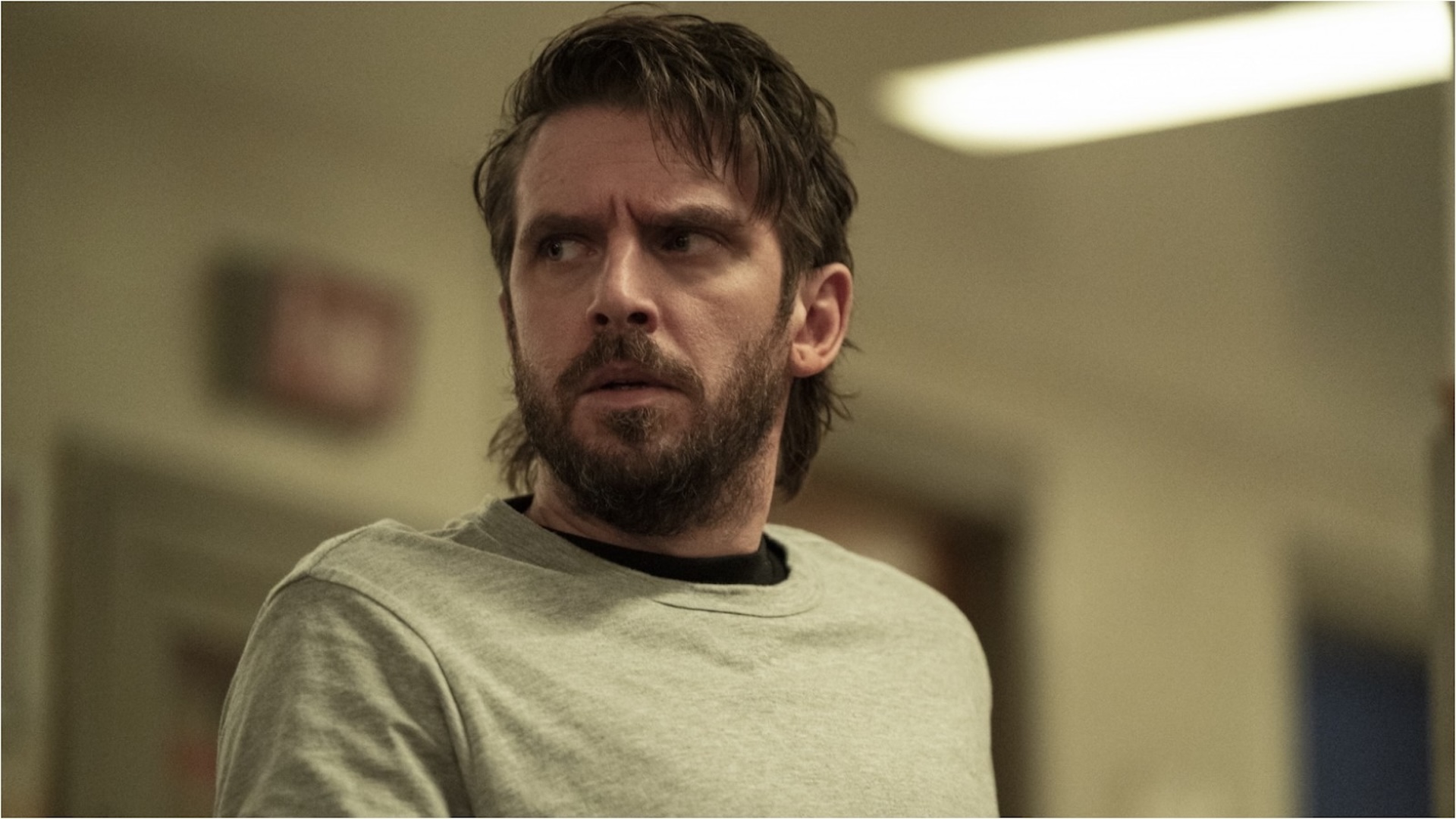
    Dan Stevens Talks Depicting the Grim State of Mental Healthcare in The Terror: Devil in Silver

    The following contains spoilers for The Terror: Devil in Silver episode 2. The Terror: Devil in Silver takes place in the confines of the fictional New Hyde Psychiatric Hospital, the sort of dark and oppressive setting that automatically lends itself to questions of reality, truth, and whether viewers can trust what they’re seeing at any […]

    The post Dan Stevens Talks Depicting the Grim State of Mental Healthcare in The Terror: Devil in Silver appeared first on Den of Geek.

    Spider-Noir is a strange mix of the familiar and the strange. On one hand, you have a web-spinner doing battle against classic villains like Sandman and Tombstone. On the other, the hero here is Ben Reilly a.k.a. the Spider, a superhero who turned private investigator after a tragedy took away the love of his life. And that doesn’t even get into how the series nods to classic film noirs, starting with Humphrey Bogart staples The Big Sleep and The Maltese Falcon.

    For star Nicolas Cage, Bogart is the best guide to mixing hard-boiled detective fiction with spectacular superhero adventures. “The thing I always enjoyed about watching Bogart, especially in movies like The Big Sleep, is that he seemed amused by other people’s bad behavior,” Cage tells Den of Geek. “He would start to laugh at other people’s wickedness, he got tickled by it.

    “I tried to put a little of that into Spider-Noir. If Li Jun Li’s character Cat Hardy was doing something dangerous, it would amuse Ben Reilly. He’d think, ‘Oh, I know this is so much fun,’ just like Bogart would be doing.”

    Cage’s commitment to film noir impressed showrunner Oren Uziel, who recalls a particularly memorable table read.

    “We were out to lunch at a restaurant in Los Angeles, long before we had started shooting and he had already memorized half the script. He suddenly said, ‘I’m going to do this one like Edward G. Robinson,’ and he just did an entire scene.”

    Performing the script in the manner of the star of greats such as Little Caesar, Scarlet Street, and Double Indemnity only further endeared Cage to Uziel, who got to combine several of his passions while making Spider-Noir.

    “I always loved Spider-Man, but I’ve always also loved noir. So when they came to me with the idea of making a standalone Spider-Man show set in 1930s New York City that’s film noir, I felt like I was the obvious person they should be talking to,” confesses Uziel. “I asked them to please let me do this.”

    Uziel cites 1949’s The Third Man as a particular favorite. Directed by Carol Reed and written by Graham Greene, with a memorable zither score by Anton Karas, The Third Man stars Joseph Cotton as an American who comes to postwar Vienna in search of his friend Harry Lime (Orson Welles), now a criminal running the underground.

    Uziel’s fandom comes through when he gushes about his favorite parts of The Third Man. “Orson Welles, and the way it’s shot, the relationships, the intrigue, all in postwar Vienna,” he says with an enthusiastic grin. “It’s just so romantic. There are shots we stole from all our favorite noirs… Well, lovingly homaged.”

    For Lamorne Morris, the exciting part is getting to play Joseph “Robbie” Robertson, a vital part of Spider-Man’s supporting cast who has rarely appeared in live action. “He’s the voice of reason,” Morris says of his character, who is not a top-ranking editor in Spider-Noir, but rather a principled journalist.

    “This Spider-Man is a little bit different than the ones we’ve seen before. He’s faced with this dilemma where he’s over being a hero. He saved millions of lives already, and he’s just ready to be done with it,” Morris explains. “But the city still needs a hero, and so this is the first time Spider-Man has someone in his ear. As reporter for the Daily Bugle, Robbie really understands the pulse of New York. He understands what’s happening with crime and depression in the city, and in the mayoral race.

    “So the fate of the city is in the Spider’s hands, and Robbie knows that. He understands the weight of it. And he’s trying to convince Ben that the city could use him.”

    While Morris gets to create his live-action Robbie with little interference, his co-star Abraham Popoola has immediate competition for his character Lonnie Lincoln, better known as the villain Tombstone. Just months after Popoola debuts his Tombstone in Spider-Noir, Marvin Jones III will play the MCU version of the crime lord in Spider-Man: Brand New Day. But instead of feeling any sense of jealousy, Popoola has nothing but respect for his fellow Lonnie.

    “I would love to talk with him about playing Lonnie,” he admits. “Marvin also plays Tombstone in the Spider-Man video game, and he’s amazing. I can’t wait to see what he does with the character in live-action.

    “I didn’t take anything directly from the PlayStation video game, but I was definitely inspired by the essence of the story. I still play it now.”

    Popoola’s love goes back further than the days of the PS4, back when he was voiced by Dorian Harewood. “Tombstone’s a character I’ve known since he was on the Fox Kids animated series from the ’90s,” Popoola notes. “I’m still processing the fact that I got this role. There’s one moment toward the end of the series where I was like, ‘This can’t be happening!’” he teases. “You’ll have to see it.”

    cnx.cmd.push(function() {
    cnx({
    playerId: “106e33c0-3911-473c-b599-b1426db57530”,

    }).render(“0270c398a82f44f49c23c16122516796”);
    });

    Modern though his touchstones may be, Popoola understands the spirit of noir necessary for his character’s milieu. “The most noir thing you can do is to brood in a corner with the brim of a hat making a shadow over your eyes, watching people across the room,” he contends.

    “I think it’s to just pop up,” jokes Morris. “In noir, they’re always just popping up. You never know what’s around the corner.”

    But fittingly enough, it’s the show’s writer and creative guide who best understands the genre. “The most noir thing you can do is get your heart broken,” Uziel says. It’s a perfect answer, whether you’re talking about Humphrey Bogart, Spider-Man, or combing them together for Spider-Noir.

    Spider-Noir premieres on MGM+ on May 25, 2026, and on Prime Video on May 27, 2026.

    The post Nicolas Cage and Spider-Noir Team Talk Hard-Boiled Inspirations for Spider-Man Series appeared first on Den of Geek.

  • Lanterns May Be Reviving a Controversial Origin Story

    Lanterns May Be Reviving a Controversial Origin Story

    Like any superhero concept that’s existed for more than 80 years, Green Lantern has undergone some significant changes. Most notably, the Green Lantern introduced in 1940 had a magical ring vulnerable to wood, while today’s Green Lanterns are sci-fi superhero space cops with power rings. Furthermore, some beats in the Green Lantern story have aged […]

    The post Lanterns May Be Reviving a Controversial Origin Story appeared first on Den of Geek.

    Spider-Noir is a strange mix of the familiar and the strange. On one hand, you have a web-spinner doing battle against classic villains like Sandman and Tombstone. On the other, the hero here is Ben Reilly a.k.a. the Spider, a superhero who turned private investigator after a tragedy took away the love of his life. And that doesn’t even get into how the series nods to classic film noirs, starting with Humphrey Bogart staples The Big Sleep and The Maltese Falcon.

    For star Nicolas Cage, Bogart is the best guide to mixing hard-boiled detective fiction with spectacular superhero adventures. “The thing I always enjoyed about watching Bogart, especially in movies like The Big Sleep, is that he seemed amused by other people’s bad behavior,” Cage tells Den of Geek. “He would start to laugh at other people’s wickedness, he got tickled by it.

    “I tried to put a little of that into Spider-Noir. If Li Jun Li’s character Cat Hardy was doing something dangerous, it would amuse Ben Reilly. He’d think, ‘Oh, I know this is so much fun,’ just like Bogart would be doing.”

    Cage’s commitment to film noir impressed showrunner Oren Uziel, who recalls a particularly memorable table read.

    “We were out to lunch at a restaurant in Los Angeles, long before we had started shooting and he had already memorized half the script. He suddenly said, ‘I’m going to do this one like Edward G. Robinson,’ and he just did an entire scene.”

    Performing the script in the manner of the star of greats such as Little Caesar, Scarlet Street, and Double Indemnity only further endeared Cage to Uziel, who got to combine several of his passions while making Spider-Noir.

    “I always loved Spider-Man, but I’ve always also loved noir. So when they came to me with the idea of making a standalone Spider-Man show set in 1930s New York City that’s film noir, I felt like I was the obvious person they should be talking to,” confesses Uziel. “I asked them to please let me do this.”

    Uziel cites 1949’s The Third Man as a particular favorite. Directed by Carol Reed and written by Graham Greene, with a memorable zither score by Anton Karas, The Third Man stars Joseph Cotton as an American who comes to postwar Vienna in search of his friend Harry Lime (Orson Welles), now a criminal running the underground.

    Uziel’s fandom comes through when he gushes about his favorite parts of The Third Man. “Orson Welles, and the way it’s shot, the relationships, the intrigue, all in postwar Vienna,” he says with an enthusiastic grin. “It’s just so romantic. There are shots we stole from all our favorite noirs… Well, lovingly homaged.”

    For Lamorne Morris, the exciting part is getting to play Joseph “Robbie” Robertson, a vital part of Spider-Man’s supporting cast who has rarely appeared in live action. “He’s the voice of reason,” Morris says of his character, who is not a top-ranking editor in Spider-Noir, but rather a principled journalist.

    “This Spider-Man is a little bit different than the ones we’ve seen before. He’s faced with this dilemma where he’s over being a hero. He saved millions of lives already, and he’s just ready to be done with it,” Morris explains. “But the city still needs a hero, and so this is the first time Spider-Man has someone in his ear. As reporter for the Daily Bugle, Robbie really understands the pulse of New York. He understands what’s happening with crime and depression in the city, and in the mayoral race.

    “So the fate of the city is in the Spider’s hands, and Robbie knows that. He understands the weight of it. And he’s trying to convince Ben that the city could use him.”

    While Morris gets to create his live-action Robbie with little interference, his co-star Abraham Popoola has immediate competition for his character Lonnie Lincoln, better known as the villain Tombstone. Just months after Popoola debuts his Tombstone in Spider-Noir, Marvin Jones III will play the MCU version of the crime lord in Spider-Man: Brand New Day. But instead of feeling any sense of jealousy, Popoola has nothing but respect for his fellow Lonnie.

    “I would love to talk with him about playing Lonnie,” he admits. “Marvin also plays Tombstone in the Spider-Man video game, and he’s amazing. I can’t wait to see what he does with the character in live-action.

    “I didn’t take anything directly from the PlayStation video game, but I was definitely inspired by the essence of the story. I still play it now.”

    Popoola’s love goes back further than the days of the PS4, back when he was voiced by Dorian Harewood. “Tombstone’s a character I’ve known since he was on the Fox Kids animated series from the ’90s,” Popoola notes. “I’m still processing the fact that I got this role. There’s one moment toward the end of the series where I was like, ‘This can’t be happening!’” he teases. “You’ll have to see it.”

    cnx.cmd.push(function() {
    cnx({
    playerId: “106e33c0-3911-473c-b599-b1426db57530”,

    }).render(“0270c398a82f44f49c23c16122516796”);
    });

    Modern though his touchstones may be, Popoola understands the spirit of noir necessary for his character’s milieu. “The most noir thing you can do is to brood in a corner with the brim of a hat making a shadow over your eyes, watching people across the room,” he contends.

    “I think it’s to just pop up,” jokes Morris. “In noir, they’re always just popping up. You never know what’s around the corner.”

    But fittingly enough, it’s the show’s writer and creative guide who best understands the genre. “The most noir thing you can do is get your heart broken,” Uziel says. It’s a perfect answer, whether you’re talking about Humphrey Bogart, Spider-Man, or combing them together for Spider-Noir.

    Spider-Noir premieres on MGM+ on May 25, 2026, and on Prime Video on May 27, 2026.

    The post Nicolas Cage and Spider-Noir Team Talk Hard-Boiled Inspirations for Spider-Man Series appeared first on Den of Geek.