Category: Blog

Your blog category

  • An Holistic Framework for Shared Design Leadership

    An Holistic Framework for Shared Design Leadership

    Picture this: You’re in a meeting room at your tech company, and two people are having what looks like the same conversation about the same design problem. One is talking about whether the team has the right skills to tackle it. The other is diving deep into whether the solution actually solves the user’s problem. Same room, same problem, completely different lenses.

    This is the beautiful, sometimes messy reality of having both a Design Manager and a Lead Designer on the same team. And if you’re wondering how to make this work without creating confusion, overlap, or the dreaded “too many cooks” scenario, you’re asking the right question.

    The traditional answer has been to draw clean lines on an org chart. The Design Manager handles people, the Lead Designer handles craft. Problem solved, right? Except clean org charts are fantasy. In reality, both roles care deeply about team health, design quality, and shipping great work. 

    The magic happens when you embrace the overlap instead of fighting it—when you start thinking of your design org as a design organism.

    The Anatomy of a Healthy Design Team

    Here’s what I’ve learned from years of being on both sides of this equation: think of your design team as a living organism. The Design Manager tends to the mind (the psychological safety, the career growth, the team dynamics). The Lead Designer tends to the body (the craft skills, the design standards, the hands-on work that ships to users).

    But just like mind and body aren’t completely separate systems, so, too, do these roles overlap in important ways. You can’t have a healthy person without both working in harmony. The trick is knowing where those overlaps are and how to navigate them gracefully.

    When we look at how healthy teams actually function, three critical systems emerge. Each requires both roles to work together, but with one taking primary responsibility for keeping that system strong.

    The Nervous System: People & Psychology

    Primary caretaker: Design Manager
    Supporting role: Lead Designer

    The nervous system is all about signals, feedback, and psychological safety. When this system is healthy, information flows freely, people feel safe to take risks, and the team can adapt quickly to new challenges.

    The Design Manager is the primary caretaker here. They’re monitoring the team’s psychological pulse, ensuring feedback loops are healthy, and creating the conditions for people to grow. They’re hosting career conversations, managing workload, and making sure no one burns out.

    But the Lead Designer plays a crucial supporting role. They’re providing sensory input about craft development needs, spotting when someone’s design skills are stagnating, and helping identify growth opportunities that the Design Manager might miss.

    Design Manager tends to:

    • Career conversations and growth planning
    • Team psychological safety and dynamics
    • Workload management and resource allocation
    • Performance reviews and feedback systems
    • Creating learning opportunities

    Lead Designer supports by:

    • Providing craft-specific feedback on team member development
    • Identifying design skill gaps and growth opportunities
    • Offering design mentorship and guidance
    • Signaling when team members are ready for more complex challenges

    The Muscular System: Craft & Execution

    Primary caretaker: Lead Designer
    Supporting role: Design Manager

    The muscular system is about strength, coordination, and skill development. When this system is healthy, the team can execute complex design work with precision, maintain consistent quality, and adapt their craft to new challenges.

    The Lead Designer is the primary caretaker here. They’re setting design standards, providing craft coaching, and ensuring that shipping work meets the quality bar. They’re the ones who can tell you if a design decision is sound or if we’re solving the right problem.

    But the Design Manager plays a crucial supporting role. They’re ensuring the team has the resources and support to do their best craft work, like proper nutrition and recovery time for an athlete.

    Lead Designer tends to:

    • Definition of design standards and system usage
    • Feedback on what design work meets the standard
    • Experience direction for the product
    • Design decisions and product-wide alignment
    • Innovation and craft advancement

    Design Manager supports by:

    • Ensuring design standards are understood and adopted across the team
    • Confirming experience direction is being followed
    • Supporting practices and systems that scale without bottlenecking
    • Facilitating design alignment across teams
    • Providing resources and removing obstacles to great craft work

    The Circulatory System: Strategy & Flow

    Shared caretakers: Both Design Manager and Lead Designer

    The circulatory system is about how information, decisions, and energy flow through the team. When this system is healthy, strategic direction is clear, priorities are aligned, and the team can respond quickly to new opportunities or challenges.

    This is where true partnership happens. Both roles are responsible for keeping the circulation strong, but they’re bringing different perspectives to the table.

    Lead Designer contributes:

    • User needs are met by the product
    • Overall product quality and experience
    • Strategic design initiatives
    • Research-based user needs for each initiative

    Design Manager contributes:

    • Communication to team and stakeholders
    • Stakeholder management and alignment
    • Cross-functional team accountability
    • Strategic business initiatives

    Both collaborate on:

    • Co-creation of strategy with leadership
    • Team goals and prioritization approach
    • Organizational structure decisions
    • Success measures and frameworks

    Keeping the Organism Healthy

    The key to making this partnership sing is understanding that all three systems need to work together. A team with great craft skills but poor psychological safety will burn out. A team with great culture but weak craft execution will ship mediocre work. A team with both but poor strategic circulation will work hard on the wrong things.

    Be Explicit About Which System You’re Tending

    When you’re in a meeting about a design problem, it helps to acknowledge which system you’re primarily focused on. “I’m thinking about this from a team capacity perspective” (nervous system) or “I’m looking at this through the lens of user needs” (muscular system) gives everyone context for your input.

    This isn’t about staying in your lane. It’s about being transparent as to which lens you’re using, so the other person knows how to best add their perspective.

    Create Healthy Feedback Loops

    The most successful partnerships I’ve seen establish clear feedback loops between the systems:

    Nervous system signals to muscular system: “The team is struggling with confidence in their design skills” → Lead Designer provides more craft coaching and clearer standards.

    Muscular system signals to nervous system: “The team’s craft skills are advancing faster than their project complexity” → Design Manager finds more challenging growth opportunities.

    Both systems signal to circulatory system: “We’re seeing patterns in team health and craft development that suggest we need to adjust our strategic priorities.”

    Handle Handoffs Gracefully

    The most critical moments in this partnership are when something moves from one system to another. This might be when a design standard (muscular system) needs to be rolled out across the team (nervous system), or when a strategic initiative (circulatory system) needs specific craft execution (muscular system).

    Make these transitions explicit. “I’ve defined the new component standards. Can you help me think through how to get the team up to speed?” or “We’ve agreed on this strategic direction. I’m going to focus on the specific user experience approach from here.”

    Stay Curious, Not Territorial

    The Design Manager who never thinks about craft, or the Lead Designer who never considers team dynamics, is like a doctor who only looks at one body system. Great design leadership requires both people to care about the whole organism, even when they’re not the primary caretaker.

    This means asking questions rather than making assumptions. “What do you think about the team’s craft development in this area?” or “How do you see this impacting team morale and workload?” keeps both perspectives active in every decision.

    When the Organism Gets Sick

    Even with clear roles, this partnership can go sideways. Here are the most common failure modes I’ve seen:

    System Isolation

    The Design Manager focuses only on the nervous system and ignores craft development. The Lead Designer focuses only on the muscular system and ignores team dynamics. Both people retreat to their comfort zones and stop collaborating.

    The symptoms: Team members get mixed messages, work quality suffers, morale drops.

    The treatment: Reconnect around shared outcomes. What are you both trying to achieve? Usually it’s great design work that ships on time from a healthy team. Figure out how both systems serve that goal.

    Poor Circulation

    Strategic direction is unclear, priorities keep shifting, and neither role is taking responsibility for keeping information flowing.

    The symptoms: Team members are confused about priorities, work gets duplicated or dropped, deadlines are missed.

    The treatment: Explicitly assign responsibility for circulation. Who’s communicating what to whom? How often? What’s the feedback loop?

    Autoimmune Response

    One person feels threatened by the other’s expertise. The Design Manager thinks the Lead Designer is undermining their authority. The Lead Designer thinks the Design Manager doesn’t understand craft.

    The symptoms: Defensive behavior, territorial disputes, team members caught in the middle.

    The treatment: Remember that you’re both caretakers of the same organism. When one system fails, the whole team suffers. When both systems are healthy, the team thrives.

    The Payoff

    Yes, this model requires more communication. Yes, it requires both people to be secure enough to share responsibility for team health. But the payoff is worth it: better decisions, stronger teams, and design work that’s both excellent and sustainable.

    When both roles are healthy and working well together, you get the best of both worlds: deep craft expertise and strong people leadership. When one person is out sick, on vacation, or overwhelmed, the other can help maintain the team’s health. When a decision requires both the people perspective and the craft perspective, you’ve got both right there in the room.

    Most importantly, the framework scales. As your team grows, you can apply the same system thinking to new challenges. Need to launch a design system? Lead Designer tends to the muscular system (standards and implementation), Design Manager tends to the nervous system (team adoption and change management), and both tend to circulation (communication and stakeholder alignment).

    The Bottom Line

    The relationship between a Design Manager and Lead Designer isn’t about dividing territories. It’s about multiplying impact. When both roles understand they’re tending to different aspects of the same healthy organism, magic happens.

    The mind and body work together. The team gets both the strategic thinking and the craft excellence they need. And most importantly, the work that ships to users benefits from both perspectives.

    So the next time you’re in that meeting room, wondering why two people are talking about the same problem from different angles, remember: you’re watching shared leadership in action. And if it’s working well, both the mind and body of your design team are getting stronger.

  • From Beta to Bedrock: Build Products that Stick.

    From Beta to Bedrock: Build Products that Stick.

    As a product builder over too many years to mention, I’ve lost count of the number of times I’ve seen promising ideas go from zero to hero in a few weeks, only to fizzle out within months.

    Financial products, which is the field I work in, are no exception. With people’s real hard-earned money on the line, user expectations running high, and a crowded market, it’s tempting to throw as many features at the wall as possible and hope something sticks. But this approach is a recipe for disaster. Here’s why:

    The pitfalls of feature-first development

    When you start building a financial product from the ground up, or are migrating existing customer journeys from paper or telephony channels onto online banking or mobile apps, it’s easy to get caught up in the excitement of creating new features. You might think, “If I can just add one more thing that solves this particular user problem, they’ll love me!” But what happens when you inevitably hit a roadblock because the narcs (your security team!) don’t like it? When a hard-fought feature isn’t as popular as you thought, or it breaks due to unforeseen complexity?

    This is where the concept of Minimum Viable Product (MVP) comes in. Jason Fried’s book Getting Real and his podcast Rework often touch on this idea, even if he doesn’t always call it that. An MVP is a product that provides just enough value to your users to keep them engaged, but not so much that it becomes overwhelming or difficult to maintain. It sounds like an easy concept but it requires a razor sharp eye, a ruthless edge and having the courage to stick by your opinion because it is easy to be seduced by “the Columbo Effect”… when there’s always “just one more thing…” that someone wants to add.

    The problem with most finance apps, however, is that they often become a reflection of the internal politics of the business rather than an experience solely designed around the customer. This means that the focus is on delivering as many features and functionalities as possible to satisfy the needs and desires of competing internal departments, rather than providing a clear value proposition that is focused on what the people out there in the real world want. As a result, these products can very easily bloat to become a mixed bag of confusing, unrelated and ultimately unlovable customer experiences—a feature salad, you might say.

    The importance of bedrock

    So what’s a better approach? How can we build products that are stable, user-friendly, and—most importantly—stick?

    That’s where the concept of “bedrock” comes in. Bedrock is the core element of your product that truly matters to users. It’s the fundamental building block that provides value and stays relevant over time.

    In the world of retail banking, which is where I work, the bedrock has got to be in and around the regular servicing journeys. People open their current account once in a blue moon but they look at it every day. They sign up for a credit card every year or two, but they check their balance and pay their bill at least once a month.

    Identifying the core tasks that people want to do and then relentlessly striving to make them easy to do, dependable, and trustworthy is where the gravy’s at.

    But how do you get to bedrock? By focusing on the “MVP” approach, prioritizing simplicity, and iterating towards a clear value proposition. This means cutting out unnecessary features and focusing on delivering real value to your users.

    It also means having some guts, because your colleagues might not always instantly share your vision to start with. And controversially, sometimes it can even mean making it clear to customers that you’re not going to come to their house and make their dinner. The occasional “opinionated user interface design” (i.e. clunky workaround for edge cases) might sometimes be what you need to use to test a concept or buy you space to work on something more important.

    Practical strategies for building financial products that stick

    So what are the key strategies I’ve learned from my own experience and research?

    1. Start with a clear “why”: What problem are you trying to solve? For whom? Make sure your mission is crystal clear before building anything. Make sure it aligns with your company’s objectives, too.
    2. Focus on a single, core feature and obsess on getting that right before moving on to something else: Resist the temptation to add too many features at once. Instead, choose one that delivers real value and iterate from there.
    3. Prioritize simplicity over complexity: Less is often more when it comes to financial products. Cut out unnecessary bells and whistles and keep the focus on what matters most.
    4. Embrace continuous iteration: Bedrock isn’t a fixed destination—it’s a dynamic process. Continuously gather user feedback, refine your product, and iterate towards that bedrock state.
    5. Stop, look and listen: Don’t just test your product as part of your delivery process—test it repeatedly in the field. Use it yourself. Run A/B tests. Gather user feedback. Talk to people who use it, and refine accordingly.

    The bedrock paradox

    There’s an interesting paradox at play here: building towards bedrock means sacrificing some short-term growth potential in favour of long-term stability. But the payoff is worth it—products built with a focus on bedrock will outlast and outperform their competitors, and deliver sustained value to users over time.

    So, how do you start your journey towards bedrock? Take it one step at a time. Start by identifying those core elements that truly matter to your users. Focus on building and refining a single, powerful feature that delivers real value. And above all, test obsessively—for, in the words of Abraham Lincoln, Alan Kay, or Peter Drucker (whomever you believe!!), “The best way to predict the future is to create it.”

  • 15 Popular Shows We’ve Never Heard Anyone Mention

    15 Popular Shows We’ve Never Heard Anyone Mention

    When a show runs for several seasons, we can consider quite a few of them a success. After all, no show gets renewed out of pity; it needs to be making money to justify the spot. And yet, throughout television’s history, there are shows that aren’t even remembered today but were hugely popular before.

    If a show gets cancelled after one season, it is expected that it won’t penetrate the general culture discourse. But after five seasons? Eight, in some cases? That’s nearly a decade of content people consume and don’t even remember. These are the shows that are strangely forgotten today.

    The post 15 Popular Shows We’ve Never Heard Anyone Mention appeared first on Den of Geek.

    In the premiere episode of the best superhero series on Prime Video, a spaceship falls on a father, crushing him in front of his young son. Out of the ship stumbles the members of the Earth’s greatest superhero team, their eyes bleeding because of weaponized syphilis. Before the heroes can recover, the supervillain arrives to shoot them in the head—well, only two get shot; the youngest simply has his hands crushed. The heroes murdered, the villain mocks the little boy before flying off, leaving him forever traumatized.

    Fans of The Boys might be scratching their heads after reading that description. Something so nasty, so filled with ineffective superheroes must come from Prime Video‘s beloved (until recently) adaptation of the comics by Garth Ennis and Darick Robertson. Or maybe it’s from the animated series Invincible, which amps up the violence in Robert Kirkman, Cory Walker, and Ryan Ottley’s celebration of all things comics.

    cnx.cmd.push(function() {
    cnx({
    playerId: “106e33c0-3911-473c-b599-b1426db57530”,

    }).render(“0270c398a82f44f49c23c16122516796”);
    });

    But in fact, it comes from the best superhero series ever produced by Amazon: The Tick. Canceled after two seasons and overshadowed by The Boys and Invincible, The Tick had a weird, resilient optimism (despite the scene described above) that’s needed even more today.

    Heroes of the City

    The death of the Flag Five at the hands of the Terror was just one of many ways that the Prime Video series differed from most depictions of the Tick. Created in 1986 by Ben Edlund for a newsletter distributed by his local comic book shop New England Comics, the Tick has spawned several comic book series, both in color and black and white, a beloved animated series that ran from 1994 to 1996, a short-lived Fox sitcom in 2001, and, finally, the Amazon series that ran for 20 episodes between 2016 and 2019.

    The appeal of the Tick is simple. He’s a giant blue guy with nigh-invulnerability and super-strength who is fully committed to the idea of being a superhero. The Tick has no name, no motivation outside of justice, and no enemies besides evil. And ninjas, but they’re more of an annoyance than enemies. He’s joined by his doughy friend Arthur, a timid accountant in a moth suit that makes him look like a bunny. The Tick defends the City, a metropolis populated by heroes and villains.

    Fundamentally, The Tick is about how superheroes are silly. Wonderful and cool and compelling, yes. But most of all, silly. The Tick can sometimes go to dark places, with a whole backstory that reveals the Tick’s past as a lunatic in an insane asylum. And the series loves its occasional satire of DC and Marvel, pairing him with Captain Wonder a.k.a. reporter Clark Oppenheimer or with the Running Guy, who is faster than 10 fast men. But the original comics were more interested in laughing with the weirdness of superheroes than laughing at them, so the Tick and Arthur spent time with less-specific oddballs like Paul the Samurai, Chainsaw Vigilante, and the Man-Eating Cow.

    The animated series and sitcom retained the same manic energy, even if it added more direct superhero parodies Die Fledermaus and American Maid (renamed Batmanuel and Captain Liberty for the live-action series). Every incarnation of the Tick has been over-the-top, absurd, and utterly optimistic… except for the 2016 series, at least at first.

    Big Blue Destiny

    On the surface, 2016’s The Tick has everything you’d expect from an adaption of the comics. There’s Peter Serafinowicz as the titular guileless and energetic big blue hero. Griffin Newman plays Arthur as a nervous accountant in a grey moth suit that makes him look like a bunny. They live in an unnamed city, under threat by the villainous Terror (Jackie Earle Haley), and cross paths with other heroes like Overkill (Scott Speiser) and the Superman-styled Superian (Brendan Hines). Arthur’s sister Dot (Valorie Curry, perhaps best known today as Firecracker on The Boys) even appears.

    But it takes only a few minutes for the series to establish itself as something very different from what came before, something realistic. We meet Arthur as a depressed young man trying to cover up his mental illness, a steadfast belief that the Terror, who killed his father and members of the Avengers-esque Flag Five 15 years ago, still lives, despite the promise that he’s been long since defeated by Superian. When Arthur gives in to his worst instincts and follows the villain Miss Lint (Yara Martinez) and a group of thugs to a warehouse, he’s intercepted by the Tick, an endless figure of excitement and glee in an otherwise dark world.

    In the pilot and the first few episodes, The Tick toys with the idea that Tick is just the manifestation of Arthur’s intrusive thoughts. Yes, Arthur lives in a world with Superian and the Terror, but he’s just a broken man, and the Tick is his psychosis.

    Unlikely as the premise is for The Tick, it made sense in 2016. The pilot was directed by Wally Pfister, Christopher Nolan‘s cinematographer, who shot all three entries in the Dark Knight trilogy. The first episodes feel like they’re trying to take the Tick in a similar direction, offering a more believable way to tell a story about a giant blue superhero who says things like, “Crime, nastiness and evil rear their fowl odorous heads in every corner of the globe, and that’s saying something because globes don’t even have corners!”

    Pretty quickly, the show did away with that conceit and allowed the Tick to live in the world. However, it never abandoned the mental health aspect. In fact, it expanded to show how not just Arthur, but everyone—Dot, Overkill, even Superian—had some failure haunting them, some sadness they couldn’t shake. Thus the heroism of the Tick is less about his powers and more about his indefatigable commitment to doing good. He’s completely unbothered by disappointment or confusion. For example, when Arthur’s stepdad (Francois Chau) greets the hero by exclaiming, “Look at you,” Tick gleefully doesn’t stop to suss out the meaning. He just responds “Impossible!” and carries on.

    The Tick’s embrace of all his weirdness became less a coping mechanism for living in an awful world, and more of a model for making the awful world better.

    Going Sane in a Crazy World

    Despite its gritty premiere, the final episode of The Tick features a host of superhero tropes. Supervillain the Duke (John Hodgman) has infiltrated the S.H.I.E.L.D. pastiche A.E.G.I.S., undermined the new Flag Five, and sent agents to kill Arthur’s family, all while Superian has an existential crisis on the Moon. Instead of leaping into action, however, Arthur and Dot get overwhelmed by past failures and mistakes, the same feelings of inadequacy that stall Overkill and Miss Lint’s turns toward heroism.

    As always, Tick responds to the crisis with a monologue, full of hyperbole and mixed metaphors. But this time, there’s something truly inspirational in his garbled words. “The truth about the truth is that it’s a choice,” he declares. “Choose love or choose fear. Everything else is up to destiny.”

    It’s a silly statement, to be sure, and the show recognizes the self-help cliches in Tick’s speech, just as it does the purple prose he usually spouts. But in that moment of self-doubt and despair, anything positive seems silly. Moreover, the fact that Tick says it with such sincerity, without even the hint of apologizing for who he is, becomes inspirational. As he’s done from the first episode, Tick invites Arthur to be who he is: not a broken man who copes with his trauma by dressing up like a moth/bunny, but a human who has both experienced hurt and makes weird, wonderful choices.

    The finale of The Tick plays even better now, in the shadow of the finale of The Boys. The Boys underscored its central point about the inherently empty and pathetic pursuit of power (whether in the real or fictional White House), but it couldn’t make the switch from outrageous edgy humor to genuine human emotion, no matter how much Homelander offered to degrade himself.

    By the end of its run, The Tick also turned its superhero tropes into something relevant, by reminding the viewers that there’s no such thing as normal, no such thing as a broken person, just a bunch of freaks who will make the world a better place when they they let Destiny get all up in their puppets.

    The Tick is streaming in its entirety on Prime Video.

    The post The Triumph of The Tick, Amazon’s Forgotten Superhero Series appeared first on Den of Geek.

  • 15 Tragedies Staining Hollywood’s History

    15 Tragedies Staining Hollywood’s History

    For all the glamour, fame, and cultural milestones Hollywood is known for, there is also a darker legacy shaped by tragedy, scandal, and unresolved controversy. These are incidents that exposed dangerous working conditions, criminal cases, public cover-up accusations, or events that permanently changed how the industry operated.

    The loss itself was devastating for most of these cases, although the surrounding questions, legal fallout, or ethical failures kept the stories alive for decades. They left lasting marks on Hollywood’s reputation, exposing the darker side behind one of entertainment’s most powerful industries.

    The post 15 Tragedies Staining Hollywood’s History appeared first on Den of Geek.

    In the premiere episode of the best superhero series on Prime Video, a spaceship falls on a father, crushing him in front of his young son. Out of the ship stumbles the members of the Earth’s greatest superhero team, their eyes bleeding because of weaponized syphilis. Before the heroes can recover, the supervillain arrives to shoot them in the head—well, only two get shot; the youngest simply has his hands crushed. The heroes murdered, the villain mocks the little boy before flying off, leaving him forever traumatized.

    Fans of The Boys might be scratching their heads after reading that description. Something so nasty, so filled with ineffective superheroes must come from Prime Video‘s beloved (until recently) adaptation of the comics by Garth Ennis and Darick Robertson. Or maybe it’s from the animated series Invincible, which amps up the violence in Robert Kirkman, Cory Walker, and Ryan Ottley’s celebration of all things comics.

    cnx.cmd.push(function() {
    cnx({
    playerId: “106e33c0-3911-473c-b599-b1426db57530”,

    }).render(“0270c398a82f44f49c23c16122516796”);
    });

    But in fact, it comes from the best superhero series ever produced by Amazon: The Tick. Canceled after two seasons and overshadowed by The Boys and Invincible, The Tick had a weird, resilient optimism (despite the scene described above) that’s needed even more today.

    Heroes of the City

    The death of the Flag Five at the hands of the Terror was just one of many ways that the Prime Video series differed from most depictions of the Tick. Created in 1986 by Ben Edlund for a newsletter distributed by his local comic book shop New England Comics, the Tick has spawned several comic book series, both in color and black and white, a beloved animated series that ran from 1994 to 1996, a short-lived Fox sitcom in 2001, and, finally, the Amazon series that ran for 20 episodes between 2016 and 2019.

    The appeal of the Tick is simple. He’s a giant blue guy with nigh-invulnerability and super-strength who is fully committed to the idea of being a superhero. The Tick has no name, no motivation outside of justice, and no enemies besides evil. And ninjas, but they’re more of an annoyance than enemies. He’s joined by his doughy friend Arthur, a timid accountant in a moth suit that makes him look like a bunny. The Tick defends the City, a metropolis populated by heroes and villains.

    Fundamentally, The Tick is about how superheroes are silly. Wonderful and cool and compelling, yes. But most of all, silly. The Tick can sometimes go to dark places, with a whole backstory that reveals the Tick’s past as a lunatic in an insane asylum. And the series loves its occasional satire of DC and Marvel, pairing him with Captain Wonder a.k.a. reporter Clark Oppenheimer or with the Running Guy, who is faster than 10 fast men. But the original comics were more interested in laughing with the weirdness of superheroes than laughing at them, so the Tick and Arthur spent time with less-specific oddballs like Paul the Samurai, Chainsaw Vigilante, and the Man-Eating Cow.

    The animated series and sitcom retained the same manic energy, even if it added more direct superhero parodies Die Fledermaus and American Maid (renamed Batmanuel and Captain Liberty for the live-action series). Every incarnation of the Tick has been over-the-top, absurd, and utterly optimistic… except for the 2016 series, at least at first.

    Big Blue Destiny

    On the surface, 2016’s The Tick has everything you’d expect from an adaption of the comics. There’s Peter Serafinowicz as the titular guileless and energetic big blue hero. Griffin Newman plays Arthur as a nervous accountant in a grey moth suit that makes him look like a bunny. They live in an unnamed city, under threat by the villainous Terror (Jackie Earle Haley), and cross paths with other heroes like Overkill (Scott Speiser) and the Superman-styled Superian (Brendan Hines). Arthur’s sister Dot (Valorie Curry, perhaps best known today as Firecracker on The Boys) even appears.

    But it takes only a few minutes for the series to establish itself as something very different from what came before, something realistic. We meet Arthur as a depressed young man trying to cover up his mental illness, a steadfast belief that the Terror, who killed his father and members of the Avengers-esque Flag Five 15 years ago, still lives, despite the promise that he’s been long since defeated by Superian. When Arthur gives in to his worst instincts and follows the villain Miss Lint (Yara Martinez) and a group of thugs to a warehouse, he’s intercepted by the Tick, an endless figure of excitement and glee in an otherwise dark world.

    In the pilot and the first few episodes, The Tick toys with the idea that Tick is just the manifestation of Arthur’s intrusive thoughts. Yes, Arthur lives in a world with Superian and the Terror, but he’s just a broken man, and the Tick is his psychosis.

    Unlikely as the premise is for The Tick, it made sense in 2016. The pilot was directed by Wally Pfister, Christopher Nolan‘s cinematographer, who shot all three entries in the Dark Knight trilogy. The first episodes feel like they’re trying to take the Tick in a similar direction, offering a more believable way to tell a story about a giant blue superhero who says things like, “Crime, nastiness and evil rear their fowl odorous heads in every corner of the globe, and that’s saying something because globes don’t even have corners!”

    Pretty quickly, the show did away with that conceit and allowed the Tick to live in the world. However, it never abandoned the mental health aspect. In fact, it expanded to show how not just Arthur, but everyone—Dot, Overkill, even Superian—had some failure haunting them, some sadness they couldn’t shake. Thus the heroism of the Tick is less about his powers and more about his indefatigable commitment to doing good. He’s completely unbothered by disappointment or confusion. For example, when Arthur’s stepdad (Francois Chau) greets the hero by exclaiming, “Look at you,” Tick gleefully doesn’t stop to suss out the meaning. He just responds “Impossible!” and carries on.

    The Tick’s embrace of all his weirdness became less a coping mechanism for living in an awful world, and more of a model for making the awful world better.

    Going Sane in a Crazy World

    Despite its gritty premiere, the final episode of The Tick features a host of superhero tropes. Supervillain the Duke (John Hodgman) has infiltrated the S.H.I.E.L.D. pastiche A.E.G.I.S., undermined the new Flag Five, and sent agents to kill Arthur’s family, all while Superian has an existential crisis on the Moon. Instead of leaping into action, however, Arthur and Dot get overwhelmed by past failures and mistakes, the same feelings of inadequacy that stall Overkill and Miss Lint’s turns toward heroism.

    As always, Tick responds to the crisis with a monologue, full of hyperbole and mixed metaphors. But this time, there’s something truly inspirational in his garbled words. “The truth about the truth is that it’s a choice,” he declares. “Choose love or choose fear. Everything else is up to destiny.”

    It’s a silly statement, to be sure, and the show recognizes the self-help cliches in Tick’s speech, just as it does the purple prose he usually spouts. But in that moment of self-doubt and despair, anything positive seems silly. Moreover, the fact that Tick says it with such sincerity, without even the hint of apologizing for who he is, becomes inspirational. As he’s done from the first episode, Tick invites Arthur to be who he is: not a broken man who copes with his trauma by dressing up like a moth/bunny, but a human who has both experienced hurt and makes weird, wonderful choices.

    The finale of The Tick plays even better now, in the shadow of the finale of The Boys. The Boys underscored its central point about the inherently empty and pathetic pursuit of power (whether in the real or fictional White House), but it couldn’t make the switch from outrageous edgy humor to genuine human emotion, no matter how much Homelander offered to degrade himself.

    By the end of its run, The Tick also turned its superhero tropes into something relevant, by reminding the viewers that there’s no such thing as normal, no such thing as a broken person, just a bunch of freaks who will make the world a better place when they they let Destiny get all up in their puppets.

    The Tick is streaming in its entirety on Prime Video.

    The post The Triumph of The Tick, Amazon’s Forgotten Superhero Series appeared first on Den of Geek.

  • 10 D&D-Style Games for Modern Geeks to Enjoy

    10 D&D-Style Games for Modern Geeks to Enjoy

    Dungeons & Dragons is the undisputed king when it comes to TTRPGs, there’s no denying that. There is also nothing wrong with it either, since it can be a lot of fun to play. The 5.5 version of the rules have made the game both approachable and tactical, with each combat encounter and dungeon crawl telling its own story.

    After many years of playing the game, however, a change is needed. You could be looking for a new system for your next campaign, or just for a couple of one-shots to shake things up. No matter your reasoning, if you want something new, these are the TTRPGs that you have to try at least once.

    The post 10 D&D-Style Games for Modern Geeks to Enjoy appeared first on Den of Geek.

    In the premiere episode of the best superhero series on Prime Video, a spaceship falls on a father, crushing him in front of his young son. Out of the ship stumbles the members of the Earth’s greatest superhero team, their eyes bleeding because of weaponized syphilis. Before the heroes can recover, the supervillain arrives to shoot them in the head—well, only two get shot; the youngest simply has his hands crushed. The heroes murdered, the villain mocks the little boy before flying off, leaving him forever traumatized.

    Fans of The Boys might be scratching their heads after reading that description. Something so nasty, so filled with ineffective superheroes must come from Prime Video‘s beloved (until recently) adaptation of the comics by Garth Ennis and Darick Robertson. Or maybe it’s from the animated series Invincible, which amps up the violence in Robert Kirkman, Cory Walker, and Ryan Ottley’s celebration of all things comics.

    cnx.cmd.push(function() {
    cnx({
    playerId: “106e33c0-3911-473c-b599-b1426db57530”,

    }).render(“0270c398a82f44f49c23c16122516796”);
    });

    But in fact, it comes from the best superhero series ever produced by Amazon: The Tick. Canceled after two seasons and overshadowed by The Boys and Invincible, The Tick had a weird, resilient optimism (despite the scene described above) that’s needed even more today.

    Heroes of the City

    The death of the Flag Five at the hands of the Terror was just one of many ways that the Prime Video series differed from most depictions of the Tick. Created in 1986 by Ben Edlund for a newsletter distributed by his local comic book shop New England Comics, the Tick has spawned several comic book series, both in color and black and white, a beloved animated series that ran from 1994 to 1996, a short-lived Fox sitcom in 2001, and, finally, the Amazon series that ran for 20 episodes between 2016 and 2019.

    The appeal of the Tick is simple. He’s a giant blue guy with nigh-invulnerability and super-strength who is fully committed to the idea of being a superhero. The Tick has no name, no motivation outside of justice, and no enemies besides evil. And ninjas, but they’re more of an annoyance than enemies. He’s joined by his doughy friend Arthur, a timid accountant in a moth suit that makes him look like a bunny. The Tick defends the City, a metropolis populated by heroes and villains.

    Fundamentally, The Tick is about how superheroes are silly. Wonderful and cool and compelling, yes. But most of all, silly. The Tick can sometimes go to dark places, with a whole backstory that reveals the Tick’s past as a lunatic in an insane asylum. And the series loves its occasional satire of DC and Marvel, pairing him with Captain Wonder a.k.a. reporter Clark Oppenheimer or with the Running Guy, who is faster than 10 fast men. But the original comics were more interested in laughing with the weirdness of superheroes than laughing at them, so the Tick and Arthur spent time with less-specific oddballs like Paul the Samurai, Chainsaw Vigilante, and the Man-Eating Cow.

    The animated series and sitcom retained the same manic energy, even if it added more direct superhero parodies Die Fledermaus and American Maid (renamed Batmanuel and Captain Liberty for the live-action series). Every incarnation of the Tick has been over-the-top, absurd, and utterly optimistic… except for the 2016 series, at least at first.

    Big Blue Destiny

    On the surface, 2016’s The Tick has everything you’d expect from an adaption of the comics. There’s Peter Serafinowicz as the titular guileless and energetic big blue hero. Griffin Newman plays Arthur as a nervous accountant in a grey moth suit that makes him look like a bunny. They live in an unnamed city, under threat by the villainous Terror (Jackie Earle Haley), and cross paths with other heroes like Overkill (Scott Speiser) and the Superman-styled Superian (Brendan Hines). Arthur’s sister Dot (Valorie Curry, perhaps best known today as Firecracker on The Boys) even appears.

    But it takes only a few minutes for the series to establish itself as something very different from what came before, something realistic. We meet Arthur as a depressed young man trying to cover up his mental illness, a steadfast belief that the Terror, who killed his father and members of the Avengers-esque Flag Five 15 years ago, still lives, despite the promise that he’s been long since defeated by Superian. When Arthur gives in to his worst instincts and follows the villain Miss Lint (Yara Martinez) and a group of thugs to a warehouse, he’s intercepted by the Tick, an endless figure of excitement and glee in an otherwise dark world.

    In the pilot and the first few episodes, The Tick toys with the idea that Tick is just the manifestation of Arthur’s intrusive thoughts. Yes, Arthur lives in a world with Superian and the Terror, but he’s just a broken man, and the Tick is his psychosis.

    Unlikely as the premise is for The Tick, it made sense in 2016. The pilot was directed by Wally Pfister, Christopher Nolan‘s cinematographer, who shot all three entries in the Dark Knight trilogy. The first episodes feel like they’re trying to take the Tick in a similar direction, offering a more believable way to tell a story about a giant blue superhero who says things like, “Crime, nastiness and evil rear their fowl odorous heads in every corner of the globe, and that’s saying something because globes don’t even have corners!”

    Pretty quickly, the show did away with that conceit and allowed the Tick to live in the world. However, it never abandoned the mental health aspect. In fact, it expanded to show how not just Arthur, but everyone—Dot, Overkill, even Superian—had some failure haunting them, some sadness they couldn’t shake. Thus the heroism of the Tick is less about his powers and more about his indefatigable commitment to doing good. He’s completely unbothered by disappointment or confusion. For example, when Arthur’s stepdad (Francois Chau) greets the hero by exclaiming, “Look at you,” Tick gleefully doesn’t stop to suss out the meaning. He just responds “Impossible!” and carries on.

    The Tick’s embrace of all his weirdness became less a coping mechanism for living in an awful world, and more of a model for making the awful world better.

    Going Sane in a Crazy World

    Despite its gritty premiere, the final episode of The Tick features a host of superhero tropes. Supervillain the Duke (John Hodgman) has infiltrated the S.H.I.E.L.D. pastiche A.E.G.I.S., undermined the new Flag Five, and sent agents to kill Arthur’s family, all while Superian has an existential crisis on the Moon. Instead of leaping into action, however, Arthur and Dot get overwhelmed by past failures and mistakes, the same feelings of inadequacy that stall Overkill and Miss Lint’s turns toward heroism.

    As always, Tick responds to the crisis with a monologue, full of hyperbole and mixed metaphors. But this time, there’s something truly inspirational in his garbled words. “The truth about the truth is that it’s a choice,” he declares. “Choose love or choose fear. Everything else is up to destiny.”

    It’s a silly statement, to be sure, and the show recognizes the self-help cliches in Tick’s speech, just as it does the purple prose he usually spouts. But in that moment of self-doubt and despair, anything positive seems silly. Moreover, the fact that Tick says it with such sincerity, without even the hint of apologizing for who he is, becomes inspirational. As he’s done from the first episode, Tick invites Arthur to be who he is: not a broken man who copes with his trauma by dressing up like a moth/bunny, but a human who has both experienced hurt and makes weird, wonderful choices.

    The finale of The Tick plays even better now, in the shadow of the finale of The Boys. The Boys underscored its central point about the inherently empty and pathetic pursuit of power (whether in the real or fictional White House), but it couldn’t make the switch from outrageous edgy humor to genuine human emotion, no matter how much Homelander offered to degrade himself.

    By the end of its run, The Tick also turned its superhero tropes into something relevant, by reminding the viewers that there’s no such thing as normal, no such thing as a broken person, just a bunch of freaks who will make the world a better place when they they let Destiny get all up in their puppets.

    The Tick is streaming in its entirety on Prime Video.

    The post The Triumph of The Tick, Amazon’s Forgotten Superhero Series appeared first on Den of Geek.

  • 15 Shows That Feel Embarrassing to Watch With Other People in the Room

    15 Shows That Feel Embarrassing to Watch With Other People in the Room

    We love shows that push limits, particularly on how to tell stories, not to mention what’s ok to tell. Adult content should, after all, be mature rather than forbidden. We ask creators to give us originality, but how do we behave once that creativity arrives at our TV screens?

    Embarrassment is usually the first reaction, particularly when we weren’t expecting it. These following shows aren’t necessarily bad by any means, but they make regular households uncomfortable. Be sure to check if you’re alone before tuning into them, unless you’re prepared to answer exactly what you’re watching.

    The post 15 Shows That Feel Embarrassing to Watch With Other People in the Room appeared first on Den of Geek.

    In the premiere episode of the best superhero series on Prime Video, a spaceship falls on a father, crushing him in front of his young son. Out of the ship stumbles the members of the Earth’s greatest superhero team, their eyes bleeding because of weaponized syphilis. Before the heroes can recover, the supervillain arrives to shoot them in the head—well, only two get shot; the youngest simply has his hands crushed. The heroes murdered, the villain mocks the little boy before flying off, leaving him forever traumatized.

    Fans of The Boys might be scratching their heads after reading that description. Something so nasty, so filled with ineffective superheroes must come from Prime Video‘s beloved (until recently) adaptation of the comics by Garth Ennis and Darick Robertson. Or maybe it’s from the animated series Invincible, which amps up the violence in Robert Kirkman, Cory Walker, and Ryan Ottley’s celebration of all things comics.

    cnx.cmd.push(function() {
    cnx({
    playerId: “106e33c0-3911-473c-b599-b1426db57530”,

    }).render(“0270c398a82f44f49c23c16122516796”);
    });

    But in fact, it comes from the best superhero series ever produced by Amazon: The Tick. Canceled after two seasons and overshadowed by The Boys and Invincible, The Tick had a weird, resilient optimism (despite the scene described above) that’s needed even more today.

    Heroes of the City

    The death of the Flag Five at the hands of the Terror was just one of many ways that the Prime Video series differed from most depictions of the Tick. Created in 1986 by Ben Edlund for a newsletter distributed by his local comic book shop New England Comics, the Tick has spawned several comic book series, both in color and black and white, a beloved animated series that ran from 1994 to 1996, a short-lived Fox sitcom in 2001, and, finally, the Amazon series that ran for 20 episodes between 2016 and 2019.

    The appeal of the Tick is simple. He’s a giant blue guy with nigh-invulnerability and super-strength who is fully committed to the idea of being a superhero. The Tick has no name, no motivation outside of justice, and no enemies besides evil. And ninjas, but they’re more of an annoyance than enemies. He’s joined by his doughy friend Arthur, a timid accountant in a moth suit that makes him look like a bunny. The Tick defends the City, a metropolis populated by heroes and villains.

    Fundamentally, The Tick is about how superheroes are silly. Wonderful and cool and compelling, yes. But most of all, silly. The Tick can sometimes go to dark places, with a whole backstory that reveals the Tick’s past as a lunatic in an insane asylum. And the series loves its occasional satire of DC and Marvel, pairing him with Captain Wonder a.k.a. reporter Clark Oppenheimer or with the Running Guy, who is faster than 10 fast men. But the original comics were more interested in laughing with the weirdness of superheroes than laughing at them, so the Tick and Arthur spent time with less-specific oddballs like Paul the Samurai, Chainsaw Vigilante, and the Man-Eating Cow.

    The animated series and sitcom retained the same manic energy, even if it added more direct superhero parodies Die Fledermaus and American Maid (renamed Batmanuel and Captain Liberty for the live-action series). Every incarnation of the Tick has been over-the-top, absurd, and utterly optimistic… except for the 2016 series, at least at first.

    Big Blue Destiny

    On the surface, 2016’s The Tick has everything you’d expect from an adaption of the comics. There’s Peter Serafinowicz as the titular guileless and energetic big blue hero. Griffin Newman plays Arthur as a nervous accountant in a grey moth suit that makes him look like a bunny. They live in an unnamed city, under threat by the villainous Terror (Jackie Earle Haley), and cross paths with other heroes like Overkill (Scott Speiser) and the Superman-styled Superian (Brendan Hines). Arthur’s sister Dot (Valorie Curry, perhaps best known today as Firecracker on The Boys) even appears.

    But it takes only a few minutes for the series to establish itself as something very different from what came before, something realistic. We meet Arthur as a depressed young man trying to cover up his mental illness, a steadfast belief that the Terror, who killed his father and members of the Avengers-esque Flag Five 15 years ago, still lives, despite the promise that he’s been long since defeated by Superian. When Arthur gives in to his worst instincts and follows the villain Miss Lint (Yara Martinez) and a group of thugs to a warehouse, he’s intercepted by the Tick, an endless figure of excitement and glee in an otherwise dark world.

    In the pilot and the first few episodes, The Tick toys with the idea that Tick is just the manifestation of Arthur’s intrusive thoughts. Yes, Arthur lives in a world with Superian and the Terror, but he’s just a broken man, and the Tick is his psychosis.

    Unlikely as the premise is for The Tick, it made sense in 2016. The pilot was directed by Wally Pfister, Christopher Nolan‘s cinematographer, who shot all three entries in the Dark Knight trilogy. The first episodes feel like they’re trying to take the Tick in a similar direction, offering a more believable way to tell a story about a giant blue superhero who says things like, “Crime, nastiness and evil rear their fowl odorous heads in every corner of the globe, and that’s saying something because globes don’t even have corners!”

    Pretty quickly, the show did away with that conceit and allowed the Tick to live in the world. However, it never abandoned the mental health aspect. In fact, it expanded to show how not just Arthur, but everyone—Dot, Overkill, even Superian—had some failure haunting them, some sadness they couldn’t shake. Thus the heroism of the Tick is less about his powers and more about his indefatigable commitment to doing good. He’s completely unbothered by disappointment or confusion. For example, when Arthur’s stepdad (Francois Chau) greets the hero by exclaiming, “Look at you,” Tick gleefully doesn’t stop to suss out the meaning. He just responds “Impossible!” and carries on.

    The Tick’s embrace of all his weirdness became less a coping mechanism for living in an awful world, and more of a model for making the awful world better.

    Going Sane in a Crazy World

    Despite its gritty premiere, the final episode of The Tick features a host of superhero tropes. Supervillain the Duke (John Hodgman) has infiltrated the S.H.I.E.L.D. pastiche A.E.G.I.S., undermined the new Flag Five, and sent agents to kill Arthur’s family, all while Superian has an existential crisis on the Moon. Instead of leaping into action, however, Arthur and Dot get overwhelmed by past failures and mistakes, the same feelings of inadequacy that stall Overkill and Miss Lint’s turns toward heroism.

    As always, Tick responds to the crisis with a monologue, full of hyperbole and mixed metaphors. But this time, there’s something truly inspirational in his garbled words. “The truth about the truth is that it’s a choice,” he declares. “Choose love or choose fear. Everything else is up to destiny.”

    It’s a silly statement, to be sure, and the show recognizes the self-help cliches in Tick’s speech, just as it does the purple prose he usually spouts. But in that moment of self-doubt and despair, anything positive seems silly. Moreover, the fact that Tick says it with such sincerity, without even the hint of apologizing for who he is, becomes inspirational. As he’s done from the first episode, Tick invites Arthur to be who he is: not a broken man who copes with his trauma by dressing up like a moth/bunny, but a human who has both experienced hurt and makes weird, wonderful choices.

    The finale of The Tick plays even better now, in the shadow of the finale of The Boys. The Boys underscored its central point about the inherently empty and pathetic pursuit of power (whether in the real or fictional White House), but it couldn’t make the switch from outrageous edgy humor to genuine human emotion, no matter how much Homelander offered to degrade himself.

    By the end of its run, The Tick also turned its superhero tropes into something relevant, by reminding the viewers that there’s no such thing as normal, no such thing as a broken person, just a bunch of freaks who will make the world a better place when they they let Destiny get all up in their puppets.

    The Tick is streaming in its entirety on Prime Video.

    The post The Triumph of The Tick, Amazon’s Forgotten Superhero Series appeared first on Den of Geek.

  • Daredevil: Born Again Can Finally Give Us the Cage and Iron Fist Team-Up We Want

    Daredevil: Born Again Can Finally Give Us the Cage and Iron Fist Team-Up We Want

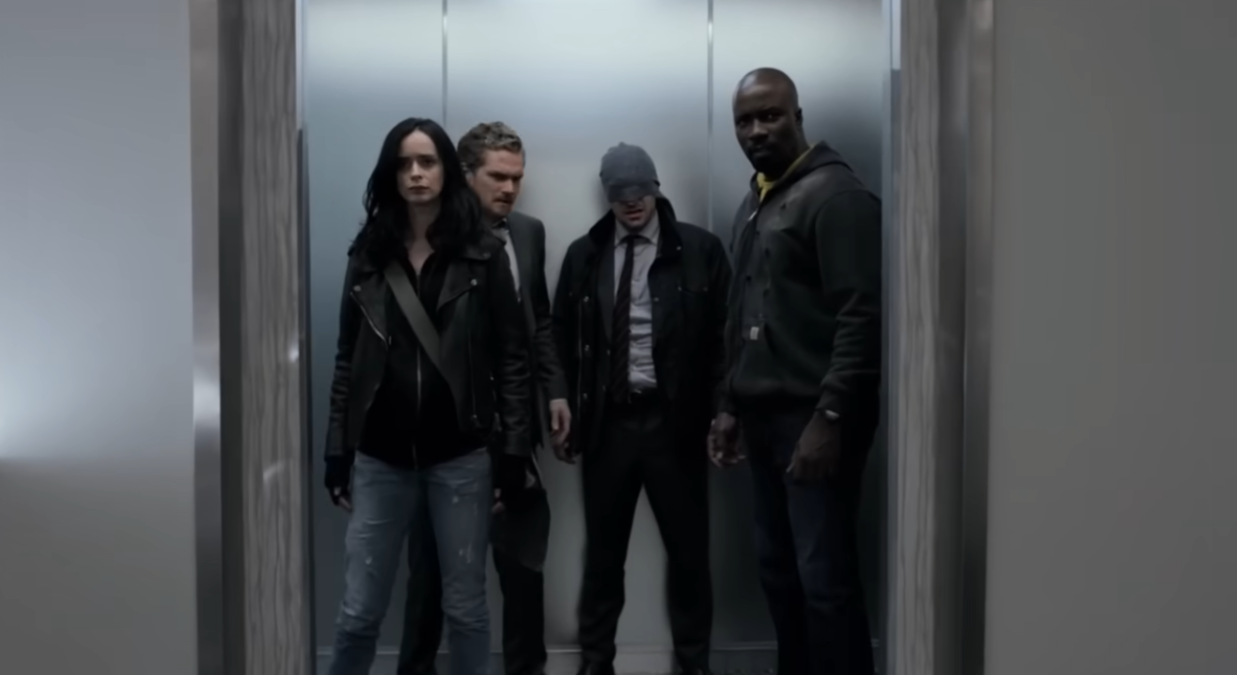
    This article contains light spoilers for Daredevil: Born Again season 3 based on set photos. Daredevil: Born Again hasn’t just been about the rebirth of Matt Murdock, the blind lawyer who spends his evening defending the streets of Hell’s Kitchen as Daredevil. It’s also been about the rebirth of the Netflix Marvel series that first […]

    The post Daredevil: Born Again Can Finally Give Us the Cage and Iron Fist Team-Up We Want appeared first on Den of Geek.

    In the premiere episode of the best superhero series on Prime Video, a spaceship falls on a father, crushing him in front of his young son. Out of the ship stumbles the members of the Earth’s greatest superhero team, their eyes bleeding because of weaponized syphilis. Before the heroes can recover, the supervillain arrives to shoot them in the head—well, only two get shot; the youngest simply has his hands crushed. The heroes murdered, the villain mocks the little boy before flying off, leaving him forever traumatized.

    Fans of The Boys might be scratching their heads after reading that description. Something so nasty, so filled with ineffective superheroes must come from Prime Video‘s beloved (until recently) adaptation of the comics by Garth Ennis and Darick Robertson. Or maybe it’s from the animated series Invincible, which amps up the violence in Robert Kirkman, Cory Walker, and Ryan Ottley’s celebration of all things comics.

    cnx.cmd.push(function() {
    cnx({
    playerId: “106e33c0-3911-473c-b599-b1426db57530”,

    }).render(“0270c398a82f44f49c23c16122516796”);
    });

    But in fact, it comes from the best superhero series ever produced by Amazon: The Tick. Canceled after two seasons and overshadowed by The Boys and Invincible, The Tick had a weird, resilient optimism (despite the scene described above) that’s needed even more today.

    Heroes of the City

    The death of the Flag Five at the hands of the Terror was just one of many ways that the Prime Video series differed from most depictions of the Tick. Created in 1986 by Ben Edlund for a newsletter distributed by his local comic book shop New England Comics, the Tick has spawned several comic book series, both in color and black and white, a beloved animated series that ran from 1994 to 1996, a short-lived Fox sitcom in 2001, and, finally, the Amazon series that ran for 20 episodes between 2016 and 2019.

    The appeal of the Tick is simple. He’s a giant blue guy with nigh-invulnerability and super-strength who is fully committed to the idea of being a superhero. The Tick has no name, no motivation outside of justice, and no enemies besides evil. And ninjas, but they’re more of an annoyance than enemies. He’s joined by his doughy friend Arthur, a timid accountant in a moth suit that makes him look like a bunny. The Tick defends the City, a metropolis populated by heroes and villains.

    Fundamentally, The Tick is about how superheroes are silly. Wonderful and cool and compelling, yes. But most of all, silly. The Tick can sometimes go to dark places, with a whole backstory that reveals the Tick’s past as a lunatic in an insane asylum. And the series loves its occasional satire of DC and Marvel, pairing him with Captain Wonder a.k.a. reporter Clark Oppenheimer or with the Running Guy, who is faster than 10 fast men. But the original comics were more interested in laughing with the weirdness of superheroes than laughing at them, so the Tick and Arthur spent time with less-specific oddballs like Paul the Samurai, Chainsaw Vigilante, and the Man-Eating Cow.

    The animated series and sitcom retained the same manic energy, even if it added more direct superhero parodies Die Fledermaus and American Maid (renamed Batmanuel and Captain Liberty for the live-action series). Every incarnation of the Tick has been over-the-top, absurd, and utterly optimistic… except for the 2016 series, at least at first.

    Big Blue Destiny

    On the surface, 2016’s The Tick has everything you’d expect from an adaption of the comics. There’s Peter Serafinowicz as the titular guileless and energetic big blue hero. Griffin Newman plays Arthur as a nervous accountant in a grey moth suit that makes him look like a bunny. They live in an unnamed city, under threat by the villainous Terror (Jackie Earle Haley), and cross paths with other heroes like Overkill (Scott Speiser) and the Superman-styled Superian (Brendan Hines). Arthur’s sister Dot (Valorie Curry, perhaps best known today as Firecracker on The Boys) even appears.

    But it takes only a few minutes for the series to establish itself as something very different from what came before, something realistic. We meet Arthur as a depressed young man trying to cover up his mental illness, a steadfast belief that the Terror, who killed his father and members of the Avengers-esque Flag Five 15 years ago, still lives, despite the promise that he’s been long since defeated by Superian. When Arthur gives in to his worst instincts and follows the villain Miss Lint (Yara Martinez) and a group of thugs to a warehouse, he’s intercepted by the Tick, an endless figure of excitement and glee in an otherwise dark world.

    In the pilot and the first few episodes, The Tick toys with the idea that Tick is just the manifestation of Arthur’s intrusive thoughts. Yes, Arthur lives in a world with Superian and the Terror, but he’s just a broken man, and the Tick is his psychosis.

    Unlikely as the premise is for The Tick, it made sense in 2016. The pilot was directed by Wally Pfister, Christopher Nolan‘s cinematographer, who shot all three entries in the Dark Knight trilogy. The first episodes feel like they’re trying to take the Tick in a similar direction, offering a more believable way to tell a story about a giant blue superhero who says things like, “Crime, nastiness and evil rear their fowl odorous heads in every corner of the globe, and that’s saying something because globes don’t even have corners!”

    Pretty quickly, the show did away with that conceit and allowed the Tick to live in the world. However, it never abandoned the mental health aspect. In fact, it expanded to show how not just Arthur, but everyone—Dot, Overkill, even Superian—had some failure haunting them, some sadness they couldn’t shake. Thus the heroism of the Tick is less about his powers and more about his indefatigable commitment to doing good. He’s completely unbothered by disappointment or confusion. For example, when Arthur’s stepdad (Francois Chau) greets the hero by exclaiming, “Look at you,” Tick gleefully doesn’t stop to suss out the meaning. He just responds “Impossible!” and carries on.

    The Tick’s embrace of all his weirdness became less a coping mechanism for living in an awful world, and more of a model for making the awful world better.

    Going Sane in a Crazy World

    Despite its gritty premiere, the final episode of The Tick features a host of superhero tropes. Supervillain the Duke (John Hodgman) has infiltrated the S.H.I.E.L.D. pastiche A.E.G.I.S., undermined the new Flag Five, and sent agents to kill Arthur’s family, all while Superian has an existential crisis on the Moon. Instead of leaping into action, however, Arthur and Dot get overwhelmed by past failures and mistakes, the same feelings of inadequacy that stall Overkill and Miss Lint’s turns toward heroism.

    As always, Tick responds to the crisis with a monologue, full of hyperbole and mixed metaphors. But this time, there’s something truly inspirational in his garbled words. “The truth about the truth is that it’s a choice,” he declares. “Choose love or choose fear. Everything else is up to destiny.”

    It’s a silly statement, to be sure, and the show recognizes the self-help cliches in Tick’s speech, just as it does the purple prose he usually spouts. But in that moment of self-doubt and despair, anything positive seems silly. Moreover, the fact that Tick says it with such sincerity, without even the hint of apologizing for who he is, becomes inspirational. As he’s done from the first episode, Tick invites Arthur to be who he is: not a broken man who copes with his trauma by dressing up like a moth/bunny, but a human who has both experienced hurt and makes weird, wonderful choices.

    The finale of The Tick plays even better now, in the shadow of the finale of The Boys. The Boys underscored its central point about the inherently empty and pathetic pursuit of power (whether in the real or fictional White House), but it couldn’t make the switch from outrageous edgy humor to genuine human emotion, no matter how much Homelander offered to degrade himself.

    By the end of its run, The Tick also turned its superhero tropes into something relevant, by reminding the viewers that there’s no such thing as normal, no such thing as a broken person, just a bunch of freaks who will make the world a better place when they they let Destiny get all up in their puppets.

    The Tick is streaming in its entirety on Prime Video.

    The post The Triumph of The Tick, Amazon’s Forgotten Superhero Series appeared first on Den of Geek.

  • 15 Board Games That Won’t Be a Bored Game

    15 Board Games That Won’t Be a Bored Game

    The dreaded board game night doesn’t need to stay that way, since there are multiple games that, contrary to popular belief, aren’t an absolute bore. Teg and Chess are all well and good, but there are many newer games you can get your hands on, with both complex and simple rules to follow.

    Not every game here is for everyone, although at least one of these games will become your next favorite thing. If you need some time away from your screens, these are just a few board games you and your friends can enjoy.

    The post 15 Board Games That Won’t Be a Bored Game appeared first on Den of Geek.

    In the premiere episode of the best superhero series on Prime Video, a spaceship falls on a father, crushing him in front of his young son. Out of the ship stumbles the members of the Earth’s greatest superhero team, their eyes bleeding because of weaponized syphilis. Before the heroes can recover, the supervillain arrives to shoot them in the head—well, only two get shot; the youngest simply has his hands crushed. The heroes murdered, the villain mocks the little boy before flying off, leaving him forever traumatized.

    Fans of The Boys might be scratching their heads after reading that description. Something so nasty, so filled with ineffective superheroes must come from Prime Video‘s beloved (until recently) adaptation of the comics by Garth Ennis and Darick Robertson. Or maybe it’s from the animated series Invincible, which amps up the violence in Robert Kirkman, Cory Walker, and Ryan Ottley’s celebration of all things comics.

    cnx.cmd.push(function() {
    cnx({
    playerId: “106e33c0-3911-473c-b599-b1426db57530”,

    }).render(“0270c398a82f44f49c23c16122516796”);
    });

    But in fact, it comes from the best superhero series ever produced by Amazon: The Tick. Canceled after two seasons and overshadowed by The Boys and Invincible, The Tick had a weird, resilient optimism (despite the scene described above) that’s needed even more today.

    Heroes of the City

    The death of the Flag Five at the hands of the Terror was just one of many ways that the Prime Video series differed from most depictions of the Tick. Created in 1986 by Ben Edlund for a newsletter distributed by his local comic book shop New England Comics, the Tick has spawned several comic book series, both in color and black and white, a beloved animated series that ran from 1994 to 1996, a short-lived Fox sitcom in 2001, and, finally, the Amazon series that ran for 20 episodes between 2016 and 2019.

    The appeal of the Tick is simple. He’s a giant blue guy with nigh-invulnerability and super-strength who is fully committed to the idea of being a superhero. The Tick has no name, no motivation outside of justice, and no enemies besides evil. And ninjas, but they’re more of an annoyance than enemies. He’s joined by his doughy friend Arthur, a timid accountant in a moth suit that makes him look like a bunny. The Tick defends the City, a metropolis populated by heroes and villains.

    Fundamentally, The Tick is about how superheroes are silly. Wonderful and cool and compelling, yes. But most of all, silly. The Tick can sometimes go to dark places, with a whole backstory that reveals the Tick’s past as a lunatic in an insane asylum. And the series loves its occasional satire of DC and Marvel, pairing him with Captain Wonder a.k.a. reporter Clark Oppenheimer or with the Running Guy, who is faster than 10 fast men. But the original comics were more interested in laughing with the weirdness of superheroes than laughing at them, so the Tick and Arthur spent time with less-specific oddballs like Paul the Samurai, Chainsaw Vigilante, and the Man-Eating Cow.

    The animated series and sitcom retained the same manic energy, even if it added more direct superhero parodies Die Fledermaus and American Maid (renamed Batmanuel and Captain Liberty for the live-action series). Every incarnation of the Tick has been over-the-top, absurd, and utterly optimistic… except for the 2016 series, at least at first.

    Big Blue Destiny

    On the surface, 2016’s The Tick has everything you’d expect from an adaption of the comics. There’s Peter Serafinowicz as the titular guileless and energetic big blue hero. Griffin Newman plays Arthur as a nervous accountant in a grey moth suit that makes him look like a bunny. They live in an unnamed city, under threat by the villainous Terror (Jackie Earle Haley), and cross paths with other heroes like Overkill (Scott Speiser) and the Superman-styled Superian (Brendan Hines). Arthur’s sister Dot (Valorie Curry, perhaps best known today as Firecracker on The Boys) even appears.

    But it takes only a few minutes for the series to establish itself as something very different from what came before, something realistic. We meet Arthur as a depressed young man trying to cover up his mental illness, a steadfast belief that the Terror, who killed his father and members of the Avengers-esque Flag Five 15 years ago, still lives, despite the promise that he’s been long since defeated by Superian. When Arthur gives in to his worst instincts and follows the villain Miss Lint (Yara Martinez) and a group of thugs to a warehouse, he’s intercepted by the Tick, an endless figure of excitement and glee in an otherwise dark world.

    In the pilot and the first few episodes, The Tick toys with the idea that Tick is just the manifestation of Arthur’s intrusive thoughts. Yes, Arthur lives in a world with Superian and the Terror, but he’s just a broken man, and the Tick is his psychosis.

    Unlikely as the premise is for The Tick, it made sense in 2016. The pilot was directed by Wally Pfister, Christopher Nolan‘s cinematographer, who shot all three entries in the Dark Knight trilogy. The first episodes feel like they’re trying to take the Tick in a similar direction, offering a more believable way to tell a story about a giant blue superhero who says things like, “Crime, nastiness and evil rear their fowl odorous heads in every corner of the globe, and that’s saying something because globes don’t even have corners!”

    Pretty quickly, the show did away with that conceit and allowed the Tick to live in the world. However, it never abandoned the mental health aspect. In fact, it expanded to show how not just Arthur, but everyone—Dot, Overkill, even Superian—had some failure haunting them, some sadness they couldn’t shake. Thus the heroism of the Tick is less about his powers and more about his indefatigable commitment to doing good. He’s completely unbothered by disappointment or confusion. For example, when Arthur’s stepdad (Francois Chau) greets the hero by exclaiming, “Look at you,” Tick gleefully doesn’t stop to suss out the meaning. He just responds “Impossible!” and carries on.

    The Tick’s embrace of all his weirdness became less a coping mechanism for living in an awful world, and more of a model for making the awful world better.

    Going Sane in a Crazy World

    Despite its gritty premiere, the final episode of The Tick features a host of superhero tropes. Supervillain the Duke (John Hodgman) has infiltrated the S.H.I.E.L.D. pastiche A.E.G.I.S., undermined the new Flag Five, and sent agents to kill Arthur’s family, all while Superian has an existential crisis on the Moon. Instead of leaping into action, however, Arthur and Dot get overwhelmed by past failures and mistakes, the same feelings of inadequacy that stall Overkill and Miss Lint’s turns toward heroism.

    As always, Tick responds to the crisis with a monologue, full of hyperbole and mixed metaphors. But this time, there’s something truly inspirational in his garbled words. “The truth about the truth is that it’s a choice,” he declares. “Choose love or choose fear. Everything else is up to destiny.”

    It’s a silly statement, to be sure, and the show recognizes the self-help cliches in Tick’s speech, just as it does the purple prose he usually spouts. But in that moment of self-doubt and despair, anything positive seems silly. Moreover, the fact that Tick says it with such sincerity, without even the hint of apologizing for who he is, becomes inspirational. As he’s done from the first episode, Tick invites Arthur to be who he is: not a broken man who copes with his trauma by dressing up like a moth/bunny, but a human who has both experienced hurt and makes weird, wonderful choices.

    The finale of The Tick plays even better now, in the shadow of the finale of The Boys. The Boys underscored its central point about the inherently empty and pathetic pursuit of power (whether in the real or fictional White House), but it couldn’t make the switch from outrageous edgy humor to genuine human emotion, no matter how much Homelander offered to degrade himself.

    By the end of its run, The Tick also turned its superhero tropes into something relevant, by reminding the viewers that there’s no such thing as normal, no such thing as a broken person, just a bunch of freaks who will make the world a better place when they they let Destiny get all up in their puppets.

    The Tick is streaming in its entirety on Prime Video.

    The post The Triumph of The Tick, Amazon’s Forgotten Superhero Series appeared first on Den of Geek.

  • X-Men ’97 Producers Tease the Return of a Fallen Fan Favorite

    X-Men ’97 Producers Tease the Return of a Fallen Fan Favorite

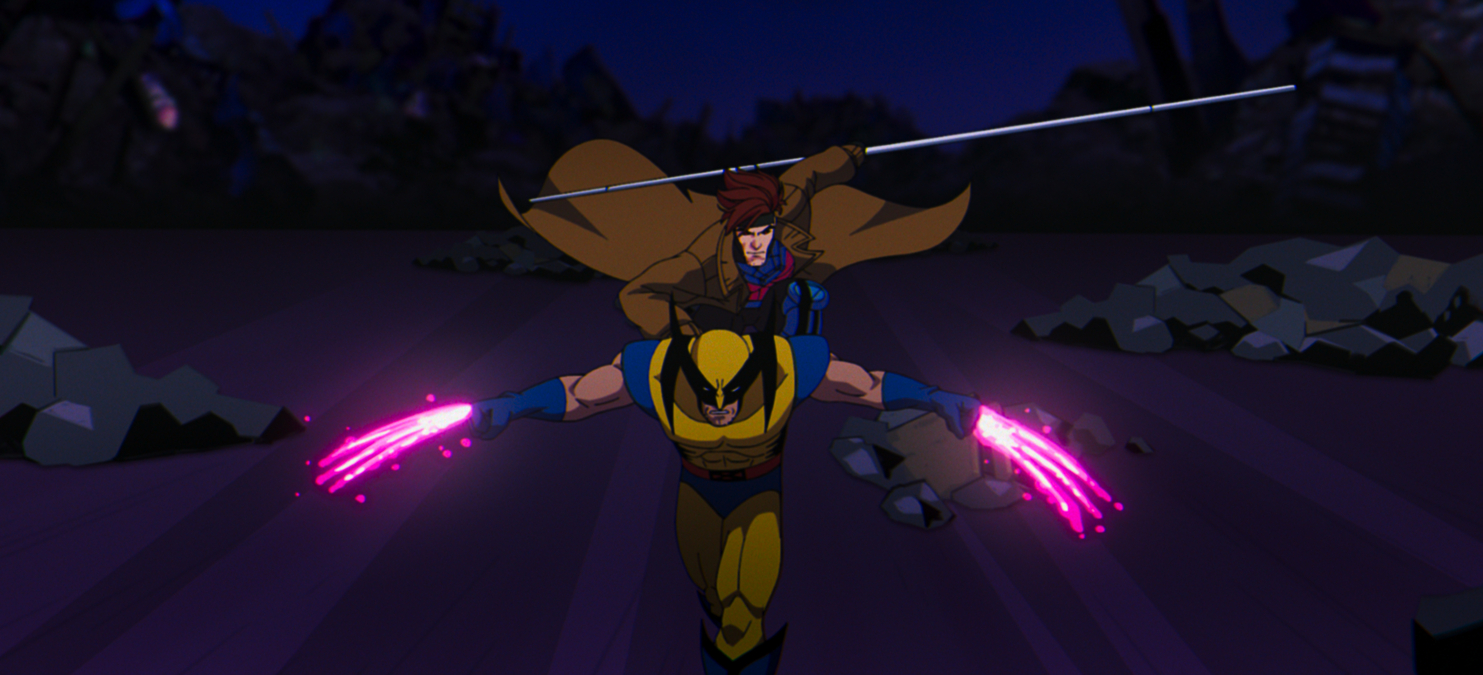
    This article contains potential spoilers for X-Men ’97 season 2. The first trailer for X-Men ’97 season 2 was full of treats for fans. But for fans of the Ragin’ Cajun Gambit, the trailer was nothing but sadness. We get to see a little of Rogue mourning her beloved, but nothing indicating that he’ll do […]

    The post X-Men ’97 Producers Tease the Return of a Fallen Fan Favorite appeared first on Den of Geek.

    In the premiere episode of the best superhero series on Prime Video, a spaceship falls on a father, crushing him in front of his young son. Out of the ship stumbles the members of the Earth’s greatest superhero team, their eyes bleeding because of weaponized syphilis. Before the heroes can recover, the supervillain arrives to shoot them in the head—well, only two get shot; the youngest simply has his hands crushed. The heroes murdered, the villain mocks the little boy before flying off, leaving him forever traumatized.

    Fans of The Boys might be scratching their heads after reading that description. Something so nasty, so filled with ineffective superheroes must come from Prime Video‘s beloved (until recently) adaptation of the comics by Garth Ennis and Darick Robertson. Or maybe it’s from the animated series Invincible, which amps up the violence in Robert Kirkman, Cory Walker, and Ryan Ottley’s celebration of all things comics.

    cnx.cmd.push(function() {
    cnx({
    playerId: “106e33c0-3911-473c-b599-b1426db57530”,

    }).render(“0270c398a82f44f49c23c16122516796”);
    });

    But in fact, it comes from the best superhero series ever produced by Amazon: The Tick. Canceled after two seasons and overshadowed by The Boys and Invincible, The Tick had a weird, resilient optimism (despite the scene described above) that’s needed even more today.

    Heroes of the City

    The death of the Flag Five at the hands of the Terror was just one of many ways that the Prime Video series differed from most depictions of the Tick. Created in 1986 by Ben Edlund for a newsletter distributed by his local comic book shop New England Comics, the Tick has spawned several comic book series, both in color and black and white, a beloved animated series that ran from 1994 to 1996, a short-lived Fox sitcom in 2001, and, finally, the Amazon series that ran for 20 episodes between 2016 and 2019.

    The appeal of the Tick is simple. He’s a giant blue guy with nigh-invulnerability and super-strength who is fully committed to the idea of being a superhero. The Tick has no name, no motivation outside of justice, and no enemies besides evil. And ninjas, but they’re more of an annoyance than enemies. He’s joined by his doughy friend Arthur, a timid accountant in a moth suit that makes him look like a bunny. The Tick defends the City, a metropolis populated by heroes and villains.

    Fundamentally, The Tick is about how superheroes are silly. Wonderful and cool and compelling, yes. But most of all, silly. The Tick can sometimes go to dark places, with a whole backstory that reveals the Tick’s past as a lunatic in an insane asylum. And the series loves its occasional satire of DC and Marvel, pairing him with Captain Wonder a.k.a. reporter Clark Oppenheimer or with the Running Guy, who is faster than 10 fast men. But the original comics were more interested in laughing with the weirdness of superheroes than laughing at them, so the Tick and Arthur spent time with less-specific oddballs like Paul the Samurai, Chainsaw Vigilante, and the Man-Eating Cow.

    The animated series and sitcom retained the same manic energy, even if it added more direct superhero parodies Die Fledermaus and American Maid (renamed Batmanuel and Captain Liberty for the live-action series). Every incarnation of the Tick has been over-the-top, absurd, and utterly optimistic… except for the 2016 series, at least at first.

    Big Blue Destiny

    On the surface, 2016’s The Tick has everything you’d expect from an adaption of the comics. There’s Peter Serafinowicz as the titular guileless and energetic big blue hero. Griffin Newman plays Arthur as a nervous accountant in a grey moth suit that makes him look like a bunny. They live in an unnamed city, under threat by the villainous Terror (Jackie Earle Haley), and cross paths with other heroes like Overkill (Scott Speiser) and the Superman-styled Superian (Brendan Hines). Arthur’s sister Dot (Valorie Curry, perhaps best known today as Firecracker on The Boys) even appears.

    But it takes only a few minutes for the series to establish itself as something very different from what came before, something realistic. We meet Arthur as a depressed young man trying to cover up his mental illness, a steadfast belief that the Terror, who killed his father and members of the Avengers-esque Flag Five 15 years ago, still lives, despite the promise that he’s been long since defeated by Superian. When Arthur gives in to his worst instincts and follows the villain Miss Lint (Yara Martinez) and a group of thugs to a warehouse, he’s intercepted by the Tick, an endless figure of excitement and glee in an otherwise dark world.

    In the pilot and the first few episodes, The Tick toys with the idea that Tick is just the manifestation of Arthur’s intrusive thoughts. Yes, Arthur lives in a world with Superian and the Terror, but he’s just a broken man, and the Tick is his psychosis.

    Unlikely as the premise is for The Tick, it made sense in 2016. The pilot was directed by Wally Pfister, Christopher Nolan‘s cinematographer, who shot all three entries in the Dark Knight trilogy. The first episodes feel like they’re trying to take the Tick in a similar direction, offering a more believable way to tell a story about a giant blue superhero who says things like, “Crime, nastiness and evil rear their fowl odorous heads in every corner of the globe, and that’s saying something because globes don’t even have corners!”

    Pretty quickly, the show did away with that conceit and allowed the Tick to live in the world. However, it never abandoned the mental health aspect. In fact, it expanded to show how not just Arthur, but everyone—Dot, Overkill, even Superian—had some failure haunting them, some sadness they couldn’t shake. Thus the heroism of the Tick is less about his powers and more about his indefatigable commitment to doing good. He’s completely unbothered by disappointment or confusion. For example, when Arthur’s stepdad (Francois Chau) greets the hero by exclaiming, “Look at you,” Tick gleefully doesn’t stop to suss out the meaning. He just responds “Impossible!” and carries on.

    The Tick’s embrace of all his weirdness became less a coping mechanism for living in an awful world, and more of a model for making the awful world better.

    Going Sane in a Crazy World

    Despite its gritty premiere, the final episode of The Tick features a host of superhero tropes. Supervillain the Duke (John Hodgman) has infiltrated the S.H.I.E.L.D. pastiche A.E.G.I.S., undermined the new Flag Five, and sent agents to kill Arthur’s family, all while Superian has an existential crisis on the Moon. Instead of leaping into action, however, Arthur and Dot get overwhelmed by past failures and mistakes, the same feelings of inadequacy that stall Overkill and Miss Lint’s turns toward heroism.

    As always, Tick responds to the crisis with a monologue, full of hyperbole and mixed metaphors. But this time, there’s something truly inspirational in his garbled words. “The truth about the truth is that it’s a choice,” he declares. “Choose love or choose fear. Everything else is up to destiny.”

    It’s a silly statement, to be sure, and the show recognizes the self-help cliches in Tick’s speech, just as it does the purple prose he usually spouts. But in that moment of self-doubt and despair, anything positive seems silly. Moreover, the fact that Tick says it with such sincerity, without even the hint of apologizing for who he is, becomes inspirational. As he’s done from the first episode, Tick invites Arthur to be who he is: not a broken man who copes with his trauma by dressing up like a moth/bunny, but a human who has both experienced hurt and makes weird, wonderful choices.

    The finale of The Tick plays even better now, in the shadow of the finale of The Boys. The Boys underscored its central point about the inherently empty and pathetic pursuit of power (whether in the real or fictional White House), but it couldn’t make the switch from outrageous edgy humor to genuine human emotion, no matter how much Homelander offered to degrade himself.

    By the end of its run, The Tick also turned its superhero tropes into something relevant, by reminding the viewers that there’s no such thing as normal, no such thing as a broken person, just a bunch of freaks who will make the world a better place when they they let Destiny get all up in their puppets.

    The Tick is streaming in its entirety on Prime Video.

    The post The Triumph of The Tick, Amazon’s Forgotten Superhero Series appeared first on Den of Geek.

  • 007 First Light Is Already Dividing Gamers… And That’s OK 

    007 First Light Is Already Dividing Gamers… And That’s OK 

    IO Interactive has rewound time to give fans the origins of the most iconic figure in espionage, James Bond. The Hitman studio’s new game 007 First Light depicts a young, reckless, and developing Bond during his time in the MI6’s training program as the former naval air crewman trains to confront a global conspiracy. The […]

    The post 007 First Light Is Already Dividing Gamers… And That’s OK  appeared first on Den of Geek.

    In the premiere episode of the best superhero series on Prime Video, a spaceship falls on a father, crushing him in front of his young son. Out of the ship stumbles the members of the Earth’s greatest superhero team, their eyes bleeding because of weaponized syphilis. Before the heroes can recover, the supervillain arrives to shoot them in the head—well, only two get shot; the youngest simply has his hands crushed. The heroes murdered, the villain mocks the little boy before flying off, leaving him forever traumatized.

    Fans of The Boys might be scratching their heads after reading that description. Something so nasty, so filled with ineffective superheroes must come from Prime Video‘s beloved (until recently) adaptation of the comics by Garth Ennis and Darick Robertson. Or maybe it’s from the animated series Invincible, which amps up the violence in Robert Kirkman, Cory Walker, and Ryan Ottley’s celebration of all things comics.

    cnx.cmd.push(function() {
    cnx({
    playerId: “106e33c0-3911-473c-b599-b1426db57530”,

    }).render(“0270c398a82f44f49c23c16122516796”);
    });

    But in fact, it comes from the best superhero series ever produced by Amazon: The Tick. Canceled after two seasons and overshadowed by The Boys and Invincible, The Tick had a weird, resilient optimism (despite the scene described above) that’s needed even more today.

    Heroes of the City

    The death of the Flag Five at the hands of the Terror was just one of many ways that the Prime Video series differed from most depictions of the Tick. Created in 1986 by Ben Edlund for a newsletter distributed by his local comic book shop New England Comics, the Tick has spawned several comic book series, both in color and black and white, a beloved animated series that ran from 1994 to 1996, a short-lived Fox sitcom in 2001, and, finally, the Amazon series that ran for 20 episodes between 2016 and 2019.

    The appeal of the Tick is simple. He’s a giant blue guy with nigh-invulnerability and super-strength who is fully committed to the idea of being a superhero. The Tick has no name, no motivation outside of justice, and no enemies besides evil. And ninjas, but they’re more of an annoyance than enemies. He’s joined by his doughy friend Arthur, a timid accountant in a moth suit that makes him look like a bunny. The Tick defends the City, a metropolis populated by heroes and villains.

    Fundamentally, The Tick is about how superheroes are silly. Wonderful and cool and compelling, yes. But most of all, silly. The Tick can sometimes go to dark places, with a whole backstory that reveals the Tick’s past as a lunatic in an insane asylum. And the series loves its occasional satire of DC and Marvel, pairing him with Captain Wonder a.k.a. reporter Clark Oppenheimer or with the Running Guy, who is faster than 10 fast men. But the original comics were more interested in laughing with the weirdness of superheroes than laughing at them, so the Tick and Arthur spent time with less-specific oddballs like Paul the Samurai, Chainsaw Vigilante, and the Man-Eating Cow.

    The animated series and sitcom retained the same manic energy, even if it added more direct superhero parodies Die Fledermaus and American Maid (renamed Batmanuel and Captain Liberty for the live-action series). Every incarnation of the Tick has been over-the-top, absurd, and utterly optimistic… except for the 2016 series, at least at first.

    Big Blue Destiny

    On the surface, 2016’s The Tick has everything you’d expect from an adaption of the comics. There’s Peter Serafinowicz as the titular guileless and energetic big blue hero. Griffin Newman plays Arthur as a nervous accountant in a grey moth suit that makes him look like a bunny. They live in an unnamed city, under threat by the villainous Terror (Jackie Earle Haley), and cross paths with other heroes like Overkill (Scott Speiser) and the Superman-styled Superian (Brendan Hines). Arthur’s sister Dot (Valorie Curry, perhaps best known today as Firecracker on The Boys) even appears.

    But it takes only a few minutes for the series to establish itself as something very different from what came before, something realistic. We meet Arthur as a depressed young man trying to cover up his mental illness, a steadfast belief that the Terror, who killed his father and members of the Avengers-esque Flag Five 15 years ago, still lives, despite the promise that he’s been long since defeated by Superian. When Arthur gives in to his worst instincts and follows the villain Miss Lint (Yara Martinez) and a group of thugs to a warehouse, he’s intercepted by the Tick, an endless figure of excitement and glee in an otherwise dark world.

    In the pilot and the first few episodes, The Tick toys with the idea that Tick is just the manifestation of Arthur’s intrusive thoughts. Yes, Arthur lives in a world with Superian and the Terror, but he’s just a broken man, and the Tick is his psychosis.

    Unlikely as the premise is for The Tick, it made sense in 2016. The pilot was directed by Wally Pfister, Christopher Nolan‘s cinematographer, who shot all three entries in the Dark Knight trilogy. The first episodes feel like they’re trying to take the Tick in a similar direction, offering a more believable way to tell a story about a giant blue superhero who says things like, “Crime, nastiness and evil rear their fowl odorous heads in every corner of the globe, and that’s saying something because globes don’t even have corners!”

    Pretty quickly, the show did away with that conceit and allowed the Tick to live in the world. However, it never abandoned the mental health aspect. In fact, it expanded to show how not just Arthur, but everyone—Dot, Overkill, even Superian—had some failure haunting them, some sadness they couldn’t shake. Thus the heroism of the Tick is less about his powers and more about his indefatigable commitment to doing good. He’s completely unbothered by disappointment or confusion. For example, when Arthur’s stepdad (Francois Chau) greets the hero by exclaiming, “Look at you,” Tick gleefully doesn’t stop to suss out the meaning. He just responds “Impossible!” and carries on.

    The Tick’s embrace of all his weirdness became less a coping mechanism for living in an awful world, and more of a model for making the awful world better.

    Going Sane in a Crazy World

    Despite its gritty premiere, the final episode of The Tick features a host of superhero tropes. Supervillain the Duke (John Hodgman) has infiltrated the S.H.I.E.L.D. pastiche A.E.G.I.S., undermined the new Flag Five, and sent agents to kill Arthur’s family, all while Superian has an existential crisis on the Moon. Instead of leaping into action, however, Arthur and Dot get overwhelmed by past failures and mistakes, the same feelings of inadequacy that stall Overkill and Miss Lint’s turns toward heroism.

    As always, Tick responds to the crisis with a monologue, full of hyperbole and mixed metaphors. But this time, there’s something truly inspirational in his garbled words. “The truth about the truth is that it’s a choice,” he declares. “Choose love or choose fear. Everything else is up to destiny.”

    It’s a silly statement, to be sure, and the show recognizes the self-help cliches in Tick’s speech, just as it does the purple prose he usually spouts. But in that moment of self-doubt and despair, anything positive seems silly. Moreover, the fact that Tick says it with such sincerity, without even the hint of apologizing for who he is, becomes inspirational. As he’s done from the first episode, Tick invites Arthur to be who he is: not a broken man who copes with his trauma by dressing up like a moth/bunny, but a human who has both experienced hurt and makes weird, wonderful choices.

    The finale of The Tick plays even better now, in the shadow of the finale of The Boys. The Boys underscored its central point about the inherently empty and pathetic pursuit of power (whether in the real or fictional White House), but it couldn’t make the switch from outrageous edgy humor to genuine human emotion, no matter how much Homelander offered to degrade himself.

    By the end of its run, The Tick also turned its superhero tropes into something relevant, by reminding the viewers that there’s no such thing as normal, no such thing as a broken person, just a bunch of freaks who will make the world a better place when they they let Destiny get all up in their puppets.

    The Tick is streaming in its entirety on Prime Video.

    The post The Triumph of The Tick, Amazon’s Forgotten Superhero Series appeared first on Den of Geek.