
Category: Blog

Your blog category

  • Anora and The Brutalist Win Big at an Oscars Where Indies Reign

    Anora and The Brutalist Win Big at an Oscars Where Indies Reign

    It began with a song that didn’t come out last year. It began with a song that didn’t come out in this century. But what a song to open the 97th annual Academy Awards: Ariana Grande threading a wilting rendition of “Somewhere Over the Rainbow.” The moment obviously was a nod to the other Oz-centric […]

    The post Anora and The Brutalist Win Big at an Oscars Where Indies Reign appeared first on Den of Geek.

    A science fiction spaceship is a lot like a house party. When I see one, the first thing I want to know is what’s going on in the kitchen. Interior designers are the unsung heroes of sci-fi worldbuilding, and a bit of carefully dressed set can do the work of a dozen dramatic exposition-filled voiceovers or lengthy opening text crawls. And this is nowhere more evident than the kitchen.

    Take a look at your own kitchen. What appliances have you got? A kitchen-bound time traveler could quickly determine when they are with a look at your microwave and fridge. A look at how much the dirty dishes have stacked up tells you about the routines and temperaments of the people who live here. A glance at the fridge will tell you how many kids are here, or show you the nearby takeout favorites.

    cnx.cmd.push(function() {
    cnx({
    playerId: “106e33c0-3911-473c-b599-b1426db57530”,

    }).render(“0270c398a82f44f49c23c16122516796”);
    });

    But more than that, the kind of food available will tell you about the world at large—how far the supply chains reach and how quickly produce can be moved along them, and what kind of cross-cultural pollination this setting is subject to. You can learn about water, power, and heating infrastructure, how much room the people who live here have access to in the rest of the home. The kitchen is a microcosm of everything else that is happening in a place or time.

    When I was writing the Fermi’s Progress series—four novellas about an FTL ship that vaporizes every planet it encounters—the spaceship’s kitchen became a key setting for the story due to all of these reasons mentioned above. And in mapping it out in my head, I thought a lot about how kitchens have worked on other well-known spacecraft.

    Nostromo (Alien)

    We have talked before about the enormous influence the Nostromo’s kitchen and otherwise has had on spaceship set design in general. Alien’s impact on sci-fi aesthetics as a whole is incalculable, sometimes to the detriment of the genre, but that influence is felt strongest where movie spaceship crews eat.

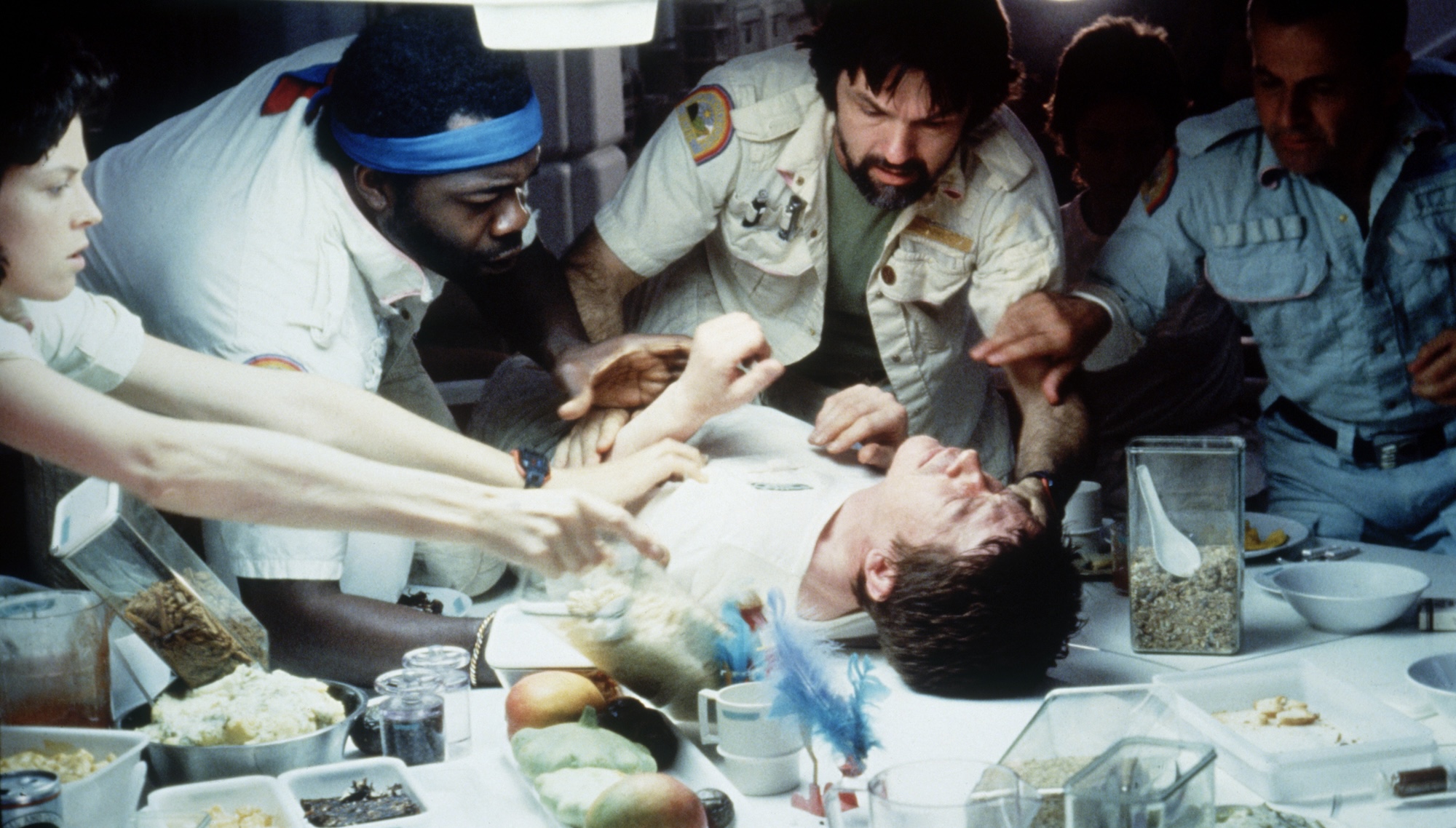
    And with good cause. The meat of the action in Alien does not take place on some bridge or control room, or in a laboratory or Star Trek-style space conference room. It doesn’t even take place in its many spacious air shafts. It all happens in the kitchen. This is where we meet the Nostromo crew for the first time arguing about percentages. This is also, of course, where John Hurt has the worst case of indigestion in film history. It is where plans are suggested, argued over and agreed on. It is where Ash attempts his brutal and terrifying murder of Ripley and the crew overpowers, interrogates and ultimately, cooks him.

    The set for the Nostromo’s kitchen might also just be one of the most intricately designed film sets in movie history. It still places the bar for environmental storytelling, from Ron Cobb’s now legendary “Semiotic Standard” to the cereal station, the wall of cups neatly ensconced in their little cupholders. Everything has its place, its premade slot. 

    But the gap between its intended and actual use is also clear—the stark white is everywhere covered in grime; the walls plastered with pin-ups, stickers, and notes. It is not just the room where the story action takes place, it is the room where the characters live, often despite the wishes of the employer that put them there, and that is visible in every detail.

    One of the most illustrative elements is the food itself. There are no ovens or hobs visible, and certainly no fresh meat or vegetables. This is a place for out-of-the-packet living. The Nostromo crew drinks canned beer and scoop food out of Tupperware containers, eating big bowls of what looks like cheap noodles, although the crew “don’t know what it’s made of.” Frankly, the food tells you how much the crew’s well-being is valued by their employer, foreshadowing what will become of them.

    Serenity (Serenity)

    The kitchen aboard the workhorse spaceship of the series Firefly and its movie spinoff Serenity is probably the second best known spaceship kitchen out there. Before we go any further it is important to also acknowledge we’re not here to celebrate Joss Whedon (who by many accounts is a shit), but Firefly’s impact on the sci-fi genre is undeniable (even if arguably that impact is recycling a bunch of stuff from the Millennium Falcon and throwing in some ideas from Cowboy Bebop and Southern Revisionism of the American Civil War).

    The Serenity has a lot in common with the Nostromo. It is a blue-collar spaceship in a setting so retrofuturistic that it borders on being just plain retro. The kitchen of that spaceship is in many ways its hero set. But Serenity’s kitchen is not your workplace cafeteria; it is the dining room in the homestead. As much as Nathan Fillion’s Mal Reynolds might seem like a salt of the earth working man, he is a salt of the earth working man who can afford an entire working spaceship.

    Comparing the two, the differences are immediate. Instead of pin-up posters, the walls have flowers painted on. There are warmer colors, wooden furniture, a hob for cooking on, and a sink for doing the dishes in. This is a domestic space as much as a workplace. People here tell stories and celebrate birthdays as much as they argue percentages on the latest job.

    When it comes to food, every meal is “protein,” reflecting a universe where food has to travel for longer than fresh produce can be expected to last. But that protein is prepared with care, with spices used to improve the flavor—and when they come by fruit, it is a delicacy.

    But what Serenity most illustrates about the role of the kitchen is that it says a lot about who a space belongs to. The Nostromo’s kitchen belongs to the Company, its crew just eats there. The Serenity’s kitchen is ostensibly the property of its captain, but it is maintained and occupied by its crew, and their personalities shine through in this space.

    Icarus II (Sunshine)

    The kitchen and dining area in Sunshine will not pass the “Definitely Not the Nostromo” smell test. Alien’s design aesthetic is felt strongly here. Yet once you start looking for differences they start to mount up. The lighting is softer, and the crew’s well-being is more of a concern. There is room for personalization in the form of bookshelves and personal storage spaces, but unlike the expansive Nostromo set, here everything is packed in closely, bringing to mind the weight and space restrictions that are a concern on any real-life space mission.

    But the really revealing bit of worldbuilding here is the food. The crew of the Icarus II gets to dine on things that the Nostromo and Serenity crews could only dream about. This is not because their spaceship is any more luxurious, but because the crew are eating the vegetables grown in their own hydroponic garden—the same garden that recycles their oxygen supply.

    It shows us how a spaceship can be many different things. The Serenity is hopping job to job, resupply to resupply. The Nostromo is a cog in a vast machine, equipped with the cheapest mass-produced components necessary for it to complete its job. Icarus II, however, is on a true mission into the unknown. It is designed to be a self-contained world because its crew is not sailing to the next port, they are sailing into a place hostile to life, and so need to take everything they need with them.

    Rocinante (The Expanse)

    Like the Icarus II, the Rocinante is a ship designed with the practicalities of space travel in mind. Where most sci-fi spaceships are laid out like a maritime vessel with decks running horizontally from the fore to the aft of the ship, the Rocinante is more like a tower, with its control room at the top and the engines at the bottom. In this way, acceleration draws everything toward the engine-end of the ship, creating a simulation of gravity.

    That is reflected in the way the Rocinante’s dining and kitchen area is laid out—everything is functional and compact. The kitchen fittings and implements can tell you a lot about technology as well. Are the kitchen crowded with cups and jars, plates and sharp implements? Then this is a spaceship that has real faith in its artificial gravity and inertial dampeners. Alternatively, is everything locked down and strapped into place?

    That hob we mentioned earlier, is it electric or is this crew willing to light a naked flame in a highly pressurised environment in the cold depths of deep space?

    Everything on the Rocinante has a place to be put away—nobody leaves knives lying around that might become projectiles if the ship has to perform a tricky manoeuvre. Fresh herbs for long voyages are grown in small centrifuges that will keep them growing properly even during periods of Zero G.

    But beyond the fittings, spaceship kitchens also tell us a lot because of the kinds of interactions they facilitate. Is this ship’s kitchen a space where a family all eat together at predetermined times of the day, or is it like a student dorm, where people rotate through one or two at a time to feed themselves?

    The kitchen is the room on a spaceship where we are most likely to see the crew when they are not working or asleep. It is the room where characters get downtime, showing us how they relate to each other out of crisis mode. It shows us if people are eating three square meals, or are just grabbing snacks on the fly. The Expanse’s Rocinante was also home to one of the all-time great space kitchen scenes where we see the Rocinante crew get to sit down and share a meal. 

    Unreliable (The Outer Worlds)

    For fans of wandering around spaceship kitchens, poking into all the cupboards and nosing through the fridge, there are quite a few video games that scratch the itch. One of the best examples is the kitchen of the Unreliable in the video game The Outer Worlds. Clearly inspired heavily by Serenity’s kitchen, the Unreliable’s dining area tells stories through the detritus that gradually builds up over time, including scattered game pieces and cards, used dishes, and off-duty crew shooting the shit between missions.

    The Millennium Falcon never showed us much of a kitchen (although expanded universe reference materials tell us Han Solo installed one as a wedding gift for Leia which is… a choice), but Star Wars games have proven an excellent hunting ground for space kitchen fans with the Jedi games’ Stinger Mantis and Outlaw’s Trailblazer both giving you a little kitchenette to sniff around. Mass Effect: Andromeda’s kitchen is pretty small and tucked away, but does give us the ability to watch the crew bickering through notes on the fridge.

    USS Enterprise NCC-1701 (Star Trek: Strange New Worlds)

    All of the kitchens we have looked at so far vary from the spartan yet homey to the grimy yet utilitarian. But all-out luxury can be just as revealing of a setting and its characters. Let’s thus take a look at the kitchen in Captain Pike’s quarters aboard Star Trek: Strange New Worlds’ Enterprise.

    This is a matter of opinion, but as a big fan of both spaceship kitchens and Star Trek, I think I am qualified to say that Trek does not normally do it for me on the kitchen front. Its ships are, first and foremost, a living room-centred environment. The ship’s dining areas are usually sterile and gray, the only appliance they need is a replicator, and even Neelix’s kitchen feels like an afterthought rather than a facility capable of serving approximately 150 people.

    But Captain Pike’s kitchen in the newest series shows the culmination of what cooking can become in Star Trek’s space communist future, even before the invention of the replicator. It is a leisure activity and a luxury.

    The kitchen is spacious enough to contain three sets of crew quarters from Kirk’s Enterprise (and I still harbor a theory that Uhura assigned Kirk one of the crappier upper deck cabins before repurposing Pike’s room as a Lower Deckers clubhouse). But as well as being a social location, it also serves a work function. This is not the “family table” we see aboard Serenity. Here people are expected to stand, and more importantly, to mingle. For all the friendly bonhomie it evokes, it is a networking space, and Pike is assuming as much authority as he stands over the grill as he does sitting in the bridge’s Big Chair.

    And of course, on Pike’s Enterprise people eat whatever they damn well please, because we might be in deep space, but Star Trek is the definition of luxury space communism. Once, during a talk, someone asked the beloved fantasy writer Terry Pratchett what he first thought about when designing a fantasy city. Pratchett reportedly answered that you should think about how the clean water gets in and the sewage gets out.

    When you are designing your spaceship there are similar concerns—thinking about when, what, and how your crew take in food and water is a good place to start.

    Except of course as a genre, space fiction is usually a good deal more reticent about where the sewage goes…

    The post Why the Kitchen Is the Most Important Room in a Sci-Fi Spaceship appeared first on Den of Geek.


  • User Research Is Storytelling

    User Research Is Storytelling

    I’ve been fascinated by shows since I was a child. I loved the figures and the excitement—but most of all the reports. I aspired to be an artist. And I believed that I’d get to do the things that Indiana Jones did and go on interesting activities. I also came up with concept films that my friends and I could create and sun in. But they never went any farther. However, I did end up in the user experience ( UX) field. Today, I realize that there’s an element of drama to UX— I hadn’t actually considered it before, but consumer research is story. And to get the most out of customer studies, you must tell a compelling story that involves stakeholders, including the product team and decision-makers, and piques their interest in learning more.

    Think of your favourite film. It more than likely follows a three-act construction that’s frequently seen in movies: the layout, the conflict, and the resolution. The second act shows what exists now, and it helps you get to know the figures and the challenges and problems that they face. Act two sets the scene for the issue and the action begins. Here, difficulties grow or get worse. The solution is the third and final work. This is where the issues are resolved and the figures learn and change. This architecture, in my opinion, is also a fantastic way to think about consumer research, and it might be particularly useful for introducing user research to others.

    Use story as a framework for conducting research

    It’s sad to say, but many have come to see studies as being inconsequential. Research is typically one of the first things to go when finances or deadlines are tight. Instead of investing in study, some goods professionals rely on manufacturers or—worse—their personal judgment to make the “right” options for users based on their experience or accepted best practices. That may lead some groups, but that approach can so easily miss the chance to solve people ‘ real issues. To be user-centered, this is something we really avoid. Design is enhanced by customer research. It keeps it on trail, pointing to problems and opportunities. Being aware of problems with your goods and taking corrective actions can help you keep ahead of your competition.

    In the three-act structure, each action corresponds to a part of the process, and each part is important to telling the whole story. Let’s take a look at the various functions and how they relate to customer research.

    Act one: layout

    Fundamental analysis comes in handy because the setup is all about comprehending the background. Basic research ( also called conceptual, discovery, or preliminary research ) helps you understand people and identify their problems. You’re learning about the problems people face now, what options are available, and how those challenges impact them, just like in the films. To do basic research, you may conduct situational inquiries or journal studies ( or both! ), which may assist you in identifying both prospects and problems. It doesn’t need to get a great investment in time or money.

    Erika Hall writes about the most effective anthropology, which can be as straightforward as spending 15 hours with a customer and asking them to” Walk me through your morning yesterday.” That’s it. Current that one ask. Opened up and listen to them for 15 days. Do everything in your power to keep yourself and your pursuits out of it. Bam, you’re doing ethnography”. According to Hall, “[This ] will definitely prove quite fascinating. In the very unlikely event that you didn’t learn anything new or helpful, carry on with increased confidence in your way”.

    I think this makes sense. And I love that this makes consumer studies so visible. You can simply attract participants and carry out the recruitment process without having to make a lot of paperwork! This can offer a wealth of knowledge about your customers, and it’ll help you better understand them and what’s going on in their life. Understanding where people are coming from is what action one is really all about.

    Maybe Spool talks about the importance of basic research and how it may type the bulk of your research. If you can supplement what you’ve heard in the basic studies by using any more user data that you can obtain, such as surveys or analytics, to make recommendations that may need to be investigated further, you might as well use those that can be drawn from those that you can obtain. Together, all this information creates a clearer picture of the state of things and all its deficiencies. And that’s the start of a gripping tale. It’s the place in the story where you realize that the principal characters—or the people in this case—are facing issues that they need to conquer. This is where you begin to develop compassion for the characters and support their success, much like in films. And maybe partners are now doing the same. Their business may lose money because users didn’t finish particular tasks, which may be their love. Or probably they do connect with people ‘ problems. In any case, work one serves as your main strategy to pique the interest and interest of the participants.

    When partners begin to understand the value of basic research, that is open doors to more opportunities that involve users in the decision-making approach. And that can help item team become more user-centric. This gains everyone—users, the goods, and partners. It’s similar to winning an Oscar for a film; it frequently results in a favorable reception and success for your item. And this can be an opportunity for participants to repeat this process with different items. Knowing how to show a good story is the only way to convince partners to worry about doing more research, and story is the key to this method.

    This brings us to work two, where you incrementally examine a design or idea to see whether it addresses the problems.

    Act two: fight

    Act two is all about digging deeper into the issues that you identified in action one. In order to evaluate a potential alternative ( such as a design ), you typically conduct vertical research, such as usability tests, to see if it addresses the problems you identified. The issues may include unfulfilled needs or problems with a circulation or procedure that’s tripping users off. More issues may come up in the process, much like in action two of a movie. It’s ok that you learn more about the characters as they grow and develop through this work.

    Usability tests should generally consist of five participants, according to Jakob Nielsen, who found that that number of users can usually identify the majority of the issues:” As you add more and more users, you learn less and less because you will keep seeing the same things again and again… After the second user, you are wasting your time by observing the same findings regularly but hardly learning much new.”

    There are parallels with storytelling here too, if you try to tell a story with too many characters, the plot may get lost. With fewer participants, each user’s struggles will be more memorable and accessible to other parties when presenting the research. This can help convey the issues that need to be addressed while also highlighting the value of doing the research in the first place.

    Usability tests have been conducted in person for decades, but you can also conduct them remotely using software like Microsoft Teams, Zoom, or other teleconferencing software. This approach has become increasingly popular since the beginning of the pandemic, and it works well. You might consider in-person usability tests like watching a movie as opposed to remote testing like attending a play. There are advantages and disadvantages to each. Usability research in person is a much more extensive experience. Stakeholders can experience the sessions with other stakeholders. You also get real-time feedback on what they’re seeing, including surprises, disagreements, and discussions about them. Much like going to a play, where audiences get to take in the stage, the costumes, the lighting, and the actors ‘ interactions, in-person research lets you see users up close, including their body language, how they interact with the moderator, and how the scene is set up.

    If conducting usability testing in the field is like watching a play that is staged and controlled, where any two sessions may be very different from one another. You can take usability testing into the field by creating a replica of the space where users interact with the product and then conduct your research there. Or you can meet users at their location to conduct your research. With either option, you get to see how things work in context, things come up that wouldn’t have in a lab environment—and conversion can shift in entirely different directions. You have less control over how these sessions end as researchers, but this can occasionally help you understand users even better. Meeting users where they are can provide clues to the external forces that could be affecting how they use your product. In-person usability tests add a level of detail that is frequently absent from remote usability tests.

    That’s not to say that the “movies” —remote sessions—aren’t a good option. A wider audience can be obtained from remote sessions. They allow a lot more stakeholders to be involved in the research and to see what’s going on. Additionally, they make access to a much wider user base geographically. But with any remote session there is the potential of time wasted if participants can’t log in or get their microphone working.

    You can ask real users questions to understand their thoughts and understanding of the solution as a result of usability testing, whether it is conducted remotely or in person. This can help you not only identify problems but also glean why they’re problems in the first place. Additionally, you can test your own hypotheses and determine whether your reasoning is correct. By the end of the sessions, you’ll have a much clearer picture of how usable the designs are and whether they work for their intended purposes. Act two is where the excitement is at the heart of the narrative, but there are also potential surprises. This is equally true of usability tests. Unexpected things that participants say frequently alter the way you look at things, and these unexpected revelations can lead to unexpected turns in the narrative.

    Unfortunately, user research is sometimes seen as expendable. Usability testing is also frequently the only research technique that some stakeholders believe they ever need, and too frequently. In fact, if the designs that you’re evaluating in the usability test aren’t grounded in a solid understanding of your users ( foundational research ), there’s not much to be gained by doing usability testing in the first place. Because you’re narrowing the scope of what you’re receiving feedback on without understanding the needs of the users. As a result, there’s no way of knowing whether the designs might solve a problem that users have. In the context of a usability test, it’s only feedback on a particular design.

    On the other hand, if you only do foundational research, while you might have set out to solve the right problem, you won’t know whether the thing that you’re building will actually solve that. This demonstrates the value of conducting both directional and foundational research.

    In act two, stakeholders will—hopefully—get to watch the story unfold in the user sessions, which creates the conflict and tension in the current design by surfacing their highs and lows. And in turn, this can encourage stakeholders to take action on the issues raised.

    Act three: resolution

    The third act is about resolving the issues from the first two acts, whereas the first two acts are about understanding the context and the tensions that can compel stakeholders to act. While it’s important to have an audience for the first two acts, it’s crucial that they stick around for the final act. That includes the entire product team, including developers, UX experts, business analysts, delivery managers, product managers, and any other interested parties who have a say in the coming development. It allows the whole team to hear users ‘ feedback together, ask questions, and discuss what’s possible within the project’s constraints. Additionally, it enables the UX design and research teams to clarify, suggest alternatives, or provide more context for their decisions. So you can get everyone on the same page and get agreement on the way forward.

    This act is primarily told through voiceover with some audience participation. The researcher is the narrator, who paints a picture of the issues and what the future of the product could look like given the things that the team has learned. They provide the stakeholders with their suggestions and suggestions for how to create this vision.

    Nancy Duarte in the Harvard Business Review offers an approach to structuring presentations that follow a persuasive story. The most effective presenters employ the same methods as great storytellers: By reaffirming the status quo and then revealing a better way, they create a conflict that needs to be resolved, writes Duarte. ” That tension helps them persuade the audience to adopt a new mindset or behave differently”.

    This type of structure aligns well with research results, and particularly results from usability tests. It provides proof for “what is “—the issues you’ve identified. And “what could be “—your recommendations on how to address them. And so forth and forth.

    You can reinforce your recommendations with examples of things that competitors are doing that could address these issues or with examples where competitors are gaining an edge. Or they can be as visual as quick sketches of a potential solution to a problem. These can help generate conversation and momentum. And this continues until the session is over when you’ve concluded everything by summarizing the key points and offering suggestions for a solution. This is the part where you reiterate the main themes or problems and what they mean for the product—the denouement of the story. This stage provides stakeholders with the next steps, and hopefully, the motivation to take those steps as well!

    While we are nearly at the end of this story, let’s reflect on the idea that user research is storytelling. The three-act structure of user research contains all the components for a good story:

      Act one: You meet the protagonists ( the users ) and the antagonists ( the problems affecting users ). This is the plot’s beginning. In act one, researchers might use methods including contextual inquiry, ethnography, diary studies, surveys, and analytics. These techniques can produce personas, empathy maps, user journeys, and analytics dashboards as output.
      Act two: Next, there’s character development. The protagonists encounter problems and challenges, which they must overcome, and there is conflict and tension. In act two, researchers might use methods including usability testing, competitive benchmarking, and heuristics evaluation. Usability findings reports, UX strategy documents, usability guidelines, and best practices can be included in the output of these.
      Act three: The protagonists triumph and you see what a better future looks like. Researchers may use techniques like presentation decks, storytelling, and digital media in act three. The output of these can be: presentation decks, video clips, audio clips, and pictures.

    The researcher plays a variety of roles, including producer, director, and storyteller. The participants have a small role, but they are significant characters ( in the research ). And the audience is the audience, as well. But the most important thing is to get the story right and to use storytelling to tell users ‘ stories through research. By the end, the parties should have a goal and a desire to solve the product’s flaws.

    So the next time that you’re planning research with clients or you’re speaking to stakeholders about research that you’ve done, think about how you can weave in some storytelling. In the end, user research is beneficial to everyone, and all parties must be interested in the conclusion.

  • Doctor Who Series 15 Trailer Breakdown

    Doctor Who Series 15 Trailer Breakdown

    Mundy Flynn will be acknowledged. In the first full trailer for Doctor Who’s next series (number 15 or season two, depending on how you’re counting), we see Varada Sethu’s new companion Belinda Chandra looking puzzled at a picture of herself on the TARDIS scanner. She’s right to look puzzled, because the picture is of Mundy […]

    The post Doctor Who Series 15 Trailer Breakdown appeared first on Den of Geek.

    A science fiction spaceship is a lot like a house party. When I see one, the first thing I want to know is what’s going on in the kitchen. Interior designers are the unsung heroes of sci-fi worldbuilding, and a bit of carefully dressed set can do the work of a dozen dramatic exposition-filled voiceovers or lengthy opening text crawls. And this is nowhere more evident than the kitchen.

    Take a look at your own kitchen. What appliances have you got? A kitchen-bound time traveler could quickly determine when they are with a look at your microwave and fridge. A look at how much the dirty dishes have stacked up tells you about the routines and temperaments of the people who live here. A glance at the fridge will tell you how many kids are here, or show you the nearby takeout favorites.

    cnx.cmd.push(function() {
    cnx({
    playerId: “106e33c0-3911-473c-b599-b1426db57530”,

    }).render(“0270c398a82f44f49c23c16122516796”);
    });

    But more than that, the kind of food available will tell you about the world at large—how far the supply chains reach and how quickly produce can be moved along them, and what kind of cross-cultural pollination this setting is subject to. You can learn about water, power, and heating infrastructure, how much room the people who live here have access to in the rest of the home. The kitchen is a microcosm of everything else that is happening in a place or time.

    When I was writing the Fermi’s Progress series—four novellas about an FTL ship that vaporizes every planet it encounters—the spaceship’s kitchen became a key setting for the story due to all of these reasons mentioned above. And in mapping it out in my head, I thought a lot about how kitchens have worked on other well-known spacecraft.

    Nostromo (Alien)

    We have talked before about the enormous influence the Nostromo’s kitchen and otherwise has had on spaceship set design in general. Alien’s impact on sci-fi aesthetics as a whole is incalculable, sometimes to the detriment of the genre, but that influence is felt strongest where movie spaceship crews eat.

    And with good cause. The meat of the action in Alien does not take place on some bridge or control room, or in a laboratory or Star Trek-style space conference room. It doesn’t even take place in its many spacious air shafts. It all happens in the kitchen. This is where we meet the Nostromo crew for the first time arguing about percentages. This is also, of course, where John Hurt has the worst case of indigestion in film history. It is where plans are suggested, argued over and agreed on. It is where Ash attempts his brutal and terrifying murder of Ripley and the crew overpowers, interrogates and ultimately, cooks him.

    The set for the Nostromo’s kitchen might also just be one of the most intricately designed film sets in movie history. It still places the bar for environmental storytelling, from Ron Cobb’s now legendary “Semiotic Standard” to the cereal station, the wall of cups neatly ensconced in their little cupholders. Everything has its place, its premade slot. 

    But the gap between its intended and actual use is also clear—the stark white is everywhere covered in grime; the walls plastered with pin-ups, stickers, and notes. It is not just the room where the story action takes place, it is the room where the characters live, often despite the wishes of the employer that put them there, and that is visible in every detail.

    One of the most illustrative elements is the food itself. There are no ovens or hobs visible, and certainly no fresh meat or vegetables. This is a place for out-of-the-packet living. The Nostromo crew drinks canned beer and scoop food out of Tupperware containers, eating big bowls of what looks like cheap noodles, although the crew “don’t know what it’s made of.” Frankly, the food tells you how much the crew’s well-being is valued by their employer, foreshadowing what will become of them.

    Serenity (Serenity)

    The kitchen aboard the workhorse spaceship of the series Firefly and its movie spinoff Serenity is probably the second best known spaceship kitchen out there. Before we go any further it is important to also acknowledge we’re not here to celebrate Joss Whedon (who by many accounts is a shit), but Firefly’s impact on the sci-fi genre is undeniable (even if arguably that impact is recycling a bunch of stuff from the Millennium Falcon and throwing in some ideas from Cowboy Bebop and Southern Revisionism of the American Civil War).

    The Serenity has a lot in common with the Nostromo. It is a blue-collar spaceship in a setting so retrofuturistic that it borders on being just plain retro. The kitchen of that spaceship is in many ways its hero set. But Serenity’s kitchen is not your workplace cafeteria; it is the dining room in the homestead. As much as Nathan Fillion’s Mal Reynolds might seem like a salt of the earth working man, he is a salt of the earth working man who can afford an entire working spaceship.

    Comparing the two, the differences are immediate. Instead of pin-up posters, the walls have flowers painted on. There are warmer colors, wooden furniture, a hob for cooking on, and a sink for doing the dishes in. This is a domestic space as much as a workplace. People here tell stories and celebrate birthdays as much as they argue percentages on the latest job.

    When it comes to food, every meal is “protein,” reflecting a universe where food has to travel for longer than fresh produce can be expected to last. But that protein is prepared with care, with spices used to improve the flavor—and when they come by fruit, it is a delicacy.

    But what Serenity most illustrates about the role of the kitchen is that it says a lot about who a space belongs to. The Nostromo’s kitchen belongs to the Company, its crew just eats there. The Serenity’s kitchen is ostensibly the property of its captain, but it is maintained and occupied by its crew, and their personalities shine through in this space.

    Icarus II (Sunshine)

    The kitchen and dining area in Sunshine will not pass the “Definitely Not the Nostromo” smell test. Alien’s design aesthetic is felt strongly here. Yet once you start looking for differences they start to mount up. The lighting is softer, and the crew’s well-being is more of a concern. There is room for personalization in the form of bookshelves and personal storage spaces, but unlike the expansive Nostromo set, here everything is packed in closely, bringing to mind the weight and space restrictions that are a concern on any real-life space mission.

    But the really revealing bit of worldbuilding here is the food. The crew of the Icarus II gets to dine on things that the Nostromo and Serenity crews could only dream about. This is not because their spaceship is any more luxurious, but because the crew are eating the vegetables grown in their own hydroponic garden—the same garden that recycles their oxygen supply.

    It shows us how a spaceship can be many different things. The Serenity is hopping job to job, resupply to resupply. The Nostromo is a cog in a vast machine, equipped with the cheapest mass-produced components necessary for it to complete its job. Icarus II, however, is on a true mission into the unknown. It is designed to be a self-contained world because its crew is not sailing to the next port, they are sailing into a place hostile to life, and so need to take everything they need with them.

    Rocinante (The Expanse)

    Like the Icarus II, the Rocinante is a ship designed with the practicalities of space travel in mind. Where most sci-fi spaceships are laid out like a maritime vessel with decks running horizontally from the fore to the aft of the ship, the Rocinante is more like a tower, with its control room at the top and the engines at the bottom. In this way, acceleration draws everything toward the engine-end of the ship, creating a simulation of gravity.

    That is reflected in the way the Rocinante’s dining and kitchen area is laid out—everything is functional and compact. The kitchen fittings and implements can tell you a lot about technology as well. Are the kitchen crowded with cups and jars, plates and sharp implements? Then this is a spaceship that has real faith in its artificial gravity and inertial dampeners. Alternatively, is everything locked down and strapped into place?

    That hob we mentioned earlier, is it electric or is this crew willing to light a naked flame in a highly pressurised environment in the cold depths of deep space?

    Everything on the Rocinante has a place to be put away—nobody leaves knives lying around that might become projectiles if the ship has to perform a tricky manoeuvre. Fresh herbs for long voyages are grown in small centrifuges that will keep them growing properly even during periods of Zero G.

    But beyond the fittings, spaceship kitchens also tell us a lot because of the kinds of interactions they facilitate. Is this ship’s kitchen a space where a family all eat together at predetermined times of the day, or is it like a student dorm, where people rotate through one or two at a time to feed themselves?

    The kitchen is the room on a spaceship where we are most likely to see the crew when they are not working or asleep. It is the room where characters get downtime, showing us how they relate to each other out of crisis mode. It shows us if people are eating three square meals, or are just grabbing snacks on the fly. The Expanse’s Rocinante was also home to one of the all-time great space kitchen scenes where we see the Rocinante crew get to sit down and share a meal. 

    Unreliable (The Outer Worlds)

    For fans of wandering around spaceship kitchens, poking into all the cupboards and nosing through the fridge, there are quite a few video games that scratch the itch. One of the best examples is the kitchen of the Unreliable in the video game The Outer Worlds. Clearly inspired heavily by Serenity’s kitchen, the Unreliable’s dining area tells stories through the detritus that gradually builds up over time, including scattered game pieces and cards, used dishes, and off-duty crew shooting the shit between missions.

    The Millennium Falcon never showed us much of a kitchen (although expanded universe reference materials tell us Han Solo installed one as a wedding gift for Leia which is… a choice), but Star Wars games have proven an excellent hunting ground for space kitchen fans with the Jedi games’ Stinger Mantis and Outlaw’s Trailblazer both giving you a little kitchenette to sniff around. Mass Effect: Andromeda’s kitchen is pretty small and tucked away, but does give us the ability to watch the crew bickering through notes on the fridge.

    USS Enterprise NCC-1701 (Star Trek: Strange New Worlds)

    All of the kitchens we have looked at so far vary from the spartan yet homey to the grimy yet utilitarian. But all-out luxury can be just as revealing of a setting and its characters. Let’s thus take a look at the kitchen in Captain Pike’s quarters aboard Star Trek: Strange New Worlds’ Enterprise.

    This is a matter of opinion, but as a big fan of both spaceship kitchens and Star Trek, I think I am qualified to say that Trek does not normally do it for me on the kitchen front. Its ships are, first and foremost, a living room-centred environment. The ship’s dining areas are usually sterile and gray, the only appliance they need is a replicator, and even Neelix’s kitchen feels like an afterthought rather than a facility capable of serving approximately 150 people.

    But Captain Pike’s kitchen in the newest series shows the culmination of what cooking can become in Star Trek’s space communist future, even before the invention of the replicator. It is a leisure activity and a luxury.

    The kitchen is spacious enough to contain three sets of crew quarters from Kirk’s Enterprise (and I still harbor a theory that Uhura assigned Kirk one of the crappier upper deck cabins before repurposing Pike’s room as a Lower Deckers clubhouse). But as well as being a social location, it also serves a work function. This is not the “family table” we see aboard Serenity. Here people are expected to stand, and more importantly, to mingle. For all the friendly bonhomie it evokes, it is a networking space, and Pike is assuming as much authority as he stands over the grill as he does sitting in the bridge’s Big Chair.

    And of course, on Pike’s Enterprise people eat whatever they damn well please, because we might be in deep space, but Star Trek is the definition of luxury space communism. Once, during a talk, someone asked the beloved fantasy writer Terry Pratchett what he first thought about when designing a fantasy city. Pratchett reportedly answered that you should think about how the clean water gets in and the sewage gets out.

    When you are designing your spaceship there are similar concerns—thinking about when, what, and how your crew take in food and water is a good place to start.

    Except of course as a genre, space fiction is usually a good deal more reticent about where the sewage goes…

    The post Why the Kitchen Is the Most Important Room in a Sci-Fi Spaceship appeared first on Den of Geek.

  • Sherlock Holmes Actors Ranked From Passable to Perfect

    Sherlock Holmes Actors Ranked From Passable to Perfect

    Picking a favourite Sherlock Holmes might seem elementary, but, when you consider just how many fantastic actors have donned the deerstalker over the years, you’re faced with a conundrum fiendish enough to daunt the master detective himself. Rathbone, Cumberbatch, Brett, Plummer…it was never going to be straightforward, was it? So, in the spirit of the […]

    The post Sherlock Holmes Actors Ranked From Passable to Perfect appeared first on Den of Geek.

    A science fiction spaceship is a lot like a house party. When I see one, the first thing I want to know is what’s going on in the kitchen. Interior designers are the unsung heroes of sci-fi worldbuilding, and a bit of carefully dressed set can do the work of a dozen dramatic exposition-filled voiceovers or lengthy opening text crawls. And this is nowhere more evident than the kitchen.

    Take a look at your own kitchen. What appliances have you got? A kitchen-bound time traveler could quickly determine when they are with a look at your microwave and fridge. A look at how much the dirty dishes have stacked up tells you about the routines and temperaments of the people who live here. A glance at the fridge will tell you how many kids are here, or show you the nearby takeout favorites.

    cnx.cmd.push(function() {
    cnx({
    playerId: “106e33c0-3911-473c-b599-b1426db57530”,

    }).render(“0270c398a82f44f49c23c16122516796”);
    });

    But more than that, the kind of food available will tell you about the world at large—how far the supply chains reach and how quickly produce can be moved along them, and what kind of cross-cultural pollination this setting is subject to. You can learn about water, power, and heating infrastructure, how much room the people who live here have access to in the rest of the home. The kitchen is a microcosm of everything else that is happening in a place or time.

    When I was writing the Fermi’s Progress series—four novellas about an FTL ship that vaporizes every planet it encounters—the spaceship’s kitchen became a key setting for the story due to all of these reasons mentioned above. And in mapping it out in my head, I thought a lot about how kitchens have worked on other well-known spacecraft.

    Nostromo (Alien)

    We have talked before about the enormous influence the Nostromo’s kitchen and otherwise has had on spaceship set design in general. Alien’s impact on sci-fi aesthetics as a whole is incalculable, sometimes to the detriment of the genre, but that influence is felt strongest where movie spaceship crews eat.

    And with good cause. The meat of the action in Alien does not take place on some bridge or control room, or in a laboratory or Star Trek-style space conference room. It doesn’t even take place in its many spacious air shafts. It all happens in the kitchen. This is where we meet the Nostromo crew for the first time arguing about percentages. This is also, of course, where John Hurt has the worst case of indigestion in film history. It is where plans are suggested, argued over and agreed on. It is where Ash attempts his brutal and terrifying murder of Ripley and the crew overpowers, interrogates and ultimately, cooks him.

    The set for the Nostromo’s kitchen might also just be one of the most intricately designed film sets in movie history. It still places the bar for environmental storytelling, from Ron Cobb’s now legendary “Semiotic Standard” to the cereal station, the wall of cups neatly ensconced in their little cupholders. Everything has its place, its premade slot. 

    But the gap between its intended and actual use is also clear—the stark white is everywhere covered in grime; the walls plastered with pin-ups, stickers, and notes. It is not just the room where the story action takes place, it is the room where the characters live, often despite the wishes of the employer that put them there, and that is visible in every detail.

    One of the most illustrative elements is the food itself. There are no ovens or hobs visible, and certainly no fresh meat or vegetables. This is a place for out-of-the-packet living. The Nostromo crew drinks canned beer and scoop food out of Tupperware containers, eating big bowls of what looks like cheap noodles, although the crew “don’t know what it’s made of.” Frankly, the food tells you how much the crew’s well-being is valued by their employer, foreshadowing what will become of them.

    Serenity (Serenity)

    The kitchen aboard the workhorse spaceship of the series Firefly and its movie spinoff Serenity is probably the second best known spaceship kitchen out there. Before we go any further it is important to also acknowledge we’re not here to celebrate Joss Whedon (who by many accounts is a shit), but Firefly’s impact on the sci-fi genre is undeniable (even if arguably that impact is recycling a bunch of stuff from the Millennium Falcon and throwing in some ideas from Cowboy Bebop and Southern Revisionism of the American Civil War).

    The Serenity has a lot in common with the Nostromo. It is a blue-collar spaceship in a setting so retrofuturistic that it borders on being just plain retro. The kitchen of that spaceship is in many ways its hero set. But Serenity’s kitchen is not your workplace cafeteria; it is the dining room in the homestead. As much as Nathan Fillion’s Mal Reynolds might seem like a salt of the earth working man, he is a salt of the earth working man who can afford an entire working spaceship.

    Comparing the two, the differences are immediate. Instead of pin-up posters, the walls have flowers painted on. There are warmer colors, wooden furniture, a hob for cooking on, and a sink for doing the dishes in. This is a domestic space as much as a workplace. People here tell stories and celebrate birthdays as much as they argue percentages on the latest job.

    When it comes to food, every meal is “protein,” reflecting a universe where food has to travel for longer than fresh produce can be expected to last. But that protein is prepared with care, with spices used to improve the flavor—and when they come by fruit, it is a delicacy.

    But what Serenity most illustrates about the role of the kitchen is that it says a lot about who a space belongs to. The Nostromo’s kitchen belongs to the Company, its crew just eats there. The Serenity’s kitchen is ostensibly the property of its captain, but it is maintained and occupied by its crew, and their personalities shine through in this space.

    Icarus II (Sunshine)

    The kitchen and dining area in Sunshine will not pass the “Definitely Not the Nostromo” smell test. Alien’s design aesthetic is felt strongly here. Yet once you start looking for differences they start to mount up. The lighting is softer, and the crew’s well-being is more of a concern. There is room for personalization in the form of bookshelves and personal storage spaces, but unlike the expansive Nostromo set, here everything is packed in closely, bringing to mind the weight and space restrictions that are a concern on any real-life space mission.

    But the really revealing bit of worldbuilding here is the food. The crew of the Icarus II gets to dine on things that the Nostromo and Serenity crews could only dream about. This is not because their spaceship is any more luxurious, but because the crew are eating the vegetables grown in their own hydroponic garden—the same garden that recycles their oxygen supply.

    It shows us how a spaceship can be many different things. The Serenity is hopping job to job, resupply to resupply. The Nostromo is a cog in a vast machine, equipped with the cheapest mass-produced components necessary for it to complete its job. Icarus II, however, is on a true mission into the unknown. It is designed to be a self-contained world because its crew is not sailing to the next port, they are sailing into a place hostile to life, and so need to take everything they need with them.

    Rocinante (The Expanse)

    Like the Icarus II, the Rocinante is a ship designed with the practicalities of space travel in mind. Where most sci-fi spaceships are laid out like a maritime vessel with decks running horizontally from the fore to the aft of the ship, the Rocinante is more like a tower, with its control room at the top and the engines at the bottom. In this way, acceleration draws everything toward the engine-end of the ship, creating a simulation of gravity.

    That is reflected in the way the Rocinante’s dining and kitchen area is laid out—everything is functional and compact. The kitchen fittings and implements can tell you a lot about technology as well. Are the kitchen crowded with cups and jars, plates and sharp implements? Then this is a spaceship that has real faith in its artificial gravity and inertial dampeners. Alternatively, is everything locked down and strapped into place?

    That hob we mentioned earlier, is it electric or is this crew willing to light a naked flame in a highly pressurised environment in the cold depths of deep space?

    Everything on the Rocinante has a place to be put away—nobody leaves knives lying around that might become projectiles if the ship has to perform a tricky manoeuvre. Fresh herbs for long voyages are grown in small centrifuges that will keep them growing properly even during periods of Zero G.

    But beyond the fittings, spaceship kitchens also tell us a lot because of the kinds of interactions they facilitate. Is this ship’s kitchen a space where a family all eat together at predetermined times of the day, or is it like a student dorm, where people rotate through one or two at a time to feed themselves?

    The kitchen is the room on a spaceship where we are most likely to see the crew when they are not working or asleep. It is the room where characters get downtime, showing us how they relate to each other out of crisis mode. It shows us if people are eating three square meals, or are just grabbing snacks on the fly. The Expanse’s Rocinante was also home to one of the all-time great space kitchen scenes where we see the Rocinante crew get to sit down and share a meal. 

    Unreliable (The Outer Worlds)

    For fans of wandering around spaceship kitchens, poking into all the cupboards and nosing through the fridge, there are quite a few video games that scratch the itch. One of the best examples is the kitchen of the Unreliable in the video game The Outer Worlds. Clearly inspired heavily by Serenity’s kitchen, the Unreliable’s dining area tells stories through the detritus that gradually builds up over time, including scattered game pieces and cards, used dishes, and off-duty crew shooting the shit between missions.

    The Millennium Falcon never showed us much of a kitchen (although expanded universe reference materials tell us Han Solo installed one as a wedding gift for Leia which is… a choice), but Star Wars games have proven an excellent hunting ground for space kitchen fans with the Jedi games’ Stinger Mantis and Outlaw’s Trailblazer both giving you a little kitchenette to sniff around. Mass Effect: Andromeda’s kitchen is pretty small and tucked away, but does give us the ability to watch the crew bickering through notes on the fridge.

    USS Enterprise NCC-1701 (Star Trek: Strange New Worlds)

    All of the kitchens we have looked at so far vary from the spartan yet homey to the grimy yet utilitarian. But all-out luxury can be just as revealing of a setting and its characters. Let’s thus take a look at the kitchen in Captain Pike’s quarters aboard Star Trek: Strange New Worlds’ Enterprise.

    This is a matter of opinion, but as a big fan of both spaceship kitchens and Star Trek, I think I am qualified to say that Trek does not normally do it for me on the kitchen front. Its ships are, first and foremost, a living room-centred environment. The ship’s dining areas are usually sterile and gray, the only appliance they need is a replicator, and even Neelix’s kitchen feels like an afterthought rather than a facility capable of serving approximately 150 people.

    But Captain Pike’s kitchen in the newest series shows the culmination of what cooking can become in Star Trek’s space communist future, even before the invention of the replicator. It is a leisure activity and a luxury.

    The kitchen is spacious enough to contain three sets of crew quarters from Kirk’s Enterprise (and I still harbor a theory that Uhura assigned Kirk one of the crappier upper deck cabins before repurposing Pike’s room as a Lower Deckers clubhouse). But as well as being a social location, it also serves a work function. This is not the “family table” we see aboard Serenity. Here people are expected to stand, and more importantly, to mingle. For all the friendly bonhomie it evokes, it is a networking space, and Pike is assuming as much authority as he stands over the grill as he does sitting in the bridge’s Big Chair.

    And of course, on Pike’s Enterprise people eat whatever they damn well please, because we might be in deep space, but Star Trek is the definition of luxury space communism. Once, during a talk, someone asked the beloved fantasy writer Terry Pratchett what he first thought about when designing a fantasy city. Pratchett reportedly answered that you should think about how the clean water gets in and the sewage gets out.

    When you are designing your spaceship there are similar concerns—thinking about when, what, and how your crew take in food and water is a good place to start.

    Except of course as a genre, space fiction is usually a good deal more reticent about where the sewage goes…

    The post Why the Kitchen Is the Most Important Room in a Sci-Fi Spaceship appeared first on Den of Geek.
  • Why the Kitchen Is the Most Important Room in a Sci-Fi Spaceship

    Why the Kitchen Is the Most Important Room in a Sci-Fi Spaceship

    A science fiction spaceship is a lot like a house party. When I see one, the first thing I want to know is what’s going on in the kitchen. Interior designers are the unsung heroes of sci-fi worldbuilding, and a bit of carefully dressed set can do the work of a dozen dramatic exposition-filled voiceovers […]

    The post Why the Kitchen Is the Most Important Room in a Sci-Fi Spaceship appeared first on Den of Geek.

    A science fiction spaceship is a lot like a house party. When I see one, the first thing I want to know is what’s going on in the kitchen. Interior designers are the unsung heroes of sci-fi worldbuilding, and a bit of carefully dressed set can do the work of a dozen dramatic exposition-filled voiceovers or lengthy opening text crawls. And this is nowhere more evident than the kitchen.

    Take a look at your own kitchen. What appliances have you got? A kitchen-bound time traveler could quickly determine when they are with a look at your microwave and fridge. A look at how much the dirty dishes have stacked up tells you about the routines and temperaments of the people who live here. A glance at the fridge will tell you how many kids are here, or show you the nearby takeout favorites.

    cnx.cmd.push(function() {
    cnx({
    playerId: “106e33c0-3911-473c-b599-b1426db57530”,

    }).render(“0270c398a82f44f49c23c16122516796”);
    });

    But more than that, the kind of food available will tell you about the world at large—how far the supply chains reach and how quickly produce can be moved along them, and what kind of cross-cultural pollination this setting is subject to. You can learn about water, power, and heating infrastructure, how much room the people who live here have access to in the rest of the home. The kitchen is a microcosm of everything else that is happening in a place or time.

    When I was writing the Fermi’s Progress series—four novellas about an FTL ship that vaporizes every planet it encounters—the spaceship’s kitchen became a key setting for the story due to all of these reasons mentioned above. And in mapping it out in my head, I thought a lot about how kitchens have worked on other well-known spacecraft.

    Nostromo (Alien)

    We have talked before about the enormous influence the Nostromo’s kitchen and otherwise has had on spaceship set design in general. Alien’s impact on sci-fi aesthetics as a whole is incalculable, sometimes to the detriment of the genre, but that influence is felt strongest where movie spaceship crews eat.

    And with good cause. The meat of the action in Alien does not take place on some bridge or control room, or in a laboratory or Star Trek-style space conference room. It doesn’t even take place in its many spacious air shafts. It all happens in the kitchen. This is where we meet the Nostromo crew for the first time arguing about percentages. This is also, of course, where John Hurt has the worst case of indigestion in film history. It is where plans are suggested, argued over and agreed on. It is where Ash attempts his brutal and terrifying murder of Ripley and the crew overpowers, interrogates and ultimately, cooks him.

    The set for the Nostromo’s kitchen might also just be one of the most intricately designed film sets in movie history. It still places the bar for environmental storytelling, from Ron Cobb’s now legendary “Semiotic Standard” to the cereal station, the wall of cups neatly ensconced in their little cupholders. Everything has its place, its premade slot. 

    But the gap between its intended and actual use is also clear—the stark white is everywhere covered in grime; the walls plastered with pin-ups, stickers, and notes. It is not just the room where the story action takes place, it is the room where the characters live, often despite the wishes of the employer that put them there, and that is visible in every detail.

    One of the most illustrative elements is the food itself. There are no ovens or hobs visible, and certainly no fresh meat or vegetables. This is a place for out-of-the-packet living. The Nostromo crew drinks canned beer and scoop food out of Tupperware containers, eating big bowls of what looks like cheap noodles, although the crew “don’t know what it’s made of.” Frankly, the food tells you how much the crew’s well-being is valued by their employer, foreshadowing what will become of them.

    Serenity (Serenity)

    The kitchen aboard the workhorse spaceship of the series Firefly and its movie spinoff Serenity is probably the second best known spaceship kitchen out there. Before we go any further it is important to also acknowledge we’re not here to celebrate Joss Whedon (who by many accounts is a shit), but Firefly’s impact on the sci-fi genre is undeniable (even if arguably that impact is recycling a bunch of stuff from the Millennium Falcon and throwing in some ideas from Cowboy Bebop and Southern Revisionism of the American Civil War).

    The Serenity has a lot in common with the Nostromo. It is a blue-collar spaceship in a setting so retrofuturistic that it borders on being just plain retro. The kitchen of that spaceship is in many ways its hero set. But Serenity’s kitchen is not your workplace cafeteria; it is the dining room in the homestead. As much as Nathan Fillion’s Mal Reynolds might seem like a salt of the earth working man, he is a salt of the earth working man who can afford an entire working spaceship.

    Comparing the two, the differences are immediate. Instead of pin-up posters, the walls have flowers painted on. There are warmer colors, wooden furniture, a hob for cooking on, and a sink for doing the dishes in. This is a domestic space as much as a workplace. People here tell stories and celebrate birthdays as much as they argue percentages on the latest job.

    When it comes to food, every meal is “protein,” reflecting a universe where food has to travel for longer than fresh produce can be expected to last. But that protein is prepared with care, with spices used to improve the flavor—and when they come by fruit, it is a delicacy.

    But what Serenity most illustrates about the role of the kitchen is that it says a lot about who a space belongs to. The Nostromo’s kitchen belongs to the Company, its crew just eats there. The Serenity’s kitchen is ostensibly the property of its captain, but it is maintained and occupied by its crew, and their personalities shine through in this space.

    Icarus II (Sunshine)

    The kitchen and dining area in Sunshine will not pass the “Definitely Not the Nostromo” smell test. Alien’s design aesthetic is felt strongly here. Yet once you start looking for differences they start to mount up. The lighting is softer, and the crew’s well-being is more of a concern. There is room for personalization in the form of bookshelves and personal storage spaces, but unlike the expansive Nostromo set, here everything is packed in closely, bringing to mind the weight and space restrictions that are a concern on any real-life space mission.

    But the really revealing bit of worldbuilding here is the food. The crew of the Icarus II gets to dine on things that the Nostromo and Serenity crews could only dream about. This is not because their spaceship is any more luxurious, but because the crew are eating the vegetables grown in their own hydroponic garden—the same garden that recycles their oxygen supply.

    It shows us how a spaceship can be many different things. The Serenity is hopping job to job, resupply to resupply. The Nostromo is a cog in a vast machine, equipped with the cheapest mass-produced components necessary for it to complete its job. Icarus II, however, is on a true mission into the unknown. It is designed to be a self-contained world because its crew is not sailing to the next port, they are sailing into a place hostile to life, and so need to take everything they need with them.

    Rocinante (The Expanse)

    Like the Icarus II, the Rocinante is a ship designed with the practicalities of space travel in mind. Where most sci-fi spaceships are laid out like a maritime vessel with decks running horizontally from the fore to the aft of the ship, the Rocinante is more like a tower, with its control room at the top and the engines at the bottom. In this way, acceleration draws everything toward the engine-end of the ship, creating a simulation of gravity.

    That is reflected in the way the Rocinante’s dining and kitchen area is laid out—everything is functional and compact. The kitchen fittings and implements can tell you a lot about technology as well. Are the kitchen crowded with cups and jars, plates and sharp implements? Then this is a spaceship that has real faith in its artificial gravity and inertial dampeners. Alternatively, is everything locked down and strapped into place?

    That hob we mentioned earlier, is it electric or is this crew willing to light a naked flame in a highly pressurised environment in the cold depths of deep space?

    Everything on the Rocinante has a place to be put away—nobody leaves knives lying around that might become projectiles if the ship has to perform a tricky manoeuvre. Fresh herbs for long voyages are grown in small centrifuges that will keep them growing properly even during periods of Zero G.

    But beyond the fittings, spaceship kitchens also tell us a lot because of the kinds of interactions they facilitate. Is this ship’s kitchen a space where a family all eat together at predetermined times of the day, or is it like a student dorm, where people rotate through one or two at a time to feed themselves?

    The kitchen is the room on a spaceship where we are most likely to see the crew when they are not working or asleep. It is the room where characters get downtime, showing us how they relate to each other out of crisis mode. It shows us if people are eating three square meals, or are just grabbing snacks on the fly. The Expanse’s Rocinante was also home to one of the all-time great space kitchen scenes where we see the Rocinante crew get to sit down and share a meal. 

    Unreliable (The Outer Worlds)

    For fans of wandering around spaceship kitchens, poking into all the cupboards and nosing through the fridge, there are quite a few video games that scratch the itch. One of the best examples is the kitchen of the Unreliable in the video game The Outer Worlds. Clearly inspired heavily by Serenity’s kitchen, the Unreliable’s dining area tells stories through the detritus that gradually builds up over time, including scattered game pieces and cards, used dishes, and off-duty crew shooting the shit between missions.

    The Millennium Falcon never showed us much of a kitchen (although expanded universe reference materials tell us Han Solo installed one as a wedding gift for Leia which is… a choice), but Star Wars games have proven an excellent hunting ground for space kitchen fans with the Jedi games’ Stinger Mantis and Outlaw’s Trailblazer both giving you a little kitchenette to sniff around. Mass Effect: Andromeda’s kitchen is pretty small and tucked away, but does give us the ability to watch the crew bickering through notes on the fridge.

    USS Enterprise NCC-1701 (Star Trek: Strange New Worlds)

    All of the kitchens we have looked at so far vary from the spartan yet homey to the grimy yet utilitarian. But all-out luxury can be just as revealing of a setting and its characters. Let’s thus take a look at the kitchen in Captain Pike’s quarters aboard Star Trek: Strange New Worlds’ Enterprise.

    This is a matter of opinion, but as a big fan of both spaceship kitchens and Star Trek, I think I am qualified to say that Trek does not normally do it for me on the kitchen front. Its ships are, first and foremost, a living room-centred environment. The ship’s dining areas are usually sterile and gray, the only appliance they need is a replicator, and even Neelix’s kitchen feels like an afterthought rather than a facility capable of serving approximately 150 people.

    But Captain Pike’s kitchen in the newest series shows the culmination of what cooking can become in Star Trek’s space communist future, even before the invention of the replicator. It is a leisure activity and a luxury.

    The kitchen is spacious enough to contain three sets of crew quarters from Kirk’s Enterprise (and I still harbor a theory that Uhura assigned Kirk one of the crappier upper deck cabins before repurposing Pike’s room as a Lower Deckers clubhouse). But as well as being a social location, it also serves a work function. This is not the “family table” we see aboard Serenity. Here people are expected to stand, and more importantly, to mingle. For all the friendly bonhomie it evokes, it is a networking space, and Pike is assuming as much authority as he stands over the grill as he does sitting in the bridge’s Big Chair.

    And of course, on Pike’s Enterprise people eat whatever they damn well please, because we might be in deep space, but Star Trek is the definition of luxury space communism. Once, during a talk, someone asked the beloved fantasy writer Terry Pratchett what he first thought about when designing a fantasy city. Pratchett reportedly answered that you should think about how the clean water gets in and the sewage gets out.

    When you are designing your spaceship there are similar concerns—thinking about when, what, and how your crew take in food and water is a good place to start.

    Except of course as a genre, space fiction is usually a good deal more reticent about where the sewage goes…

    The post Why the Kitchen Is the Most Important Room in a Sci-Fi Spaceship appeared first on Den of Geek.

  • The White Lotus Just Teased a Closer Connection to Season 1

    The White Lotus Just Teased a Closer Connection to Season 1

    This article contains spoilers for episode 3 of The White Lotus. The White Lotus season 3 keeps revealing more and more connections to the first season. From the beginning, we’ve known that Belinda (Natasha Rothwell) was set to return just as Tanya (Jennifer Coolidge) did in season 2. However, the first episode of season 3 […]

    The post The White Lotus Just Teased a Closer Connection to Season 1 appeared first on Den of Geek.

    A science fiction spaceship is a lot like a house party. When I see one, the first thing I want to know is what’s going on in the kitchen. Interior designers are the unsung heroes of sci-fi worldbuilding, and a bit of carefully dressed set can do the work of a dozen dramatic exposition-filled voiceovers or lengthy opening text crawls. And this is nowhere more evident than the kitchen.

    Take a look at your own kitchen. What appliances have you got? A kitchen-bound time traveler could quickly determine when they are with a look at your microwave and fridge. A look at how much the dirty dishes have stacked up tells you about the routines and temperaments of the people who live here. A glance at the fridge will tell you how many kids are here, or show you the nearby takeout favorites.

    cnx.cmd.push(function() {
    cnx({
    playerId: “106e33c0-3911-473c-b599-b1426db57530”,

    }).render(“0270c398a82f44f49c23c16122516796”);
    });

    But more than that, the kind of food available will tell you about the world at large—how far the supply chains reach and how quickly produce can be moved along them, and what kind of cross-cultural pollination this setting is subject to. You can learn about water, power, and heating infrastructure, how much room the people who live here have access to in the rest of the home. The kitchen is a microcosm of everything else that is happening in a place or time.

    When I was writing the Fermi’s Progress series—four novellas about an FTL ship that vaporizes every planet it encounters—the spaceship’s kitchen became a key setting for the story due to all of these reasons mentioned above. And in mapping it out in my head, I thought a lot about how kitchens have worked on other well-known spacecraft.

    Nostromo (Alien)

    We have talked before about the enormous influence the Nostromo’s kitchen and otherwise has had on spaceship set design in general. Alien’s impact on sci-fi aesthetics as a whole is incalculable, sometimes to the detriment of the genre, but that influence is felt strongest where movie spaceship crews eat.

    And with good cause. The meat of the action in Alien does not take place on some bridge or control room, or in a laboratory or Star Trek-style space conference room. It doesn’t even take place in its many spacious air shafts. It all happens in the kitchen. This is where we meet the Nostromo crew for the first time arguing about percentages. This is also, of course, where John Hurt has the worst case of indigestion in film history. It is where plans are suggested, argued over and agreed on. It is where Ash attempts his brutal and terrifying murder of Ripley and the crew overpowers, interrogates and ultimately, cooks him.

    The set for the Nostromo’s kitchen might also just be one of the most intricately designed film sets in movie history. It still places the bar for environmental storytelling, from Ron Cobb’s now legendary “Semiotic Standard” to the cereal station, the wall of cups neatly ensconced in their little cupholders. Everything has its place, its premade slot. 

    But the gap between its intended and actual use is also clear—the stark white is everywhere covered in grime; the walls plastered with pin-ups, stickers, and notes. It is not just the room where the story action takes place, it is the room where the characters live, often despite the wishes of the employer that put them there, and that is visible in every detail.

    One of the most illustrative elements is the food itself. There are no ovens or hobs visible, and certainly no fresh meat or vegetables. This is a place for out-of-the-packet living. The Nostromo crew drinks canned beer and scoop food out of Tupperware containers, eating big bowls of what looks like cheap noodles, although the crew “don’t know what it’s made of.” Frankly, the food tells you how much the crew’s well-being is valued by their employer, foreshadowing what will become of them.

    Serenity (Serenity)

    The kitchen aboard the workhorse spaceship of the series Firefly and its movie spinoff Serenity is probably the second best known spaceship kitchen out there. Before we go any further it is important to also acknowledge we’re not here to celebrate Joss Whedon (who by many accounts is a shit), but Firefly’s impact on the sci-fi genre is undeniable (even if arguably that impact is recycling a bunch of stuff from the Millennium Falcon and throwing in some ideas from Cowboy Bebop and Southern Revisionism of the American Civil War).

    The Serenity has a lot in common with the Nostromo. It is a blue-collar spaceship in a setting so retrofuturistic that it borders on being just plain retro. The kitchen of that spaceship is in many ways its hero set. But Serenity’s kitchen is not your workplace cafeteria; it is the dining room in the homestead. As much as Nathan Fillion’s Mal Reynolds might seem like a salt of the earth working man, he is a salt of the earth working man who can afford an entire working spaceship.

    Comparing the two, the differences are immediate. Instead of pin-up posters, the walls have flowers painted on. There are warmer colors, wooden furniture, a hob for cooking on, and a sink for doing the dishes in. This is a domestic space as much as a workplace. People here tell stories and celebrate birthdays as much as they argue percentages on the latest job.

    When it comes to food, every meal is “protein,” reflecting a universe where food has to travel for longer than fresh produce can be expected to last. But that protein is prepared with care, with spices used to improve the flavor—and when they come by fruit, it is a delicacy.

    But what Serenity most illustrates about the role of the kitchen is that it says a lot about who a space belongs to. The Nostromo’s kitchen belongs to the Company, its crew just eats there. The Serenity’s kitchen is ostensibly the property of its captain, but it is maintained and occupied by its crew, and their personalities shine through in this space.

    Icarus II (Sunshine)

    The kitchen and dining area in Sunshine will not pass the “Definitely Not the Nostromo” smell test. Alien’s design aesthetic is felt strongly here. Yet once you start looking for differences they start to mount up. The lighting is softer, and the crew’s well-being is more of a concern. There is room for personalization in the form of bookshelves and personal storage spaces, but unlike the expansive Nostromo set, here everything is packed in closely, bringing to mind the weight and space restrictions that are a concern on any real-life space mission.

    But the really revealing bit of worldbuilding here is the food. The crew of the Icarus II gets to dine on things that the Nostromo and Serenity crews could only dream about. This is not because their spaceship is any more luxurious, but because the crew are eating the vegetables grown in their own hydroponic garden—the same garden that recycles their oxygen supply.

    It shows us how a spaceship can be many different things. The Serenity is hopping job to job, resupply to resupply. The Nostromo is a cog in a vast machine, equipped with the cheapest mass-produced components necessary for it to complete its job. Icarus II, however, is on a true mission into the unknown. It is designed to be a self-contained world because its crew is not sailing to the next port, they are sailing into a place hostile to life, and so need to take everything they need with them.

    Rocinante (The Expanse)

    Like the Icarus II, the Rocinante is a ship designed with the practicalities of space travel in mind. Where most sci-fi spaceships are laid out like a maritime vessel with decks running horizontally from the fore to the aft of the ship, the Rocinante is more like a tower, with its control room at the top and the engines at the bottom. In this way, acceleration draws everything toward the engine-end of the ship, creating a simulation of gravity.

    That is reflected in the way the Rocinante’s dining and kitchen area is laid out—everything is functional and compact. The kitchen fittings and implements can tell you a lot about technology as well. Are the kitchen crowded with cups and jars, plates and sharp implements? Then this is a spaceship that has real faith in its artificial gravity and inertial dampeners. Alternatively, is everything locked down and strapped into place?

    That hob we mentioned earlier, is it electric or is this crew willing to light a naked flame in a highly pressurised environment in the cold depths of deep space?

    Everything on the Rocinante has a place to be put away—nobody leaves knives lying around that might become projectiles if the ship has to perform a tricky manoeuvre. Fresh herbs for long voyages are grown in small centrifuges that will keep them growing properly even during periods of Zero G.

    But beyond the fittings, spaceship kitchens also tell us a lot because of the kinds of interactions they facilitate. Is this ship’s kitchen a space where a family all eat together at predetermined times of the day, or is it like a student dorm, where people rotate through one or two at a time to feed themselves?

    The kitchen is the room on a spaceship where we are most likely to see the crew when they are not working or asleep. It is the room where characters get downtime, showing us how they relate to each other out of crisis mode. It shows us if people are eating three square meals, or are just grabbing snacks on the fly. The Expanse’s Rocinante was also home to one of the all-time great space kitchen scenes where we see the Rocinante crew get to sit down and share a meal. 

    Unreliable (The Outer Worlds)

    For fans of wandering around spaceship kitchens, poking into all the cupboards and nosing through the fridge, there are quite a few video games that scratch the itch. One of the best examples is the kitchen of the Unreliable in the video game The Outer Worlds. Clearly inspired heavily by Serenity’s kitchen, the Unreliable’s dining area tells stories through the detritus that gradually builds up over time, including scattered game pieces and cards, used dishes, and off-duty crew shooting the shit between missions.

    The Millennium Falcon never showed us much of a kitchen (although expanded universe reference materials tell us Han Solo installed one as a wedding gift for Leia which is… a choice), but Star Wars games have proven an excellent hunting ground for space kitchen fans with the Jedi games’ Stinger Mantis and Outlaw’s Trailblazer both giving you a little kitchenette to sniff around. Mass Effect: Andromeda’s kitchen is pretty small and tucked away, but does give us the ability to watch the crew bickering through notes on the fridge.

    USS Enterprise NCC-1701 (Star Trek: Strange New Worlds)

    All of the kitchens we have looked at so far vary from the spartan yet homey to the grimy yet utilitarian. But all-out luxury can be just as revealing of a setting and its characters. Let’s thus take a look at the kitchen in Captain Pike’s quarters aboard Star Trek: Strange New Worlds’ Enterprise.

    This is a matter of opinion, but as a big fan of both spaceship kitchens and Star Trek, I think I am qualified to say that Trek does not normally do it for me on the kitchen front. Its ships are, first and foremost, a living room-centred environment. The ship’s dining areas are usually sterile and gray, the only appliance they need is a replicator, and even Neelix’s kitchen feels like an afterthought rather than a facility capable of serving approximately 150 people.

    But Captain Pike’s kitchen in the newest series shows the culmination of what cooking can become in Star Trek’s space communist future, even before the invention of the replicator. It is a leisure activity and a luxury.

    The kitchen is spacious enough to contain three sets of crew quarters from Kirk’s Enterprise (and I still harbor a theory that Uhura assigned Kirk one of the crappier upper deck cabins before repurposing Pike’s room as a Lower Deckers clubhouse). But as well as being a social location, it also serves a work function. This is not the “family table” we see aboard Serenity. Here people are expected to stand, and more importantly, to mingle. For all the friendly bonhomie it evokes, it is a networking space, and Pike is assuming as much authority as he stands over the grill as he does sitting in the bridge’s Big Chair.

    And of course, on Pike’s Enterprise people eat whatever they damn well please, because we might be in deep space, but Star Trek is the definition of luxury space communism. Once, during a talk, someone asked the beloved fantasy writer Terry Pratchett what he first thought about when designing a fantasy city. Pratchett reportedly answered that you should think about how the clean water gets in and the sewage gets out.

    When you are designing your spaceship there are similar concerns—thinking about when, what, and how your crew take in food and water is a good place to start.

    Except of course as a genre, space fiction is usually a good deal more reticent about where the sewage goes…

    The post Why the Kitchen Is the Most Important Room in a Sci-Fi Spaceship appeared first on Den of Geek.

  • Daredevil: Born Again Release Time and Daredevil Season 3 Recap

    Daredevil: Born Again Release Time and Daredevil Season 3 Recap

    After almost six years and a few cameos in the MCU, Matt Murdock (Charlie Cox) is finally returning in his own solo series once again. Daredevil: Born Again will be the character’s first formal foray into the MCU proper, with the first three seasons of the Netflix series essentially being grandfathered into the canon. Along […]

    The post Daredevil: Born Again Release Time and Daredevil Season 3 Recap appeared first on Den of Geek.

    A science fiction spaceship is a lot like a house party. When I see one, the first thing I want to know is what’s going on in the kitchen. Interior designers are the unsung heroes of sci-fi worldbuilding, and a bit of carefully dressed set can do the work of a dozen dramatic exposition-filled voiceovers or lengthy opening text crawls. And this is nowhere more evident than the kitchen.

    Take a look at your own kitchen. What appliances have you got? A kitchen-bound time traveler could quickly determine when they are with a look at your microwave and fridge. A look at how much the dirty dishes have stacked up tells you about the routines and temperaments of the people who live here. A glance at the fridge will tell you how many kids are here, or show you the nearby takeout favorites.

    cnx.cmd.push(function() {
    cnx({
    playerId: “106e33c0-3911-473c-b599-b1426db57530”,

    }).render(“0270c398a82f44f49c23c16122516796”);
    });

    But more than that, the kind of food available will tell you about the world at large—how far the supply chains reach and how quickly produce can be moved along them, and what kind of cross-cultural pollination this setting is subject to. You can learn about water, power, and heating infrastructure, how much room the people who live here have access to in the rest of the home. The kitchen is a microcosm of everything else that is happening in a place or time.

    When I was writing the Fermi’s Progress series—four novellas about an FTL ship that vaporizes every planet it encounters—the spaceship’s kitchen became a key setting for the story due to all of these reasons mentioned above. And in mapping it out in my head, I thought a lot about how kitchens have worked on other well-known spacecraft.

    Nostromo (Alien)

    We have talked before about the enormous influence the Nostromo’s kitchen and otherwise has had on spaceship set design in general. Alien’s impact on sci-fi aesthetics as a whole is incalculable, sometimes to the detriment of the genre, but that influence is felt strongest where movie spaceship crews eat.

    And with good cause. The meat of the action in Alien does not take place on some bridge or control room, or in a laboratory or Star Trek-style space conference room. It doesn’t even take place in its many spacious air shafts. It all happens in the kitchen. This is where we meet the Nostromo crew for the first time arguing about percentages. This is also, of course, where John Hurt has the worst case of indigestion in film history. It is where plans are suggested, argued over and agreed on. It is where Ash attempts his brutal and terrifying murder of Ripley and the crew overpowers, interrogates and ultimately, cooks him.

    The set for the Nostromo’s kitchen might also just be one of the most intricately designed film sets in movie history. It still places the bar for environmental storytelling, from Ron Cobb’s now legendary “Semiotic Standard” to the cereal station, the wall of cups neatly ensconced in their little cupholders. Everything has its place, its premade slot. 

    But the gap between its intended and actual use is also clear—the stark white is everywhere covered in grime; the walls plastered with pin-ups, stickers, and notes. It is not just the room where the story action takes place, it is the room where the characters live, often despite the wishes of the employer that put them there, and that is visible in every detail.

    One of the most illustrative elements is the food itself. There are no ovens or hobs visible, and certainly no fresh meat or vegetables. This is a place for out-of-the-packet living. The Nostromo crew drinks canned beer and scoop food out of Tupperware containers, eating big bowls of what looks like cheap noodles, although the crew “don’t know what it’s made of.” Frankly, the food tells you how much the crew’s well-being is valued by their employer, foreshadowing what will become of them.

    Serenity (Serenity)

    The kitchen aboard the workhorse spaceship of the series Firefly and its movie spinoff Serenity is probably the second best known spaceship kitchen out there. Before we go any further it is important to also acknowledge we’re not here to celebrate Joss Whedon (who by many accounts is a shit), but Firefly’s impact on the sci-fi genre is undeniable (even if arguably that impact is recycling a bunch of stuff from the Millennium Falcon and throwing in some ideas from Cowboy Bebop and Southern Revisionism of the American Civil War).

    The Serenity has a lot in common with the Nostromo. It is a blue-collar spaceship in a setting so retrofuturistic that it borders on being just plain retro. The kitchen of that spaceship is in many ways its hero set. But Serenity’s kitchen is not your workplace cafeteria; it is the dining room in the homestead. As much as Nathan Fillion’s Mal Reynolds might seem like a salt of the earth working man, he is a salt of the earth working man who can afford an entire working spaceship.

    Comparing the two, the differences are immediate. Instead of pin-up posters, the walls have flowers painted on. There are warmer colors, wooden furniture, a hob for cooking on, and a sink for doing the dishes in. This is a domestic space as much as a workplace. People here tell stories and celebrate birthdays as much as they argue percentages on the latest job.

    When it comes to food, every meal is “protein,” reflecting a universe where food has to travel for longer than fresh produce can be expected to last. But that protein is prepared with care, with spices used to improve the flavor—and when they come by fruit, it is a delicacy.

    But what Serenity most illustrates about the role of the kitchen is that it says a lot about who a space belongs to. The Nostromo’s kitchen belongs to the Company, its crew just eats there. The Serenity’s kitchen is ostensibly the property of its captain, but it is maintained and occupied by its crew, and their personalities shine through in this space.

    Icarus II (Sunshine)

    The kitchen and dining area in Sunshine will not pass the “Definitely Not the Nostromo” smell test. Alien’s design aesthetic is felt strongly here. Yet once you start looking for differences they start to mount up. The lighting is softer, and the crew’s well-being is more of a concern. There is room for personalization in the form of bookshelves and personal storage spaces, but unlike the expansive Nostromo set, here everything is packed in closely, bringing to mind the weight and space restrictions that are a concern on any real-life space mission.

    But the really revealing bit of worldbuilding here is the food. The crew of the Icarus II gets to dine on things that the Nostromo and Serenity crews could only dream about. This is not because their spaceship is any more luxurious, but because the crew are eating the vegetables grown in their own hydroponic garden—the same garden that recycles their oxygen supply.

    It shows us how a spaceship can be many different things. The Serenity is hopping job to job, resupply to resupply. The Nostromo is a cog in a vast machine, equipped with the cheapest mass-produced components necessary for it to complete its job. Icarus II, however, is on a true mission into the unknown. It is designed to be a self-contained world because its crew is not sailing to the next port, they are sailing into a place hostile to life, and so need to take everything they need with them.

    Rocinante (The Expanse)

    Like the Icarus II, the Rocinante is a ship designed with the practicalities of space travel in mind. Where most sci-fi spaceships are laid out like a maritime vessel with decks running horizontally from the fore to the aft of the ship, the Rocinante is more like a tower, with its control room at the top and the engines at the bottom. In this way, acceleration draws everything toward the engine-end of the ship, creating a simulation of gravity.

    That is reflected in the way the Rocinante’s dining and kitchen area is laid out—everything is functional and compact. The kitchen fittings and implements can tell you a lot about technology as well. Are the kitchen crowded with cups and jars, plates and sharp implements? Then this is a spaceship that has real faith in its artificial gravity and inertial dampeners. Alternatively, is everything locked down and strapped into place?

    That hob we mentioned earlier, is it electric or is this crew willing to light a naked flame in a highly pressurised environment in the cold depths of deep space?

    Everything on the Rocinante has a place to be put away—nobody leaves knives lying around that might become projectiles if the ship has to perform a tricky manoeuvre. Fresh herbs for long voyages are grown in small centrifuges that will keep them growing properly even during periods of Zero G.

    But beyond the fittings, spaceship kitchens also tell us a lot because of the kinds of interactions they facilitate. Is this ship’s kitchen a space where a family all eat together at predetermined times of the day, or is it like a student dorm, where people rotate through one or two at a time to feed themselves?

    The kitchen is the room on a spaceship where we are most likely to see the crew when they are not working or asleep. It is the room where characters get downtime, showing us how they relate to each other out of crisis mode. It shows us if people are eating three square meals, or are just grabbing snacks on the fly. The Expanse’s Rocinante was also home to one of the all-time great space kitchen scenes where we see the Rocinante crew get to sit down and share a meal. 

    Unreliable (The Outer Worlds)

    For fans of wandering around spaceship kitchens, poking into all the cupboards and nosing through the fridge, there are quite a few video games that scratch the itch. One of the best examples is the kitchen of the Unreliable in the video game The Outer Worlds. Clearly inspired heavily by Serenity’s kitchen, the Unreliable’s dining area tells stories through the detritus that gradually builds up over time, including scattered game pieces and cards, used dishes, and off-duty crew shooting the shit between missions.

    The Millennium Falcon never showed us much of a kitchen (although expanded universe reference materials tell us Han Solo installed one as a wedding gift for Leia which is… a choice), but Star Wars games have proven an excellent hunting ground for space kitchen fans with the Jedi games’ Stinger Mantis and Outlaw’s Trailblazer both giving you a little kitchenette to sniff around. Mass Effect: Andromeda’s kitchen is pretty small and tucked away, but does give us the ability to watch the crew bickering through notes on the fridge.

    USS Enterprise NCC-1701 (Star Trek: Strange New Worlds)

    All of the kitchens we have looked at so far vary from the spartan yet homey to the grimy yet utilitarian. But all-out luxury can be just as revealing of a setting and its characters. Let’s thus take a look at the kitchen in Captain Pike’s quarters aboard Star Trek: Strange New Worlds’ Enterprise.

    This is a matter of opinion, but as a big fan of both spaceship kitchens and Star Trek, I think I am qualified to say that Trek does not normally do it for me on the kitchen front. Its ships are, first and foremost, a living room-centred environment. The ship’s dining areas are usually sterile and gray, the only appliance they need is a replicator, and even Neelix’s kitchen feels like an afterthought rather than a facility capable of serving approximately 150 people.

    But Captain Pike’s kitchen in the newest series shows the culmination of what cooking can become in Star Trek’s space communist future, even before the invention of the replicator. It is a leisure activity and a luxury.

    The kitchen is spacious enough to contain three sets of crew quarters from Kirk’s Enterprise (and I still harbor a theory that Uhura assigned Kirk one of the crappier upper deck cabins before repurposing Pike’s room as a Lower Deckers clubhouse). But as well as being a social location, it also serves a work function. This is not the “family table” we see aboard Serenity. Here people are expected to stand, and more importantly, to mingle. For all the friendly bonhomie it evokes, it is a networking space, and Pike is assuming as much authority as he stands over the grill as he does sitting in the bridge’s Big Chair.

    And of course, on Pike’s Enterprise people eat whatever they damn well please, because we might be in deep space, but Star Trek is the definition of luxury space communism. Once, during a talk, someone asked the beloved fantasy writer Terry Pratchett what he first thought about when designing a fantasy city. Pratchett reportedly answered that you should think about how the clean water gets in and the sewage gets out.

    When you are designing your spaceship there are similar concerns—thinking about when, what, and how your crew take in food and water is a good place to start.

    Except of course as a genre, space fiction is usually a good deal more reticent about where the sewage goes…

    The post Why the Kitchen Is the Most Important Room in a Sci-Fi Spaceship appeared first on Den of Geek.

  • Towards Zero Ending Explained and How It Changes the Agatha Christie Book

    Towards Zero Ending Explained and How It Changes the Agatha Christie Book

    Warning: contains finale spoilers for Towards Zero.  “Why have a husband when you can have a lawyer?” asks Lady Tressilian in episode one of Towards Zero. It’s a maxim that Audrey Strange would have done well to follow, considering how this twisted story unfurled. The name “Nevile Strange” with its idiosyncratic one-l spelling was a clue hiding […]

    The post Towards Zero Ending Explained and How It Changes the Agatha Christie Book appeared first on Den of Geek.

    A science fiction spaceship is a lot like a house party. When I see one, the first thing I want to know is what’s going on in the kitchen. Interior designers are the unsung heroes of sci-fi worldbuilding, and a bit of carefully dressed set can do the work of a dozen dramatic exposition-filled voiceovers or lengthy opening text crawls. And this is nowhere more evident than the kitchen.

    Take a look at your own kitchen. What appliances have you got? A kitchen-bound time traveler could quickly determine when they are with a look at your microwave and fridge. A look at how much the dirty dishes have stacked up tells you about the routines and temperaments of the people who live here. A glance at the fridge will tell you how many kids are here, or show you the nearby takeout favorites.

    cnx.cmd.push(function() {
    cnx({
    playerId: “106e33c0-3911-473c-b599-b1426db57530”,

    }).render(“0270c398a82f44f49c23c16122516796”);
    });

    But more than that, the kind of food available will tell you about the world at large—how far the supply chains reach and how quickly produce can be moved along them, and what kind of cross-cultural pollination this setting is subject to. You can learn about water, power, and heating infrastructure, how much room the people who live here have access to in the rest of the home. The kitchen is a microcosm of everything else that is happening in a place or time.

    When I was writing the Fermi’s Progress series—four novellas about an FTL ship that vaporizes every planet it encounters—the spaceship’s kitchen became a key setting for the story due to all of these reasons mentioned above. And in mapping it out in my head, I thought a lot about how kitchens have worked on other well-known spacecraft.

    Nostromo (Alien)

    We have talked before about the enormous influence the Nostromo’s kitchen and otherwise has had on spaceship set design in general. Alien’s impact on sci-fi aesthetics as a whole is incalculable, sometimes to the detriment of the genre, but that influence is felt strongest where movie spaceship crews eat.

    And with good cause. The meat of the action in Alien does not take place on some bridge or control room, or in a laboratory or Star Trek-style space conference room. It doesn’t even take place in its many spacious air shafts. It all happens in the kitchen. This is where we meet the Nostromo crew for the first time arguing about percentages. This is also, of course, where John Hurt has the worst case of indigestion in film history. It is where plans are suggested, argued over and agreed on. It is where Ash attempts his brutal and terrifying murder of Ripley and the crew overpowers, interrogates and ultimately, cooks him.

    The set for the Nostromo’s kitchen might also just be one of the most intricately designed film sets in movie history. It still places the bar for environmental storytelling, from Ron Cobb’s now legendary “Semiotic Standard” to the cereal station, the wall of cups neatly ensconced in their little cupholders. Everything has its place, its premade slot. 

    But the gap between its intended and actual use is also clear—the stark white is everywhere covered in grime; the walls plastered with pin-ups, stickers, and notes. It is not just the room where the story action takes place, it is the room where the characters live, often despite the wishes of the employer that put them there, and that is visible in every detail.

    One of the most illustrative elements is the food itself. There are no ovens or hobs visible, and certainly no fresh meat or vegetables. This is a place for out-of-the-packet living. The Nostromo crew drinks canned beer and scoop food out of Tupperware containers, eating big bowls of what looks like cheap noodles, although the crew “don’t know what it’s made of.” Frankly, the food tells you how much the crew’s well-being is valued by their employer, foreshadowing what will become of them.

    Serenity (Serenity)

    The kitchen aboard the workhorse spaceship of the series Firefly and its movie spinoff Serenity is probably the second best known spaceship kitchen out there. Before we go any further it is important to also acknowledge we’re not here to celebrate Joss Whedon (who by many accounts is a shit), but Firefly’s impact on the sci-fi genre is undeniable (even if arguably that impact is recycling a bunch of stuff from the Millennium Falcon and throwing in some ideas from Cowboy Bebop and Southern Revisionism of the American Civil War).

    The Serenity has a lot in common with the Nostromo. It is a blue-collar spaceship in a setting so retrofuturistic that it borders on being just plain retro. The kitchen of that spaceship is in many ways its hero set. But Serenity’s kitchen is not your workplace cafeteria; it is the dining room in the homestead. As much as Nathan Fillion’s Mal Reynolds might seem like a salt of the earth working man, he is a salt of the earth working man who can afford an entire working spaceship.

    Comparing the two, the differences are immediate. Instead of pin-up posters, the walls have flowers painted on. There are warmer colors, wooden furniture, a hob for cooking on, and a sink for doing the dishes in. This is a domestic space as much as a workplace. People here tell stories and celebrate birthdays as much as they argue percentages on the latest job.

    When it comes to food, every meal is “protein,” reflecting a universe where food has to travel for longer than fresh produce can be expected to last. But that protein is prepared with care, with spices used to improve the flavor—and when they come by fruit, it is a delicacy.

    But what Serenity most illustrates about the role of the kitchen is that it says a lot about who a space belongs to. The Nostromo’s kitchen belongs to the Company, its crew just eats there. The Serenity’s kitchen is ostensibly the property of its captain, but it is maintained and occupied by its crew, and their personalities shine through in this space.

    Icarus II (Sunshine)

    The kitchen and dining area in Sunshine will not pass the “Definitely Not the Nostromo” smell test. Alien’s design aesthetic is felt strongly here. Yet once you start looking for differences they start to mount up. The lighting is softer, and the crew’s well-being is more of a concern. There is room for personalization in the form of bookshelves and personal storage spaces, but unlike the expansive Nostromo set, here everything is packed in closely, bringing to mind the weight and space restrictions that are a concern on any real-life space mission.

    But the really revealing bit of worldbuilding here is the food. The crew of the Icarus II gets to dine on things that the Nostromo and Serenity crews could only dream about. This is not because their spaceship is any more luxurious, but because the crew are eating the vegetables grown in their own hydroponic garden—the same garden that recycles their oxygen supply.

    It shows us how a spaceship can be many different things. The Serenity is hopping job to job, resupply to resupply. The Nostromo is a cog in a vast machine, equipped with the cheapest mass-produced components necessary for it to complete its job. Icarus II, however, is on a true mission into the unknown. It is designed to be a self-contained world because its crew is not sailing to the next port, they are sailing into a place hostile to life, and so need to take everything they need with them.

    Rocinante (The Expanse)

    Like the Icarus II, the Rocinante is a ship designed with the practicalities of space travel in mind. Where most sci-fi spaceships are laid out like a maritime vessel with decks running horizontally from the fore to the aft of the ship, the Rocinante is more like a tower, with its control room at the top and the engines at the bottom. In this way, acceleration draws everything toward the engine-end of the ship, creating a simulation of gravity.

    That is reflected in the way the Rocinante’s dining and kitchen area is laid out—everything is functional and compact. The kitchen fittings and implements can tell you a lot about technology as well. Are the kitchen crowded with cups and jars, plates and sharp implements? Then this is a spaceship that has real faith in its artificial gravity and inertial dampeners. Alternatively, is everything locked down and strapped into place?

    That hob we mentioned earlier, is it electric or is this crew willing to light a naked flame in a highly pressurised environment in the cold depths of deep space?

    Everything on the Rocinante has a place to be put away—nobody leaves knives lying around that might become projectiles if the ship has to perform a tricky manoeuvre. Fresh herbs for long voyages are grown in small centrifuges that will keep them growing properly even during periods of Zero G.

    But beyond the fittings, spaceship kitchens also tell us a lot because of the kinds of interactions they facilitate. Is this ship’s kitchen a space where a family all eat together at predetermined times of the day, or is it like a student dorm, where people rotate through one or two at a time to feed themselves?

    The kitchen is the room on a spaceship where we are most likely to see the crew when they are not working or asleep. It is the room where characters get downtime, showing us how they relate to each other out of crisis mode. It shows us if people are eating three square meals, or are just grabbing snacks on the fly. The Expanse’s Rocinante was also home to one of the all-time great space kitchen scenes where we see the Rocinante crew get to sit down and share a meal. 

    Unreliable (The Outer Worlds)

    For fans of wandering around spaceship kitchens, poking into all the cupboards and nosing through the fridge, there are quite a few video games that scratch the itch. One of the best examples is the kitchen of the Unreliable in the video game The Outer Worlds. Clearly inspired heavily by Serenity’s kitchen, the Unreliable’s dining area tells stories through the detritus that gradually builds up over time, including scattered game pieces and cards, used dishes, and off-duty crew shooting the shit between missions.

    The Millennium Falcon never showed us much of a kitchen (although expanded universe reference materials tell us Han Solo installed one as a wedding gift for Leia which is… a choice), but Star Wars games have proven an excellent hunting ground for space kitchen fans with the Jedi games’ Stinger Mantis and Outlaw’s Trailblazer both giving you a little kitchenette to sniff around. Mass Effect: Andromeda’s kitchen is pretty small and tucked away, but does give us the ability to watch the crew bickering through notes on the fridge.

    USS Enterprise NCC-1701 (Star Trek: Strange New Worlds)

    All of the kitchens we have looked at so far vary from the spartan yet homey to the grimy yet utilitarian. But all-out luxury can be just as revealing of a setting and its characters. Let’s thus take a look at the kitchen in Captain Pike’s quarters aboard Star Trek: Strange New Worlds’ Enterprise.

    This is a matter of opinion, but as a big fan of both spaceship kitchens and Star Trek, I think I am qualified to say that Trek does not normally do it for me on the kitchen front. Its ships are, first and foremost, a living room-centred environment. The ship’s dining areas are usually sterile and gray, the only appliance they need is a replicator, and even Neelix’s kitchen feels like an afterthought rather than a facility capable of serving approximately 150 people.

    But Captain Pike’s kitchen in the newest series shows the culmination of what cooking can become in Star Trek’s space communist future, even before the invention of the replicator. It is a leisure activity and a luxury.

    The kitchen is spacious enough to contain three sets of crew quarters from Kirk’s Enterprise (and I still harbor a theory that Uhura assigned Kirk one of the crappier upper deck cabins before repurposing Pike’s room as a Lower Deckers clubhouse). But as well as being a social location, it also serves a work function. This is not the “family table” we see aboard Serenity. Here people are expected to stand, and more importantly, to mingle. For all the friendly bonhomie it evokes, it is a networking space, and Pike is assuming as much authority as he stands over the grill as he does sitting in the bridge’s Big Chair.

    And of course, on Pike’s Enterprise people eat whatever they damn well please, because we might be in deep space, but Star Trek is the definition of luxury space communism. Once, during a talk, someone asked the beloved fantasy writer Terry Pratchett what he first thought about when designing a fantasy city. Pratchett reportedly answered that you should think about how the clean water gets in and the sewage gets out.

    When you are designing your spaceship there are similar concerns—thinking about when, what, and how your crew take in food and water is a good place to start.

    Except of course as a genre, space fiction is usually a good deal more reticent about where the sewage goes…

    The post Why the Kitchen Is the Most Important Room in a Sci-Fi Spaceship appeared first on Den of Geek.
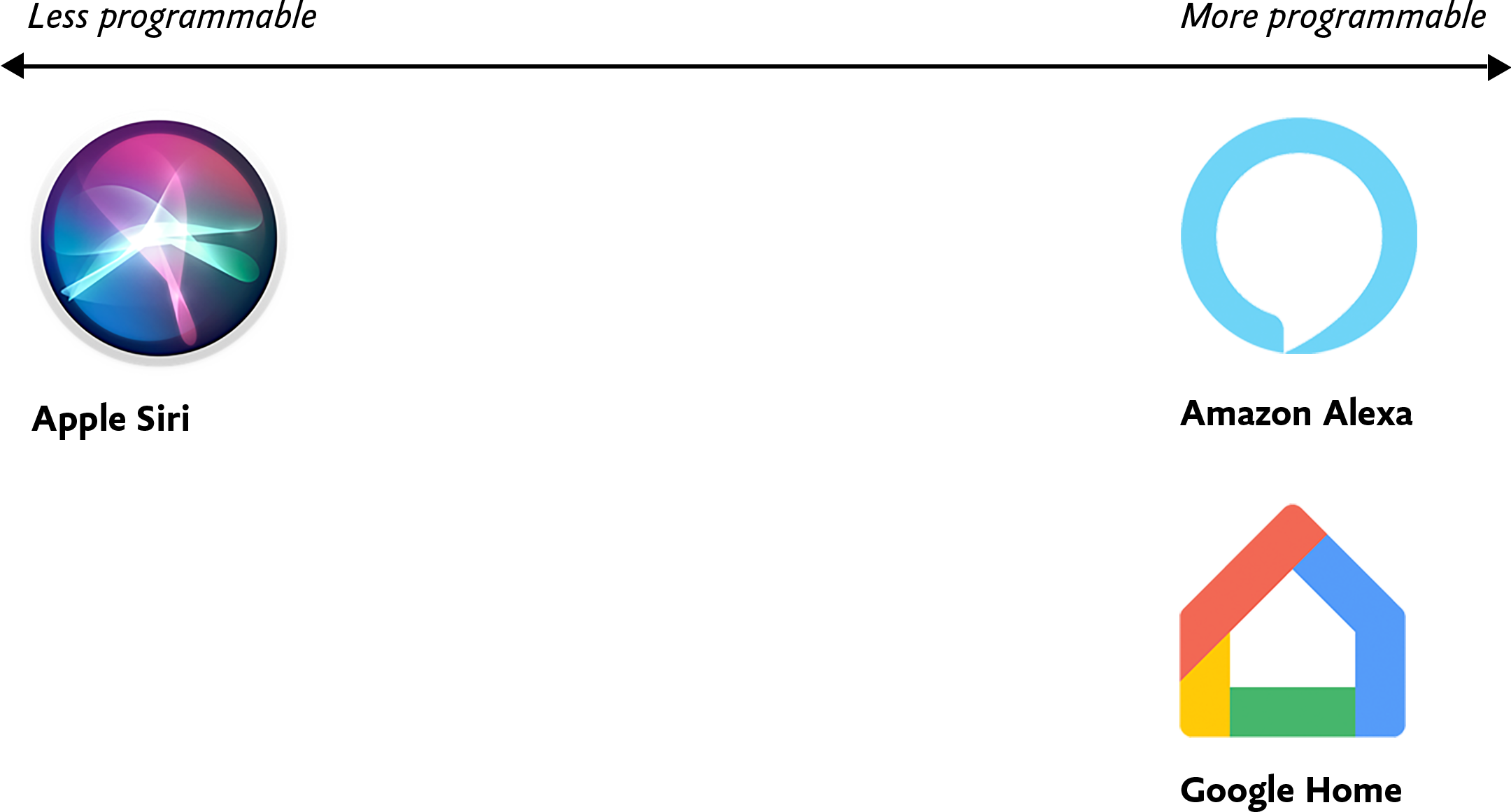
  • Beware the Cut ‘n’ Paste Persona

    Beware the Cut ‘n’ Paste Persona

    This Person Does Not Exist is a website that generates human faces with a machine learning algorithm. It takes real portraits and recombines them into fake human faces. We recently scrolled past a LinkedIn post stating that this website could be useful “if you are developing a persona and looking for a photo.” 

    We agree: the computer-generated faces could be a great match for personas—but not for the reason you might think. Ironically, the website highlights the core issue of this very common design method: the person(a) does not exist. Like the pictures, personas are artificially made. Information is taken out of natural context and recombined into an isolated snapshot that’s detached from reality. 

    But strangely enough, designers use personas to inspire their design for the real world. 

    Personas: A step back

    Most designers have created, used, or come across personas at least once in their career. In their article “Personas – A Simple Introduction,” the Interaction Design Foundation defines personas as “fictional characters, which you create based upon your research in order to represent the different user types that might use your service, product, site, or brand.” In their most complete expression, personas typically consist of a name, profile picture, quotes, demographics, goals, needs, behavior in relation to a certain service/product, emotions, and motivations (for example, see Creative Companion’s Persona Core Poster). The purpose of personas, as stated by design agency Designit, is “to make the research relatable, [and] easy to communicate, digest, reference, and apply to product and service development.”

    The decontextualization of personas

    Personas are popular because they make “dry” research data more relatable, more human. However, this method constrains the researcher’s data analysis in such a way that the investigated users are removed from their unique contexts. As a result, personas don’t portray key factors that make you understand their decision-making process or allow you to relate to users’ thoughts and behavior; they lack stories. You understand what the persona did, but you don’t have the background to understand why. You end up with representations of users that are actually less human.

    This “decontextualization” we see in personas happens in four ways, which we’ll explain below. 

    Personas assume people are static 

    Although many companies still try to box in their employees and customers with outdated personality tests (referring to you, Myers-Briggs), here’s a painfully obvious truth: people are not a fixed set of features. You act, think, and feel differently according to the situations you experience. You appear different to different people; you might act friendly to some, rough to others. And you change your mind all the time about decisions you’ve taken. 

    Modern psychologists agree that while people generally behave according to certain patterns, it’s actually a combination of background and environment that determines how people act and take decisions. The context—the environment, the influence of other people, your mood, the entire history that led up to a situation—determines the kind of person you are in each specific moment. 

    In their attempt to simplify reality, personas do not take this variability into account; they present a user as a fixed set of features. Like personality tests, personas snatch people away from real life. Even worse, people are reduced to a label and categorized as “that kind of person” with no means to exercise their innate flexibility. This practice reinforces stereotypes, lowers diversity, and doesn’t reflect reality. 

    Personas focus on individuals, not the environment

    In the real world, you’re designing for a context, not for an individual. Each person lives in a family, a community, an ecosystem, where there are environmental, political, and social factors you need to consider. A design is never meant for a single user. Rather, you design for one or more particular contexts in which many people might use that product. Personas, however, show the user alone rather than describe how the user relates to the environment. 

    Would you always make the same decision over and over again? Maybe you’re a committed vegan but still decide to buy some meat when your relatives are coming over. As they depend on different situations and variables, your decisions—and behavior, opinions, and statements—are not absolute but highly contextual. The persona that “represents” you wouldn’t take into account this dependency, because it doesn’t specify the premises of your decisions. It doesn’t provide a justification of why you act the way you do. Personas enact the well-known bias called fundamental attribution error: explaining others’ behavior too much by their personality and too little by the situation.

    As mentioned by the Interaction Design Foundation, personas are usually placed in a scenario that’s a “specific context with a problem they want to or have to solve”—does that mean context actually is considered? Unfortunately, what often happens is that you take a fictional character and based on that fiction determine how this character might deal with a certain situation. This is made worse by the fact that you haven’t even fully investigated and understood the current context of the people your persona seeks to represent; so how could you possibly understand how they would act in new situations? 

    Personas are meaningless averages

    As mentioned in Shlomo Goltz’s introductory article on Smashing Magazine, “a persona is depicted as a specific person but is not a real individual; rather, it is synthesized from observations of many people.” A well-known critique to this aspect of personas is that the average person does not exist, as per the famous example of the USA Air Force designing planes based on the average of 140 of their pilots’ physical dimensions and not a single pilot actually fitting within that average seat. 

    The same limitation applies to mental aspects of people. Have you ever heard a famous person say, “They took what I said out of context! They used my words, but I didn’t mean it like that.” The celebrity’s statement was reported literally, but the reporter failed to explain the context around the statement and didn’t describe the non-verbal expressions. As a result, the intended meaning was lost. You do the same when you create personas: you collect somebody’s statement (or goal, or need, or emotion), of which the meaning can only be understood if you provide its own specific context, yet report it as an isolated finding. 

    But personas go a step further, extracting a decontextualized finding and joining it with another decontextualized finding from somebody else. The resulting set of findings often does not make sense: it’s unclear, or even contrasting, because it lacks the underlying reasons on why and how that finding has arisen. It lacks meaning. And the persona doesn’t give you the full background of the person(s) to uncover this meaning: you would need to dive into the raw data for each single persona item to find it. What, then, is the usefulness of the persona?

    The relatability of personas is deceiving

    To a certain extent, designers realize that a persona is a lifeless average. To overcome this, designers invent and add “relatable” details to personas to make them resemble real individuals. Nothing captures the absurdity of this better than a sentence by the Interaction Design Foundation: “Add a few fictional personal details to make the persona a realistic character.” In other words, you add non-realism in an attempt to create more realism. You deliberately obscure the fact that “John Doe” is an abstract representation of research findings; but wouldn’t it be much more responsible to emphasize that John is only an abstraction? If something is artificial, let’s present it as such.

    It’s the finishing touch of a persona’s decontextualization: after having assumed that people’s personalities are fixed, dismissed the importance of their environment, and hidden meaning by joining isolated, non-generalizable findings, designers invent new context to create (their own) meaning. In doing so, as with everything they create, they introduce a host of biases. As phrased by Designit, as designers we can “contextualize [the persona] based on our reality and experience. We create connections that are familiar to us.” This practice reinforces stereotypes, doesn’t reflect real-world diversity, and gets further away from people’s actual reality with every detail added. 

    To do good design research, we should report the reality “as-is” and make it relatable for our audience, so everyone can use their own empathy and develop their own interpretation and emotional response.

    Dynamic Selves: The alternative to personas

    If we shouldn’t use personas, what should we do instead? 

    Designit has proposed using Mindsets instead of personas. Each Mindset is a “spectrum of attitudes and emotional responses that different people have within the same context or life experience.” It challenges designers to not get fixated on a single user’s way of being. Unfortunately, while being a step in the right direction, this proposal doesn’t take into account that people are part of an environment that determines their personality, their behavior, and, yes, their mindset. Therefore, Mindsets are also not absolute but change in regard to the situation. The question remains, what determines a certain Mindset?

    Another alternative comes from Margaret P., author of the article “Kill Your Personas,” who has argued for replacing personas with persona spectrums that consist of a range of user abilities. For example, a visual impairment could be permanent (blindness), temporary (recovery from eye surgery), or situational (screen glare). Persona spectrums are highly useful for more inclusive and context-based design, as they’re based on the understanding that the context is the pattern, not the personality. Their limitation, however, is that they have a very functional take on users that misses the relatability of a real person taken from within a spectrum. 

    In developing an alternative to personas, we aim to transform the standard design process to be context-based. Contexts are generalizable and have patterns that we can identify, just like we tried to do previously with people. So how do we identify these patterns? How do we ensure truly context-based design? 

    Understand real individuals in multiple contexts

    Nothing is more relatable and inspiring than reality. Therefore, we have to understand real individuals in their multi-faceted contexts, and use this understanding to fuel our design. We refer to this approach as Dynamic Selves.

    Let’s take a look at what the approach looks like, based on an example of how one of us applied it in a recent project that researched habits of Italians around energy consumption. We drafted a design research plan aimed at investigating people’s attitudes toward energy consumption and sustainable behavior, with a focus on smart thermostats. 

    1. Choose the right sample

    When we argue against personas, we’re often challenged with quotes such as “Where are you going to find a single person that encapsulates all the information from one of these advanced personas[?]” The answer is simple: you don’t have to. You don’t need to have information about many people for your insights to be deep and meaningful. 

    In qualitative research, validity does not derive from quantity but from accurate sampling. You select the people that best represent the “population” you’re designing for. If this sample is chosen well, and you have understood the sampled people in sufficient depth, you’re able to infer how the rest of the population thinks and behaves. There’s no need to study seven Susans and five Yuriys; one of each will do. 

    Similarly, you don’t need to understand Susan in fifteen different contexts. Once you’ve seen her in a couple of diverse situations, you’ve understood the scheme of Susan’s response to different contexts. Not Susan as an atomic being but Susan in relation to the surrounding environment: how she might act, feel, and think in different situations. 

    Given that each person is representative of a part of the total population you’re researching, it becomes clear why each should be represented as an individual, as each already is an abstraction of a larger group of individuals in similar contexts. You don’t want abstractions of abstractions! These selected people need to be understood and shown in their full expression, remaining in their microcosmos—and if you want to identify patterns you can focus on identifying patterns in contexts.

    Yet the question remains: how do you select a representative sample? First of all, you have to consider what’s the target audience of the product or service you are designing: it might be useful to look at the company’s goals and strategy, the current customer base, and/or a possible future target audience. 

    In our example project, we were designing an application for those who own a smart thermostat. In the future, everyone could have a smart thermostat in their house. Right now, though, only early adopters own one. To build a significant sample, we needed to understand the reason why these early adopters became such. We therefore recruited by asking people why they had a smart thermostat and how they got it. There were those who had chosen to buy it, those who had been influenced by others to buy it, and those who had found it in their house. So we selected representatives of these three situations, from different age groups and geographical locations, with an equal balance of tech savvy and non-tech savvy participants. 

    2. Conduct your research

    After having chosen and recruited your sample, conduct your research using ethnographic methodologies. This will make your qualitative data rich with anecdotes and examples. In our example project, given COVID-19 restrictions, we converted an in-house ethnographic research effort into remote family interviews, conducted from home and accompanied by diary studies.

    To gain an in-depth understanding of attitudes and decision-making trade-offs, the research focus was not limited to the interviewee alone but deliberately included the whole family. Each interviewee would tell a story that would then become much more lively and precise with the corrections or additional details coming from wives, husbands, children, or sometimes even pets. We also focused on the relationships with other meaningful people (such as colleagues or distant family) and all the behaviors that resulted from those relationships. This wide research focus allowed us to shape a vivid mental image of dynamic situations with multiple actors. 

    It’s essential that the scope of the research remains broad enough to be able to include all possible actors. Therefore, it normally works best to define broad research areas with macro questions. Interviews are best set up in a semi-structured way, where follow-up questions will dive into topics mentioned spontaneously by the interviewee. This open-minded “plan to be surprised” will yield the most insightful findings. When we asked one of our participants how his family regulated the house temperature, he replied, “My wife has not installed the thermostat’s app—she uses WhatsApp instead. If she wants to turn on the heater and she is not home, she will text me. I am her thermostat.”

    3. Analysis: Create the Dynamic Selves

    During the research analysis, you start representing each individual with multiple Dynamic Selves, each “Self” representing one of the contexts you have investigated. The core of each Dynamic Self is a quote, which comes supported by a photo and a few relevant demographics that illustrate the wider context. The research findings themselves will show which demographics are relevant to show. In our case, as our research focused on families and their lifestyle to understand their needs for thermal regulation, the important demographics were family type, number and nature of houses owned, economic status, and technological maturity. (We also included the individual’s name and age, but they’re optional—we included them to ease the stakeholders’ transition from personas and be able to connect multiple actions and contexts to the same person).

    To capture exact quotes, interviews need to be video-recorded and notes need to be taken verbatim as much as possible. This is essential to the truthfulness of the several Selves of each participant. In the case of real-life ethnographic research, photos of the context and anonymized actors are essential to build realistic Selves. Ideally, these photos should come directly from field research, but an evocative and representative image will work, too, as long as it’s realistic and depicts meaningful actions that you associate with your participants. For example, one of our interviewees told us about his mountain home where he used to spend every weekend with his family. Therefore, we portrayed him hiking with his little daughter. 

    At the end of the research analysis, we displayed all of the Selves’ “cards” on a single canvas, categorized by activities. Each card displayed a situation, represented by a quote and a unique photo. All participants had multiple cards about themselves.

    4. Identify design opportunities

    Once you have collected all main quotes from the interview transcripts and diaries, and laid them all down as Self cards, you will see patterns emerge. These patterns will highlight the opportunity areas for new product creation, new functionalities, and new services—for new design. 

    In our example project, there was a particularly interesting insight around the concept of humidity. We realized that people don’t know what humidity is and why it is important to monitor it for health: an environment that’s too dry or too wet can cause respiratory problems or worsen existing ones. This highlighted a big opportunity for our client to educate users on this concept and become a health advisor.

    Benefits of Dynamic Selves

    When you use the Dynamic Selves approach in your research, you start to notice unique social relations, peculiar situations real people face and the actions that follow, and that people are surrounded by changing environments. In our thermostat project, we have come to know one of the participants, Davide, as a boyfriend, dog-lover, and tech enthusiast. 

    Davide is an individual we might have once reduced to a persona called “tech enthusiast.” But we can have tech enthusiasts who have families or are single, who are rich or poor. Their motivations and priorities when deciding to purchase a new thermostat can be opposite according to these different frames. 

    Once you have understood Davide in multiple situations, and for each situation have understood in sufficient depth the underlying reasons for his behavior, you’re able to generalize how he would act in another situation. You can use your understanding of him to infer what he would think and do in the contexts (or scenarios) that you design for.

    The Dynamic Selves approach aims to dismiss the conflicted dual purpose of personas—to summarize and empathize at the same time—by separating your research summary from the people you’re seeking to empathize with. This is important because our empathy for people is affected by scale: the bigger the group, the harder it is to feel empathy for others. We feel the strongest empathy for individuals we can personally relate to.  

    If you take a real person as inspiration for your design, you no longer need to create an artificial character. No more inventing details to make the character more “realistic,” no more unnecessary additional bias. It’s simply how this person is in real life. In fact, in our experience, personas quickly become nothing more than a name in our priority guides and prototype screens, as we all know that these characters don’t really exist. 

    Another powerful benefit of the Dynamic Selves approach is that it raises the stakes of your work: if you mess up your design, someone real, a person you and the team know and have met, is going to feel the consequences. It might stop you from taking shortcuts and will remind you to conduct daily checks on your designs.

    And finally, real people in their specific contexts are a better basis for anecdotal storytelling and therefore are more effective in persuasion. Documentation of real research is essential in achieving this result. It adds weight and urgency behind your design arguments: “When I met Alessandra, the conditions of her workplace struck me. Noise, bad ergonomics, lack of light, you name it. If we go for this functionality, I’m afraid we’re going to add complexity to her life.”

    Conclusion

    Designit mentioned in their article on Mindsets that “design thinking tools offer a shortcut to deal with reality’s complexities, but this process of simplification can sometimes flatten out people’s lives into a few general characteristics.” Unfortunately, personas have been culprits in a crime of oversimplification. They are unsuited to represent the complex nature of our users’ decision-making processes and don’t account for the fact that humans are immersed in contexts. 

    Design needs simplification but not generalization. You have to look at the research elements that stand out: the sentences that captured your attention, the images that struck you, the sounds that linger. Portray those, use them to describe the person in their multiple contexts. Both insights and people come with a context; they cannot be cut from that context because it would remove meaning. 

    It’s high time for design to move away from fiction, and embrace reality—in its messy, surprising, and unquantifiable beauty—as our guide and inspiration.

  • Voice Content and Usability

    Voice Content and Usability

    We’ve been having conversations for thousands of years. Whether to convey information, conduct transactions, or simply to check in on one another, people have yammered away, chattering and gesticulating, through spoken conversation for countless generations. Only in the last few millennia have we begun to commit our conversations to writing, and only in the last few decades have we begun to outsource them to the computer, a machine that shows much more affinity for written correspondence than for the slangy vagaries of spoken language.

    Computers have trouble because between spoken and written language, speech is more primordial. To have successful conversations with us, machines must grapple with the messiness of human speech: the disfluencies and pauses, the gestures and body language, and the variations in word choice and spoken dialect that can stymie even the most carefully crafted human-computer interaction. In the human-to-human scenario, spoken language also has the privilege of face-to-face contact, where we can readily interpret nonverbal social cues.

    In contrast, written language immediately concretizes as we commit it to record and retains usages long after they become obsolete in spoken communication (the salutation “To whom it may concern,” for example), generating its own fossil record of outdated terms and phrases. Because it tends to be more consistent, polished, and formal, written text is fundamentally much easier for machines to parse and understand.

    Spoken language has no such luxury. Besides the nonverbal cues that decorate conversations with emphasis and emotional context, there are also verbal cues and vocal behaviors that modulate conversation in nuanced ways: how something is said, not what. Whether rapid-fire, low-pitched, or high-decibel, whether sarcastic, stilted, or sighing, our spoken language conveys much more than the written word could ever muster. So when it comes to voice interfaces—the machines we conduct spoken conversations with—we face exciting challenges as designers and content strategists.

    Voice Interactions

    We interact with voice interfaces for a variety of reasons, but according to Michael McTear, Zoraida Callejas, and David Griol in The Conversational Interface, those motivations by and large mirror the reasons we initiate conversations with other people, too (). Generally, we start up a conversation because:

    • we need something done (such as a transaction),
    • we want to know something (information of some sort), or
    • we are social beings and want someone to talk to (conversation for conversation’s sake).

    These three categories—which I call transactional, informational, and prosocial—also characterize essentially every voice interaction: a single conversation from beginning to end that realizes some outcome for the user, starting with the voice interface’s first greeting and ending with the user exiting the interface. Note here that a conversation in our human sense—a chat between people that leads to some result and lasts an arbitrary length of time—could encompass multiple transactional, informational, and prosocial voice interactions in succession. In other words, a voice interaction is a conversation, but a conversation is not necessarily a single voice interaction.

    Purely prosocial conversations are more gimmicky than captivating in most voice interfaces, because machines don’t yet have the capacity to really want to know how we’re doing and to do the sort of glad-handing humans crave. There’s also ongoing debate as to whether users actually prefer the sort of organic human conversation that begins with a prosocial voice interaction and shifts seamlessly into other types. In fact, in Voice User Interface Design, Michael Cohen, James Giangola, and Jennifer Balogh recommend sticking to users’ expectations by mimicking how they interact with other voice interfaces rather than trying too hard to be human—potentially alienating them in the process ().

    That leaves two genres of conversations we can have with one another that a voice interface can easily have with us, too: a transactional voice interaction realizing some outcome (“buy iced tea”) and an informational voice interaction teaching us something new (“discuss a musical”).

    Transactional voice interactions

    Unless you’re tapping buttons on a food delivery app, you’re generally having a conversation—and therefore a voice interaction—when you order a Hawaiian pizza with extra pineapple. Even when we walk up to the counter and place an order, the conversation quickly pivots from an initial smattering of neighborly small talk to the real mission at hand: ordering a pizza (generously topped with pineapple, as it should be).

    Alison: Hey, how’s it going?

    Burhan: Hi, welcome to Crust Deluxe! It’s cold out there. How can I help you?

    Alison: Can I get a Hawaiian pizza with extra pineapple?

    Burhan: Sure, what size?

    Alison: Large.

    Burhan: Anything else?

    Alison: No thanks, that’s it.

    Burhan: Something to drink?

    Alison: I’ll have a bottle of Coke.

    Burhan: You got it. That’ll be $13.55 and about fifteen minutes.

    Each progressive disclosure in this transactional conversation reveals more and more of the desired outcome of the transaction: a service rendered or a product delivered. Transactional conversations have certain key traits: they’re direct, to the point, and economical. They quickly dispense with pleasantries.

    Informational voice interactions

    Meanwhile, some conversations are primarily about obtaining information. Though Alison might visit Crust Deluxe with the sole purpose of placing an order, she might not actually want to walk out with a pizza at all. She might be just as interested in whether they serve halal or kosher dishes, gluten-free options, or something else. Here, though we again have a prosocial mini-conversation at the beginning to establish politeness, we’re after much more.

    Alison: Hey, how’s it going?

    Burhan: Hi, welcome to Crust Deluxe! It’s cold out there. How can I help you?

    Alison: Can I ask a few questions?

    Burhan: Of course! Go right ahead.

    Alison: Do you have any halal options on the menu?

    Burhan: Absolutely! We can make any pie halal by request. We also have lots of vegetarian, ovo-lacto, and vegan options. Are you thinking about any other dietary restrictions?

    Alison: What about gluten-free pizzas?

    Burhan: We can definitely do a gluten-free crust for you, no problem, for both our deep-dish and thin-crust pizzas. Anything else I can answer for you?

    Alison: That’s it for now. Good to know. Thanks!

    Burhan: Anytime, come back soon!

    This is a very different dialogue. Here, the goal is to get a certain set of facts. Informational conversations are investigative quests for the truth—research expeditions to gather data, news, or facts. Voice interactions that are informational might be more long-winded than transactional conversations by necessity. Responses tend to be lengthier, more informative, and carefully communicated so the customer understands the key takeaways.

    Voice Interfaces

    At their core, voice interfaces employ speech to support users in reaching their goals. But simply because an interface has a voice component doesn’t mean that every user interaction with it is mediated through voice. Because multimodal voice interfaces can lean on visual components like screens as crutches, we’re most concerned in this book with pure voice interfaces, which depend entirely on spoken conversation, lack any visual component whatsoever, and are therefore much more nuanced and challenging to tackle.

    Though voice interfaces have long been integral to the imagined future of humanity in science fiction, only recently have those lofty visions become fully realized in genuine voice interfaces.

    Interactive voice response (IVR) systems

    Though written conversational interfaces have been fixtures of computing for many decades, voice interfaces first emerged in the early 1990s with text-to-speech (TTS) dictation programs that recited written text aloud, as well as speech-enabled in-car systems that gave directions to a user-provided address. With the advent of interactive voice response (IVR) systems, intended as an alternative to overburdened customer service representatives, we became acquainted with the first true voice interfaces that engaged in authentic conversation.

    IVR systems allowed organizations to reduce their reliance on call centers but soon became notorious for their clunkiness. Commonplace in the corporate world, these systems were primarily designed as metaphorical switchboards to guide customers to a real phone agent (“Say Reservations to book a flight or check an itinerary”); chances are you will enter a conversation with one when you call an airline or hotel conglomerate. Despite their functional issues and users’ frustration with their inability to speak to an actual human right away, IVR systems proliferated in the early 1990s across a variety of industries (, PDF).

    While IVR systems are great for highly repetitive, monotonous conversations that generally don’t veer from a single format, they have a reputation for less scintillating conversation than we’re used to in real life (or even in science fiction).

    Screen readers

    Parallel to the evolution of IVR systems was the invention of the screen reader, a tool that transcribes visual content into synthesized speech. For Blind or visually impaired website users, it’s the predominant method of interacting with text, multimedia, or form elements. Screen readers represent perhaps the closest equivalent we have today to an out-of-the-box implementation of content delivered through voice.

    Among the first screen readers known by that moniker was the Screen Reader for the BBC Micro and NEEC Portable developed by the Research Centre for the Education of the Visually Handicapped (RCEVH) at the University of Birmingham in 1986 (). That same year, Jim Thatcher created the first IBM Screen Reader for text-based computers, later recreated for computers with graphical user interfaces (GUIs) ().

    With the rapid growth of the web in the 1990s, the demand for accessible tools for websites exploded. Thanks to the introduction of semantic HTML and especially ARIA roles beginning in 2008, screen readers started facilitating speedy interactions with web pages that ostensibly allow disabled users to traverse the page as an aural and temporal space rather than a visual and physical one. In other words, screen readers for the web “provide mechanisms that translate visual design constructs—proximity, proportion, etc.—into useful information,” writes Aaron Gustafson in A List Apart. “At least they do when documents are authored thoughtfully” ().

    Though deeply instructive for voice interface designers, there’s one significant problem with screen readers: they’re difficult to use and unremittingly verbose. The visual structures of websites and web navigation don’t translate well to screen readers, sometimes resulting in unwieldy pronouncements that name every manipulable HTML element and announce every formatting change. For many screen reader users, working with web-based interfaces exacts a cognitive toll.

    In Wired, accessibility advocate and voice engineer Chris Maury considers why the screen reader experience is ill-suited to users relying on voice:

    From the beginning, I hated the way that Screen Readers work. Why are they designed the way they are? It makes no sense to present information visually and then, and only then, translate that into audio. All of the time and energy that goes into creating the perfect user experience for an app is wasted, or even worse, adversely impacting the experience for blind users. ()

    In many cases, well-designed voice interfaces can speed users to their destination better than long-winded screen reader monologues. After all, visual interface users have the benefit of darting around the viewport freely to find information, ignoring areas irrelevant to them. Blind users, meanwhile, are obligated to listen to every utterance synthesized into speech and therefore prize brevity and efficiency. Disabled users who have long had no choice but to employ clunky screen readers may find that voice interfaces, particularly more modern voice assistants, offer a more streamlined experience.

    Voice assistants

    When we think of voice assistants (the subset of voice interfaces now commonplace in living rooms, smart homes, and offices), many of us immediately picture HAL from 2001: A Space Odyssey or hear Majel Barrett’s voice as the omniscient computer in Star Trek. Voice assistants are akin to personal concierges that can answer questions, schedule appointments, conduct searches, and perform other common day-to-day tasks. And they’re rapidly gaining more attention from accessibility advocates for their assistive potential.

    Before the earliest IVR systems found success in the enterprise, Apple published a demonstration video in 1987 depicting the Knowledge Navigator, a voice assistant that could transcribe spoken words and recognize human speech to a great degree of accuracy. Then, in 2001, Tim Berners-Lee and others formulated their vision for a Semantic Web “agent” that would perform typical errands like “checking calendars, making appointments, and finding locations” (, behind paywall). It wasn’t until 2011 that Apple’s Siri finally entered the picture, making voice assistants a tangible reality for consumers.

    Thanks to the plethora of voice assistants available today, there is considerable variation in how programmable and customizable certain voice assistants are over others (Fig 1.1). At one extreme, everything except vendor-provided features is locked down; for example, at the time of their release, the core functionality of Apple’s Siri and Microsoft’s Cortana couldn’t be extended beyond their existing capabilities. Even today, it isn’t possible to program Siri to perform arbitrary functions, because there’s no means by which developers can interact with Siri at a low level, apart from predefined categories of tasks like sending messages, hailing rideshares, making restaurant reservations, and certain others.

    At the opposite end of the spectrum, voice assistants like Amazon Alexa and Google Home offer a core foundation on which developers can build custom voice interfaces. For this reason, programmable voice assistants that lend themselves to customization and extensibility are becoming increasingly popular for developers who feel stifled by the limitations of Siri and Cortana. Amazon offers the Alexa Skills Kit, a developer framework for building custom voice interfaces for Amazon Alexa, while Google Home offers the ability to program arbitrary Google Assistant skills. Today, users can choose from among thousands of custom-built skills within both the Amazon Alexa and Google Assistant ecosystems.

    As corporations like Amazon, Apple, Microsoft, and Google continue to stake their territory, they’re also selling and open-sourcing an unprecedented array of tools and frameworks for designers and developers that aim to make building voice interfaces as easy as possible, even without code.

    Often by necessity, voice assistants like Amazon Alexa tend to be monochannel—they’re tightly coupled to a device and can’t be accessed on a computer or smartphone instead. By contrast, many development platforms like Google’s Dialogflow have introduced omnichannel capabilities so users can build a single conversational interface that then manifests as a voice interface, textual chatbot, and IVR system upon deployment. I don’t prescribe any specific implementation approaches in this design-focused book, but in Chapter 4 we’ll get into some of the implications these variables might have on the way you build out your design artifacts.

    Voice Content

    Simply put, voice content is content delivered through voice. To preserve what makes human conversation so compelling in the first place, voice content needs to be free-flowing and organic, contextless and concise—everything written content isn’t.

    Our world is replete with voice content in various forms: screen readers reciting website content, voice assistants rattling off a weather forecast, and automated phone hotline responses governed by IVR systems. In this book, we’re most concerned with content delivered auditorily—not as an option, but as a necessity.

    For many of us, our first foray into informational voice interfaces will be to deliver content to users. There’s only one problem: any content we already have isn’t in any way ready for this new habitat. So how do we make the content trapped on our websites more conversational? And how do we write new copy that lends itself to voice interactions?

    Lately, we’ve begun slicing and dicing our content in unprecedented ways. Websites are, in many respects, colossal vaults of what I call macrocontent: lengthy prose that can extend for infinitely scrollable miles in a browser window, like microfilm viewers of newspaper archives. Back in 2002, well before the present-day ubiquity of voice assistants, technologist Anil Dash defined microcontent as permalinked pieces of content that stay legible regardless of environment, such as email or text messages:

    A day’s weather forcast [sic], the arrival and departure times for an airplane flight, an abstract from a long publication, or a single instant message can all be examples of microcontent. ()

    I’d update Dash’s definition of microcontent to include all examples of bite-sized content that go well beyond written communiqués. After all, today we encounter microcontent in interfaces where a small snippet of copy is displayed alone, unmoored from the browser, like a textbot confirmation of a restaurant reservation. Microcontent offers the best opportunity to gauge how your content can be stretched to the very edges of its capabilities, informing delivery channels both established and novel.

    As microcontent, voice content is unique because it’s an example of how content is experienced in time rather than in space. We can glance at a digital sign underground for an instant and know when the next train is arriving, but voice interfaces hold our attention captive for periods of time that we can’t easily escape or skip, something screen reader users are all too familiar with.

    Because microcontent is fundamentally made up of isolated blobs with no relation to the channels where they’ll eventually end up, we need to ensure that our microcontent truly performs well as voice content—and that means focusing on the two most important traits of robust voice content: voice content legibility and voice content discoverability.

    Fundamentally, the legibility and discoverability of our voice content both have to do with how voice content manifests in perceived time and space.