Category: Blog

Your blog category

  • The Wax and the Wane of the Web

    The Wax and the Wane of the Web

    I offer a second bit of advice to friends and family when they become new families: When you start to believe that you’ve got everything figured out, everything will change. Simply as you start to get the hang of injections, diapers, and ordinary sleep, it’s time for solid foods, potty training, and nighttime sleep. When you figure those away, it’s time for school and unique sleep. The cycle goes on and on.

    The same applies for those of us working in design and development these times. Having worked on the web for about three years at this point, I’ve seen the typical wax and wane of concepts, strategies, and systems. Each day that we as developers and designers get into a regular rhythm, some innovative idea or technology comes down to shake things up and copy our world.

    How we got below

    I built my first website in the mid-’90s. Design and development on the web back then was a free-for-all, with few established norms. For any layout aside from a single column, we used table elements, often with empty cells containing a single pixel spacer GIF to add empty space. We styled text with numerous font tags, nesting the tags every time we wanted to vary the font style. And we had only three or four typefaces to choose from: Arial, Courier, or Times New Roman. When Verdana and Georgia came out in 1996, we rejoiced because our options had nearly doubled. The only safe colors to choose from were the 216 “web safe” colors known to work across platforms. The few interactive elements (like contact forms, guest books, and counters) were mostly powered by CGI scripts (predominantly written in Perl at the time). Achieving any kind of unique look involved a pile of hacks all the way down. Interaction was often limited to specific pages in a site.

    The beginning of website standards

    At the turn of the century, a new cycle started. Crufty code littered with table layouts and font tags waned, and a push for web standards waxed. Newer technologies like CSS got more widespread adoption by browsers makers, developers, and designers. This shift toward standards didn’t happen accidentally or overnight. It took active engagement between the W3C and browser vendors and heavy evangelism from folks like the Web Standards Project to build standards. A List Apart and books like Designing with Web Standards by Jeffrey Zeldman played key roles in teaching developers and designers why standards are important, how to implement them, and how to sell them to their organizations. And approaches like progressive enhancement introduced the idea that content should be available for all browsers—with additional enhancements available for more advanced browsers. Meanwhile, sites like the CSS Zen Garden showcased just how powerful and versatile CSS can be when combined with a solid semantic HTML structure.

    Server-side languages like PHP, Java, and.NET overtook Perl as the predominant back-end processors, and the cgi-bin was tossed in the trash bin. With these better server-side tools came the first era of web applications, starting with content-management systems ( particularly in the blogging space with tools like Blogger, Grey Matter, Movable Type, and WordPress ). In the mid-2000s, AJAX opened doors for asynchronous interaction between the front end and back end. Suddenly, pages could update their content without needing to reload. A crop of JavaScript frameworks like Prototype, YUI, and jQuery arose to help developers build more reliable client-side interaction across browsers that had wildly varying levels of standards support. Techniques like image replacement let crafty designers and developers display fonts of their choosing. And technologies like Flash made it possible to add animations, games, and even more interactivity.

    These new technologies, standards, and techniques reinvigorated the industry in many ways. Web design flourished as designers and developers explored more diverse styles and layouts. But we still relied on tons of hacks. Early CSS was a huge improvement over table-based layouts when it came to basic layout and text styling, but its limitations at the time meant that designers and developers still relied heavily on images for complex shapes ( such as rounded or angled corners ) and tiled backgrounds for the appearance of full-length columns (among other hacks ). Complicated layouts required all manner of nested floats or absolute positioning ( or both ). Flash and image replacement for custom fonts was a great start toward varying the typefaces from the big five, but both hacks introduced accessibility and performance problems. And JavaScript libraries made it easy for anyone to add a dash of interaction to pages, although at the cost of doubling or even quadrupling the download size of simple websites.

    The web as software platform

    The symbiosis between the front end and back end continued to improve, and that led to the current era of modern web applications. Between expanded server-side programming languages ( which kept growing to include Ruby, Python, Go, and others ) and newer front-end tools like React, Vue, and Angular, we could build fully capable software on the web. Alongside these tools came others, including collaborative version control, build automation, and shared package libraries. What was once primarily an environment for linked documents became a realm of infinite possibilities.

    At the same time, mobile devices became more capable, and they gave us internet access in our pockets. Mobile apps and responsive design opened up opportunities for new interactions anywhere and any time.

    This combination of capable mobile devices and powerful development tools contributed to the waxing of social media and other centralized tools for people to connect and consume. As it became easier and more common to connect with others directly on Twitter, Facebook, and even Slack, the desire for hosted personal sites waned. Social media offered connections on a global scale, with both the good and bad that that entails.

    Want a much more extensive history of how we got here, with some other takes on ways that we can improve? Jeremy Keith wrote” Of Time and the Web“. Or check out the” Web Design History Timeline” at the Web Design Museum. Neal Agarwal also has a fun tour through” Internet Artifacts“.

    Where we are now

    In the last couple of years, it’s felt like we’ve begun to reach another major inflection point. As social-media platforms fracture and wane, there’s been a growing interest in owning our own content again. There are many different ways to make a website, from the tried-and-true classic of hosting plain HTML files to static site generators to content management systems of all flavors. The fracturing of social media also comes with a cost: we lose crucial infrastructure for discovery and connection. Webmentions, RSS, ActivityPub, and other tools of the IndieWeb can help with this, but they’re still relatively underimplemented and hard to use for the less nerdy. We can build amazing personal websites and add to them regularly, but without discovery and connection, it can sometimes feel like we may as well be shouting into the void.

    Browser support for CSS, JavaScript, and other standards like web components has accelerated, especially through efforts like Interop. New technologies gain support across the board in a fraction of the time that they used to. I often learn about a new feature and check its browser support only to find that its coverage is already above 80 percent. Nowadays, the barrier to using newer techniques often isn’t browser support but simply the limits of how quickly designers and developers can learn what’s available and how to adopt it.

    Today, with a few commands and a couple of lines of code, we can prototype almost any idea. All the tools that we now have available make it easier than ever to start something new. But the upfront cost that these frameworks may save in initial delivery eventually comes due as upgrading and maintaining them becomes a part of our technical debt.

    If we rely on third-party frameworks, adopting new standards can sometimes take longer since we may have to wait for those frameworks to adopt those standards. These frameworks—which used to let us adopt new techniques sooner—have now become hindrances instead. These same frameworks often come with performance costs too, forcing users to wait for scripts to load before they can read or interact with pages. And when scripts fail ( whether through poor code, network issues, or other environmental factors ), there’s often no alternative, leaving users with blank or broken pages.

    Where do we go from here?

    Today’s hacks help to shape tomorrow’s standards. And there’s nothing inherently wrong with embracing hacks —for now—to move the present forward. Problems only arise when we’re unwilling to admit that they’re hacks or we hesitate to replace them. So what can we do to create the future we want for the web?

    Build for the long haul. Optimize for performance, for accessibility, and for the user. Weigh the costs of those developer-friendly tools. They may make your job a little easier today, but how do they affect everything else? What’s the cost to users? To future developers? To standards adoption? Sometimes the convenience may be worth it. Sometimes it’s just a hack that you’ve grown accustomed to. And sometimes it’s holding you back from even better options.

    Start from standards. Standards continue to evolve over time, but browsers have done a remarkably good job of continuing to support older standards. The same isn’t always true of third-party frameworks. Sites built with even the hackiest of HTML from the’ 90s still work just fine today. The same can’t always be said of sites built with frameworks even after just a couple years.

    Design with care. Whether your craft is code, pixels, or processes, consider the impacts of each decision. The convenience of many a modern tool comes at the cost of not always understanding the underlying decisions that have led to its design and not always considering the impact that those decisions can have. Rather than rushing headlong to “move fast and break things”, use the time saved by modern tools to consider more carefully and design with deliberation.

    Always be learning. If you’re always learning, you’re also growing. Sometimes it may be hard to pinpoint what’s worth learning and what’s just today’s hack. You might end up focusing on something that won’t matter next year, even if you were to focus solely on learning standards. ( Remember XHTML? ) But constant learning opens up new connections in your brain, and the hacks that you learn one day may help to inform different experiments another day.

    Play, experiment, and be weird! This web that we’ve built is the ultimate experiment. It’s the single largest human endeavor in history, and yet each of us can create our own pocket within it. Be courageous and try new things. Build a playground for ideas. Make goofy experiments in your own mad science lab. Start your own small business. There has never been a more empowering place to be creative, take risks, and explore what we’re capable of.

    Share and amplify. As you experiment, play, and learn, share what’s worked for you. Write on your own website, post on whichever social media site you prefer, or shout it from a TikTok. Write something for A List Apart! But take the time to amplify others too: find new voices, learn from them, and share what they’ve taught you.

    Go forth and make

    As designers and developers for the web ( and beyond ), we’re responsible for building the future every day, whether that may take the shape of personal websites, social media tools used by billions, or anything in between. Let’s imbue our values into the things that we create, and let’s make the web a better place for everyone. Create that thing that only you are uniquely qualified to make. Then share it, make it better, make it again, or make something new. Learn. Make. Share. Grow. Rinse and repeat. Every time you think that you’ve mastered the web, everything will change.

  • Opportunities for AI in Accessibility

    Opportunities for AI in Accessibility

    In studying Joe Dolson’s new item on the crossroads of AI and affordability, I positively appreciated the suspicion that he has for AI in public as well as for the ways that many have been using it. In fact, I’m very skeptical of AI myself, despite my role at Microsoft as an accessibility technology strategist who helps manage the AI for Accessibility award program. As with any tool, AI can be used in quite productive, equitable, and visible ways, and it can also be used in dangerous, unique, and dangerous ones. And there are a ton of combines somewhere in the poor center as effectively.

    I’d like you to consider this a “yes … and” piece to complement Joe’s post. I’m not trying to reject any of what he’s saying but instead provide some awareness to projects and possibilities where AI can generate substantial differences for people with disabilities. To be clear, I’m not saying that there aren’t true threats or pressing problems with AI that need to be addressed—there are, and we’ve needed to address them, like, yesterday—but I want to take a little time to talk about what’s possible in hope that we’ll get there one day.

    Other text

    Joe’s part spends a lot of time talking about computer-vision types generating other words. He highlights a ton of true issues with the current state of things. And while computer-vision concepts continue to improve in the quality and complexity of information in their information, their benefits aren’t wonderful. As he rightly points out, the current state of image analysis is pretty poor—especially for certain image types—in large part because current AI systems examine images in isolation rather than within the contexts that they’re in ( which is a consequence of having separate “foundation” models for text analysis and image analysis ). Today’s models aren’t trained to distinguish between images that are contextually relevant ( that should probably have descriptions ) and those that are purely decorative ( which might not need a description ) either. Still, I still think there’s potential in this space.

    As Joe mentions, human-in-the-loop authoring of alt text should absolutely be a thing. And if AI can pop in to offer a starting point for alt text—even if that starting point might be a prompt saying What is this BS? That’s not right at all … Let me try to offer a starting point— I think that’s a win.

    Taking things a step further, if we can specifically train a model to analyze image usage in context, it could help us more quickly identify which images are likely to be decorative and which ones likely require a description. That will help reinforce which contexts call for image descriptions and it’ll improve authors ‘ efficiency toward making their pages more accessible.

    While complex images—like graphs and charts—are challenging to describe in any sort of succinct way ( even for humans ), the image example shared in the GPT4 announcement points to an interesting opportunity as well. Let’s suppose that you came across a chart whose description was simply the title of the chart and the kind of visualization it was, such as: Pie chart comparing smartphone usage to feature phone usage among US households making under$ 30, 000 a year. ( That would be a pretty awful alt text for a chart since that would tend to leave many questions about the data unanswered, but then again, let’s suppose that that was the description that was in place. ) If your browser knew that that image was a pie chart ( because an onboard model concluded this ), imagine a world where users could ask questions like these about the graphic:

    • Do more people use smartphones or feature phones?
    • How many more?
    • Is there a group of people that don’t fall into either of these buckets?
    • How many is that?

    Setting aside the realities of large language model ( LLM) hallucinations—where a model just makes up plausible-sounding “facts” —for a moment, the opportunity to learn more about images and data in this way could be revolutionary for blind and low-vision folks as well as for people with various forms of color blindness, cognitive disabilities, and so on. It could also be useful in educational contexts to help people who can see these charts, as is, to understand the data in the charts.

    Taking things a step further: What if you could ask your browser to simplify a complex chart? What if you could ask it to isolate a single line on a line graph? What if you could ask your browser to transpose the colors of the different lines to work better for form of color blindness you have? What if you could ask it to swap colors for patterns? Given these tools ‘ chat-based interfaces and our existing ability to manipulate images in today’s AI tools, that seems like a possibility.

    Now imagine a purpose-built model that could extract the information from that chart and convert it to another format. For example, perhaps it could turn that pie chart ( or better yet, a series of pie charts ) into more accessible ( and useful ) formats, like spreadsheets. That would be amazing!

    Matching algorithms

    Safiya Umoja Noble absolutely hit the nail on the head when she titled her book Algorithms of Oppression. While her book was focused on the ways that search engines reinforce racism, I think that it’s equally true that all computer models have the potential to amplify conflict, bias, and intolerance. Whether it’s Twitter always showing you the latest tweet from a bored billionaire, YouTube sending us into a Q-hole, or Instagram warping our ideas of what natural bodies look like, we know that poorly authored and maintained algorithms are incredibly harmful. A lot of this stems from a lack of diversity among the people who shape and build them. When these platforms are built with inclusively baked in, however, there’s real potential for algorithm development to help people with disabilities.

    Take Mentra, for example. They are an employment network for neurodivergent people. They use an algorithm to match job seekers with potential employers based on over 75 data points. On the job-seeker side of things, it considers each candidate’s strengths, their necessary and preferred workplace accommodations, environmental sensitivities, and so on. On the employer side, it considers each work environment, communication factors related to each job, and the like. As a company run by neurodivergent folks, Mentra made the decision to flip the script when it came to typical employment sites. They use their algorithm to propose available candidates to companies, who can then connect with job seekers that they are interested in, reducing the emotional and physical labor on the job-seeker side of things.

    When more people with disabilities are involved in the creation of algorithms, that can reduce the chances that these algorithms will inflict harm on their communities. That’s why diverse teams are so important.

    Imagine that a social media company’s recommendation engine was tuned to analyze who you’re following and if it was tuned to prioritize follow recommendations for people who talked about similar things but who were different in some key ways from your existing sphere of influence. For example, if you were to follow a bunch of nondisabled white male academics who talk about AI, it could suggest that you follow academics who are disabled or aren’t white or aren’t male who also talk about AI. If you took its recommendations, perhaps you’d get a more holistic and nuanced understanding of what’s happening in the AI field. These same systems should also use their understanding of biases about particular communities—including, for instance, the disability community—to make sure that they aren’t recommending any of their users follow accounts that perpetuate biases against (or, worse, spewing hate toward ) those groups.

    Other ways that AI can helps people with disabilities

    If I weren’t trying to put this together between other tasks, I’m sure that I could go on and on, providing all kinds of examples of how AI could be used to help people with disabilities, but I’m going to make this last section into a bit of a lightning round. In no particular order:

      Voice preservation. You may have seen the VALL-E paper or Apple’s Global Accessibility Awareness Day announcement or you may be familiar with the voice-preservation offerings from Microsoft, Acapela, or others. It’s possible to train an AI model to replicate your voice, which can be a tremendous boon for people who have ALS ( Lou Gehrig’s disease ) or motor-neuron disease or other medical conditions that can lead to an inability to talk. This is, of course, the same tech that can also be used to create audio deepfakes, so it’s something that we need to approach responsibly, but the tech has truly transformative potential.
    • Voice recognition. Researchers like those in the Speech Accessibility Project are paying people with disabilities for their help in collecting recordings of people with atypical speech. As I type, they are actively recruiting people with Parkinson’s and related conditions, and they have plans to expand this to other conditions as the project progresses. This research will result in more inclusive data sets that will let more people with disabilities use voice assistants, dictation software, and voice-response services as well as control their computers and other devices more easily, using only their voice.
    • Text transformation. The current generation of LLMs is quite capable of adjusting existing text content without injecting hallucinations. This is hugely empowering for people with cognitive disabilities who may benefit from text summaries or simplified versions of text or even text that’s prepped for Bionic Reading.

    The importance of diverse teams and data

    We need to recognize that our differences matter. Our lived experiences are influenced by the intersections of the identities that we exist in. These lived experiences—with all their complexities ( and joys and pain ) —are valuable inputs to the software, services, and societies that we shape. Our differences need to be represented in the data that we use to train new models, and the folks who contribute that valuable information need to be compensated for sharing it with us. Inclusive data sets yield more robust models that foster more equitable outcomes.

    Want a model that doesn’t demean or patronize or objectify people with disabilities? Make sure that you have content about disabilities that’s authored by people with a range of disabilities, and make sure that that’s well represented in the training data.

    Want a model that doesn’t use ableist language? You may be able to use existing data sets to build a filter that can intercept and remediate ableist language before it reaches readers. That being said, when it comes to sensitivity reading, AI models won’t be replacing human copy editors anytime soon.

    Want a coding copilot that gives you accessible recommendations from the jump? Train it on code that you know to be accessible.


    I have no doubt that AI can and will harm people … today, tomorrow, and well into the future. But I also believe that we can acknowledge that and, with an eye towards accessibility ( and, more broadly, inclusion ), make thoughtful, considerate, and intentional changes in our approaches to AI that will reduce harm over time as well. Today, tomorrow, and well into the future.


    Many thanks to Kartik Sawhney for helping me with the development of this piece, Ashley Bischoff for her invaluable editorial assistance, and, of course, Joe Dolson for the prompt.

  • I am a creative.

    I am a creative.

    I am a innovative. What I do is alchemy. It is a puzzle. I do not so little do it, when let it be done through me.

    I am a artistic. Not all imaginative people like this brand. No all see themselves this method. Some creative individuals see knowledge in what they do. That is their reality, and I respect it. Sometimes I even envy them, a minor. But my approach is different—my becoming is unique.

    Apologizing and qualifying in progress is a diversion. That’s what my head does to destroy me. I set it aside for today. I may come back later to forgive and qualify. After I’ve said what I came to say. Which is challenging enough.

    Except when it is simple and flows like a river of liquor.

    Sometimes it does come that method. Maybe what I need to build comes in an instant. I have learned not to say it at that time, because if you admit that sometimes the idea only comes and it is the best idea and you know it is the best idea, they think you don’t work hard enough.

    Maybe I work and work and work until the plan comes. Often it comes suddenly and I don’t tell people for three weeks. Maybe I’m so excited by the idea that came immediately that I blurt it out, can’t help myself. Like a child who found a medal in his Cracker Jacks. Maybe I get away with this. Maybe other people agree: yes, that is the best plan. Most times they don’t and I regret having given way to joy.

    Joy is best saved for the conference where it will make a difference. Certainly the casual get-together that accompanies that gathering by two different meetings. Anyone knows why we have all these sessions. We keep saying we’re doing away with them, but then only finding other ways to include them. Sometimes they are also good. But other days they are a distraction from the actual labor. The percentages between when conferences are important, and when they are a sad distraction, vary, depending on what you do and where you do it. And who you are and how you do it. Once I digress. I am a artistic. That is the design.

    Often many hours of hard and persistent work produce something that is rarely serviceable. Often I have to accept that and move on to the next task.

    Don’t question about method. I am a artistic.

    I am a artistic. I don’t command my goals. And I don’t handle my best tips.

    I can nail aside, surround myself with information or photos, and maybe that works. I can go for a walk, and occasionally that functions. I may be making breakfast and there’s a Eureka having nothing to do with sizzling oil and flowing pots. Usually I know what to do the instant I wake up. And then, nearly as often, as I become aware and part of the world once, the idea that may have saved me turns to vanishing sand in a senseless storm of nothingness. For imagination, I believe, comes from that other planet. The one we enter in aspirations, and possibly, before conception and after death. But that’s for authors to know, and I am not a writer. I am a innovative. And it’s for theologians to large armies about in their artistic world that they insist is true. But that is another diversion. And a miserable one. Even on a much more important issue than whether I am a inventive or not. But nevertheless a tangent from what I came here to say.

    Often the process is mitigation. And horror. You know the cliché about the tortured designer? It’s true, even when the artist ( and let’s put that noun in quotes ) is trying to write a soft drink jingle, a callback in a tired sitcom, a budget request.

    Some people who hate being called innovative may be closeted artists, but that’s between them and their angels. No offence meant. Your wisdom is correct, too. But mine is for me.

    Creatives understand creatives.

    Creatives identify creatives like faggots recognize queers, like true rappers recognize true performers, like cons know cons. Creatives feel large regard for creatives. We love, respect, emulate, and nearly deify the excellent ones. To revere any man is, of course, a dreadful mistake. We have been warned. We know much. We know people are simply people. They dispute, they are depressed, they regret their most critical decisions, they are weak and thirsty, they can be cruel, they can be just as terrible as we can, if, like us, they are clay. But. But. But they make this wonderful issue. They beginning anything that did not exist before them, and could not occur without them. They are the mother of tips. And I suppose, since it’s only lying it, I have to put that they are the mother of technology. Ba ho bum! Okay, that’s done. Continue.

    Creatives belittle our personal small successes, because we compare them to those of the wonderful people. Wonderful graphics! Also, I‘m no Miyazaki. Now THAT is brilliance. That is brilliance directly from the mind of God. This half-starved small item that I made? It more or less fell off the back of the pumpkin trailer. And the carrots weren’t even clean.

    Creatives knows that, at best, they are Salieri. Yet the creatives who are He feel that.

    I am a artistic. I haven’t worked in advertising in 30 years, but in my hallucinations, it’s my former artistic managers who judge me. And they are appropriate to do so. I am very lazy, overly simplistic, and when it actually counts, my mind goes blank. There is no supplement for artistic function.

    I am a artistic. Every date I make is an experience that makes Indiana Jones look like a retiree snoring in a balcony seat. The longer I remain a artistic, the faster I am when I do my job and the longer I brood and move in circles and gaze blankly before I do that job.

    I am also 10 times faster than people who are not artistic, or people who have just been imaginative a short while, or people who have just been properly imaginative a short while. It’s just that, before I work 10 times as fast as they do, I spend twice as long as they do putting the work down. I am that confident in my ability to do a wonderful work when I put my mind to it. I am that attached to the excitement scramble of delay. I am also that scared of the climb.

    I am not an actor.

    I am a artistic. No an actor. Though I dreamed, as a boy, of eventually being that. Some of us disparage our products and like ourselves because we are not Michelangelos and Warhols. That is narcissism—but at least we aren’t in elections.

    I am a artistic. Though I believe in reason and science, I decide by intelligence and desire. And sit with what follows—the disasters as well as the successes.

    I am a artistic. Every term I’ve said these may offend another artists, who see things differently. Ask two artists a problem, get three ideas. Our dispute, our enthusiasm about it, and our responsibility to our own reality are, at least to me, the facts that we are artists, no matter how we may think about it.

    I am a artistic. I lament my lack of taste in the places about which I know quite small, which is to say almost all areas of human knowledge. And I trust my preference above all other items in the regions closest to my soul, or perhaps, more precisely, to my passions. Without my passions, I would probably have to spend my time looking career in the eye, and virtually none of us can do that for longer. No seriously. No actually. Because many in existence, if you really look at it, is intolerable.

    I am a artistic. I believe, as a family believes, that when I am gone, some little good part of me will take on in the head of at least one other people.

    Working saves me from worrying about function.

    I am a artistic. I live in horror of my little present immediately going ahead.

    I am a artistic. I am very active making the next thing to spend too much time seriously considering that almost nothing I make does come anywhere near the glory I awkwardly aspire to.

    I am a artistic. I believe in the greatest mystery of operation. I believe in it so much, I am actually foolish enough to submit an essay I dictated into a small machine and didn’t take time to evaluate or update. I won’t do this often, I promise. But I did it just now, because, as afraid as I might be of your seeing through my pitiful gestures toward the beautiful, I was even more afraid of forgetting what I came to say.

    There. I think I’ve said it.

  • SXSW 2025 Narrative Film Preview Guide

    SXSW 2025 Narrative Film Preview Guide

    Spring has sprung in Austin, which may mean only one thing: it’s time for the many-hyphenated SXSW Festival! A strange, beautiful, and utterly Austin crossing of music, systems, games, and of course film and television, this event in many ways kicks off the next month’s itinerary in culture and fun. But there is so much ]… ]

    The article SXSW 2025 Narrative Film Preview Guide appeared second on Den of Geek.

    Whether it &#8217, s in your living space on a flatscreen, in bed on a product, or at your office on a computer, watching tv is usually a relatively private practice. That&#8217, s not the case at South by Southwest.

    cnx. cmd. push ( function ( ) {cnx ( {playerId:” 106e33c0-3911-473c-b599-b1426db57530″, }). render ( “0270c398a82f44f49c23c16122516796” ), }),

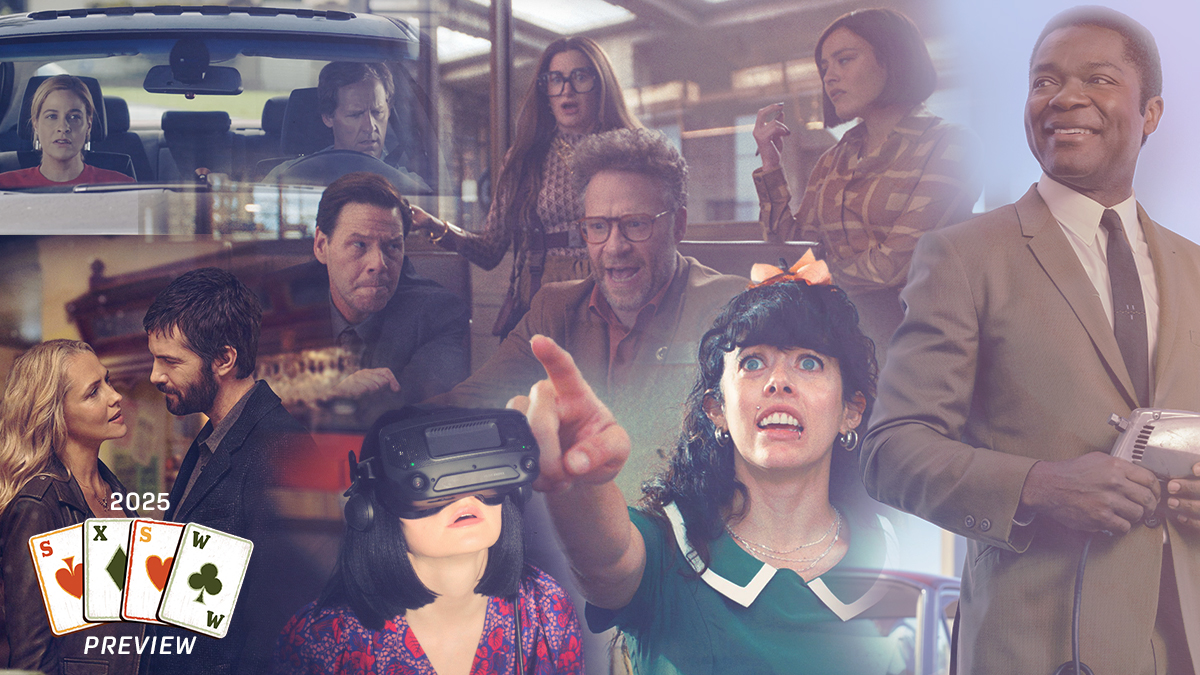
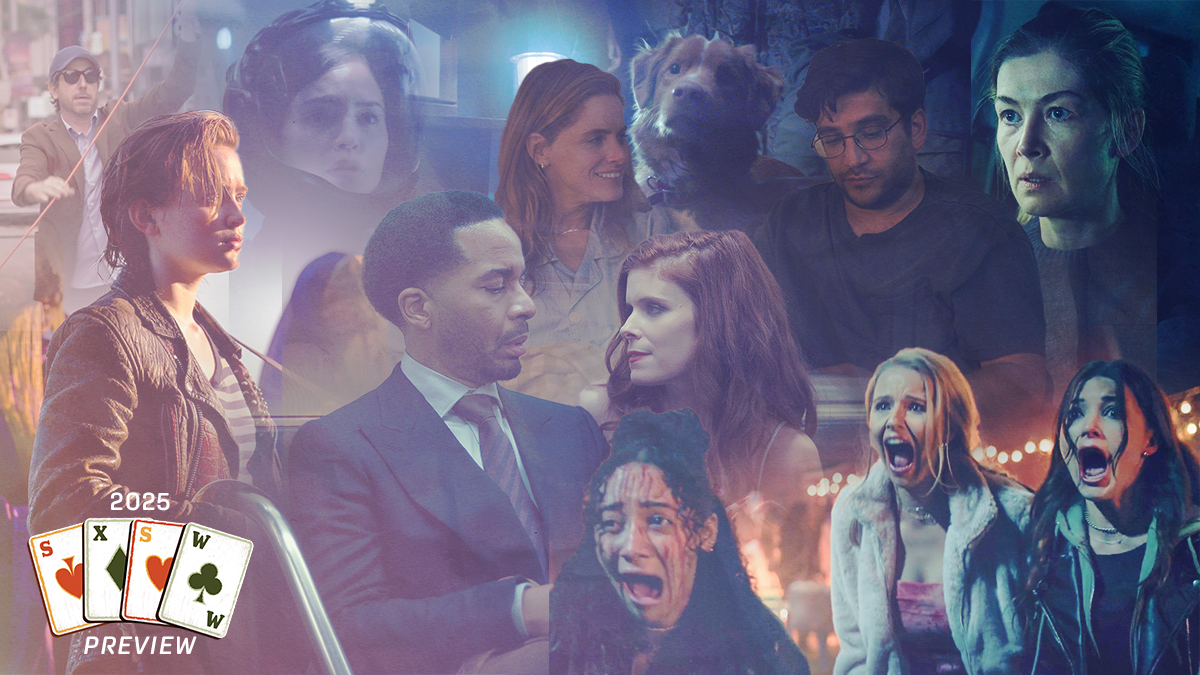
    The 2025 SXSW Film and TV Festival is filled with small screen series getting their public debut on big screens. Some are appropriately huge like the star-studded Apple TV + comedy The Studio, while others are lowkey indie and international pilots looking for a home. Here are all the shows you &#8217, re going to want to keep an eye on from this year &#8217, s festival.

    Prime Video

    # 1 Happy Family USA

    When the Hussein family’s neighbors start to see them as enemy #1 in the aftermath of 9/11, they only have one option: to become # 1 Happy Family USA. Patriotism! Smiles! Fitting in! This satirical adult animated series, created by Ramy Youssef with South Park producer Pam Brady and A24, mines the early 2000s Muslim-American experience for sharp, absurd comedy. It’ll make its world premiere at SXSW before launching the first of two already-commissioned seasons on Prime Video in March. 

    Apple TV +

    Government Cheese

    The ambitious, unconventional Chambers family were doing just fine in 1969 San Fernando Valley without patriarch Hampton while he served his jail time. Now, he’s a free man hoping to shake off his criminal past, reunite with his wife and sons, and make sense of what appear to be episodes of divine intervention in his life. &nbsp,

    Created by acclaimed music video director Paul Hunter and screenwriter-producer Ayesha Carr, Government Cheese is a surrealist dramedy based on Hunter’s short film of the same name, which will stream on Apple TV + in April. The 10-episode series stars Silo and Lawmen: Bass Reeves’ David Oyelowo as Hampton Chambers, with Simone Missick (Luke Cage’s Misty Knight) as his wife, Astoria. Expect strangeness.

    Paramount+

    Happy Face

    The Dropout, Dirty John, Dr. Death … behind every hit true crime TV show is a podcast telling the same story, but without pictures and with more ads for Mailchimp. Eight-episode Paramount + series Happy Face is based on the pod of the same name by Melissa G. Moore, a creator with a unique perspective on real-life serial killer Keith” Happy Face” Hunter Jesperson by dint of being his daughter. Starring Dennis Quaid as Jesperson and Annaleigh Ashford as Moore, it lands on March 20.

    Philadelphia Inquirer/MCT/Sipa US

    Spy High

    You remember that one teacher with eyes in the back of their head? In 2010, a Philadelphia school district decided to go one better. Using webcams in school-issued laptops, they were alleged to have spied on students in their bedrooms at home, leading to an accusation that 15-year-old Blake Robbins was selling drugs. Robbins brought a lawsuit against them and successfully won damages, and Mark Wahlberg’s production company is here to tell the story in this four-part Prime Video docuseries.

    Apple TV +

    The Studio

    Matt Remick (Seth Rogen) got into the film biz because he loves movies, but now that he’s the head of Continental Studios, he’s worried that his job is to ruin them. Thanks to bottom lines, in-fighting execs, and narcissist creatives, it’ll certainly ruin him in this 10-episode industry satire coming to Apple TV + on March 26.

    From longtime collaborators Rogen and Evan Goldberg ( Superbad, Knocked Up, This is the End ), The Studio stars Beetlejuice Beetlejuice‘s CatherineO’Hara and Agatha All Along‘s Kathryn Hahn, with Breaking Bad‘s Bryan Cranston, The Batman‘s Paul Dano, and star cameos aplenty ( Rogen and Goldberg are connected, so expect to see appearances by Martin Scorsese, Charlize Theron, and more ). Can The Studio reach the same cynical depths as Robert Altman’s 1992 classic The Player? It can try! With any luck, it’ll fare better than HBO’s superhero movie satire The Franchise, which didn’t last longer than a season.

    Torjus Thesen/Maipo Film

    Dates in Real Life

    From Norway comes the dramedy Dates in Real Life, a sideways look at dating in the age of technology. Dates in Real Life stars Gina Bernhoft Gørvell as Ida, a woman who thought her virtual relationship with her boyfriend was fulfilling—that is until she sees him in person with another woman. Her virtual reality shattered, Ida must figure out how to relate with others face-to-face. Creator Jakob Rørvik goes beyond banal observations for his award-winning series. &nbsp,

    Foxtel Group

    Mix Tape

    Jim Sturgess is no stranger to the intersection of romance and music, having starred in the 2007 Beatles jukebox musical Across the Universe. Now, music is set to take him someplace even more exotic than across the universe: a 1989 house party in Sheffield.

    A collaborative effort among Canadian, Australian, Finnish, and Irish producers, Mix Tape follows two teens who bond over their love of music and then meet again 20 years later to reflect on what could have been. &nbsp,

    Michelle Lawler

    Bulldozer

    Amid a successful career in casting, voice acting, and playing background roles in sitcoms ( perhaps you remember” Vanessa’s Friend” in Curb Your Enthusiasm season 9? ), Joanna Leeds takes center stage by creating and starring in comedy pilot Bulldozer. &nbsp,

    Assisted by notable performers like Nat Faxon, Harvey Guillen, and Mary Steenburgen, Bulldozer depicts one passionate, if misguided, woman trying to find love while lurching from crisis to crisis like some kind of…motorized construction machine. &nbsp,

    The American Standard Film Co

    Stars Diner

    Fun fact: the statistic that 90 % of restaurants fail in their first year is a myth. Truthfully, “only” 17 % of restaurants close after year one. But what are the statistics for restaurants that happen to be situated next to a massive volcano that could end all life in Fresno, California?

    That’s the situation facing the employees of Stars Diner. This indie TV pilot is directed by Fidel Ruiz-Healy and Tyler Walker and features&nbsp, Natalie Palamides ( who stopped by last year’s SXSW to promote fellow indie TV project The Broadcast ).

    The post SXSW 2025 TV Preview: The Studio, Happy Face, # 1 Happy Family USA, and More appeared first on Den of Geek.

  • The Best UK TV Quiz Shows Ranked

    The Best UK TV Quiz Shows Ranked

    Individuals think it’s really questions and answers. It’s not just questions and answers. The best TV survey shows are areas you drop into that feeling immediately like home. They’re a school common room, or a friend’s sofa, or your local pub – somewhere familiar and unchanging that lets you relax and know that you belong… ]…]

    The article The Best British TV Quiz Shows Ranked appeared initially on Den of Geek.

    Whether it &#8217, s in your living space on a flatscreen, in sleep on a product, or at your office on a computer, watching tv is usually a relatively private practice. That&#8217, s not the case at South by Southwest.

    cnx. powershell. push ( function ( ) {cnx ( {playerId:” 106e33c0-3911-473c-b599-b1426db57530″, }). render ( “0270c398a82f44f49c23c16122516796” ), }),

    The 2025 SXSW Film and Television Festival is filled with smaller screen collection getting their common debut on large screens. Some are correctly great like the star-studded Apple Television + humor The Studio, while others are lowkey independent and global planes looking for a home. Here are all the shows you &#8217, re going to want to keep an eye on from this year &#8217, s event.

    Prime Video

    # 1 Happy Family USA

    When the Hussein family’s neighbors start to see them as enemy #1 in the aftermath of 9/11, they only have one option: to become # 1 Happy Family USA. Patriotism! Smiles! Fitting in! This satirical adult animated series, created by Ramy Youssef with South Park producer Pam Brady and A24, mines the early 2000s Muslim-American experience for sharp, absurd comedy. It’ll make its world premiere at SXSW before launching the first of two already-commissioned seasons on Prime Video in March. 

    Apple TV +

    Government Cheese

    The ambitious, unconventional Chambers family were doing just fine in 1969 San Fernando Valley without patriarch Hampton while he served his jail time. Now, he’s a free man hoping to shake off his criminal past, reunite with his wife and sons, and make sense of what appear to be episodes of divine intervention in his life. &nbsp,

    Created by acclaimed music video director Paul Hunter and screenwriter-producer Ayesha Carr, Government Cheese is a surrealist dramedy based on Hunter’s short film of the same name, which will stream on Apple TV + in April. The 10-episode series stars Silo and Lawmen: Bass Reeves’ David Oyelowo as Hampton Chambers, with Simone Missick (Luke Cage’s Misty Knight) as his wife, Astoria. Expect strangeness.

    Paramount+

    Happy Face

    The Dropout, Dirty John, Dr. Death … behind every hit true crime TV show is a podcast telling the same story, but without pictures and with more ads for Mailchimp. Eight-episode Paramount + series Happy Face is based on the pod of the same name by Melissa G. Moore, a creator with a unique perspective on real-life serial killer Keith” Happy Face” Hunter Jesperson by dint of being his daughter. Starring Dennis Quaid as Jesperson and Annaleigh Ashford as Moore, it lands on March 20.

    Philadelphia Inquirer/MCT/Sipa US

    Spy High

    You remember that one teacher with eyes in the back of their head? In 2010, a Philadelphia school district decided to go one better. Using webcams in school-issued laptops, they were alleged to have spied on students in their bedrooms at home, leading to an accusation that 15-year-old Blake Robbins was selling drugs. Robbins brought a lawsuit against them and successfully won damages, and Mark Wahlberg’s production company is here to tell the story in this four-part Prime Video docuseries.

    Apple TV +

    The Studio

    Matt Remick (Seth Rogen) got into the film biz because he loves movies, but now that he’s the head of Continental Studios, he’s worried that his job is to ruin them. Thanks to bottom lines, in-fighting execs, and narcissist creatives, it’ll certainly ruin him in this 10-episode industry satire coming to Apple TV + on March 26.

    From longtime collaborators Rogen and Evan Goldberg ( Superbad, Knocked Up, This is the End ), The Studio stars Beetlejuice Beetlejuice‘s CatherineO’Hara and Agatha All Along‘s Kathryn Hahn, with Breaking Bad‘s Bryan Cranston, The Batman‘s Paul Dano, and star cameos aplenty ( Rogen and Goldberg are connected, so expect to see appearances by Martin Scorsese, Charlize Theron, and more ). Can The Studio reach the same cynical depths as Robert Altman’s 1992 classic The Player? It can try! With any luck, it’ll fare better than HBO’s superhero movie satire The Franchise, which didn’t last longer than a season.

    Torjus Thesen/Maipo Film

    Dates in Real Life

    From Norway comes the dramedy Dates in Real Life, a sideways look at dating in the age of technology. Dates in Real Life stars Gina Bernhoft Gørvell as Ida, a woman who thought her virtual relationship with her boyfriend was fulfilling—that is until she sees him in person with another woman. Her virtual reality shattered, Ida must figure out how to relate with others face-to-face. Creator Jakob Rørvik goes beyond banal observations for his award-winning series. &nbsp,

    Foxtel Group

    Mix Tape

    Jim Sturgess is no stranger to the intersection of romance and music, having starred in the 2007 Beatles jukebox musical Across the Universe. Now, music is set to take him someplace even more exotic than across the universe: a 1989 house party in Sheffield.

    A collaborative effort among Canadian, Australian, Finnish, and Irish producers, Mix Tape follows two teens who bond over their love of music and then meet again 20 years later to reflect on what could have been. &nbsp,

    Michelle Lawler

    Bulldozer

    Amid a successful career in casting, voice acting, and playing background roles in sitcoms ( perhaps you remember” Vanessa’s Friend” in Curb Your Enthusiasm season 9? ), Joanna Leeds takes center stage by creating and starring in comedy pilot Bulldozer. &nbsp,

    Assisted by notable performers like Nat Faxon, Harvey Guillen, and Mary Steenburgen, Bulldozer depicts one passionate, if misguided, woman trying to find love while lurching from crisis to crisis like some kind of…motorized construction machine. &nbsp,

    The American Standard Film Co

    Stars Diner

    Fun fact: the statistic that 90 % of restaurants fail in their first year is a myth. Truthfully, “only” 17 % of restaurants close after year one. But what are the statistics for restaurants that happen to be situated next to a massive volcano that could end all life in Fresno, California?

    That’s the situation facing the employees of Stars Diner. This indie TV pilot is directed by Fidel Ruiz-Healy and Tyler Walker and features&nbsp, Natalie Palamides ( who stopped by last year’s SXSW to promote fellow indie TV project The Broadcast ).

    The post SXSW 2025 TV Preview: The Studio, Happy Face, # 1 Happy Family USA, and More appeared first on Den of Geek.

  • 25 Years On, American Psycho’s Ending Is Still Misunderstood

    25 Years On, American Psycho’s Ending Is Still Misunderstood

    Late last year, it was reported that director Luca Guadagnino is developing a new movie adaptation of Bret Easton Ellis ‘ 1991 book, American Psycho. Ellis has cast doubts on that statement by suggesting it’s more of an idea than a dedicated project, but the announcement sparked mixed emotions. Guadagnino tackling this relevant text through a]… ]

    The article 25 Times On, American Psycho’s Finishing Is Also Misunderstood appeared first on Den of Geek.

    Whether it &#8217, s in your living space on a flatscreen, in sleep on a product, or at your office on a computer, watching tv is usually a relatively private practice. That&#8217, s not the case at South by Southwest.

    cnx. powershell. push ( function ( ) {cnx ( {playerId:” 106e33c0-3911-473c-b599-b1426db57530″, }). render ( “0270c398a82f44f49c23c16122516796” ), }),

    The 2025 SXSW Film and Television Festival is filled with smaller screen collection getting their common debut on large screens. Some are properly great like the star-studded Apple Television + humor The Studio, while others are lowkey independent and global planes looking for a home. Here are all the shows you &#8217, re going to want to keep an eye on from this year &#8217, s event.

    Prime Video

    # 1 Happy Family USA

    When the Hussein family’s neighbors start to see them as enemy #1 in the aftermath of 9/11, they only have one option: to become # 1 Happy Family USA. Patriotism! Smiles! Fitting in! This satirical adult animated series, created by Ramy Youssef with South Park producer Pam Brady and A24, mines the early 2000s Muslim-American experience for sharp, absurd comedy. It’ll make its world premiere at SXSW before launching the first of two already-commissioned seasons on Prime Video in March. 

    Apple TV +

    Government Cheese

    The optimistic, innovative Chambers relatives were doing just fine in 1969 San Fernando Valley without father Virginia while he served his prison time. Now, he’s a free man hoping to shake off his criminal past, reunite with his wife and sons, and make sense of what appear to be episodes of divine intervention in his life. &nbsp,

    Created by acclaimed music video director Paul Hunter and screenwriter-producer Ayesha Carr, Government Cheese is a surrealist dramedy based on Hunter’s short film of the same name, which will stream on Apple TV + in April. The 10-episode series stars Silo and Lawmen: Bass Reeves’ David Oyelowo as Hampton Chambers, with Simone Missick (Luke Cage’s Misty Knight) as his wife, Astoria. Expect strangeness.

    Paramount+

    Happy Face

    The Dropout, Dirty John, Dr. Death … behind every hit true crime TV show is a podcast telling the same story, but without pictures and with more ads for Mailchimp. Eight-episode Paramount + series Happy Face is based on the pod of the same name by Melissa G. Moore, a creator with a unique perspective on real-life serial killer Keith” Happy Face” Hunter Jesperson by dint of being his daughter. Starring Dennis Quaid as Jesperson and Annaleigh Ashford as Moore, it lands on March 20.

    Philadelphia Inquirer/MCT/Sipa US

    Spy High

    You remember that one teacher with eyes in the back of their head? In 2010, a Philadelphia school district decided to go one better. Using webcams in school-issued laptops, they were alleged to have spied on students in their bedrooms at home, leading to an accusation that 15-year-old Blake Robbins was selling drugs. Robbins brought a lawsuit against them and successfully won damages, and Mark Wahlberg’s production company is here to tell the story in this four-part Prime Video docuseries.

    Apple TV +

    The Studio

    Matt Remick (Seth Rogen) got into the film biz because he loves movies, but now that he’s the head of Continental Studios, he’s worried that his job is to ruin them. Thanks to bottom lines, in-fighting execs, and narcissist creatives, it’ll certainly ruin him in this 10-episode industry satire coming to Apple TV + on March 26.

    From longtime collaborators Rogen and Evan Goldberg ( Superbad, Knocked Up, This is the End ), The Studio stars Beetlejuice Beetlejuice‘s CatherineO’Hara and Agatha All Along‘s Kathryn Hahn, with Breaking Bad‘s Bryan Cranston, The Batman‘s Paul Dano, and star cameos aplenty ( Rogen and Goldberg are connected, so expect to see appearances by Martin Scorsese, Charlize Theron, and more ). Can The Studio reach the same cynical depths as Robert Altman’s 1992 classic The Player? It can try! With any luck, it’ll fare better than HBO’s superhero movie satire The Franchise, which didn’t last longer than a season.

    Torjus Thesen/Maipo Film

    Dates in Real Life

    From Norway comes the dramedy Dates in Real Life, a sideways look at dating in the age of technology. Dates in Real Life stars Gina Bernhoft Gørvell as Ida, a woman who thought her virtual relationship with her boyfriend was fulfilling—that is until she sees him in person with another woman. Her virtual reality shattered, Ida must figure out how to relate with others face-to-face. Creator Jakob Rørvik goes beyond banal observations for his award-winning series. &nbsp,

    Foxtel Group

    Mix Tape

    Jim Sturgess is no stranger to the intersection of romance and music, having starred in the 2007 Beatles jukebox musical Across the Universe. Now, music is set to take him someplace even more exotic than across the universe: a 1989 house party in Sheffield.

    A collaborative effort among Canadian, Australian, Finnish, and Irish producers, Mix Tape follows two teens who bond over their love of music and then meet again 20 years later to reflect on what could have been. &nbsp,

    Michelle Lawler

    Bulldozer

    Amid a successful career in casting, voice acting, and playing background roles in sitcoms ( perhaps you remember” Vanessa’s Friend” in Curb Your Enthusiasm season 9? ), Joanna Leeds takes center stage by creating and starring in comedy pilot Bulldozer. &nbsp,

    Assisted by notable performers like Nat Faxon, Harvey Guillen, and Mary Steenburgen, Bulldozer depicts one passionate, if misguided, woman trying to find love while lurching from crisis to crisis like some kind of…motorized construction machine. &nbsp,

    The American Standard Film Co

    Stars Diner

    Fun fact: the statistic that 90 % of restaurants fail in their first year is a myth. Truthfully, “only” 17 % of restaurants close after year one. But what are the statistics for restaurants that happen to be situated next to a massive volcano that could end all life in Fresno, California?

    That’s the situation facing the employees of Stars Diner. This indie TV pilot is directed by Fidel Ruiz-Healy and Tyler Walker and features&nbsp, Natalie Palamides ( who stopped by last year’s SXSW to promote fellow indie TV project The Broadcast ).

    The post SXSW 2025 TV Preview: The Studio, Happy Face, # 1 Happy Family USA, and More appeared first on Den of Geek.

  • Wednesday: Jenna Ortega Confirms Season 2 Will Dive Deeper into Addams Family Lore

    Wednesday: Jenna Ortega Confirms Season 2 Will Dive Deeper into Addams Family Lore

    Jenna Ortega has more than once acknowledged that before Wednesday came down, friends and family in her life were now comparing her to the Addams Family’s sad girl, a figure originally created by Charles Addams more than 90 decades earlier. With season 2 almost upon us, she appears poised to create that image specific. During ]… ]

    The article Wednesday: Jenna Ortega Confirms Season 2 May Swim Deeper into Addams Family Lore appeared first on Den of Geek.

    Whether it &#8217, s in your living space on a flatscreen, in sleep on a product, or at your office on a computer, watching tv is usually a relatively private practice. That&#8217, s not the case at South by Southwest.

    cnx. cmd. push ( function ( ) {cnx ( {playerId:” 106e33c0-3911-473c-b599-b1426db57530″, }). render ( “0270c398a82f44f49c23c16122516796” ), }),

    The 2025 SXSW Film and TV Festival is filled with small screen series getting their public debut on big screens. Some are appropriately huge like the star-studded Apple TV + comedy The Studio, while others are lowkey indie and international pilots looking for a home. Here are all the shows you &#8217, re going to want to keep an eye on from this year &#8217, s festival.

    Prime Video

    # 1 Happy Family USA

    When the Hussein family’s neighbors start to see them as enemy #1 in the aftermath of 9/11, they only have one option: to become # 1 Happy Family USA. Patriotism! Smiles! Fitting in! This satirical adult animated series, created by Ramy Youssef with South Park producer Pam Brady and A24, mines the early 2000s Muslim-American experience for sharp, absurd comedy. It’ll make its world premiere at SXSW before launching the first of two already-commissioned seasons on Prime Video in March. 

    Apple TV +

    Government Cheese

    The ambitious, unconventional Chambers family were doing just fine in 1969 San Fernando Valley without patriarch Hampton while he served his jail time. Now, he’s a free man hoping to shake off his criminal past, reunite with his wife and sons, and make sense of what appear to be episodes of divine intervention in his life. &nbsp,

    Created by acclaimed music video director Paul Hunter and screenwriter-producer Ayesha Carr, Government Cheese is a surrealist dramedy based on Hunter’s short film of the same name, which will stream on Apple TV + in April. The 10-episode series stars Silo and Lawmen: Bass Reeves’ David Oyelowo as Hampton Chambers, with Simone Missick (Luke Cage’s Misty Knight) as his wife, Astoria. Expect strangeness.

    Paramount+

    Happy Face

    The Dropout, Dirty John, Dr. Death … behind every hit true crime TV show is a podcast telling the same story, but without pictures and with more ads for Mailchimp. Eight-episode Paramount + series Happy Face is based on the pod of the same name by Melissa G. Moore, a creator with a unique perspective on real-life serial killer Keith” Happy Face” Hunter Jesperson by dint of being his daughter. Starring Dennis Quaid as Jesperson and Annaleigh Ashford as Moore, it lands on March 20.

    Philadelphia Inquirer/MCT/Sipa US

    Spy High

    You remember that one teacher with eyes in the back of their head? In 2010, a Philadelphia school district decided to go one better. Using webcams in school-issued laptops, they were alleged to have spied on students in their bedrooms at home, leading to an accusation that 15-year-old Blake Robbins was selling drugs. Robbins brought a lawsuit against them and successfully won damages, and Mark Wahlberg’s production company is here to tell the story in this four-part Prime Video docuseries.

    Apple TV +

    The Studio

    Matt Remick (Seth Rogen) got into the film biz because he loves movies, but now that he’s the head of Continental Studios, he’s worried that his job is to ruin them. Thanks to bottom lines, in-fighting execs, and narcissist creatives, it’ll certainly ruin him in this 10-episode industry satire coming to Apple TV + on March 26.

    From longtime collaborators Rogen and Evan Goldberg ( Superbad, Knocked Up, This is the End ), The Studio stars Beetlejuice Beetlejuice‘s CatherineO’Hara and Agatha All Along‘s Kathryn Hahn, with Breaking Bad‘s Bryan Cranston, The Batman‘s Paul Dano, and star cameos aplenty ( Rogen and Goldberg are connected, so expect to see appearances by Martin Scorsese, Charlize Theron, and more ). Can The Studio reach the same cynical depths as Robert Altman’s 1992 classic The Player? It can try! With any luck, it’ll fare better than HBO’s superhero movie satire The Franchise, which didn’t last longer than a season.

    Torjus Thesen/Maipo Film

    Dates in Real Life

    From Norway comes the dramedy Dates in Real Life, a sideways look at dating in the age of technology. Dates in Real Life stars Gina Bernhoft Gørvell as Ida, a woman who thought her virtual relationship with her boyfriend was fulfilling—that is until she sees him in person with another woman. Her virtual reality shattered, Ida must figure out how to relate with others face-to-face. Creator Jakob Rørvik goes beyond banal observations for his award-winning series. &nbsp,

    Foxtel Group

    Mix Tape

    Jim Sturgess is no stranger to the intersection of romance and music, having starred in the 2007 Beatles jukebox musical Across the Universe. Now, music is set to take him someplace even more exotic than across the universe: a 1989 house party in Sheffield.

    A collaborative effort among Canadian, Australian, Finnish, and Irish producers, Mix Tape follows two teens who bond over their love of music and then meet again 20 years later to reflect on what could have been. &nbsp,

    Michelle Lawler

    Bulldozer

    Amid a successful career in casting, voice acting, and playing background roles in sitcoms ( perhaps you remember” Vanessa’s Friend” in Curb Your Enthusiasm season 9? ), Joanna Leeds takes center stage by creating and starring in comedy pilot Bulldozer. &nbsp,

    Assisted by notable performers like Nat Faxon, Harvey Guillen, and Mary Steenburgen, Bulldozer depicts one passionate, if misguided, woman trying to find love while lurching from crisis to crisis like some kind of…motorized construction machine. &nbsp,

    The American Standard Film Co

    Stars Diner

    Fun fact: the statistic that 90 % of restaurants fail in their first year is a myth. Truthfully, “only” 17 % of restaurants close after year one. But what are the statistics for restaurants that happen to be situated next to a massive volcano that could end all life in Fresno, California?

    That’s the situation facing the employees of Stars Diner. This indie TV pilot is directed by Fidel Ruiz-Healy and Tyler Walker and features&nbsp, Natalie Palamides ( who stopped by last year’s SXSW to promote fellow indie TV project The Broadcast ).

    The post SXSW 2025 TV Preview: The Studio, Happy Face, # 1 Happy Family USA, and More appeared first on Den of Geek.

  • Link Tank: New RSVLTS Collection Will ‘Power The Force’ for Star Wars Fans

    Link Tank: New RSVLTS Collection Will ‘Power The Force’ for Star Wars Fans

    The Star Wars” Power The Force” series from RSVLTS enjoys several fan-favorite characters and special devices that have powered the world throughout the ages. ” The collection includes fantastical tech-themed array of Star Wars designs that feature some classic and new droids and lightsabers from over the decades, all available on RSVLTS signature KUNUFLEX™ material with ]… ]

    The article Link Tank: New RSVLTS Collection Will ‘ Power The Force ‘ for Star Wars Fans appeared second on Den of Geek.

    Whether it &#8217, s in your living space on a flatscreen, in sleep on a product, or at your office on a computer, watching tv is usually a relatively private practice. That&#8217, s not the case at South by Southwest.

    cnx. command. push ( function ( ) {cnx ( {playerId:” 106e33c0-3911-473c-b599-b1426db57530″, }). render ( “0270c398a82f44f49c23c16122516796” ), }),

    The 2025 SXSW Film and Television Festival is filled with smaller screen collection getting their common debut on large screens. Some are properly great like the star-studded Apple TV + humor The Studio, while others are lowkey independent and global planes looking for a home. Here are all the shows you &#8217, re going to want to keep an eye on from this year &#8217, s festival.

    Prime Video

    # 1 Happy Family USA

    When the Hussein family’s neighbors start to see them as enemy #1 in the aftermath of 9/11, they only have one option: to become # 1 Happy Family USA. Patriotism! Smiles! Fitting in! This satirical adult animated series, created by Ramy Youssef with South Park producer Pam Brady and A24, mines the early 2000s Muslim-American experience for sharp, absurd comedy. It’ll make its world premiere at SXSW before launching the first of two already-commissioned seasons on Prime Video in March. 

    Apple TV +

    Government Cheese

    The ambitious, unconventional Chambers family were doing just fine in 1969 San Fernando Valley without patriarch Hampton while he served his jail time. Now, he’s a free man hoping to shake off his criminal past, reunite with his wife and sons, and make sense of what appear to be episodes of divine intervention in his life. &nbsp,

    Created by acclaimed music video director Paul Hunter and screenwriter-producer Ayesha Carr, Government Cheese is a surrealist dramedy based on Hunter’s short film of the same name, which will stream on Apple TV + in April. The 10-episode series stars Silo and Lawmen: Bass Reeves’ David Oyelowo as Hampton Chambers, with Simone Missick (Luke Cage’s Misty Knight) as his wife, Astoria. Expect strangeness.

    Paramount+

    Happy Face

    The Dropout, Dirty John, Dr. Death … behind every hit true crime TV show is a podcast telling the same story, but without pictures and with more ads for Mailchimp. Eight-episode Paramount + series Happy Face is based on the pod of the same name by Melissa G. Moore, a creator with a unique perspective on real-life serial killer Keith” Happy Face” Hunter Jesperson by dint of being his daughter. Starring Dennis Quaid as Jesperson and Annaleigh Ashford as Moore, it lands on March 20.

    Philadelphia Inquirer/MCT/Sipa US

    Spy High

    You remember that one teacher with eyes in the back of their head? In 2010, a Philadelphia school district decided to go one better. Using webcams in school-issued laptops, they were alleged to have spied on students in their bedrooms at home, leading to an accusation that 15-year-old Blake Robbins was selling drugs. Robbins brought a lawsuit against them and successfully won damages, and Mark Wahlberg’s production company is here to tell the story in this four-part Prime Video docuseries.

    Apple TV +

    The Studio

    Matt Remick (Seth Rogen) got into the film biz because he loves movies, but now that he’s the head of Continental Studios, he’s worried that his job is to ruin them. Thanks to bottom lines, in-fighting execs, and narcissist creatives, it’ll certainly ruin him in this 10-episode industry satire coming to Apple TV + on March 26.

    From longtime collaborators Rogen and Evan Goldberg ( Superbad, Knocked Up, This is the End ), The Studio stars Beetlejuice Beetlejuice‘s CatherineO’Hara and Agatha All Along‘s Kathryn Hahn, with Breaking Bad‘s Bryan Cranston, The Batman‘s Paul Dano, and star cameos aplenty ( Rogen and Goldberg are connected, so expect to see appearances by Martin Scorsese, Charlize Theron, and more ). Can The Studio reach the same cynical depths as Robert Altman’s 1992 classic The Player? It can try! With any luck, it’ll fare better than HBO’s superhero movie satire The Franchise, which didn’t last longer than a season.

    Torjus Thesen/Maipo Film

    Dates in Real Life

    From Norway comes the dramedy Dates in Real Life, a sideways look at dating in the age of technology. Dates in Real Life stars Gina Bernhoft Gørvell as Ida, a woman who thought her virtual relationship with her boyfriend was fulfilling—that is until she sees him in person with another woman. Her virtual reality shattered, Ida must figure out how to relate with others face-to-face. Creator Jakob Rørvik goes beyond banal observations for his award-winning series. &nbsp,

    Foxtel Group

    Mix Tape

    Jim Sturgess is no stranger to the intersection of romance and music, having starred in the 2007 Beatles jukebox musical Across the Universe. Now, music is set to take him someplace even more exotic than across the universe: a 1989 house party in Sheffield.

    A collaborative effort among Canadian, Australian, Finnish, and Irish producers, Mix Tape follows two teens who bond over their love of music and then meet again 20 years later to reflect on what could have been. &nbsp,

    Michelle Lawler

    Bulldozer

    Amid a successful career in casting, voice acting, and playing background roles in sitcoms ( perhaps you remember” Vanessa’s Friend “in Curb Your Enthusiasm season 9? ), Joanna Leeds takes center stage by creating and starring in comedy pilot Bulldozer. &nbsp,

    Assisted by notable performers like Nat Faxon, Harvey Guillen, and Mary Steenburgen, Bulldozer depicts one passionate, if misguided, woman trying to find love while lurching from crisis to crisis like some kind of…motorized construction machine. &nbsp,

    The American Standard Film Co

    Stars Diner

    Fun fact: the statistic that 90 % of restaurants fail in their first year is a myth. Truthfully”, only” 17 % of restaurants close after year one. But what are the statistics for restaurants that happen to be situated next to a massive volcano that could end all life in Fresno, California?

    That’s the situation facing the employees of Stars Diner. This indie TV pilot is directed by Fidel Ruiz-Healy and Tyler Walker and features&nbsp, Natalie Palamides ( who stopped by last year’s SXSW to promote fellow indie TV project The Broadcast ).

    The post SXSW 2025 TV Preview: The Studio, Happy Face, # 1 Happy Family USA, and More appeared first on Den of Geek.

  • SXSW 2025 TV Preview: The Studio, Happy Face, #1 Happy Family USA, and More

    SXSW 2025 TV Preview: The Studio, Happy Face, #1 Happy Family USA, and More

    Whether it’s in your living space on a flatscreen, in bed on a product, or at your office on a computer, watching tv is usually a fairly personal experience. That’s not the situation at South by Southwest. The 2025 SXSW Film and Television Festival is filled with smaller screen set getting their common debut on ]…]

    The article SXSW 2025 Screen Preview: The Studio, Happy Face,# 1 Happy Family USA, and More appeared first on Den of Geek.

    Whether it &#8217, s in your living space on a flatscreen, in sleep on a product, or at your office on a computer, watching tv is usually a relatively private practice. That&#8217, s not the case at South by Southwest.

    cnx. command. push ( function ( ) {cnx ( {playerId:” 106e33c0-3911-473c-b599-b1426db57530″, }). render ( “0270c398a82f44f49c23c16122516796” ), }),

    The 2025 SXSW Film and Television Festival is filled with smaller screen collection getting their common debut on large screens. Some are properly great like the star-studded Apple Television + sitcom The Studio, while others are lowkey indie and global planes looking for a home. Here are all the shows you &#8217, re going to want to keep an eye on from this year &#8217, s festival.

    Prime Video

    # 1 Happy Family USA

    When the Hussein family’s neighbors start to see them as enemy #1 in the aftermath of 9/11, they only have one option: to become # 1 Happy Family USA. Patriotism! Smiles! Fitting in! This satirical adult animated series, created by Ramy Youssef with South Park producer Pam Brady and A24, mines the early 2000s Muslim-American experience for sharp, absurd comedy. It’ll make its world premiere at SXSW before launching the first of two already-commissioned seasons on Prime Video in March. 

    Apple TV +

    Government Cheese

    The ambitious, unconventional Chambers family were doing just fine in 1969 San Fernando Valley without patriarch Hampton while he served his jail time. Now, he’s a free man hoping to shake off his criminal past, reunite with his wife and sons, and make sense of what appear to be episodes of divine intervention in his life. &nbsp,

    Created by acclaimed music video director Paul Hunter and screenwriter-producer Ayesha Carr, Government Cheese is a surrealist dramedy based on Hunter’s short film of the same name, which will stream on Apple TV + in April. The 10-episode series stars Silo and Lawmen: Bass Reeves’ David Oyelowo as Hampton Chambers, with Simone Missick (Luke Cage’s Misty Knight) as his wife, Astoria. Expect strangeness.

    Paramount+

    Happy Face

    The Dropout, Dirty John, Dr. Death … behind every hit true crime TV show is a podcast telling the same story, but without pictures and with more ads for Mailchimp. Eight-episode Paramount + series Happy Face is based on the pod of the same name by Melissa G. Moore, a creator with a unique perspective on real-life serial killer Keith” Happy Face” Hunter Jesperson by dint of being his daughter. Starring Dennis Quaid as Jesperson and Annaleigh Ashford as Moore, it lands on March 20.

    Philadelphia Inquirer/MCT/Sipa US

    Spy High

    You remember that one teacher with eyes in the back of their head? In 2010, a Philadelphia school district decided to go one better. Using webcams in school-issued laptops, they were alleged to have spied on students in their bedrooms at home, leading to an accusation that 15-year-old Blake Robbins was selling drugs. Robbins brought a lawsuit against them and successfully won damages, and Mark Wahlberg’s production company is here to tell the story in this four-part Prime Video docuseries.

    Apple TV +

    The Studio

    Matt Remick (Seth Rogen) got into the film biz because he loves movies, but now that he’s the head of Continental Studios, he’s worried that his job is to ruin them. Thanks to bottom lines, in-fighting execs, and narcissist creatives, it’ll certainly ruin him in this 10-episode industry satire coming to Apple TV + on March 26.

    From longtime collaborators Rogen and Evan Goldberg ( Superbad, Knocked Up, This is the End ), The Studio stars Beetlejuice Beetlejuice‘s CatherineO’Hara and Agatha All Along‘s Kathryn Hahn, with Breaking Bad‘s Bryan Cranston, The Batman‘s Paul Dano, and star cameos aplenty ( Rogen and Goldberg are connected, so expect to see appearances by Martin Scorsese, Charlize Theron, and more ). Can The Studio reach the same cynical depths as Robert Altman’s 1992 classic The Player? It can try! With any luck, it’ll fare better than HBO’s superhero movie satire The Franchise, which didn’t last longer than a season.

    Torjus Thesen/Maipo Film

    Dates in Real Life

    From Norway comes the dramedy Dates in Real Life, a sideways look at dating in the age of technology. Dates in Real Life stars Gina Bernhoft Gørvell as Ida, a woman who thought her virtual relationship with her boyfriend was fulfilling—that is until she sees him in person with another woman. Her virtual reality shattered, Ida must figure out how to relate with others face-to-face. Creator Jakob Rørvik goes beyond banal observations for his award-winning series. &nbsp,

    Foxtel Group

    Mix Tape

    Jim Sturgess is no stranger to the intersection of romance and music, having starred in the 2007 Beatles jukebox musical Across the Universe. Now, music is set to take him someplace even more exotic than across the universe: a 1989 house party in Sheffield.

    A collaborative effort among Canadian, Australian, Finnish, and Irish producers, Mix Tape follows two teens who bond over their love of music and then meet again 20 years later to reflect on what could have been. &nbsp,

    Michelle Lawler

    Bulldozer

    Amid a successful career in casting, voice acting, and playing background roles in sitcoms ( perhaps you remember” Vanessa’s Friend” in Curb Your Enthusiasm season 9? ), Joanna Leeds takes center stage by creating and starring in comedy pilot Bulldozer. &nbsp,

    Assisted by notable performers like Nat Faxon, Harvey Guillen, and Mary Steenburgen, Bulldozer depicts one passionate, if misguided, woman trying to find love while lurching from crisis to crisis like some kind of…motorized construction machine. &nbsp,

    The American Standard Film Co

    Stars Diner

    Fun fact: the statistic that 90 % of restaurants fail in their first year is a myth. Truthfully, “only” 17 % of restaurants close after year one. But what are the statistics for restaurants that happen to be situated next to a massive volcano that could end all life in Fresno, California?

    That’s the situation facing the employees of Stars Diner. This indie TV pilot is directed by Fidel Ruiz-Healy and Tyler Walker and features&nbsp, Natalie Palamides ( who stopped by last year’s SXSW to promote fellow indie TV project The Broadcast ).

    The article SXSW 2025 Screen Preview: The Studio, Happy Face,# 1 Happy Family USA, and More appeared first on Den of Geek.

  • Beware the Cut ‘n’ Paste Persona

    Beware the Cut ‘n’ Paste Persona

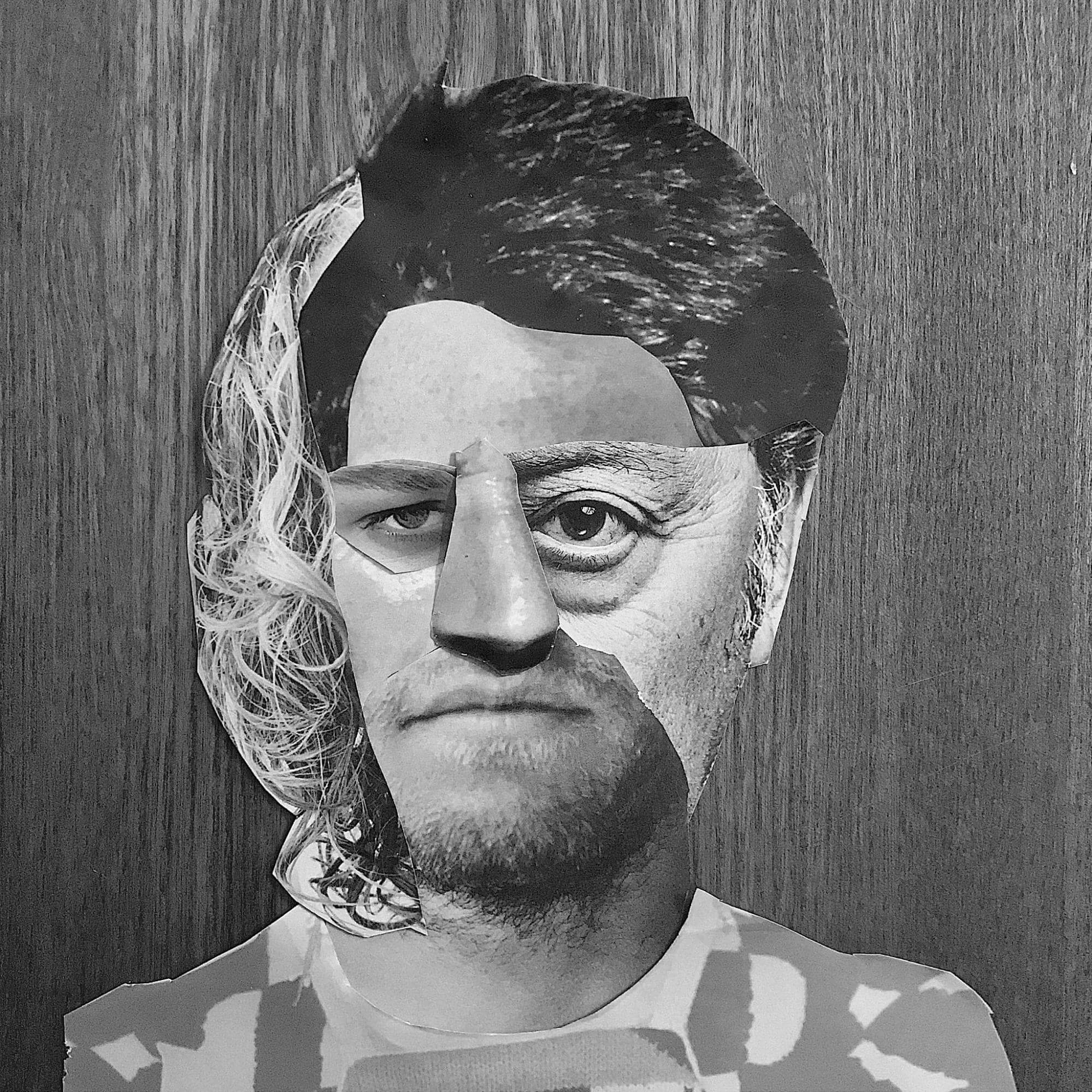
    This Person Does Not Arise is a site that generates mortal eyes with a machine learning algorithm. It takes actual photos and recombines them into false people faces. We just scrolled past a LinkedIn article stating that this website may be important “if you are developing a image and looking for a photo”.

    We agree: the computer-generated heads could be a great fit for personas—but not for the purpose you might think. Ironically, the website highlights the core issue of this very common design method: the person ( a ) does not exist. Like the photographs, identities are artificially made. Knowledge is taken out of natural environment and recombined into an isolated preview that’s detached from reality.

    But strangely enough, manufacturers use personalities to encourage their style for the real world.

    Personas: A action up

    Most manufacturers have created, used, or come across personalities at least once in their profession. In their content” Personas- A Plain Introduction”, the Interaction Design Foundation defines profile as “fictional characters, which you create based upon your study in order to reflect the unique user types that might use your service, product, site, or brand”. In their most complete expression, personas typically consist of a name, profile picture, quotes, demographics, goals, needs, behavior in relation to a certain service/product, emotions, and motivations ( for example, see Creative Companion’s Persona Core Poster ). The purpose of personas, as stated by design agency Designit, is” to make the research relatable, ]and ] easy to communicate, digest, reference, and apply to product and service development”.

    The decontextualization of personalities

    Personas are common because they make “dry” research information more realistic, more people. However, this strategy constrains the study’s data research in such a way that the investigated customers are removed from their unique settings. As a result, personalities don’t describe important factors that make you realize their decision-making method or allow you to connect to users ‘ thoughts and behavior, they lack stories. You understand what the image did, but you don’t have the background to know why. You end up with depictions of people that are really less people.

    This “decontextualization” we see in identities happens in four way, which we’ll discuss below.

    Identities assume people are dynamic

    Although many companies still try to box in their employees and customers with outdated personality tests ( referring to you, Myers-Briggs ), here’s a painfully obvious truth: people are not a fixed set of features. You act, think, and feel different according to the conditions you experience. You appear distinct to different people, you may act helpful to some, tough to others. And you change your mind all the time about selections you’ve taken.

    Modern psychology agree that while persons usually behave according to certain styles, it’s actually a combination of history and culture that determines how people act and take decisions. The context—the atmosphere, the effect of other people, your feelings, the whole story that led up to a situation—determines the kind of person you are in each particular time.

    In their effort to reduce reality, personalities do not take this variability into consideration, they present a person as a predetermined set of features. Like personality tests, personas snatch people away from real life. Even worse, people are reduced to a label and categorized as” that kind of person” with no means to exercise their innate flexibility. This practice reinforces stereotypes, lowers diversity, and doesn’t reflect reality.

    Personas focus on individuals, not the environment

    In the real world, you’re designing for a context, not for an individual. Each person lives in a family, a community, an ecosystem, where there are environmental, political, and social factors you need to consider. A design is never meant for a single user. Rather, you design for one or more particular contexts in which many people might use that product. Personas, however, show the user alone rather than describe how the user relates to the environment.

    Would you always make the same decision over and over again? Maybe you’re a committed vegan but still decide to buy some meat when your relatives are coming over. As they depend on different situations and variables, your decisions—and behavior, opinions, and statements —are not absolute but highly contextual. The persona that “represents” you wouldn’t take into account this dependency, because it doesn’t specify the premises of your decisions. It doesn’t provide a justification of why you act the way you do. Personas enact the well-known bias called fundamental attribution error: explaining others ‘ behavior too much by their personality and too little by the situation.

    As mentioned by the Interaction Design Foundation, personas are usually placed in a scenario that’s a” specific context with a problem they want to or have to solve “—does that mean context actually is considered? Unfortunately, what often happens is that you take a fictional character and based on that fiction determine how this character might deal with a certain situation. This is made worse by the fact that you haven’t even fully investigated and understood the current context of the people your persona seeks to represent, so how could you possibly understand how they would act in new situations?

    Personas are meaningless averages

    As mentioned in Shlomo Goltz’s introductory article on Smashing Magazine,” a persona is depicted as a specific person but is not a real individual, rather, it is synthesized from observations of many people”. A well-known critique to this aspect of personas is that the average person does not exist, as per the famous example of the USA Air Force designing planes based on the average of 140 of their pilots ‘ physical dimensions and not a single pilot actually fitting within that average seat.

    The same limitation applies to mental aspects of people. Have you ever heard a famous person say,” They took what I said out of context! They used my words, but I didn’t mean it like that”. The celebrity’s statement was reported literally, but the reporter failed to explain the context around the statement and didn’t describe the non-verbal expressions. As a result, the intended meaning was lost. You do the same when you create personas: you collect somebody’s statement ( or goal, or need, or emotion ), of which the meaning can only be understood if you provide its own specific context, yet report it as an isolated finding.

    But personas go a step further, extracting a decontextualized finding and joining it with another decontextualized finding from somebody else. The resulting set of findings often does not make sense: it’s unclear, or even contrasting, because it lacks the underlying reasons on why and how that finding has arisen. It lacks meaning. And the persona doesn’t give you the full background of the person ( s ) to uncover this meaning: you would need to dive into the raw data for each single persona item to find it. What, then, is the usefulness of the persona?

    The relatability of personas is deceiving

    To a certain extent, designers realize that a persona is a lifeless average. To overcome this, designers invent and add “relatable” details to personas to make them resemble real individuals. Nothing captures the absurdity of this better than a sentence by the Interaction Design Foundation:” Add a few fictional personal details to make the persona a realistic character”. In other words, you add non-realism in an attempt to create more realism. You deliberately obscure the fact that” John Doe” is an abstract representation of research findings, but wouldn’t it be much more responsible to emphasize that John is only an abstraction? If something is artificial, let’s present it as such.

    It’s the finishing touch of a persona’s decontextualization: after having assumed that people’s personalities are fixed, dismissed the importance of their environment, and hidden meaning by joining isolated, non-generalizable findings, designers invent new context to create ( their own ) meaning. In doing so, as with everything they create, they introduce a host of biases. As phrased by Designit, as designers we can” contextualize]the persona ] based on our reality and experience. We create connections that are familiar to us“. This practice reinforces stereotypes, doesn’t reflect real-world diversity, and gets further away from people’s actual reality with every detail added.

    To do good design research, we should report the reality “as-is” and make it relatable for our audience, so everyone can use their own empathy and develop their own interpretation and emotional response.

    Dynamic Selves: The alternative to personas

    If we shouldn’t use personas, what should we do instead?

    Designit has proposed using Mindsets instead of personas. Each Mindset is a” spectrum of attitudes and emotional responses that different people have within the same context or life experience”. It challenges designers to not get fixated on a single user’s way of being. Unfortunately, while being a step in the right direction, this proposal doesn’t take into account that people are part of an environment that determines their personality, their behavior, and, yes, their mindset. Therefore, Mindsets are also not absolute but change in regard to the situation. The question remains, what determines a certain Mindset?

    Another alternative comes from Margaret P., author of the article” Kill Your Personas“, who has argued for replacing personas with persona spectrums that consist of a range of user abilities. For example, a visual impairment could be permanent ( blindness ), temporary ( recovery from eye surgery ), or situational (screen glare ). Persona spectrums are highly useful for more inclusive and context-based design, as they’re based on the understanding that the context is the pattern, not the personality. Their limitation, however, is that they have a very functional take on users that misses the relatability of a real person taken from within a spectrum.

    In developing an alternative to personas, we aim to transform the standard design process to be context-based. Contexts are generalizable and have patterns that we can identify, just like we tried to do previously with people. So how do we identify these patterns? How do we ensure truly context-based design?

    Understand real individuals in multiple contexts

    Nothing is more relatable and inspiring than reality. Therefore, we have to understand real individuals in their multi-faceted contexts, and use this understanding to fuel our design. We refer to this approach as Dynamic Selves.

    Let’s take a look at what the approach looks like, based on an example of how one of us applied it in a recent project that researched habits of Italians around energy consumption. We drafted a design research plan aimed at investigating people’s attitudes toward energy consumption and sustainable behavior, with a focus on smart thermostats.

    1. Choose the right sample

    When we argue against personas, we’re often challenged with quotes such as” Where are you going to find a single person that encapsulates all the information from one of these advanced personas]? ]” The answer is simple: you don’t have to. You don’t need to have information about many people for your insights to be deep and meaningful.

    In qualitative research, validity does not derive from quantity but from accurate sampling. You select the people that best represent the “population” you’re designing for. If this sample is chosen well, and you have understood the sampled people in sufficient depth, you’re able to infer how the rest of the population thinks and behaves. There’s no need to study seven Susans and five Yuriys, one of each will do.

    Similarly, you don’t need to understand Susan in fifteen different contexts. Once you’ve seen her in a couple of diverse situations, you’ve understood the scheme of Susan’s response to different contexts. Not Susan as an atomic being but Susan in relation to the surrounding environment: how she might act, feel, and think in different situations.

    Given that each person is representative of a part of the total population you’re researching, it becomes clear why each should be represented as an individual, as each already is an abstraction of a larger group of individuals in similar contexts. You don’t want abstractions of abstractions! These selected people need to be understood and shown in their full expression, remaining in their microcosmos—and if you want to identify patterns you can focus on identifying patterns in contexts.

    Yet the question remains: how do you select a representative sample? First of all, you have to consider what’s the target audience of the product or service you are designing: it might be useful to look at the company’s goals and strategy, the current customer base, and/or a possible future target audience.

    In our example project, we were designing an application for those who own a smart thermostat. In the future, everyone could have a smart thermostat in their house. Right now, though, only early adopters own one. To build a significant sample, we needed to understand the reason why these early adopters became such. We therefore recruited by asking people why they had a smart thermostat and how they got it. There were those who had chosen to buy it, those who had been influenced by others to buy it, and those who had found it in their house. So we selected representatives of these three situations, from different age groups and geographical locations, with an equal balance of tech savvy and non-tech savvy participants.

    2. Conduct your research

    After having chosen and recruited your sample, conduct your research using ethnographic methodologies. This will make your qualitative data rich with anecdotes and examples. In our example project, given COVID-19 restrictions, we converted an in-house ethnographic research effort into remote family interviews, conducted from home and accompanied by diary studies.

    To gain an in-depth understanding of attitudes and decision-making trade-offs, the research focus was not limited to the interviewee alone but deliberately included the whole family. Each interviewee would tell a story that would then become much more lively and precise with the corrections or additional details coming from wives, husbands, children, or sometimes even pets. We also focused on the relationships with other meaningful people ( such as colleagues or distant family ) and all the behaviors that resulted from those relationships. This wide research focus allowed us to shape a vivid mental image of dynamic situations with multiple actors.

    It’s essential that the scope of the research remains broad enough to be able to include all possible actors. Therefore, it normally works best to define broad research areas with macro questions. Interviews are best set up in a semi-structured way, where follow-up questions will dive into topics mentioned spontaneously by the interviewee. This open-minded “plan to be surprised” will yield the most insightful findings. When we asked one of our participants how his family regulated the house temperature, he replied,” My wife has not installed the thermostat’s app—she uses WhatsApp instead. If she wants to turn on the heater and she is not home, she will text me. I am her thermostat”.

    3. Analysis: Create the Dynamic Selves

    During the research analysis, you start representing each individual with multiple Dynamic Selves, each” Self” representing one of the contexts you have investigated. The core of each Dynamic Self is a quote, which comes supported by a photo and a few relevant demographics that illustrate the wider context. The research findings themselves will show which demographics are relevant to show. In our case, as our research focused on families and their lifestyle to understand their needs for thermal regulation, the important demographics were family type, number and nature of houses owned, economic status, and technological maturity. ( We also included the individual’s name and age, but they’re optional—we included them to ease the stakeholders ‘ transition from personas and be able to connect multiple actions and contexts to the same person ).

    To capture exact quotes, interviews need to be video-recorded and notes need to be taken verbatim as much as possible. This is essential to the truthfulness of the several Selves of each participant. In the case of real-life ethnographic research, photos of the context and anonymized actors are essential to build realistic Selves. Ideally, these photos should come directly from field research, but an evocative and representative image will work, too, as long as it’s realistic and depicts meaningful actions that you associate with your participants. For example, one of our interviewees told us about his mountain home where he used to spend every weekend with his family. Therefore, we portrayed him hiking with his little daughter.

    At the end of the research analysis, we displayed all of the Selves ‘” cards” on a single canvas, categorized by activities. Each card displayed a situation, represented by a quote and a unique photo. All participants had multiple cards about themselves.

    4. Identify design opportunities

    Once you have collected all main quotes from the interview transcripts and diaries, and laid them all down as Self cards, you will see patterns emerge. These patterns will highlight the opportunity areas for new product creation, new functionalities, and new services—for new design.

    In our example project, there was a particularly interesting insight around the concept of humidity. We realized that people don’t know what humidity is and why it is important to monitor it for health: an environment that’s too dry or too wet can cause respiratory problems or worsen existing ones. This highlighted a big opportunity for our client to educate users on this concept and become a health advisor.

    Benefits of Dynamic Selves

    When you use the Dynamic Selves approach in your research, you start to notice unique social relations, peculiar situations real people face and the actions that follow, and that people are surrounded by changing environments. In our thermostat project, we have come to know one of the participants, Davide, as a boyfriend, dog-lover, and tech enthusiast.

    Davide is an individual we might have once reduced to a persona called “tech enthusiast”. But we can have tech enthusiasts who have families or are single, who are rich or poor. Their motivations and priorities when deciding to purchase a new thermostat can be opposite according to these different frames.

    Once you have understood Davide in multiple situations, and for each situation have understood in sufficient depth the underlying reasons for his behavior, you’re able to generalize how he would act in another situation. You can use your understanding of him to infer what he would think and do in the contexts ( or scenarios ) that you design for.

    The Dynamic Selves approach aims to dismiss the conflicted dual purpose of personas—to summarize and empathize at the same time—by separating your research summary from the people you’re seeking to empathize with. This is important because our empathy for people is affected by scale: the bigger the group, the harder it is to feel empathy for others. We feel the strongest empathy for individuals we can personally relate to.

    If you take a real person as inspiration for your design, you no longer need to create an artificial character. No more inventing details to make the character more “realistic”, no more unnecessary additional bias. It’s simply how this person is in real life. In fact, in our experience, personas quickly become nothing more than a name in our priority guides and prototype screens, as we all know that these characters don’t really exist.

    Another powerful benefit of the Dynamic Selves approach is that it raises the stakes of your work: if you mess up your design, someone real, a person you and the team know and have met, is going to feel the consequences. It might stop you from taking shortcuts and will remind you to conduct daily checks on your designs.

    And finally, real people in their specific contexts are a better basis for anecdotal storytelling and therefore are more effective in persuasion. Documentation of real research is essential in achieving this result. It adds weight and urgency behind your design arguments:” When I met Alessandra, the conditions of her workplace struck me. Noise, bad ergonomics, lack of light, you name it. If we go for this functionality, I’m afraid we’re going to add complexity to her life”.

    Conclusion

    Designit mentioned in their article on Mindsets that “design thinking tools offer a shortcut to deal with reality’s complexities, but this process of simplification can sometimes flatten out people’s lives into a few general characteristics”. Unfortunately, personas have been culprits in a crime of oversimplification. They are unsuited to represent the complex nature of our users ‘ decision-making processes and don’t account for the fact that humans are immersed in contexts.

    Design needs simplification but not generalization. You have to look at the research elements that stand out: the sentences that captured your attention, the images that struck you, the sounds that linger. Portray those, use them to describe the person in their multiple contexts. Both insights and people come with a context, they cannot be cut from that context because it would remove meaning.

    It’s high time for design to move away from fiction, and embrace reality—in its messy, surprising, and unquantifiable beauty—as our guide and inspiration.