Category: Blog

Your blog category

  • Opportunities for AI in Accessibility

    Opportunities for AI in Accessibility

    In reading Joe Dolson’s recent piece on the intersection of AI and accessibility, I absolutely appreciated the skepticism that he has for AI in general as well as for the ways that many have been using it. In fact, I’m very skeptical of AI myself, despite my role at Microsoft as an accessibility innovation strategist who helps run the AI for Accessibility grant program. As with any tool, AI can be used in very constructive, inclusive, and accessible ways; and it can also be used in destructive, exclusive, and harmful ones. And there are a ton of uses somewhere in the mediocre middle as well.

    I’d like you to consider this a “yes… and” piece to complement Joe’s post. I’m not trying to refute any of what he’s saying but rather provide some visibility to projects and opportunities where AI can make meaningful differences for people with disabilities. To be clear, I’m not saying that there aren’t real risks or pressing issues with AI that need to be addressed—there are, and we’ve needed to address them, like, yesterday—but I want to take a little time to talk about what’s possible in hopes that we’ll get there one day.

    Alternative text

    Joe’s piece spends a lot of time talking about computer-vision models generating alternative text. He highlights a ton of valid issues with the current state of things. And while computer-vision models continue to improve in the quality and richness of detail in their descriptions, their results aren’t great. As he rightly points out, the current state of image analysis is pretty poor—especially for certain image types—in large part because current AI systems examine images in isolation rather than within the contexts that they’re in (which is a consequence of having separate “foundation” models for text analysis and image analysis). Today’s models aren’t trained to distinguish between images that are contextually relevant (that should probably have descriptions) and those that are purely decorative (which might not need a description) either. Still, I still think there’s potential in this space.

    As Joe mentions, human-in-the-loop authoring of alt text should absolutely be a thing. And if AI can pop in to offer a starting point for alt text—even if that starting point might be a prompt saying What is this BS? That’s not right at all… Let me try to offer a starting point—I think that’s a win.

    Taking things a step further, if we can specifically train a model to analyze image usage in context, it could help us more quickly identify which images are likely to be decorative and which ones likely require a description. That will help reinforce which contexts call for image descriptions and it’ll improve authors’ efficiency toward making their pages more accessible.

    While complex images—like graphs and charts—are challenging to describe in any sort of succinct way (even for humans), the image example shared in the GPT4 announcement points to an interesting opportunity as well. Let’s suppose that you came across a chart whose description was simply the title of the chart and the kind of visualization it was, such as: Pie chart comparing smartphone usage to feature phone usage among US households making under $30,000 a year. (That would be a pretty awful alt text for a chart since that would tend to leave many questions about the data unanswered, but then again, let’s suppose that that was the description that was in place.) If your browser knew that that image was a pie chart (because an onboard model concluded this), imagine a world where users could ask questions like these about the graphic:

    • Do more people use smartphones or feature phones?
    • How many more?
    • Is there a group of people that don’t fall into either of these buckets?
    • How many is that?

    Setting aside the realities of large language model (LLM) hallucinations—where a model just makes up plausible-sounding “facts”—for a moment, the opportunity to learn more about images and data in this way could be revolutionary for blind and low-vision folks as well as for people with various forms of color blindness, cognitive disabilities, and so on. It could also be useful in educational contexts to help people who can see these charts, as is, to understand the data in the charts.

    Taking things a step further: What if you could ask your browser to simplify a complex chart? What if you could ask it to isolate a single line on a line graph? What if you could ask your browser to transpose the colors of the different lines to work better for form of color blindness you have? What if you could ask it to swap colors for patterns? Given these tools’ chat-based interfaces and our existing ability to manipulate images in today’s AI tools, that seems like a possibility.

    Now imagine a purpose-built model that could extract the information from that chart and convert it to another format. For example, perhaps it could turn that pie chart (or better yet, a series of pie charts) into more accessible (and useful) formats, like spreadsheets. That would be amazing!

    Matching algorithms

    Safiya Umoja Noble absolutely hit the nail on the head when she titled her book Algorithms of Oppression. While her book was focused on the ways that search engines reinforce racism, I think that it’s equally true that all computer models have the potential to amplify conflict, bias, and intolerance. Whether it’s Twitter always showing you the latest tweet from a bored billionaire, YouTube sending us into a Q-hole, or Instagram warping our ideas of what natural bodies look like, we know that poorly authored and maintained algorithms are incredibly harmful. A lot of this stems from a lack of diversity among the people who shape and build them. When these platforms are built with inclusively baked in, however, there’s real potential for algorithm development to help people with disabilities.

    Take Mentra, for example. They are an employment network for neurodivergent people. They use an algorithm to match job seekers with potential employers based on over 75 data points. On the job-seeker side of things, it considers each candidate’s strengths, their necessary and preferred workplace accommodations, environmental sensitivities, and so on. On the employer side, it considers each work environment, communication factors related to each job, and the like. As a company run by neurodivergent folks, Mentra made the decision to flip the script when it came to typical employment sites. They use their algorithm to propose available candidates to companies, who can then connect with job seekers that they are interested in; reducing the emotional and physical labor on the job-seeker side of things.

    When more people with disabilities are involved in the creation of algorithms, that can reduce the chances that these algorithms will inflict harm on their communities. That’s why diverse teams are so important.

    Imagine that a social media company’s recommendation engine was tuned to analyze who you’re following and if it was tuned to prioritize follow recommendations for people who talked about similar things but who were different in some key ways from your existing sphere of influence. For example, if you were to follow a bunch of nondisabled white male academics who talk about AI, it could suggest that you follow academics who are disabled or aren’t white or aren’t male who also talk about AI. If you took its recommendations, perhaps you’d get a more holistic and nuanced understanding of what’s happening in the AI field. These same systems should also use their understanding of biases about particular communities—including, for instance, the disability community—to make sure that they aren’t recommending any of their users follow accounts that perpetuate biases against (or, worse, spewing hate toward) those groups.

    Other ways that AI can helps people with disabilities

    If I weren’t trying to put this together between other tasks, I’m sure that I could go on and on, providing all kinds of examples of how AI could be used to help people with disabilities, but I’m going to make this last section into a bit of a lightning round. In no particular order:

    • Voice preservation. You may have seen the VALL-E paper or Apple’s Global Accessibility Awareness Day announcement or you may be familiar with the voice-preservation offerings from Microsoft, Acapela, or others. It’s possible to train an AI model to replicate your voice, which can be a tremendous boon for people who have ALS (Lou Gehrig’s disease) or motor-neuron disease or other medical conditions that can lead to an inability to talk. This is, of course, the same tech that can also be used to create audio deepfakes, so it’s something that we need to approach responsibly, but the tech has truly transformative potential.
    • Voice recognition. Researchers like those in the Speech Accessibility Project are paying people with disabilities for their help in collecting recordings of people with atypical speech. As I type, they are actively recruiting people with Parkinson’s and related conditions, and they have plans to expand this to other conditions as the project progresses. This research will result in more inclusive data sets that will let more people with disabilities use voice assistants, dictation software, and voice-response services as well as control their computers and other devices more easily, using only their voice.
    • Text transformation. The current generation of LLMs is quite capable of adjusting existing text content without injecting hallucinations. This is hugely empowering for people with cognitive disabilities who may benefit from text summaries or simplified versions of text or even text that’s prepped for Bionic Reading.

    The importance of diverse teams and data

    We need to recognize that our differences matter. Our lived experiences are influenced by the intersections of the identities that we exist in. These lived experiences—with all their complexities (and joys and pain)—are valuable inputs to the software, services, and societies that we shape. Our differences need to be represented in the data that we use to train new models, and the folks who contribute that valuable information need to be compensated for sharing it with us. Inclusive data sets yield more robust models that foster more equitable outcomes.

    Want a model that doesn’t demean or patronize or objectify people with disabilities? Make sure that you have content about disabilities that’s authored by people with a range of disabilities, and make sure that that’s well represented in the training data.

    Want a model that doesn’t use ableist language? You may be able to use existing data sets to build a filter that can intercept and remediate ableist language before it reaches readers. That being said, when it comes to sensitivity reading, AI models won’t be replacing human copy editors anytime soon. 

    Want a coding copilot that gives you accessible recommendations from the jump? Train it on code that you know to be accessible.


    I have no doubt that AI can and will harm people… today, tomorrow, and well into the future. But I also believe that we can acknowledge that and, with an eye towards accessibility (and, more broadly, inclusion), make thoughtful, considerate, and intentional changes in our approaches to AI that will reduce harm over time as well. Today, tomorrow, and well into the future.


    Many thanks to Kartik Sawhney for helping me with the development of this piece, Ashley Bischoff for her invaluable editorial assistance, and, of course, Joe Dolson for the prompt.
  • I am a creative.

    I am a creative.

    I am a creative. What I do is alchemy. It is a mystery. I do not so much do it, as let it be done through me.

    I am a creative. Not all creative people like this label. Not all see themselves this way. Some creative people see science in what they do. That is their truth, and I respect it. Maybe I even envy them, a little. But my process is different—my being is different.

    Apologizing and qualifying in advance is a distraction. That’s what my brain does to sabotage me. I set it aside for now. I can come back later to apologize and qualify. After I’ve said what I came to say. Which is hard enough. 

    Except when it is easy and flows like a river of wine.

    Sometimes it does come that way. Sometimes what I need to create comes in an instant. I have learned not to say it at that moment, because if you admit that sometimes the idea just comes and it is the best idea and you know it is the best idea, they think you don’t work hard enough.

    Sometimes I work and work and work until the idea comes. Sometimes it comes instantly and I don’t tell anyone for three days. Sometimes I’m so excited by the idea that came instantly that I blurt it out, can’t help myself. Like a boy who found a prize in his Cracker Jacks. Sometimes I get away with this. Sometimes other people agree: yes, that is the best idea. Most times they don’t and I regret having  given way to enthusiasm. 

    Enthusiasm is best saved for the meeting where it will make a difference. Not the casual get-together that precedes that meeting by two other meetings. Nobody knows why we have all these meetings. We keep saying we’re doing away with them, but then just finding other ways to have them. Sometimes they are even good. But other times they are a distraction from the actual work. The proportion between when meetings are useful, and when they are a pitiful distraction, varies, depending on what you do and where you do it. And who you are and how you do it. Again I digress. I am a creative. That is the theme.

    Sometimes many hours of hard and patient work produce something that is barely serviceable. Sometimes I have to accept that and move on to the next project.

    Don’t ask about process. I am a creative.

    I am a creative. I don’t control my dreams. And I don’t control my best ideas.

    I can hammer away, surround myself with facts or images, and sometimes that works. I can go for a walk, and sometimes that works. I can be making dinner and there’s a Eureka having nothing to do with sizzling oil and bubbling pots. Often I know what to do the instant I wake up. And then, almost as often, as I become conscious and part of the world again, the idea that would have saved me turns to vanishing dust in a mindless wind of oblivion. For creativity, I believe, comes from that other world. The one we enter in dreams, and perhaps, before birth and after death. But that’s for poets to wonder, and I am not a poet. I am a creative. And it’s for theologians to mass armies about in their creative world that they insist is real. But that is another digression. And a depressing one. Maybe on a much more important topic than whether I am a creative or not. But still a digression from what I came here to say.

    Sometimes the process is avoidance. And agony. You know the cliché about the tortured artist? It’s true, even when the artist (and let’s put that noun in quotes) is trying to write a soft drink jingle, a callback in a tired sitcom, a budget request.

    Some people who hate being called creative may be closeted creatives, but that’s between them and their gods. No offense meant. Your truth is true, too. But mine is for me. 

    Creatives recognize creatives.

    Creatives recognize creatives like queers recognize queers, like real rappers recognize real rappers, like cons know cons. Creatives feel massive respect for creatives. We love, honor, emulate, and practically deify the great ones. To deify any human is, of course, a tragic mistake. We have been warned. We know better. We know people are just people. They squabble, they are lonely, they regret their most important decisions, they are poor and hungry, they can be cruel, they can be just as stupid as we can, because, like us, they are clay. But. But. But they make this amazing thing. They birth something that did not exist before them, and could not exist without them. They are the mothers of ideas. And I suppose, since it’s just lying there, I have to add that they are the mothers of invention. Ba dum bum! OK, that’s done. Continue.

    Creatives belittle our own small achievements, because we compare them to those of the great ones. Beautiful animation! Well, I’m no Miyazaki. Now THAT is greatness. That is greatness straight from the mind of God. This half-starved little thing that I made? It more or less fell off the back of the turnip truck. And the turnips weren’t even fresh.

    Creatives knows that, at best, they are Salieri. Even the creatives who are Mozart believe that. 

    I am a creative. I haven’t worked in advertising in 30 years, but in my nightmares, it’s my former creative directors who judge me. And they are right to do so. I am too lazy, too facile, and when it really counts, my mind goes blank. There is no pill for creative dysfunction.

    I am a creative. Every deadline I make is an adventure that makes Indiana Jones look like a pensioner snoring in a deck chair. The longer I remain a creative, the faster I am when I do my work and the longer I brood and walk in circles and stare blankly before I do that work. 

    I am still 10 times faster than people who are not creative, or people who have only been creative a short while, or people who have only been professionally creative a short while. It’s just that, before I work 10 times as fast as they do, I spend twice as long as they do putting the work off. I am that confident in my ability to do a great job when I put my mind to it. I am that addicted to the adrenaline rush of postponement. I am still that afraid of the jump.

    I am not an artist.

    I am a creative. Not an artist. Though I dreamed, as a lad, of someday being that. Some of us belittle our gifts and dislike ourselves because we are not Michelangelos and Warhols. That is narcissism—but at least we aren’t in politics.

    I am a creative. Though I believe in reason and science, I decide by intuition and impulse. And live with what follows—the catastrophes as well as the triumphs. 

    I am a creative. Every word I’ve said here will annoy other creatives, who see things differently. Ask two creatives a question, get three opinions. Our disagreement, our passion about it, and our commitment to our own truth are, at least to me, the proofs that we are creatives, no matter how we may feel about it.

    I am a creative. I lament my lack of taste in the areas about which I know very little, which is to say almost all areas of human knowledge. And I trust my taste above all other things in the areas closest to my heart, or perhaps, more accurately, to my obsessions. Without my obsessions, I would probably have to spend my time looking life in the eye, and almost none of us can do that for long. Not honestly. Not really. Because much in life, if you really look at it, is unbearable.

    I am a creative. I believe, as a parent believes, that when I am gone, some small good part of me will carry on in the mind of at least one other person.

    Working saves me from worrying about work.

    I am a creative. I live in dread of my small gift suddenly going away.

    I am a creative. I am too busy making the next thing to spend too much time deeply considering that almost nothing I make will come anywhere near the greatness I comically aspire to.

    I am a creative. I believe in the ultimate mystery of process. I believe in it so much, I am even fool enough to publish an essay I dictated into a tiny machine and didn’t take time to review or revise. I won’t do this often, I promise. But I did it just now, because, as afraid as I might be of your seeing through my pitiful gestures toward the beautiful, I was even more afraid of forgetting what I came to say. 

    There. I think I’ve said it. 

  • Yellowjackets Season 3 Episode 4 Review: An Unexpected Death

    Yellowjackets Season 3 Episode 4 Review: An Unexpected Death

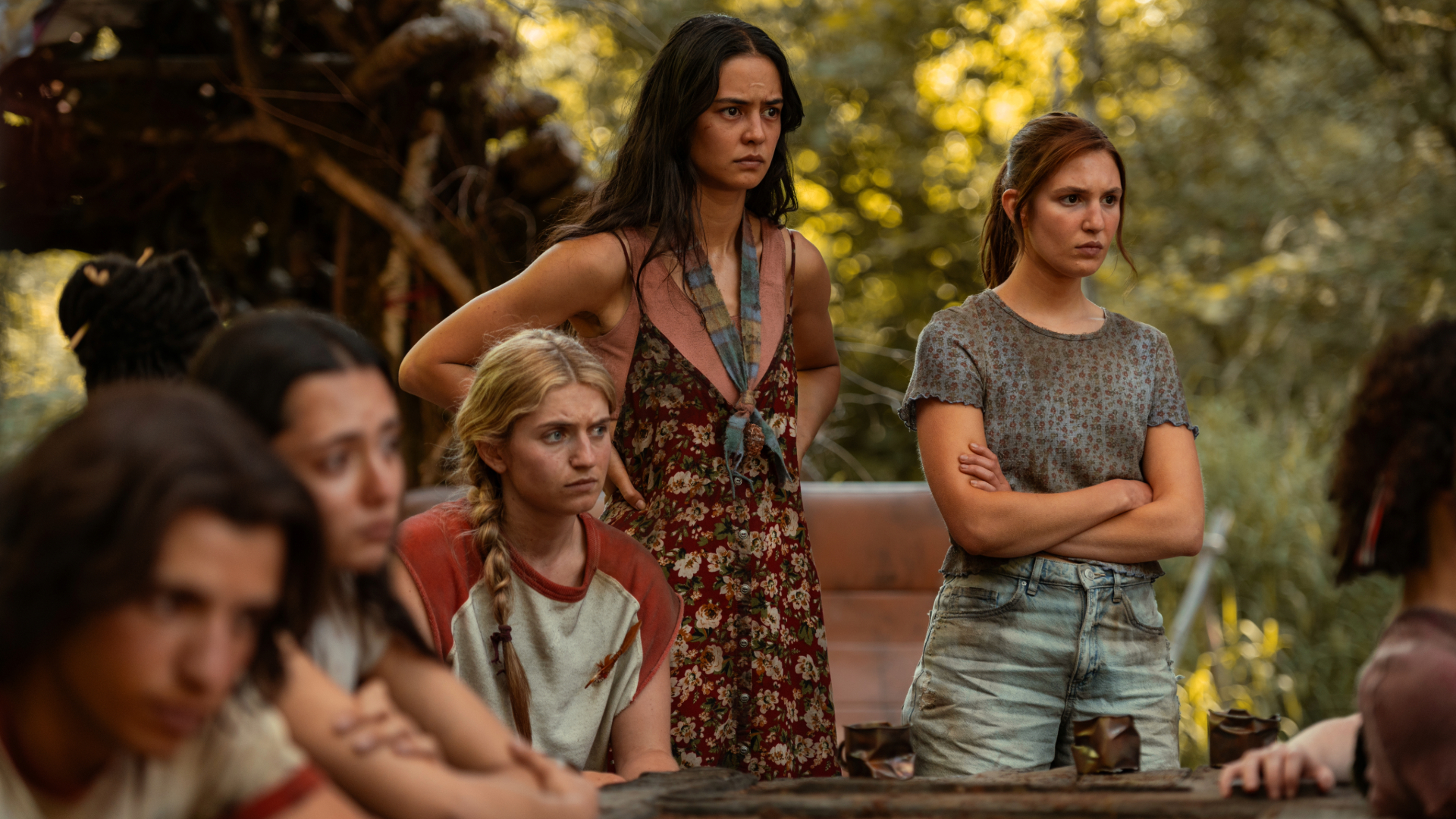
    This review contains spoilers for Yellowjackets season 3 episode 4. As the name of episode 4 suggests, “12 Angry Girls and 1 Drunk Travis” is centered on the trial of Coach Scott (Steven Krueger) as he desperately tries to plead his case to the Yellowjackets (and Travis). This episode of Yellowjackets might not be quite […]

    The post Yellowjackets Season 3 Episode 4 Review: An Unexpected Death appeared first on Den of Geek.

    After leaving high school behind in the season 3 finale, Buffy the Vampire Slayer struggled to find its footing in young adulthood. Season 4 was an epic mix of highs and lows, with each episode being a toss-up between a series-defining masterpiece and a well-intended misfire. In the wake of that often disappointing 22-episode run, it was clear that Buffy needed a change of pace. By perfectly blending the show’s signature supernatural elements with relatable, grounded drama, season 5 is brave, moving, and masterful – thanks, in no small part, to the introduction of Buffy’s (Sarah Michelle Gellar) brand-new little sister Dawn, played by Michelle Trachtenberg, who tragically passed away on Feb. 26, 2025.

    In what remains one of the best teen drama twists of all time, season 5’s opening episode drops a bombshell before a quick cut-to-black: the young girl briefly shown in Buffy’s room is, according to their mother, her little sister—despite never being part of the series prior to this moment. As the season continues on, Buffy eventually learns that Dawn was created by a group of monks, transformed from a magical key into a person that Buffy herself would ultimately die to protect from an angry god. While this premise is as harebrained as it gets (and par for the course in the series’ supernatural wheelhouse), Dawn’s evolution from annoying little sister to beloved pillar of the show all circles back to the brilliant writing elevated by Trachtenberg’s vulnerable and moving performance. 

    Dawn herself could have easily devolved into nothing more than a plot device. Her presence in the fifth season’s story is straightforward and often predictable, and, in less capable hands, it’s easy to see how one-note this key-turned-sister could’ve been. But from her very first full episode on the show (titled “Real Me,” season 5 episode 2), Trachtenberg imbues her with a tangibility that is only matched by Gellar’s early work on the series as Buffy herself. 

    There’s a gentle touch behind every move Dawn makes, where her charming, troublemaking streak blends with her heartbreaking, grounded fear layered with a heavy dose of supernatural symbolism. Dawn questions whether or not she’s a real person deserving of love, mirroring the fears of many teenagers as they try to develop into themselves. Dawn acts out when Buffy’s larger-than-life stakes overshadow her teenage drama, injecting an even stronger inferiority complex against Buffy’s godly position within her family and friend group. 

    cnx.cmd.push(function() {
    cnx({
    playerId: “106e33c0-3911-473c-b599-b1426db57530”,

    }).render(“0270c398a82f44f49c23c16122516796”);
    });

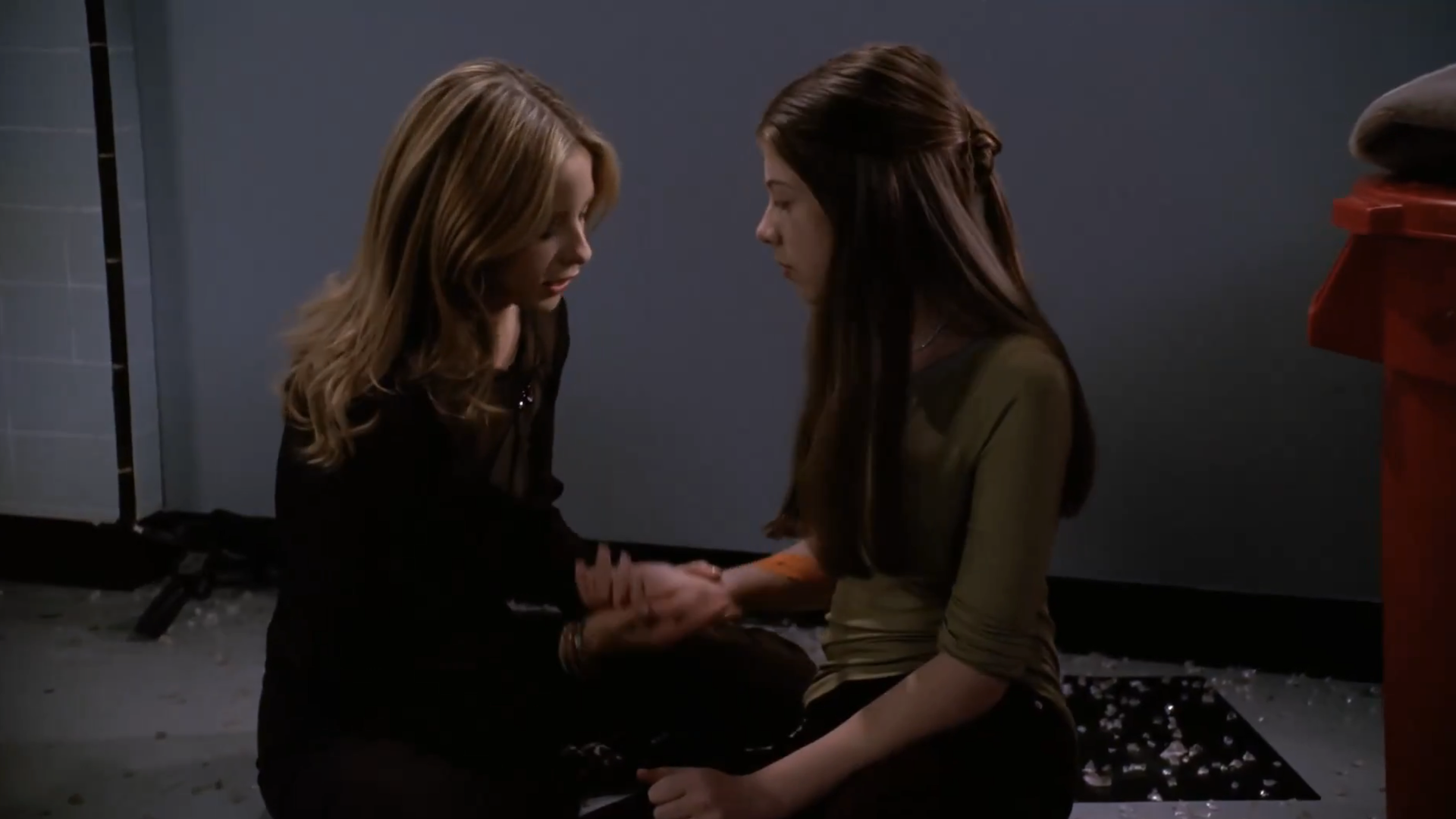
    In one of Trachtenberg’s greatest moments on Buffy, Dawn and Buffy regroup after a fight with the season’s Big Bad, and Buffy asks if Dawn is alright. Dawn asks why Buffy cares, she’s not really her sister, after all. She’s just an object that a group of monks made flesh, why should Buffy concern herself with her feelings? Who’s to say she even has them? But when Buffy takes her own blood and clasps Dawn’s bloody hand within her own, it’s clear that these two women are bound for life. Even without the Summers blood running through her veins, Buffy loves Dawn, and no amount of cosmic intervention could change that. 

    While Gellar is often the focal point of the scene, Trachtenberg gives such a stunning performance, even after her lines have finished. You can see as she puts up her walls, preemptively shutting Buffy out before her sister can hurt her by insisting that she’s not a person at all. Those walls slowly come down throughout Buffy’s heartfelt speech, genuine love and surprise clouding Trachtenberg’s wide, blue eyes. When Buffy finally hugs her, her face fully collapses, crying into her sister’s shoulder as she finally admits that she’s just a scared kid, facing problems and obstacles far beyond her reach. 

    It’s that admission that defines Dawn’s arc throughout the rest of the season, elevated by the absolutely pitch-perfect performance given in that moment. Nine episodes later, when Buffy tells Dawn that the hardest thing in this world is to live in it before she jumps to her own death to save her sister’s life, it’s that blood-tying moment that Buffy flashes back to. Of course, it’s to explain just how and why Buffy can sacrifice herself in Dawn’s place, but it’s also to remind audiences that Dawn is, truly, just a scared kid who doesn’t believe her life is worth saving, especially over Buffy’s. 

    Even if Dawn didn’t believe she was worth Buffy’s sacrifice at the time, Michelle Trachtenberg made us believe she was. She made us believe she was the little sister we never had, but always wanted; she made us believe in the power of teenage whims and the weight of heartache and sorrow on a soul too young to have gone through so much; she made us believe in the magnitude of both being a teenager and being a lynchpin in one of the greatest supernatural stories ever told. 

    As the series goes on, Dawn becomes further enmeshed in the canon, despite only appearing in the final three seasons. She becomes Spike’s (James Marsters) odd-couple friend, she becomes Tara (Amber Benson) and Willow’s (Alyson Hannigan) number one shipper before it was cool, and she becomes the narrative’s beating heart, long after Buffy herself lost some of the light that used to shine in her eyes. 

    Trachtenberg brought humor, heart, light, and relatability to Dawn that allowed her to become one of the series’ most iconic figures, picking up the baton from Gellar to bring grounded, teenage drama back into a series that knew its hero needed to grow up. While fans have rallied for decades behind their assertions that Dawn was “annoying” and stilted the show’s evolution, this one-dimensional take on this ultimately iconic character diminishes not only importance of the teenage aspects of Buffy to the show’s everlasting legacy, but also the incredible performance Trachtenberg delivered across 66 episodes. 

    In the twelfth episode of the final season, Xander (Nicholas Brennan) sits Dawn down for a pep talk. With their house overflowing with potential slayers and an apocalypse looming on the horizon, Dawn is feeling useless and frustrated as her sister and their friends all prepare for battle. He tells her that he knows what it’s like to not be “chosen,” to not be “special.” “You’re not special,” he flat-out tells her. Dawn takes a tearful pause, Trachtenberg plays her humility and disappointment with a marked grace; but Xander isn’t done: “You’re extraordinary.” She’s special not because she has infinite power and a calling to save the world, but simply because she cares enough to stand by those who do. If Buffy herself represents heroism by force, Dawn represents heroism by choice, inspired by her sister to do what is right and good, no matter the cost. 

    Extraordinary feels like the perfect word to describe both Dawn and Trachtenberg. The kind of perfect storm created by a character and performance so moving and incredible that it defines the series itself, that it becomes seminal to the genre in a way that is absolutely undeniable. The world is infinitely less bright without Trachtenberg in it, but, at the very least, her performance as Dawn Summers—TV’s greatest little sister, still, to this day—will live on as one of the best to grace both the series and the genre itself. 

    The post Buffy the Vampire Slayer’s Dawn Summers Is TV’s Most Important Sister appeared first on Den of Geek.

  • The 15 Best Video Games Inspired by Books

    The 15 Best Video Games Inspired by Books

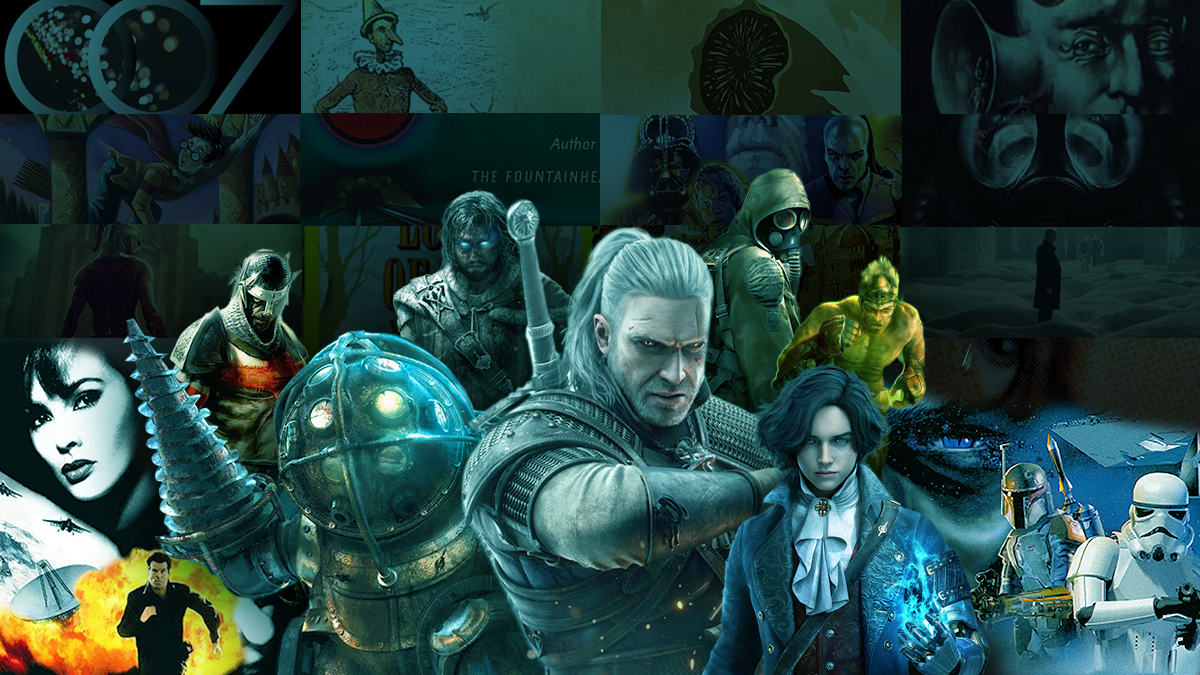
    As art forms, literature and video games couldn’t be more unalike…at least on the surface. Video games are hypersensory, stimulating with sight, sound, and touch while giving the player agency to play their way. Novels on the other hand are hyperlinear and unfold in the theater of the mind. One would think it would be […]

    The post The 15 Best Video Games Inspired by Books appeared first on Den of Geek.

    After leaving high school behind in the season 3 finale, Buffy the Vampire Slayer struggled to find its footing in young adulthood. Season 4 was an epic mix of highs and lows, with each episode being a toss-up between a series-defining masterpiece and a well-intended misfire. In the wake of that often disappointing 22-episode run, it was clear that Buffy needed a change of pace. By perfectly blending the show’s signature supernatural elements with relatable, grounded drama, season 5 is brave, moving, and masterful – thanks, in no small part, to the introduction of Buffy’s (Sarah Michelle Gellar) brand-new little sister Dawn, played by Michelle Trachtenberg, who tragically passed away on Feb. 26, 2025.

    In what remains one of the best teen drama twists of all time, season 5’s opening episode drops a bombshell before a quick cut-to-black: the young girl briefly shown in Buffy’s room is, according to their mother, her little sister—despite never being part of the series prior to this moment. As the season continues on, Buffy eventually learns that Dawn was created by a group of monks, transformed from a magical key into a person that Buffy herself would ultimately die to protect from an angry god. While this premise is as harebrained as it gets (and par for the course in the series’ supernatural wheelhouse), Dawn’s evolution from annoying little sister to beloved pillar of the show all circles back to the brilliant writing elevated by Trachtenberg’s vulnerable and moving performance. 

    Dawn herself could have easily devolved into nothing more than a plot device. Her presence in the fifth season’s story is straightforward and often predictable, and, in less capable hands, it’s easy to see how one-note this key-turned-sister could’ve been. But from her very first full episode on the show (titled “Real Me,” season 5 episode 2), Trachtenberg imbues her with a tangibility that is only matched by Gellar’s early work on the series as Buffy herself. 

    There’s a gentle touch behind every move Dawn makes, where her charming, troublemaking streak blends with her heartbreaking, grounded fear layered with a heavy dose of supernatural symbolism. Dawn questions whether or not she’s a real person deserving of love, mirroring the fears of many teenagers as they try to develop into themselves. Dawn acts out when Buffy’s larger-than-life stakes overshadow her teenage drama, injecting an even stronger inferiority complex against Buffy’s godly position within her family and friend group. 

    cnx.cmd.push(function() {
    cnx({
    playerId: “106e33c0-3911-473c-b599-b1426db57530”,

    }).render(“0270c398a82f44f49c23c16122516796”);
    });

    In one of Trachtenberg’s greatest moments on Buffy, Dawn and Buffy regroup after a fight with the season’s Big Bad, and Buffy asks if Dawn is alright. Dawn asks why Buffy cares, she’s not really her sister, after all. She’s just an object that a group of monks made flesh, why should Buffy concern herself with her feelings? Who’s to say she even has them? But when Buffy takes her own blood and clasps Dawn’s bloody hand within her own, it’s clear that these two women are bound for life. Even without the Summers blood running through her veins, Buffy loves Dawn, and no amount of cosmic intervention could change that. 

    While Gellar is often the focal point of the scene, Trachtenberg gives such a stunning performance, even after her lines have finished. You can see as she puts up her walls, preemptively shutting Buffy out before her sister can hurt her by insisting that she’s not a person at all. Those walls slowly come down throughout Buffy’s heartfelt speech, genuine love and surprise clouding Trachtenberg’s wide, blue eyes. When Buffy finally hugs her, her face fully collapses, crying into her sister’s shoulder as she finally admits that she’s just a scared kid, facing problems and obstacles far beyond her reach. 

    It’s that admission that defines Dawn’s arc throughout the rest of the season, elevated by the absolutely pitch-perfect performance given in that moment. Nine episodes later, when Buffy tells Dawn that the hardest thing in this world is to live in it before she jumps to her own death to save her sister’s life, it’s that blood-tying moment that Buffy flashes back to. Of course, it’s to explain just how and why Buffy can sacrifice herself in Dawn’s place, but it’s also to remind audiences that Dawn is, truly, just a scared kid who doesn’t believe her life is worth saving, especially over Buffy’s. 

    Even if Dawn didn’t believe she was worth Buffy’s sacrifice at the time, Michelle Trachtenberg made us believe she was. She made us believe she was the little sister we never had, but always wanted; she made us believe in the power of teenage whims and the weight of heartache and sorrow on a soul too young to have gone through so much; she made us believe in the magnitude of both being a teenager and being a lynchpin in one of the greatest supernatural stories ever told. 

    As the series goes on, Dawn becomes further enmeshed in the canon, despite only appearing in the final three seasons. She becomes Spike’s (James Marsters) odd-couple friend, she becomes Tara (Amber Benson) and Willow’s (Alyson Hannigan) number one shipper before it was cool, and she becomes the narrative’s beating heart, long after Buffy herself lost some of the light that used to shine in her eyes. 

    Trachtenberg brought humor, heart, light, and relatability to Dawn that allowed her to become one of the series’ most iconic figures, picking up the baton from Gellar to bring grounded, teenage drama back into a series that knew its hero needed to grow up. While fans have rallied for decades behind their assertions that Dawn was “annoying” and stilted the show’s evolution, this one-dimensional take on this ultimately iconic character diminishes not only importance of the teenage aspects of Buffy to the show’s everlasting legacy, but also the incredible performance Trachtenberg delivered across 66 episodes. 

    In the twelfth episode of the final season, Xander (Nicholas Brennan) sits Dawn down for a pep talk. With their house overflowing with potential slayers and an apocalypse looming on the horizon, Dawn is feeling useless and frustrated as her sister and their friends all prepare for battle. He tells her that he knows what it’s like to not be “chosen,” to not be “special.” “You’re not special,” he flat-out tells her. Dawn takes a tearful pause, Trachtenberg plays her humility and disappointment with a marked grace; but Xander isn’t done: “You’re extraordinary.” She’s special not because she has infinite power and a calling to save the world, but simply because she cares enough to stand by those who do. If Buffy herself represents heroism by force, Dawn represents heroism by choice, inspired by her sister to do what is right and good, no matter the cost. 

    Extraordinary feels like the perfect word to describe both Dawn and Trachtenberg. The kind of perfect storm created by a character and performance so moving and incredible that it defines the series itself, that it becomes seminal to the genre in a way that is absolutely undeniable. The world is infinitely less bright without Trachtenberg in it, but, at the very least, her performance as Dawn Summers—TV’s greatest little sister, still, to this day—will live on as one of the best to grace both the series and the genre itself. 

    The post Buffy the Vampire Slayer’s Dawn Summers Is TV’s Most Important Sister appeared first on Den of Geek.

  • One of the Best Oscar Nominated Documentaries Is Streaming Now on Disney+

    One of the Best Oscar Nominated Documentaries Is Streaming Now on Disney+

    When most people sign up for a Disney+ subscription, they’re probably thinking about catching up with Disney Channel Originals they loved as kids or watching the latest Marvel movie at home. For most, Disney+ means access to endless streams of frothy entertainment, with social issues presented in the form of cartoon allegories like Zootopia. The […]

    The post One of the Best Oscar Nominated Documentaries Is Streaming Now on Disney+ appeared first on Den of Geek.

    After leaving high school behind in the season 3 finale, Buffy the Vampire Slayer struggled to find its footing in young adulthood. Season 4 was an epic mix of highs and lows, with each episode being a toss-up between a series-defining masterpiece and a well-intended misfire. In the wake of that often disappointing 22-episode run, it was clear that Buffy needed a change of pace. By perfectly blending the show’s signature supernatural elements with relatable, grounded drama, season 5 is brave, moving, and masterful – thanks, in no small part, to the introduction of Buffy’s (Sarah Michelle Gellar) brand-new little sister Dawn, played by Michelle Trachtenberg, who tragically passed away on Feb. 26, 2025.

    In what remains one of the best teen drama twists of all time, season 5’s opening episode drops a bombshell before a quick cut-to-black: the young girl briefly shown in Buffy’s room is, according to their mother, her little sister—despite never being part of the series prior to this moment. As the season continues on, Buffy eventually learns that Dawn was created by a group of monks, transformed from a magical key into a person that Buffy herself would ultimately die to protect from an angry god. While this premise is as harebrained as it gets (and par for the course in the series’ supernatural wheelhouse), Dawn’s evolution from annoying little sister to beloved pillar of the show all circles back to the brilliant writing elevated by Trachtenberg’s vulnerable and moving performance. 

    Dawn herself could have easily devolved into nothing more than a plot device. Her presence in the fifth season’s story is straightforward and often predictable, and, in less capable hands, it’s easy to see how one-note this key-turned-sister could’ve been. But from her very first full episode on the show (titled “Real Me,” season 5 episode 2), Trachtenberg imbues her with a tangibility that is only matched by Gellar’s early work on the series as Buffy herself. 

    There’s a gentle touch behind every move Dawn makes, where her charming, troublemaking streak blends with her heartbreaking, grounded fear layered with a heavy dose of supernatural symbolism. Dawn questions whether or not she’s a real person deserving of love, mirroring the fears of many teenagers as they try to develop into themselves. Dawn acts out when Buffy’s larger-than-life stakes overshadow her teenage drama, injecting an even stronger inferiority complex against Buffy’s godly position within her family and friend group. 

    cnx.cmd.push(function() {
    cnx({
    playerId: “106e33c0-3911-473c-b599-b1426db57530”,

    }).render(“0270c398a82f44f49c23c16122516796”);
    });

    In one of Trachtenberg’s greatest moments on Buffy, Dawn and Buffy regroup after a fight with the season’s Big Bad, and Buffy asks if Dawn is alright. Dawn asks why Buffy cares, she’s not really her sister, after all. She’s just an object that a group of monks made flesh, why should Buffy concern herself with her feelings? Who’s to say she even has them? But when Buffy takes her own blood and clasps Dawn’s bloody hand within her own, it’s clear that these two women are bound for life. Even without the Summers blood running through her veins, Buffy loves Dawn, and no amount of cosmic intervention could change that. 

    While Gellar is often the focal point of the scene, Trachtenberg gives such a stunning performance, even after her lines have finished. You can see as she puts up her walls, preemptively shutting Buffy out before her sister can hurt her by insisting that she’s not a person at all. Those walls slowly come down throughout Buffy’s heartfelt speech, genuine love and surprise clouding Trachtenberg’s wide, blue eyes. When Buffy finally hugs her, her face fully collapses, crying into her sister’s shoulder as she finally admits that she’s just a scared kid, facing problems and obstacles far beyond her reach. 

    It’s that admission that defines Dawn’s arc throughout the rest of the season, elevated by the absolutely pitch-perfect performance given in that moment. Nine episodes later, when Buffy tells Dawn that the hardest thing in this world is to live in it before she jumps to her own death to save her sister’s life, it’s that blood-tying moment that Buffy flashes back to. Of course, it’s to explain just how and why Buffy can sacrifice herself in Dawn’s place, but it’s also to remind audiences that Dawn is, truly, just a scared kid who doesn’t believe her life is worth saving, especially over Buffy’s. 

    Even if Dawn didn’t believe she was worth Buffy’s sacrifice at the time, Michelle Trachtenberg made us believe she was. She made us believe she was the little sister we never had, but always wanted; she made us believe in the power of teenage whims and the weight of heartache and sorrow on a soul too young to have gone through so much; she made us believe in the magnitude of both being a teenager and being a lynchpin in one of the greatest supernatural stories ever told. 

    As the series goes on, Dawn becomes further enmeshed in the canon, despite only appearing in the final three seasons. She becomes Spike’s (James Marsters) odd-couple friend, she becomes Tara (Amber Benson) and Willow’s (Alyson Hannigan) number one shipper before it was cool, and she becomes the narrative’s beating heart, long after Buffy herself lost some of the light that used to shine in her eyes. 

    Trachtenberg brought humor, heart, light, and relatability to Dawn that allowed her to become one of the series’ most iconic figures, picking up the baton from Gellar to bring grounded, teenage drama back into a series that knew its hero needed to grow up. While fans have rallied for decades behind their assertions that Dawn was “annoying” and stilted the show’s evolution, this one-dimensional take on this ultimately iconic character diminishes not only importance of the teenage aspects of Buffy to the show’s everlasting legacy, but also the incredible performance Trachtenberg delivered across 66 episodes. 

    In the twelfth episode of the final season, Xander (Nicholas Brennan) sits Dawn down for a pep talk. With their house overflowing with potential slayers and an apocalypse looming on the horizon, Dawn is feeling useless and frustrated as her sister and their friends all prepare for battle. He tells her that he knows what it’s like to not be “chosen,” to not be “special.” “You’re not special,” he flat-out tells her. Dawn takes a tearful pause, Trachtenberg plays her humility and disappointment with a marked grace; but Xander isn’t done: “You’re extraordinary.” She’s special not because she has infinite power and a calling to save the world, but simply because she cares enough to stand by those who do. If Buffy herself represents heroism by force, Dawn represents heroism by choice, inspired by her sister to do what is right and good, no matter the cost. 

    Extraordinary feels like the perfect word to describe both Dawn and Trachtenberg. The kind of perfect storm created by a character and performance so moving and incredible that it defines the series itself, that it becomes seminal to the genre in a way that is absolutely undeniable. The world is infinitely less bright without Trachtenberg in it, but, at the very least, her performance as Dawn Summers—TV’s greatest little sister, still, to this day—will live on as one of the best to grace both the series and the genre itself. 

    The post Buffy the Vampire Slayer’s Dawn Summers Is TV’s Most Important Sister appeared first on Den of Geek.

  • Towards Zero Review: A Sizzling Agatha Christie Murder Mystery

    Towards Zero Review: A Sizzling Agatha Christie Murder Mystery

    A murder mystery set at a luxury coastal resort filled with wealthy, glamorous, hateful suspects? Somebody should make a TV show about that.  Somebody has, other than the makers of HBO’s eat-the-rich satire The White Lotus. The BBC’s latest Agatha Christie adaptation Towards Zero is a stylish whodunnit with a cast so good looking they could be whispering […]

    The post Towards Zero Review: A Sizzling Agatha Christie Murder Mystery appeared first on Den of Geek.

    After leaving high school behind in the season 3 finale, Buffy the Vampire Slayer struggled to find its footing in young adulthood. Season 4 was an epic mix of highs and lows, with each episode being a toss-up between a series-defining masterpiece and a well-intended misfire. In the wake of that often disappointing 22-episode run, it was clear that Buffy needed a change of pace. By perfectly blending the show’s signature supernatural elements with relatable, grounded drama, season 5 is brave, moving, and masterful – thanks, in no small part, to the introduction of Buffy’s (Sarah Michelle Gellar) brand-new little sister Dawn, played by Michelle Trachtenberg, who tragically passed away on Feb. 26, 2025.

    In what remains one of the best teen drama twists of all time, season 5’s opening episode drops a bombshell before a quick cut-to-black: the young girl briefly shown in Buffy’s room is, according to their mother, her little sister—despite never being part of the series prior to this moment. As the season continues on, Buffy eventually learns that Dawn was created by a group of monks, transformed from a magical key into a person that Buffy herself would ultimately die to protect from an angry god. While this premise is as harebrained as it gets (and par for the course in the series’ supernatural wheelhouse), Dawn’s evolution from annoying little sister to beloved pillar of the show all circles back to the brilliant writing elevated by Trachtenberg’s vulnerable and moving performance. 

    Dawn herself could have easily devolved into nothing more than a plot device. Her presence in the fifth season’s story is straightforward and often predictable, and, in less capable hands, it’s easy to see how one-note this key-turned-sister could’ve been. But from her very first full episode on the show (titled “Real Me,” season 5 episode 2), Trachtenberg imbues her with a tangibility that is only matched by Gellar’s early work on the series as Buffy herself. 

    There’s a gentle touch behind every move Dawn makes, where her charming, troublemaking streak blends with her heartbreaking, grounded fear layered with a heavy dose of supernatural symbolism. Dawn questions whether or not she’s a real person deserving of love, mirroring the fears of many teenagers as they try to develop into themselves. Dawn acts out when Buffy’s larger-than-life stakes overshadow her teenage drama, injecting an even stronger inferiority complex against Buffy’s godly position within her family and friend group. 

    cnx.cmd.push(function() {
    cnx({
    playerId: “106e33c0-3911-473c-b599-b1426db57530”,

    }).render(“0270c398a82f44f49c23c16122516796”);
    });

    In one of Trachtenberg’s greatest moments on Buffy, Dawn and Buffy regroup after a fight with the season’s Big Bad, and Buffy asks if Dawn is alright. Dawn asks why Buffy cares, she’s not really her sister, after all. She’s just an object that a group of monks made flesh, why should Buffy concern herself with her feelings? Who’s to say she even has them? But when Buffy takes her own blood and clasps Dawn’s bloody hand within her own, it’s clear that these two women are bound for life. Even without the Summers blood running through her veins, Buffy loves Dawn, and no amount of cosmic intervention could change that. 

    While Gellar is often the focal point of the scene, Trachtenberg gives such a stunning performance, even after her lines have finished. You can see as she puts up her walls, preemptively shutting Buffy out before her sister can hurt her by insisting that she’s not a person at all. Those walls slowly come down throughout Buffy’s heartfelt speech, genuine love and surprise clouding Trachtenberg’s wide, blue eyes. When Buffy finally hugs her, her face fully collapses, crying into her sister’s shoulder as she finally admits that she’s just a scared kid, facing problems and obstacles far beyond her reach. 

    It’s that admission that defines Dawn’s arc throughout the rest of the season, elevated by the absolutely pitch-perfect performance given in that moment. Nine episodes later, when Buffy tells Dawn that the hardest thing in this world is to live in it before she jumps to her own death to save her sister’s life, it’s that blood-tying moment that Buffy flashes back to. Of course, it’s to explain just how and why Buffy can sacrifice herself in Dawn’s place, but it’s also to remind audiences that Dawn is, truly, just a scared kid who doesn’t believe her life is worth saving, especially over Buffy’s. 

    Even if Dawn didn’t believe she was worth Buffy’s sacrifice at the time, Michelle Trachtenberg made us believe she was. She made us believe she was the little sister we never had, but always wanted; she made us believe in the power of teenage whims and the weight of heartache and sorrow on a soul too young to have gone through so much; she made us believe in the magnitude of both being a teenager and being a lynchpin in one of the greatest supernatural stories ever told. 

    As the series goes on, Dawn becomes further enmeshed in the canon, despite only appearing in the final three seasons. She becomes Spike’s (James Marsters) odd-couple friend, she becomes Tara (Amber Benson) and Willow’s (Alyson Hannigan) number one shipper before it was cool, and she becomes the narrative’s beating heart, long after Buffy herself lost some of the light that used to shine in her eyes. 

    Trachtenberg brought humor, heart, light, and relatability to Dawn that allowed her to become one of the series’ most iconic figures, picking up the baton from Gellar to bring grounded, teenage drama back into a series that knew its hero needed to grow up. While fans have rallied for decades behind their assertions that Dawn was “annoying” and stilted the show’s evolution, this one-dimensional take on this ultimately iconic character diminishes not only importance of the teenage aspects of Buffy to the show’s everlasting legacy, but also the incredible performance Trachtenberg delivered across 66 episodes. 

    In the twelfth episode of the final season, Xander (Nicholas Brennan) sits Dawn down for a pep talk. With their house overflowing with potential slayers and an apocalypse looming on the horizon, Dawn is feeling useless and frustrated as her sister and their friends all prepare for battle. He tells her that he knows what it’s like to not be “chosen,” to not be “special.” “You’re not special,” he flat-out tells her. Dawn takes a tearful pause, Trachtenberg plays her humility and disappointment with a marked grace; but Xander isn’t done: “You’re extraordinary.” She’s special not because she has infinite power and a calling to save the world, but simply because she cares enough to stand by those who do. If Buffy herself represents heroism by force, Dawn represents heroism by choice, inspired by her sister to do what is right and good, no matter the cost. 

    Extraordinary feels like the perfect word to describe both Dawn and Trachtenberg. The kind of perfect storm created by a character and performance so moving and incredible that it defines the series itself, that it becomes seminal to the genre in a way that is absolutely undeniable. The world is infinitely less bright without Trachtenberg in it, but, at the very least, her performance as Dawn Summers—TV’s greatest little sister, still, to this day—will live on as one of the best to grace both the series and the genre itself. 

    The post Buffy the Vampire Slayer’s Dawn Summers Is TV’s Most Important Sister appeared first on Den of Geek.

  • Buffy the Vampire Slayer’s Dawn Summers Is TV’s Most Important Sister

    Buffy the Vampire Slayer’s Dawn Summers Is TV’s Most Important Sister

    After leaving high school behind in the season 3 finale, Buffy the Vampire Slayer struggled to find its footing in young adulthood. Season 4 was an epic mix of highs and lows, with each episode being a toss-up between a series-defining masterpiece and a well-intended misfire. In the wake of that often disappointing 22-episode run, […]

    The post Buffy the Vampire Slayer’s Dawn Summers Is TV’s Most Important Sister appeared first on Den of Geek.

    After leaving high school behind in the season 3 finale, Buffy the Vampire Slayer struggled to find its footing in young adulthood. Season 4 was an epic mix of highs and lows, with each episode being a toss-up between a series-defining masterpiece and a well-intended misfire. In the wake of that often disappointing 22-episode run, it was clear that Buffy needed a change of pace. By perfectly blending the show’s signature supernatural elements with relatable, grounded drama, season 5 is brave, moving, and masterful – thanks, in no small part, to the introduction of Buffy’s (Sarah Michelle Gellar) brand-new little sister Dawn, played by Michelle Trachtenberg, who tragically passed away on Feb. 26, 2025.

    In what remains one of the best teen drama twists of all time, season 5’s opening episode drops a bombshell before a quick cut-to-black: the young girl briefly shown in Buffy’s room is, according to their mother, her little sister—despite never being part of the series prior to this moment. As the season continues on, Buffy eventually learns that Dawn was created by a group of monks, transformed from a magical key into a person that Buffy herself would ultimately die to protect from an angry god. While this premise is as harebrained as it gets (and par for the course in the series’ supernatural wheelhouse), Dawn’s evolution from annoying little sister to beloved pillar of the show all circles back to the brilliant writing elevated by Trachtenberg’s vulnerable and moving performance. 

    Dawn herself could have easily devolved into nothing more than a plot device. Her presence in the fifth season’s story is straightforward and often predictable, and, in less capable hands, it’s easy to see how one-note this key-turned-sister could’ve been. But from her very first full episode on the show (titled “Real Me,” season 5 episode 2), Trachtenberg imbues her with a tangibility that is only matched by Gellar’s early work on the series as Buffy herself. 

    There’s a gentle touch behind every move Dawn makes, where her charming, troublemaking streak blends with her heartbreaking, grounded fear layered with a heavy dose of supernatural symbolism. Dawn questions whether or not she’s a real person deserving of love, mirroring the fears of many teenagers as they try to develop into themselves. Dawn acts out when Buffy’s larger-than-life stakes overshadow her teenage drama, injecting an even stronger inferiority complex against Buffy’s godly position within her family and friend group. 

    cnx.cmd.push(function() {
    cnx({
    playerId: “106e33c0-3911-473c-b599-b1426db57530”,

    }).render(“0270c398a82f44f49c23c16122516796”);
    });

    In one of Trachtenberg’s greatest moments on Buffy, Dawn and Buffy regroup after a fight with the season’s Big Bad, and Buffy asks if Dawn is alright. Dawn asks why Buffy cares, she’s not really her sister, after all. She’s just an object that a group of monks made flesh, why should Buffy concern herself with her feelings? Who’s to say she even has them? But when Buffy takes her own blood and clasps Dawn’s bloody hand within her own, it’s clear that these two women are bound for life. Even without the Summers blood running through her veins, Buffy loves Dawn, and no amount of cosmic intervention could change that. 

    While Gellar is often the focal point of the scene, Trachtenberg gives such a stunning performance, even after her lines have finished. You can see as she puts up her walls, preemptively shutting Buffy out before her sister can hurt her by insisting that she’s not a person at all. Those walls slowly come down throughout Buffy’s heartfelt speech, genuine love and surprise clouding Trachtenberg’s wide, blue eyes. When Buffy finally hugs her, her face fully collapses, crying into her sister’s shoulder as she finally admits that she’s just a scared kid, facing problems and obstacles far beyond her reach. 

    It’s that admission that defines Dawn’s arc throughout the rest of the season, elevated by the absolutely pitch-perfect performance given in that moment. Nine episodes later, when Buffy tells Dawn that the hardest thing in this world is to live in it before she jumps to her own death to save her sister’s life, it’s that blood-tying moment that Buffy flashes back to. Of course, it’s to explain just how and why Buffy can sacrifice herself in Dawn’s place, but it’s also to remind audiences that Dawn is, truly, just a scared kid who doesn’t believe her life is worth saving, especially over Buffy’s. 

    Even if Dawn didn’t believe she was worth Buffy’s sacrifice at the time, Michelle Trachtenberg made us believe she was. She made us believe she was the little sister we never had, but always wanted; she made us believe in the power of teenage whims and the weight of heartache and sorrow on a soul too young to have gone through so much; she made us believe in the magnitude of both being a teenager and being a lynchpin in one of the greatest supernatural stories ever told. 

    As the series goes on, Dawn becomes further enmeshed in the canon, despite only appearing in the final three seasons. She becomes Spike’s (James Marsters) odd-couple friend, she becomes Tara (Amber Benson) and Willow’s (Alyson Hannigan) number one shipper before it was cool, and she becomes the narrative’s beating heart, long after Buffy herself lost some of the light that used to shine in her eyes. 

    Trachtenberg brought humor, heart, light, and relatability to Dawn that allowed her to become one of the series’ most iconic figures, picking up the baton from Gellar to bring grounded, teenage drama back into a series that knew its hero needed to grow up. While fans have rallied for decades behind their assertions that Dawn was “annoying” and stilted the show’s evolution, this one-dimensional take on this ultimately iconic character diminishes not only importance of the teenage aspects of Buffy to the show’s everlasting legacy, but also the incredible performance Trachtenberg delivered across 66 episodes. 

    In the twelfth episode of the final season, Xander (Nicholas Brennan) sits Dawn down for a pep talk. With their house overflowing with potential slayers and an apocalypse looming on the horizon, Dawn is feeling useless and frustrated as her sister and their friends all prepare for battle. He tells her that he knows what it’s like to not be “chosen,” to not be “special.” “You’re not special,” he flat-out tells her. Dawn takes a tearful pause, Trachtenberg plays her humility and disappointment with a marked grace; but Xander isn’t done: “You’re extraordinary.” She’s special not because she has infinite power and a calling to save the world, but simply because she cares enough to stand by those who do. If Buffy herself represents heroism by force, Dawn represents heroism by choice, inspired by her sister to do what is right and good, no matter the cost. 

    Extraordinary feels like the perfect word to describe both Dawn and Trachtenberg. The kind of perfect storm created by a character and performance so moving and incredible that it defines the series itself, that it becomes seminal to the genre in a way that is absolutely undeniable. The world is infinitely less bright without Trachtenberg in it, but, at the very least, her performance as Dawn Summers—TV’s greatest little sister, still, to this day—will live on as one of the best to grace both the series and the genre itself. 

    The post Buffy the Vampire Slayer’s Dawn Summers Is TV’s Most Important Sister appeared first on Den of Geek.

  • Star Wars: Shawn Levy and Ryan Gosling Have Opportunity to Ignore the Skywalker Saga

    Star Wars: Shawn Levy and Ryan Gosling Have Opportunity to Ignore the Skywalker Saga

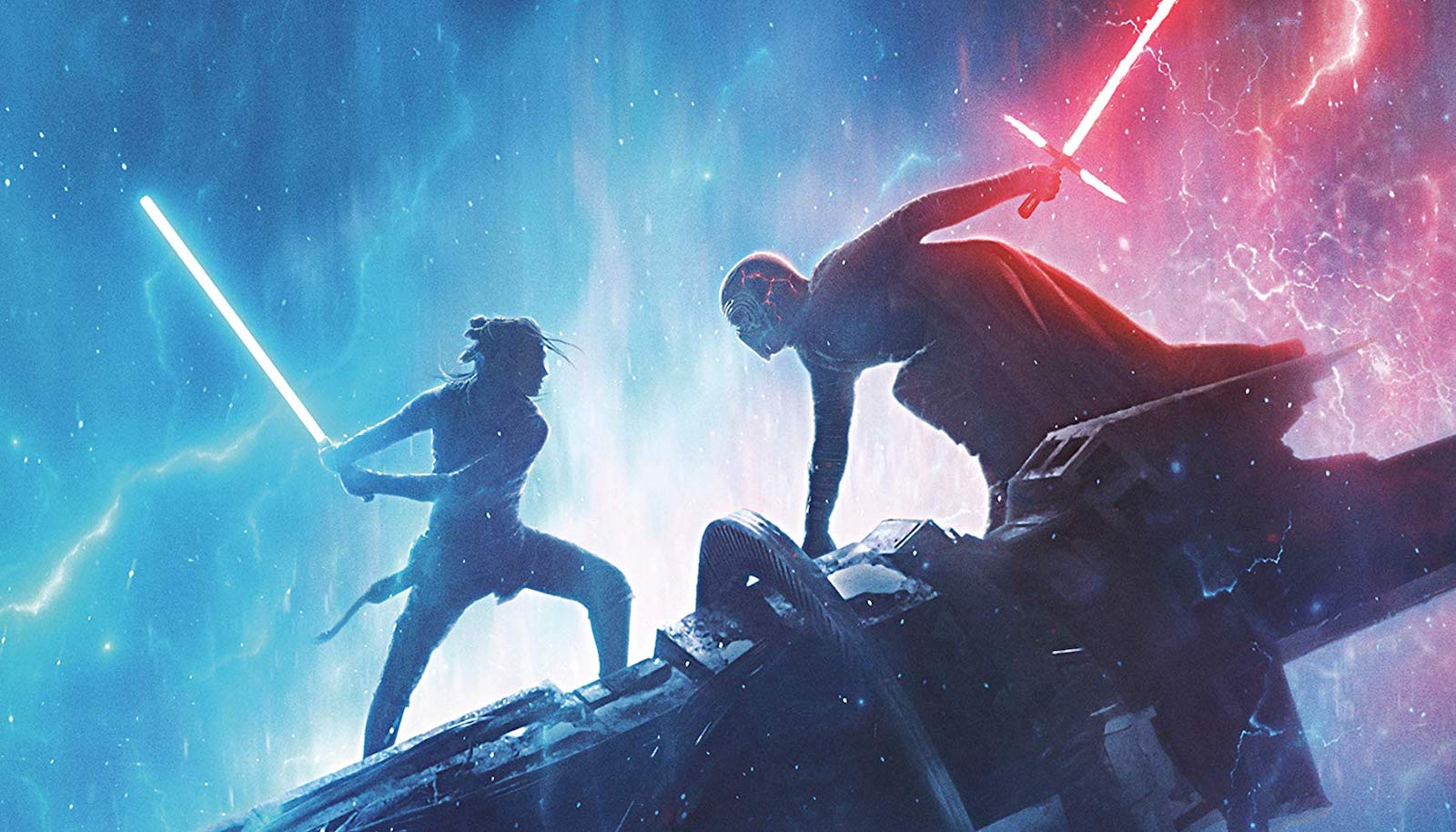
    “Rey Skywalker.” With those two words, the final words spoken in the Star Wars Sequel Trilogy, many fans threw up their hands in disgust. Honestly, no part of Star Wars: The Rise of Skywalker worked beyond clunky fan service that, ironically, only further alienated viewers. But even by those standards, Rey’s nonsense turn to adopt […]

    The post Star Wars: Shawn Levy and Ryan Gosling Have Opportunity to Ignore the Skywalker Saga appeared first on Den of Geek.

    After leaving high school behind in the season 3 finale, Buffy the Vampire Slayer struggled to find its footing in young adulthood. Season 4 was an epic mix of highs and lows, with each episode being a toss-up between a series-defining masterpiece and a well-intended misfire. In the wake of that often disappointing 22-episode run, it was clear that Buffy needed a change of pace. By perfectly blending the show’s signature supernatural elements with relatable, grounded drama, season 5 is brave, moving, and masterful – thanks, in no small part, to the introduction of Buffy’s (Sarah Michelle Gellar) brand-new little sister Dawn, played by Michelle Trachtenberg, who tragically passed away on Feb. 26, 2025.

    In what remains one of the best teen drama twists of all time, season 5’s opening episode drops a bombshell before a quick cut-to-black: the young girl briefly shown in Buffy’s room is, according to their mother, her little sister—despite never being part of the series prior to this moment. As the season continues on, Buffy eventually learns that Dawn was created by a group of monks, transformed from a magical key into a person that Buffy herself would ultimately die to protect from an angry god. While this premise is as harebrained as it gets (and par for the course in the series’ supernatural wheelhouse), Dawn’s evolution from annoying little sister to beloved pillar of the show all circles back to the brilliant writing elevated by Trachtenberg’s vulnerable and moving performance. 

    Dawn herself could have easily devolved into nothing more than a plot device. Her presence in the fifth season’s story is straightforward and often predictable, and, in less capable hands, it’s easy to see how one-note this key-turned-sister could’ve been. But from her very first full episode on the show (titled “Real Me,” season 5 episode 2), Trachtenberg imbues her with a tangibility that is only matched by Gellar’s early work on the series as Buffy herself. 

    There’s a gentle touch behind every move Dawn makes, where her charming, troublemaking streak blends with her heartbreaking, grounded fear layered with a heavy dose of supernatural symbolism. Dawn questions whether or not she’s a real person deserving of love, mirroring the fears of many teenagers as they try to develop into themselves. Dawn acts out when Buffy’s larger-than-life stakes overshadow her teenage drama, injecting an even stronger inferiority complex against Buffy’s godly position within her family and friend group. 

    cnx.cmd.push(function() {
    cnx({
    playerId: “106e33c0-3911-473c-b599-b1426db57530”,

    }).render(“0270c398a82f44f49c23c16122516796”);
    });

    In one of Trachtenberg’s greatest moments on Buffy, Dawn and Buffy regroup after a fight with the season’s Big Bad, and Buffy asks if Dawn is alright. Dawn asks why Buffy cares, she’s not really her sister, after all. She’s just an object that a group of monks made flesh, why should Buffy concern herself with her feelings? Who’s to say she even has them? But when Buffy takes her own blood and clasps Dawn’s bloody hand within her own, it’s clear that these two women are bound for life. Even without the Summers blood running through her veins, Buffy loves Dawn, and no amount of cosmic intervention could change that. 

    While Gellar is often the focal point of the scene, Trachtenberg gives such a stunning performance, even after her lines have finished. You can see as she puts up her walls, preemptively shutting Buffy out before her sister can hurt her by insisting that she’s not a person at all. Those walls slowly come down throughout Buffy’s heartfelt speech, genuine love and surprise clouding Trachtenberg’s wide, blue eyes. When Buffy finally hugs her, her face fully collapses, crying into her sister’s shoulder as she finally admits that she’s just a scared kid, facing problems and obstacles far beyond her reach. 

    It’s that admission that defines Dawn’s arc throughout the rest of the season, elevated by the absolutely pitch-perfect performance given in that moment. Nine episodes later, when Buffy tells Dawn that the hardest thing in this world is to live in it before she jumps to her own death to save her sister’s life, it’s that blood-tying moment that Buffy flashes back to. Of course, it’s to explain just how and why Buffy can sacrifice herself in Dawn’s place, but it’s also to remind audiences that Dawn is, truly, just a scared kid who doesn’t believe her life is worth saving, especially over Buffy’s. 

    Even if Dawn didn’t believe she was worth Buffy’s sacrifice at the time, Michelle Trachtenberg made us believe she was. She made us believe she was the little sister we never had, but always wanted; she made us believe in the power of teenage whims and the weight of heartache and sorrow on a soul too young to have gone through so much; she made us believe in the magnitude of both being a teenager and being a lynchpin in one of the greatest supernatural stories ever told. 

    As the series goes on, Dawn becomes further enmeshed in the canon, despite only appearing in the final three seasons. She becomes Spike’s (James Marsters) odd-couple friend, she becomes Tara (Amber Benson) and Willow’s (Alyson Hannigan) number one shipper before it was cool, and she becomes the narrative’s beating heart, long after Buffy herself lost some of the light that used to shine in her eyes. 

    Trachtenberg brought humor, heart, light, and relatability to Dawn that allowed her to become one of the series’ most iconic figures, picking up the baton from Gellar to bring grounded, teenage drama back into a series that knew its hero needed to grow up. While fans have rallied for decades behind their assertions that Dawn was “annoying” and stilted the show’s evolution, this one-dimensional take on this ultimately iconic character diminishes not only importance of the teenage aspects of Buffy to the show’s everlasting legacy, but also the incredible performance Trachtenberg delivered across 66 episodes. 

    In the twelfth episode of the final season, Xander (Nicholas Brennan) sits Dawn down for a pep talk. With their house overflowing with potential slayers and an apocalypse looming on the horizon, Dawn is feeling useless and frustrated as her sister and their friends all prepare for battle. He tells her that he knows what it’s like to not be “chosen,” to not be “special.” “You’re not special,” he flat-out tells her. Dawn takes a tearful pause, Trachtenberg plays her humility and disappointment with a marked grace; but Xander isn’t done: “You’re extraordinary.” She’s special not because she has infinite power and a calling to save the world, but simply because she cares enough to stand by those who do. If Buffy herself represents heroism by force, Dawn represents heroism by choice, inspired by her sister to do what is right and good, no matter the cost. 

    Extraordinary feels like the perfect word to describe both Dawn and Trachtenberg. The kind of perfect storm created by a character and performance so moving and incredible that it defines the series itself, that it becomes seminal to the genre in a way that is absolutely undeniable. The world is infinitely less bright without Trachtenberg in it, but, at the very least, her performance as Dawn Summers—TV’s greatest little sister, still, to this day—will live on as one of the best to grace both the series and the genre itself. 

    The post Buffy the Vampire Slayer’s Dawn Summers Is TV’s Most Important Sister appeared first on Den of Geek.

  • Netflix’s Toxic Town Is a Battle Cry in Support of Experts and So-Called ‘Red Tape’

    Netflix’s Toxic Town Is a Battle Cry in Support of Experts and So-Called ‘Red Tape’

    Warning: contains finale spoilers for Netflix’s Toxic Town. “Certain places get inside you, you know?” says Aimee Lou Wood’s character Tracey Taylor in Netflix’s Toxic Town. If Jack Thorne were a less sensitive screenwriter, that line might be seen as a gag in a drama about a group of mothers whose infants were poisoned in […]

    The post Netflix’s Toxic Town Is a Battle Cry in Support of Experts and So-Called ‘Red Tape’ appeared first on Den of Geek.

    After leaving high school behind in the season 3 finale, Buffy the Vampire Slayer struggled to find its footing in young adulthood. Season 4 was an epic mix of highs and lows, with each episode being a toss-up between a series-defining masterpiece and a well-intended misfire. In the wake of that often disappointing 22-episode run, it was clear that Buffy needed a change of pace. By perfectly blending the show’s signature supernatural elements with relatable, grounded drama, season 5 is brave, moving, and masterful – thanks, in no small part, to the introduction of Buffy’s (Sarah Michelle Gellar) brand-new little sister Dawn, played by Michelle Trachtenberg, who tragically passed away on Feb. 26, 2025.

    In what remains one of the best teen drama twists of all time, season 5’s opening episode drops a bombshell before a quick cut-to-black: the young girl briefly shown in Buffy’s room is, according to their mother, her little sister—despite never being part of the series prior to this moment. As the season continues on, Buffy eventually learns that Dawn was created by a group of monks, transformed from a magical key into a person that Buffy herself would ultimately die to protect from an angry god. While this premise is as harebrained as it gets (and par for the course in the series’ supernatural wheelhouse), Dawn’s evolution from annoying little sister to beloved pillar of the show all circles back to the brilliant writing elevated by Trachtenberg’s vulnerable and moving performance. 

    Dawn herself could have easily devolved into nothing more than a plot device. Her presence in the fifth season’s story is straightforward and often predictable, and, in less capable hands, it’s easy to see how one-note this key-turned-sister could’ve been. But from her very first full episode on the show (titled “Real Me,” season 5 episode 2), Trachtenberg imbues her with a tangibility that is only matched by Gellar’s early work on the series as Buffy herself. 

    There’s a gentle touch behind every move Dawn makes, where her charming, troublemaking streak blends with her heartbreaking, grounded fear layered with a heavy dose of supernatural symbolism. Dawn questions whether or not she’s a real person deserving of love, mirroring the fears of many teenagers as they try to develop into themselves. Dawn acts out when Buffy’s larger-than-life stakes overshadow her teenage drama, injecting an even stronger inferiority complex against Buffy’s godly position within her family and friend group. 

    cnx.cmd.push(function() {
    cnx({
    playerId: “106e33c0-3911-473c-b599-b1426db57530”,

    }).render(“0270c398a82f44f49c23c16122516796”);
    });

    In one of Trachtenberg’s greatest moments on Buffy, Dawn and Buffy regroup after a fight with the season’s Big Bad, and Buffy asks if Dawn is alright. Dawn asks why Buffy cares, she’s not really her sister, after all. She’s just an object that a group of monks made flesh, why should Buffy concern herself with her feelings? Who’s to say she even has them? But when Buffy takes her own blood and clasps Dawn’s bloody hand within her own, it’s clear that these two women are bound for life. Even without the Summers blood running through her veins, Buffy loves Dawn, and no amount of cosmic intervention could change that. 

    While Gellar is often the focal point of the scene, Trachtenberg gives such a stunning performance, even after her lines have finished. You can see as she puts up her walls, preemptively shutting Buffy out before her sister can hurt her by insisting that she’s not a person at all. Those walls slowly come down throughout Buffy’s heartfelt speech, genuine love and surprise clouding Trachtenberg’s wide, blue eyes. When Buffy finally hugs her, her face fully collapses, crying into her sister’s shoulder as she finally admits that she’s just a scared kid, facing problems and obstacles far beyond her reach. 

    It’s that admission that defines Dawn’s arc throughout the rest of the season, elevated by the absolutely pitch-perfect performance given in that moment. Nine episodes later, when Buffy tells Dawn that the hardest thing in this world is to live in it before she jumps to her own death to save her sister’s life, it’s that blood-tying moment that Buffy flashes back to. Of course, it’s to explain just how and why Buffy can sacrifice herself in Dawn’s place, but it’s also to remind audiences that Dawn is, truly, just a scared kid who doesn’t believe her life is worth saving, especially over Buffy’s. 

    Even if Dawn didn’t believe she was worth Buffy’s sacrifice at the time, Michelle Trachtenberg made us believe she was. She made us believe she was the little sister we never had, but always wanted; she made us believe in the power of teenage whims and the weight of heartache and sorrow on a soul too young to have gone through so much; she made us believe in the magnitude of both being a teenager and being a lynchpin in one of the greatest supernatural stories ever told. 

    As the series goes on, Dawn becomes further enmeshed in the canon, despite only appearing in the final three seasons. She becomes Spike’s (James Marsters) odd-couple friend, she becomes Tara (Amber Benson) and Willow’s (Alyson Hannigan) number one shipper before it was cool, and she becomes the narrative’s beating heart, long after Buffy herself lost some of the light that used to shine in her eyes. 

    Trachtenberg brought humor, heart, light, and relatability to Dawn that allowed her to become one of the series’ most iconic figures, picking up the baton from Gellar to bring grounded, teenage drama back into a series that knew its hero needed to grow up. While fans have rallied for decades behind their assertions that Dawn was “annoying” and stilted the show’s evolution, this one-dimensional take on this ultimately iconic character diminishes not only importance of the teenage aspects of Buffy to the show’s everlasting legacy, but also the incredible performance Trachtenberg delivered across 66 episodes. 

    In the twelfth episode of the final season, Xander (Nicholas Brennan) sits Dawn down for a pep talk. With their house overflowing with potential slayers and an apocalypse looming on the horizon, Dawn is feeling useless and frustrated as her sister and their friends all prepare for battle. He tells her that he knows what it’s like to not be “chosen,” to not be “special.” “You’re not special,” he flat-out tells her. Dawn takes a tearful pause, Trachtenberg plays her humility and disappointment with a marked grace; but Xander isn’t done: “You’re extraordinary.” She’s special not because she has infinite power and a calling to save the world, but simply because she cares enough to stand by those who do. If Buffy herself represents heroism by force, Dawn represents heroism by choice, inspired by her sister to do what is right and good, no matter the cost. 

    Extraordinary feels like the perfect word to describe both Dawn and Trachtenberg. The kind of perfect storm created by a character and performance so moving and incredible that it defines the series itself, that it becomes seminal to the genre in a way that is absolutely undeniable. The world is infinitely less bright without Trachtenberg in it, but, at the very least, her performance as Dawn Summers—TV’s greatest little sister, still, to this day—will live on as one of the best to grace both the series and the genre itself. 

    The post Buffy the Vampire Slayer’s Dawn Summers Is TV’s Most Important Sister appeared first on Den of Geek.

  • Beware the Cut ‘n’ Paste Persona

    Beware the Cut ‘n’ Paste Persona

    This Person Does Not Exist is a website that uses a machine learning algorithm to create individual eyes. It takes actual photos and recombines them into false people faces. We just squinted past a LinkedIn post that claimed this site might be helpful “if you are developing a image and looking for a photo.”

    We agree: the computer-generated eyes could be a great fit for personas—but not for the purpose you might think. Ironically, the website highlights the core issue of this very common design method: the person ( a ) does not exist. Personas are deliberately created, just like in the photos. Knowledge is taken out of natural environment and recombined into an isolated preview that’s detached from reality.

    However, oddly enough, people are personalities to serve as a source of inspiration for architecture in the real world.

    Personas: A action up

    Most manufacturers have created, used, or come across personalities at least once in their profession. The Interaction Design Foundation defines profile as “fictional characters, which you create based upon your research in order to represent the various consumer types that might use your company, product, page, or brand” in their article” Personas- A Simple Introduction.” In their most complete expression, personas typically consist of a name, profile picture, quotes, demographics, goals, needs, behavior in relation to a certain service/product, emotions, and motivations ( for example, see Creative Companion’s Persona Core Poster ). According to design firm Designit, the goal of personas is to “make the research relateable, ]and ] easy to communicate, digest, reference, and apply to product and service development.”

    The decontextualization of identities

    Personas are common because they make “dry” research information more realistic, more people. However, this approach places a cap on the author’s ability to exclude the target people from their particular contexts. As a result, personalities don’t describe important factors that make you know their decision-making method or allow you to connect to users ‘ thoughts and behavior, they lack stories. You are aware of the persona’s actions, but you lack the knowledge to know why. You end up with images of people that are really less people.

    This “decontextualization” we see in identities happens in four way, which we’ll discuss below.

    People are assumed to be stable, according to individuals.

    Although many companies still try to box in their employees and customers with outdated personality tests ( referring to you, Myers-Briggs ), here’s a painfully obvious truth: people are not a fixed set of features. Depending on how you feel, how you act, think, and think, what you do and do. You appear distinct to different people, you may act pleasant to some, tough to others. And you change your mind all the time about choices you’ve taken.

    Current psychologists concur that while individuals typically act in accordance with specific patterns, how people act and make decisions is ultimately influenced by a combination of history and culture. The context—the atmosphere, the effect of other people, your feelings, the whole story that led up to a situation—determines the kind of person you are in each particular time.

    Personas provide a consumer as a predetermined set of features in an effort to improve reality, but do so without taking this variability into account. Like personality tests, personas seize people away from real existence. Even worse, individuals are reduced to a brand and categorized as” that kind of guy” with no means to practice their inherent flexibility. This behavior defies stereotypes, diminishes variety, and doesn’t indicate reality.

    Personas rely on people, not the setting

    You’re designing for a environment, not an individual, in the real world. Each individual lives in a community, a group, an habitat, where there are environmental, social, and cultural factors you need to consider. A pattern is not meant for a single customer. Instead, you create a product that is intended to be used by a certain number of people. Personas, yet, show the customer alone rather than define how the consumer relates to the environment.

    Would you choose the exact course of action over and over again? Maybe you’re a dedicated vegan but also decide to buy some meats when your family are coming across. As they depend on various situations and characteristics, your decisions—and behavior, thoughts, and comments —are no absolute but extremely contextual. Because it doesn’t explain the circumstances under which you make your decisions, the persona that “represents” you doesn’t take into account this interdependence. It doesn’t provide a explanation of why you act the way you do. People practice the well-known attribution error, which states that they too often attribute others ‘ behavior to their personalities and not to the circumstances.

    As mentioned by the Interaction Design Foundation, identities are often placed in a situation that’s a” specific environment with a problem they want to or have to solve “—does that mean environment actually is considered? However, what frequently happens is that you take a hypothetical figure and based on that literature decide how this figure may deal with a particular situation. How could you possibly understand how someone you want to represent behave in new circumstances if you hadn’t even fully investigated and understood the current context of the people you want to represent?

    Personas are meaningless averages

    A persona is depicted as a specific person in Shlomo Goltz’s introduction to Smashing Magazine, according to Shlomo Goltz’s introduction article. It is instead made up of observations from numerous people. A well-known critique to this aspect of personas is that the average person does not exist, as per the famous example of the USA Air Force designing planes based on the average of 140 of their pilots ‘ physical dimensions and not a single pilot actually fitting within that average seat.

    The same limitation applies to mental aspects of people. Have you ever heard a famous person say something was taken out of context? They used my words, but I didn’t mean it like that”. The reporter didn’t explain the context of the celebrity’s statement or explain the non-verbal expressions, but the celebrity’s statement was literally reported. As a result, the intended meaning was lost. You do the same when you create personas: you collect somebody’s statement ( or goal, or need, or emotion ), of which the meaning can only be understood if you provide its own specific context, yet report it as an isolated finding.

    However, personas go one step further, combining a decontextualized finding with another decontextualized finding from another. The resulting set of findings often does not make sense: it’s unclear, or even contrasting, because it lacks the underlying reasons on why and how that finding has arisen. It lacks any significance. And the persona doesn’t give you the full background of the person ( s ) to uncover this meaning: you would need to dive into the raw data for each single persona item to find it. What, then, is the usefulness of the persona?

    People’s relatability can be deceiving.

    To a certain extent, designers realize that a persona is a lifeless average. To combat this, designers create and add “relatable” details to personas to make them appear to be real people. Nothing captures the absurdity of this better than a sentence by the Interaction Design Foundation:” Add a few fictional personal details to make the persona a realistic character”. In other words, you add non-realism in an attempt to create more realism. Wouldn’t it be much more responsible to emphasize that John is only an abstraction if you purposefully conceal the fact that” John Doe” is an abstract representation of research findings? If something is artificial, let’s present it as such.

    After accepting that people’s personalities are fixed, dismissed the importance of their environment, and added hidden meaning by joining isolated, non-generalizable findings, designers create new context to create ( their own ) meaning. In doing so, as with everything they create, they introduce a host of biases. As phrased by Designit, as designers we can” contextualize]the persona ] based on our reality and experience. We make connections that are well-known to us. This practice reinforces stereotypes, doesn’t reflect real-world diversity, and gets further away from people’s actual reality with every detail added.

    To conduct effective design research, we must report the “as-is” reality and make it relatable for our audience so that everyone can use their own empathy and formula for their own interpretation and emotional response.

    Dynamic Selves: The alternative to personas

    If we shouldn’t use personas, what should we do instead?

    Designit suggests using mindsets rather than personas. Each Mindset is a” spectrum of attitudes and emotional responses that different people have within the same context or life experience”. It challenges designers to avoid getting fixated on just one person’s way of being. Unfortunately, while being a step in the right direction, this proposal doesn’t take into account that people are part of an environment that determines their personality, their behavior, and, yes, their mindset. Therefore, Mindsets are also not absolute but change in regard to the situation. What determines a certain Mindset, remains to be seen.

    Another alternative comes from Margaret P., author of the article” Kill Your Personas“, who has argued for replacing personas with persona spectrums that consist of a range of user abilities. For instance, a visual impairment could be permanent ( blindness ), temporary ( recovery from eye surgery ), or situational (screen glare ). Persona spectrums are highly useful for more inclusive and context-based design, as they’re based on the understanding that the context is the pattern, not the personality. Their limitation, however, is that they have a very functional take on users that misses the relatability of a real person taken from within a spectrum.

    We want to change the traditional design process to be context-based by creating an alternative to personas. Contexts are generalizable and have patterns that we can identify, just like we tried to do previously with people. So how do we learn these patterns? How do we ensure truly context-based design?

    Understand real individuals in multiple contexts

    Nothing can be more relatable and inspiring than reality. Therefore, we have to understand real individuals in their multi-faceted contexts, and use this understanding to fuel our design. We refer to this method as Dynamic Selves.

    Let’s take a look at what the approach looks like, based on an example of how one of us applied it in a recent project that researched habits of Italians around energy consumption. We drafted a design research plan aimed at investigating people’s attitudes toward energy consumption and sustainable behavior, with a focus on smart thermostats.

    1. Choose the right sample

    When we contest personas, we are frequently met with the words” Where are you going to find a single person that encapsulates all the information from one of these advanced personas ]””? The answer is simple: you don’t have to. You don’t need to have information about many people for your insights to be deep and meaningful.

    In qualitative research, accuracy comes from accurate sampling rather than quantity. You select the people that best represent the “population” you’re designing for. If you select the right sample and have a deep understanding of the sampled people, you can infer how the rest of the population thinks and acts. There’s no need to study seven Susans and five Yuriys, one of each will do.

    Similarly, you don’t need to understand Susan in fifteen different contexts. Once you’ve seen her in a few different settings, you’ve grasped Susan’s general scheme of action. Not Susan as an atomic being but Susan in relation to the surrounding environment: how she might act, feel, and think in different situations.

    It becomes clear why each person should be portrayed as an individual because each already represents an abstraction of a larger group of people in similar circumstances because each person is representative of a portion of the total population you’re researching. You don’t want abstractions of abstractions! These selected people need to be understood and shown in their full expression, remaining in their microcosmos—and if you want to identify patterns you can focus on identifying patterns in contexts.

    However, the question remains: how do you select a sample representative? First of all, you have to consider what’s the target audience of the product or service you are designing: it might be useful to look at the company’s goals and strategy, the current customer base, and/or a possible future target audience.

    We were creating an application for those who already have smart thermostats in our example project. In the future, everyone could have a smart thermostat in their house. Right now, though, only early adopters own one. We needed to understand the reason behind these early adopters in order to build a significant sample. We therefore recruited by asking people why they had a smart thermostat and how they got it. There were those who had made the decision to purchase it, those who had been influenced by other people’s decisions, and those who had discovered it in their homes. So we selected representatives of these three situations, from different age groups and geographical locations, with an equal balance of tech savvy and non-tech savvy participants.

    2. Conduct your research

    After having chosen and recruited your sample, conduct your research using ethnographic methodologies. Your qualitative data will be enriched with examples and anecdotes thanks to this. In our example project, given COVID-19 restrictions, we converted an in-house ethnographic research effort into remote family interviews, conducted from home and accompanied by diary studies.

    To gain an in-depth understanding of attitudes and decision-making trade-offs, the research focus was not limited to the interviewee alone but deliberately included the whole family. With the additions or corrections made by wives, husbands, children, or occasionally even pets, each interviewee would tell a story that would then become much more engaging and precise. We also focused on the relationships with other meaningful people ( such as colleagues or distant family ) and all the behaviors that resulted from those relationships. This extensive field of study gave us the ability to create a vivid mental image of dynamic situations involving multiple actors.

    It’s essential that the scope of the research remains broad enough to be able to include all possible actors. Therefore, it normally works best to define broad research areas with macro questions. Interviews should be conducted in a semi-structured manner, with follow-up questions delve into subjects that the interviewee has blatantly mentioned. This open-minded “plan to be surprised” will yield the most insightful findings. One of our participants responded to our question about how his family controlled the house temperature by saying,” My wife has not installed the thermostat’s app; she uses WhatsApp instead. If she wants to turn on the heater and she is not home, she will text me. I am her thermostat”.

    3. Analysis: Create the Dynamic Selves

    You begin to represent each individual with several Dynamic Selves, each” Self” representing one of the circumstances you have examined throughout the research analysis. The core of each Dynamic Self is a quote, which comes supported by a photo and a few relevant demographics that illustrate the wider context. The research findings themselves will show which demographics are relevant to show. The key demographics were family type, number and type of homes owned, economic status, and technological maturity in our case because our research focused on families and their way of life to understand their needs for thermal regulation. ( We also included the individual’s name and age, but they’re optional—we included them to ease the stakeholders ‘ transition from personas and be able to connect multiple actions and contexts to the same person ).

    Interviews must be video-recorded in order to capture precise quotes, and notes must be as much as possible taken verbatim. This is essential to the truthfulness of the several Selves of each participant. In the case of real-life ethnographic research, photos of the context and anonymized actors are essential to build realistic Selves. As long as these photos are realistic and depict meaningful actions that you associate with your participants, they should be taken directly from field research, but an evocative and representative image can also work. For example, one of our interviewees told us about his mountain home where he used to spend every weekend with his family. We depicted him hiking with his young daughter as a result.

    At the end of the research analysis, we displayed all of the Selves ‘” cards” on a single canvas, categorized by activities. Each card displayed a situation, represented by a quote and a unique photo. Each participant had a different deck full of self-assessments.

    4. Identify creative uses

    Once you have collected all main quotes from the interview transcripts and diaries, and laid them all down as Self cards, you will see patterns emerge. These patterns will highlight the opportunity areas for new product creation, new functionalities, and new services—for new design.

    There was a particularly intriguing insight around the concept of humidity in our example project. We realized that people don’t know what humidity is and why it is important to monitor it for health: an environment that’s too dry or too wet can cause respiratory problems or worsen existing ones. This highlighted a significant opportunity for our client to train users about the concept and work as a health advisor.

    Benefits of Dynamic Selves

    When you use the Dynamic Selves approach in your research, you start to notice unique social relations, peculiar situations real people face and the actions that follow, and that people are surrounded by changing environments. One of the participants in our thermostat project, Davide, is described as a boyfriend, dog lover, and tech nut.

    Davide is an individual we might have once reduced to a persona called “tech enthusiast”. However, there are also those who love technology who have families or are single, who are wealthy or poor. Their motivations and priorities when deciding to purchase a new thermostat can be opposite according to these different frames.

    Once you have understood Davide in multiple situations, and for each situation have understood in sufficient depth the underlying reasons for his behavior, you’re able to generalize how he would act in another situation. You can infer what he would think and do in the circumstances ( or scenarios ) you design for using your understanding of him.

    The Dynamic Selves approach aims to dismiss the conflicted dual purpose of personas—to summarize and empathize at the same time—by separating your research summary from the people you’re seeking to empathize with. This is crucial because scale affects how we feel empathy for people and how difficult it is to do so with other people. We feel the strongest empathy for individuals we can personally relate to.

    If you take a real person as inspiration for your design, you no longer need to create an artificial character. No more creating new plot devices to “realize” the character, no more implausible bias. It’s simply how this person is in real life. We all know that these characters don’t really exist, so in our experience personas quickly turn into nothing more than a name in our priority guides and prototype screens.

    Another powerful benefit of the Dynamic Selves approach is that it raises the stakes of your work: if you mess up your design, someone real, a person you and the team know and have met, is going to feel the consequences. It might stop you from taking shortcuts and will remind you to conduct daily checks on your designs.

    Finally, real people in their specific contexts provide a better foundation for anecdotal storytelling and are thus more persuasive. Documentation of real research is essential in achieving this result. It reinforces your design arguments with more urgency and weight:” When I met Alessandra, the conditions of her workplace struck me. Noise, bad ergonomics, lack of light, you name it. If we go for this functionality, I’m afraid we’re going to add complexity to her life”.

    Conclusion

    In their article on Mindsets, Designit mentioned that “design thinking tools offer a shortcut to deal with reality’s complexities, but this process of simplification can occasionally flatten out people’s lives into a few general characteristics.” Unfortunately, personas have been culprits in a crime of oversimplification. They fail to account for the complexity of the decision-making processes of our users and don’t take into account the contexts that humans are immersed in.

    Design needs simplification but not generalization. You have to look at the research elements that stand out: the sentences that captured your attention, the images that struck you, the sounds that linger. Use those to characterize the person in all of their contexts, and portray them. Both insights and people come with a context, they cannot be cut from that context because it would remove meaning.

    It’s high time for design to break away from fiction and use reality as our guide and inspiration, in its messy, surprising, and unquantifiable beauty.