Category: Blog

Your blog category

  • Design Dialects: Breaking the Rules, Not the System

    Design Dialects: Breaking the Rules, Not the System

    “Language is not merely a set of unrelated sounds, clauses, rules, and meanings; it is a totally coherent system bound to context and behavior.” — Kenneth L. Pike

    The web has accents. So should our design systems.

    Design Systems as Living Languages

    Design systems aren’t component libraries—they’re living languages. Tokens are phonemes, components are words, patterns are phrases, layouts are sentences. The conversations we build with users become the stories our products tell.

    But here’s what we’ve forgotten: the more fluently a language is spoken, the more accents it can support without losing meaning. English in Scotland differs from English in Sydney, yet both are unmistakably English. The language adapts to context while preserving core meaning. This couldn’t be more obvious to me, a Brazilian Portuguese speaker, who learned English with an American accent, and lives in Sydney.

    Our design systems must work the same way. Rigid adherence to visual rules creates brittle systems that break under contextual pressure. Fluent systems bend without breaking.

    Consistency becomes a prison

    The promise of design systems was simple: consistent components would accelerate development and unify experiences. But as systems matured and products grew more complex, that promise has become a prison. Teams file “exception” requests by the hundreds. Products launch with workarounds instead of system components. Designers spend more time defending consistency than solving user problems.

    Our design systems must learn to speak dialects.

    A design dialect is a systematic adaptation of a design system that maintains core principles while developing new patterns for specific contexts. Unlike one-off customizations or brand themes, dialects preserve the system’s essential grammar while expanding its vocabulary to serve different users, environments, or constraints.

    When Perfect Consistency Fails

    At Booking.com, I learned this lesson the hard way. We A/B-tested everything—color, copy, button shapes, even logo colors. As a professional with a graphic design education and experience building brand style guides, I found this shocking. While everyone fell in love with Airbnb’s pristine design system, Booking grew into a giant without ever considering visual consistency.  

    The chaos taught me something profound: consistency isn’t ROI; solved problems are.

    At Shopify. Polaris () was our crown jewel—a mature design language perfect for merchants on laptops. As a product team, we were expected to adopt Polaris as-is. Then my fulfillment team hit an “Oh, Ship!” moment, as we faced the challenge of building an app for warehouse pickers using our interface on shared, battered Android scanners in dim aisles, wearing thick gloves, scanning dozens of items per minute, many with limited levels of English understanding.

    Task completion with standard Polaris: 0%.

    Every component that worked beautifully for merchants failed completely for pickers. White backgrounds created glare. 44px tap targets were invisible to gloved fingers. Sentence-case labels took too long to parse. Multi-step flows confused non-native speakers.

    We faced a choice: abandon Polaris entirely, or teach it to speak warehouse.

    The Birth of a Dialect

    We chose evolution over revolution. Working within Polaris’s core principles—clarity, efficiency, consistency—we developed what we now call a design dialect:

    ConstraintFluent MoveRationale
    Glare & low lightDark surfaces + light textReduce glare on low-DPI screens
    Gloves & haste90px tap targets (~2cm)Accommodate thick gloves
    MultilingualSingle-task screens, plain languageReduce cognitive load

    Result: Task completion jumped from 0% to 100%. Onboarding time dropped from three weeks to one shift.

    This wasn’t customization or theming—this was a dialect: a systematic adaptation that maintained Polaris’s core grammar while developing new vocabulary for a specific context. Polaris hadn’t failed; it had learned to speak warehouse.

    The Flexibility Framework

    At Atlassian, working on the Jira platform—itself a system within the larger Atlassian system—I pushed for formalizing this insight. With dozens of products sharing a design language across different codebases, we needed systematic flexibility so we built directly into our ways of working. The old model—exception requests and special approvals—was failing at scale.

    We developed the Flexibility Framework to help designers define how flexible they wanted their components to be:

    TierActionOwnership
    ConsistentAdopt unchangedPlatform locks design + code
    OpinionatedAdapt within boundsPlatform provides smart defaults, products customize
    FlexibleExtend freelyPlatform defines behavior, products own presentation

    During a navigation redesign, we tiered every element. Logo and global search stayed Consistent. Breadcrumbs and contextual actions became Flexible. Product teams could immediately see where innovation was welcome and where consistency mattered.

    The Decision Ladder

    Flexibility needs boundaries. We created a simple ladder for evaluating when rules should bend:

    Good: Ship with existing system components. Fast, consistent, proven.

    Better: Stretch a component slightly. Document the change. Contribute improvements back to the system for all to use.

    Best: Prototype the ideal experience first. If user testing validates the benefit, update the system to support it.

    The key question: “Which option lets users succeed fastest?”

    Rules are tools, not relics.

    Unity Beats Uniformity

    Gmail, Drive, and Maps are unmistakably Google—yet each speaks with its own accent. They achieve unity through shared principles, not cloned components. One extra week of debate over button color costs roughly $30K in engineer time.

    Unity is a brand outcome; fluency is a user outcome. When the two clash, side with the user.

    Governance Without Gates

    How do you maintain coherence while enabling dialects? Treat your system like a living vocabulary:

    Document every deviation – e.g., dialects/warehouse.md with before/after screenshots and rationale.

    Promote shared patterns – when three teams adopt a dialect independently, review it for core inclusion.

    Deprecate with context – retire old idioms via flags and migration notes, never a big-bang purge.

    A living dictionary scales better than a frozen rulebook.

    Start Small: Your First Dialect

    Ready to introduce dialects? Start with one broken experience:

    This week: Find one user flow where perfect consistency blocks task completion. Could be mobile users struggling with desktop-sized components, or accessibility needs your standard patterns don’t address.

    Document the context: What makes standard patterns fail here? Environmental constraints? User capabilities? Task urgency?

    Design one systematic change: Focus on behavior over aesthetics. If gloves are the problem, bigger targets aren’t “”breaking the system””—they’re serving the user. Earn the variations and make them intentional.

    Test and measure: Does the change improve task completion? Time to productivity? User satisfaction?

    Show the savings: If that dialect frees even half a sprint, fluency has paid for itself.

    Beyond the Component Library

    We’re not managing design systems anymore—we’re cultivating design languages. Languages that grow with their speakers. Languages that develop accents without losing meaning. Languages that serve human needs over aesthetic ideals.

    The warehouse workers who went from 0% to 100% task completion didn’t care that our buttons broke the style guide. They cared that the buttons finally worked.

    Your users feel the same way. Give your system permission to speak their language.

  • 14 Actors Who Were Too Old to Star in Action Flicks

    14 Actors Who Were Too Old to Star in Action Flicks

    Action heroes are supposed to sprint across rooftops, trade punches with trained killers, and survive impossible odds. Yet Hollywood has increasingly asked audiences to believe actors well into their sixties, seventies, and even eighties could still do it all.

    Granted, many relied on stunt doubles, careful editing, and decades of star power to push away our disbelief. We don’t know if audiences found it inspiring or a little hard to believe, but that hasn’t stopped them; these stars proved that age rarely stops Hollywood from handing someone another gun, car chase, or fistfight.

    The post 14 Actors Who Were Too Old to Star in Action Flicks appeared first on Den of Geek.

    Historical movies and TV shows have a way of making the past feel vivid, whether they’re telling the story of a famous ruler, a legendary battle, or a real-life icon. But even the most celebrated productions don’t always stick to the facts. To keep the story moving, filmmakers often combine timelines, invent conversations, or change historical details altogether. While those creative choices can make for compelling entertainment, they also mean that some memorable scenes aren’t nearly as accurate as they seem.

    Here’s a look at 15 historical dramas that got some major details wrong.

    cnx.cmd.push(function() {
    cnx({
    playerId: “106e33c0-3911-473c-b599-b1426db57530”,

    }).render(“0270c398a82f44f49c23c16122516796”);
    });

    ©IMDb

    Braveheart (1995)

    Mel Gibson’s epic helped make William Wallace a household name, but it also played fast and loose with history. One of the biggest inaccuracies is Wallace’s clothing, as the blue face paint and kilts shown in the movie didn’t belong to the time period in which he actually lived.

    ©IMDb

    The Greatest Showman (2017)

    The movie turns P.T. Barnum into an inspiring dreamer, but it leaves out many of the more controversial parts of his career. It also suggests singer Jenny Lind toured with Barnum because of a romantic connection, even though there’s no historical evidence that the two were ever involved.

    ©IMDb

    Pocahontas (1995)

    Disney’s version centers on a romance between Pocahontas and John Smith, but historians widely agree that the relationship shown in the film never happened. Pocahontas was also around 10 or 11 years old when the English settlers first arrived, much younger than the teenager portrayed on screen.

    ©IMDb

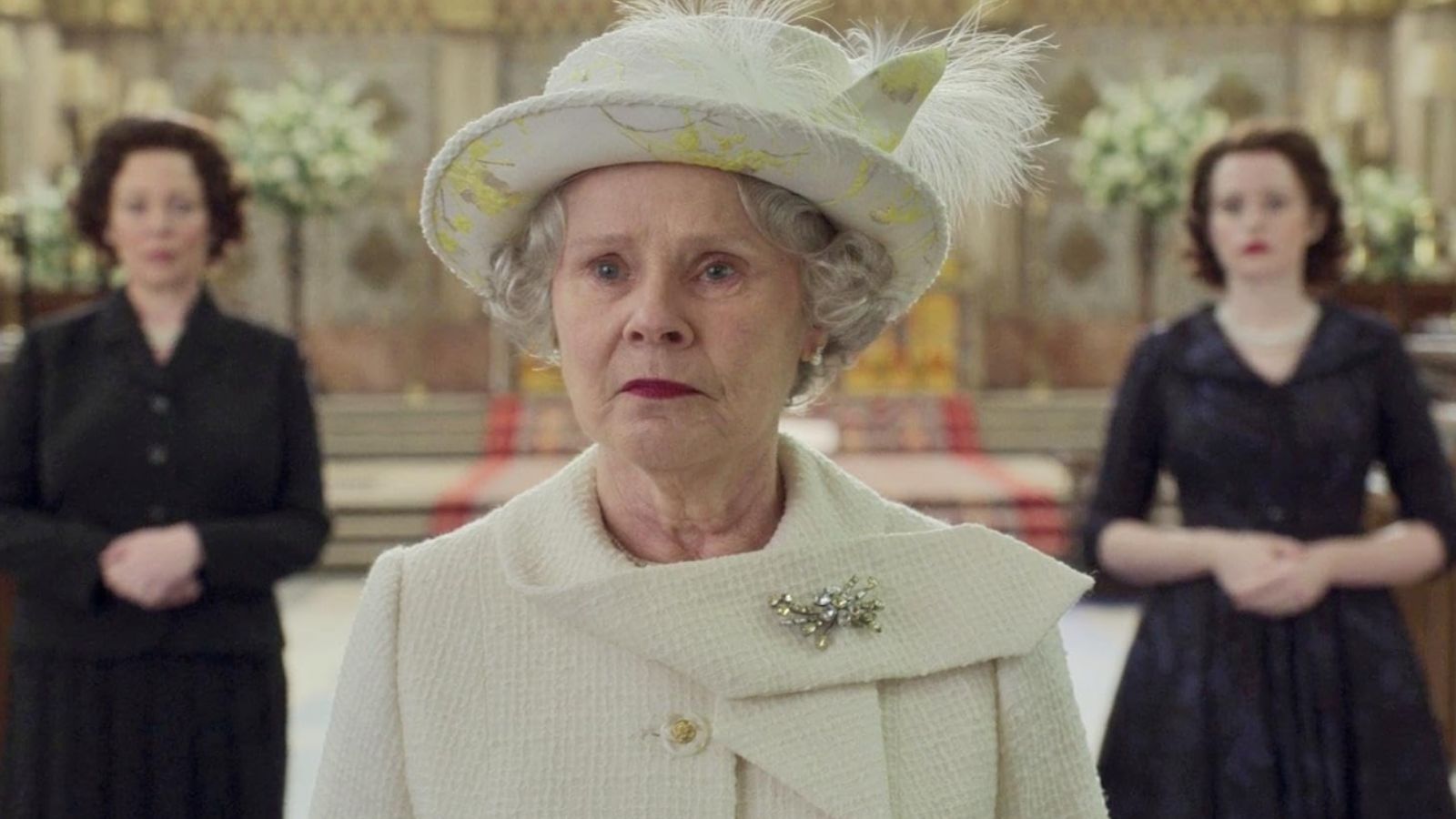
    The Crown (2016-2023)

    The series is based on real events, but many of its private conversations and family moments were created by the writers. For example, several tense exchanges between members of the royal family were invented because no record of those conversations exists.

    ©IMDb

    Bohemian Rhapsody (2018)

    The movie rearranges several major events in Queen’s history, including when Freddie Mercury told his bandmates about his AIDS diagnosis. It also changes parts of the band’s formation and suggests Queen had broken up before Live Aid, something that never actually happened.

    ©IMDb

    The Tudors (2007-2010)

    The show follows Henry VIII’s reign but frequently condenses timelines and reshapes historical figures. Henry’s sister Margaret, for instance, was given a storyline that actually combines elements from the lives of two different sisters.

    ©IMDb

    Gladiator (2000)

    The movie’s biggest departure from history comes at the end. Emperor Commodus was not killed in the Colosseum by a former general, but was instead assassinated in a private plot involving people close to him.

    ©IMDb

    Titanic (1997)

    Although the sinking of the Titanic is portrayed with remarkable historical detail, Jack Dawson and Rose DeWitt Bukater were completely fictional. Their love story was created to guide viewers through the real disaster without changing what actually happened to the ship.

    ©IMDb

    The Imitation Game (2014)

    Alan Turing really did help crack Germany’s Enigma code during World War II, but the film changes parts of his personality and working relationships. It also suggests he built the decoding machine almost entirely on his own, when it was actually the result of a team effort.

    ©IMDb

    Pearl Harbor (2001)

    The attack itself is based on real events, but the fictional love triangle takes center stage. The movie also compresses the timeline between Pearl Harbor and the Doolittle Raid, making the two events seem much closer together than they really were.

    ©IMDb

    300 (2006)

    Frank Miller’s graphic novel inspired the film’s visual style, but many historical details were exaggerated along the way. Xerxes’ appearance, the size of the Persian army, and even the armor worn by the Spartans were all heavily stylized rather than historically accurate.

    ©IMDb

    Napoleon (2023)

    Ridley Scott’s film condenses years of history into a single narrative and changes several key moments from Napoleon’s life. One example is the scene showing him firing cannons at the pyramids, something historians agree never happened.

    ©IMDb

    The Patriot (2000)

    While inspired by the American Revolution, many of the movie’s characters and events are fictional. One of its most controversial scenes, showing British soldiers locking civilians inside a church before setting it on fire, has no documented basis in the war.

    ©IMDb

    The Last Samurai (2003)

    Tom Cruise’s character never existed. Instead, he was created by combining elements of several real historical figures involved in Japan’s transition from the samurai era to a modern military, rather than representing one specific person.

    ©IMDb

    The Other Boleyn Girl (2008)

    The film dramatizes the relationship between Anne and Mary Boleyn and reshapes several events at Henry VIII’s court. It also exaggerates the sisters’ rivalry, even though historians have found little evidence that their relationship was as hostile as the movie suggests.

    The post 15 Historical Dramas That Got Major Details Wrong appeared first on Den of Geek.

  • 15 Movies Where the Whole Point is the Jokes

    15 Movies Where the Whole Point is the Jokes

    Some movies aim for unforgettable stories while others have a much simpler mission. They just want to make you laugh as often as possible. Plot, logic, and realism take a back seat as every scene becomes another opportunity for a visual gag, a ridiculous one liner, or an absurd situation. These comedies rarely slow down because there is always another joke waiting around the corner. Whether every punchline lands is beside the point. Their greatest strength is their willingness to throw everything at the audience and keep the laughs coming. These are movies where the jokes are the entire experience.

    The post 15 Movies Where the Whole Point is the Jokes appeared first on Den of Geek.

    Historical movies and TV shows have a way of making the past feel vivid, whether they’re telling the story of a famous ruler, a legendary battle, or a real-life icon. But even the most celebrated productions don’t always stick to the facts. To keep the story moving, filmmakers often combine timelines, invent conversations, or change historical details altogether. While those creative choices can make for compelling entertainment, they also mean that some memorable scenes aren’t nearly as accurate as they seem.

    Here’s a look at 15 historical dramas that got some major details wrong.

    cnx.cmd.push(function() {
    cnx({
    playerId: “106e33c0-3911-473c-b599-b1426db57530”,

    }).render(“0270c398a82f44f49c23c16122516796”);
    });

    ©IMDb

    Braveheart (1995)

    Mel Gibson’s epic helped make William Wallace a household name, but it also played fast and loose with history. One of the biggest inaccuracies is Wallace’s clothing, as the blue face paint and kilts shown in the movie didn’t belong to the time period in which he actually lived.

    ©IMDb

    The Greatest Showman (2017)

    The movie turns P.T. Barnum into an inspiring dreamer, but it leaves out many of the more controversial parts of his career. It also suggests singer Jenny Lind toured with Barnum because of a romantic connection, even though there’s no historical evidence that the two were ever involved.

    ©IMDb

    Pocahontas (1995)

    Disney’s version centers on a romance between Pocahontas and John Smith, but historians widely agree that the relationship shown in the film never happened. Pocahontas was also around 10 or 11 years old when the English settlers first arrived, much younger than the teenager portrayed on screen.

    ©IMDb

    The Crown (2016-2023)

    The series is based on real events, but many of its private conversations and family moments were created by the writers. For example, several tense exchanges between members of the royal family were invented because no record of those conversations exists.

    ©IMDb

    Bohemian Rhapsody (2018)

    The movie rearranges several major events in Queen’s history, including when Freddie Mercury told his bandmates about his AIDS diagnosis. It also changes parts of the band’s formation and suggests Queen had broken up before Live Aid, something that never actually happened.

    ©IMDb

    The Tudors (2007-2010)

    The show follows Henry VIII’s reign but frequently condenses timelines and reshapes historical figures. Henry’s sister Margaret, for instance, was given a storyline that actually combines elements from the lives of two different sisters.

    ©IMDb

    Gladiator (2000)

    The movie’s biggest departure from history comes at the end. Emperor Commodus was not killed in the Colosseum by a former general, but was instead assassinated in a private plot involving people close to him.

    ©IMDb

    Titanic (1997)

    Although the sinking of the Titanic is portrayed with remarkable historical detail, Jack Dawson and Rose DeWitt Bukater were completely fictional. Their love story was created to guide viewers through the real disaster without changing what actually happened to the ship.

    ©IMDb

    The Imitation Game (2014)

    Alan Turing really did help crack Germany’s Enigma code during World War II, but the film changes parts of his personality and working relationships. It also suggests he built the decoding machine almost entirely on his own, when it was actually the result of a team effort.

    ©IMDb

    Pearl Harbor (2001)

    The attack itself is based on real events, but the fictional love triangle takes center stage. The movie also compresses the timeline between Pearl Harbor and the Doolittle Raid, making the two events seem much closer together than they really were.

    ©IMDb

    300 (2006)

    Frank Miller’s graphic novel inspired the film’s visual style, but many historical details were exaggerated along the way. Xerxes’ appearance, the size of the Persian army, and even the armor worn by the Spartans were all heavily stylized rather than historically accurate.

    ©IMDb

    Napoleon (2023)

    Ridley Scott’s film condenses years of history into a single narrative and changes several key moments from Napoleon’s life. One example is the scene showing him firing cannons at the pyramids, something historians agree never happened.

    ©IMDb

    The Patriot (2000)

    While inspired by the American Revolution, many of the movie’s characters and events are fictional. One of its most controversial scenes, showing British soldiers locking civilians inside a church before setting it on fire, has no documented basis in the war.

    ©IMDb

    The Last Samurai (2003)

    Tom Cruise’s character never existed. Instead, he was created by combining elements of several real historical figures involved in Japan’s transition from the samurai era to a modern military, rather than representing one specific person.

    ©IMDb

    The Other Boleyn Girl (2008)

    The film dramatizes the relationship between Anne and Mary Boleyn and reshapes several events at Henry VIII’s court. It also exaggerates the sisters’ rivalry, even though historians have found little evidence that their relationship was as hostile as the movie suggests.

    The post 15 Historical Dramas That Got Major Details Wrong appeared first on Den of Geek.

  • The Nightmare on Elm Street Reboot Should Ditch Freddy Krueger

    The Nightmare on Elm Street Reboot Should Ditch Freddy Krueger

    Not many horror villains are as big or iconic as Freddy Krueger. His burned face, razor glove, taunting voice, and darkly comedic zingers straight up defined the Nightmare on Elm Street franchise, so most people immediately think of Freddy as a key part of it. But if the franchise is ever going to feel truly […]

    The post The Nightmare on Elm Street Reboot Should Ditch Freddy Krueger appeared first on Den of Geek.

    Historical movies and TV shows have a way of making the past feel vivid, whether they’re telling the story of a famous ruler, a legendary battle, or a real-life icon. But even the most celebrated productions don’t always stick to the facts. To keep the story moving, filmmakers often combine timelines, invent conversations, or change historical details altogether. While those creative choices can make for compelling entertainment, they also mean that some memorable scenes aren’t nearly as accurate as they seem.

    Here’s a look at 15 historical dramas that got some major details wrong.

    cnx.cmd.push(function() {
    cnx({
    playerId: “106e33c0-3911-473c-b599-b1426db57530”,

    }).render(“0270c398a82f44f49c23c16122516796”);
    });

    ©IMDb

    Braveheart (1995)

    Mel Gibson’s epic helped make William Wallace a household name, but it also played fast and loose with history. One of the biggest inaccuracies is Wallace’s clothing, as the blue face paint and kilts shown in the movie didn’t belong to the time period in which he actually lived.

    ©IMDb

    The Greatest Showman (2017)

    The movie turns P.T. Barnum into an inspiring dreamer, but it leaves out many of the more controversial parts of his career. It also suggests singer Jenny Lind toured with Barnum because of a romantic connection, even though there’s no historical evidence that the two were ever involved.

    ©IMDb

    Pocahontas (1995)

    Disney’s version centers on a romance between Pocahontas and John Smith, but historians widely agree that the relationship shown in the film never happened. Pocahontas was also around 10 or 11 years old when the English settlers first arrived, much younger than the teenager portrayed on screen.

    ©IMDb

    The Crown (2016-2023)

    The series is based on real events, but many of its private conversations and family moments were created by the writers. For example, several tense exchanges between members of the royal family were invented because no record of those conversations exists.

    ©IMDb

    Bohemian Rhapsody (2018)

    The movie rearranges several major events in Queen’s history, including when Freddie Mercury told his bandmates about his AIDS diagnosis. It also changes parts of the band’s formation and suggests Queen had broken up before Live Aid, something that never actually happened.

    ©IMDb

    The Tudors (2007-2010)

    The show follows Henry VIII’s reign but frequently condenses timelines and reshapes historical figures. Henry’s sister Margaret, for instance, was given a storyline that actually combines elements from the lives of two different sisters.

    ©IMDb

    Gladiator (2000)

    The movie’s biggest departure from history comes at the end. Emperor Commodus was not killed in the Colosseum by a former general, but was instead assassinated in a private plot involving people close to him.

    ©IMDb

    Titanic (1997)

    Although the sinking of the Titanic is portrayed with remarkable historical detail, Jack Dawson and Rose DeWitt Bukater were completely fictional. Their love story was created to guide viewers through the real disaster without changing what actually happened to the ship.

    ©IMDb

    The Imitation Game (2014)

    Alan Turing really did help crack Germany’s Enigma code during World War II, but the film changes parts of his personality and working relationships. It also suggests he built the decoding machine almost entirely on his own, when it was actually the result of a team effort.

    ©IMDb

    Pearl Harbor (2001)

    The attack itself is based on real events, but the fictional love triangle takes center stage. The movie also compresses the timeline between Pearl Harbor and the Doolittle Raid, making the two events seem much closer together than they really were.

    ©IMDb

    300 (2006)

    Frank Miller’s graphic novel inspired the film’s visual style, but many historical details were exaggerated along the way. Xerxes’ appearance, the size of the Persian army, and even the armor worn by the Spartans were all heavily stylized rather than historically accurate.

    ©IMDb

    Napoleon (2023)

    Ridley Scott’s film condenses years of history into a single narrative and changes several key moments from Napoleon’s life. One example is the scene showing him firing cannons at the pyramids, something historians agree never happened.

    ©IMDb

    The Patriot (2000)

    While inspired by the American Revolution, many of the movie’s characters and events are fictional. One of its most controversial scenes, showing British soldiers locking civilians inside a church before setting it on fire, has no documented basis in the war.

    ©IMDb

    The Last Samurai (2003)

    Tom Cruise’s character never existed. Instead, he was created by combining elements of several real historical figures involved in Japan’s transition from the samurai era to a modern military, rather than representing one specific person.

    ©IMDb

    The Other Boleyn Girl (2008)

    The film dramatizes the relationship between Anne and Mary Boleyn and reshapes several events at Henry VIII’s court. It also exaggerates the sisters’ rivalry, even though historians have found little evidence that their relationship was as hostile as the movie suggests.

    The post 15 Historical Dramas That Got Major Details Wrong appeared first on Den of Geek.

  • 15 Movies from the 1980s Your Uncle Still Tries to Make You Watch

    15 Movies from the 1980s Your Uncle Still Tries to Make You Watch

    Years go by, but there are still a handful of classic movies your uncle can’t believe you haven’t seen yet. Whether he’s quoting his favorite scenes, insisting they ‘don’t make them like this anymore’, or casually dropping spoilers like it’s no big deal, these ’80s films have earned a permanent spot on his must-watch list. Some of them he probably saw in theaters, others he’s rewatched so many times he knows every line. Either way, they tend to come up in conversation more often than you’d expect.

    Here’s a look at 15 movies from the 1980s your uncle still tries to make you watch.

    The post 15 Movies from the 1980s Your Uncle Still Tries to Make You Watch appeared first on Den of Geek.

    Historical movies and TV shows have a way of making the past feel vivid, whether they’re telling the story of a famous ruler, a legendary battle, or a real-life icon. But even the most celebrated productions don’t always stick to the facts. To keep the story moving, filmmakers often combine timelines, invent conversations, or change historical details altogether. While those creative choices can make for compelling entertainment, they also mean that some memorable scenes aren’t nearly as accurate as they seem.

    Here’s a look at 15 historical dramas that got some major details wrong.

    cnx.cmd.push(function() {
    cnx({
    playerId: “106e33c0-3911-473c-b599-b1426db57530”,

    }).render(“0270c398a82f44f49c23c16122516796”);
    });

    ©IMDb

    Braveheart (1995)

    Mel Gibson’s epic helped make William Wallace a household name, but it also played fast and loose with history. One of the biggest inaccuracies is Wallace’s clothing, as the blue face paint and kilts shown in the movie didn’t belong to the time period in which he actually lived.

    ©IMDb

    The Greatest Showman (2017)

    The movie turns P.T. Barnum into an inspiring dreamer, but it leaves out many of the more controversial parts of his career. It also suggests singer Jenny Lind toured with Barnum because of a romantic connection, even though there’s no historical evidence that the two were ever involved.

    ©IMDb

    Pocahontas (1995)

    Disney’s version centers on a romance between Pocahontas and John Smith, but historians widely agree that the relationship shown in the film never happened. Pocahontas was also around 10 or 11 years old when the English settlers first arrived, much younger than the teenager portrayed on screen.

    ©IMDb

    The Crown (2016-2023)

    The series is based on real events, but many of its private conversations and family moments were created by the writers. For example, several tense exchanges between members of the royal family were invented because no record of those conversations exists.

    ©IMDb

    Bohemian Rhapsody (2018)

    The movie rearranges several major events in Queen’s history, including when Freddie Mercury told his bandmates about his AIDS diagnosis. It also changes parts of the band’s formation and suggests Queen had broken up before Live Aid, something that never actually happened.

    ©IMDb

    The Tudors (2007-2010)

    The show follows Henry VIII’s reign but frequently condenses timelines and reshapes historical figures. Henry’s sister Margaret, for instance, was given a storyline that actually combines elements from the lives of two different sisters.

    ©IMDb

    Gladiator (2000)

    The movie’s biggest departure from history comes at the end. Emperor Commodus was not killed in the Colosseum by a former general, but was instead assassinated in a private plot involving people close to him.

    ©IMDb

    Titanic (1997)

    Although the sinking of the Titanic is portrayed with remarkable historical detail, Jack Dawson and Rose DeWitt Bukater were completely fictional. Their love story was created to guide viewers through the real disaster without changing what actually happened to the ship.

    ©IMDb

    The Imitation Game (2014)

    Alan Turing really did help crack Germany’s Enigma code during World War II, but the film changes parts of his personality and working relationships. It also suggests he built the decoding machine almost entirely on his own, when it was actually the result of a team effort.

    ©IMDb

    Pearl Harbor (2001)

    The attack itself is based on real events, but the fictional love triangle takes center stage. The movie also compresses the timeline between Pearl Harbor and the Doolittle Raid, making the two events seem much closer together than they really were.

    ©IMDb

    300 (2006)

    Frank Miller’s graphic novel inspired the film’s visual style, but many historical details were exaggerated along the way. Xerxes’ appearance, the size of the Persian army, and even the armor worn by the Spartans were all heavily stylized rather than historically accurate.

    ©IMDb

    Napoleon (2023)

    Ridley Scott’s film condenses years of history into a single narrative and changes several key moments from Napoleon’s life. One example is the scene showing him firing cannons at the pyramids, something historians agree never happened.

    ©IMDb

    The Patriot (2000)

    While inspired by the American Revolution, many of the movie’s characters and events are fictional. One of its most controversial scenes, showing British soldiers locking civilians inside a church before setting it on fire, has no documented basis in the war.

    ©IMDb

    The Last Samurai (2003)

    Tom Cruise’s character never existed. Instead, he was created by combining elements of several real historical figures involved in Japan’s transition from the samurai era to a modern military, rather than representing one specific person.

    ©IMDb

    The Other Boleyn Girl (2008)

    The film dramatizes the relationship between Anne and Mary Boleyn and reshapes several events at Henry VIII’s court. It also exaggerates the sisters’ rivalry, even though historians have found little evidence that their relationship was as hostile as the movie suggests.

    The post 15 Historical Dramas That Got Major Details Wrong appeared first on Den of Geek.

  • 14 Darker Facts from Hollywood’s Troubled Past

    14 Darker Facts from Hollywood’s Troubled Past

    Hollywood has always had its glamorous side, but not everything behind the movies and red carpets is as polished as it looks. Over the years, plenty of stories have surfaced about difficult film sets, strict studio rules, behind-the-scenes feuds, and moments that changed the industry in unexpected ways. While audiences usually remember the finished movies, the road to getting them on screen wasn’t always smooth. Some productions became famous for what happened off camera, while others revealed a side of old Hollywood that studios would have rather kept out of the spotlight.

    Here are 15 darker facts from Hollywood’s troubled past.

    The post 14 Darker Facts from Hollywood’s Troubled Past appeared first on Den of Geek.

    Historical movies and TV shows have a way of making the past feel vivid, whether they’re telling the story of a famous ruler, a legendary battle, or a real-life icon. But even the most celebrated productions don’t always stick to the facts. To keep the story moving, filmmakers often combine timelines, invent conversations, or change historical details altogether. While those creative choices can make for compelling entertainment, they also mean that some memorable scenes aren’t nearly as accurate as they seem.

    Here’s a look at 15 historical dramas that got some major details wrong.

    cnx.cmd.push(function() {
    cnx({
    playerId: “106e33c0-3911-473c-b599-b1426db57530”,

    }).render(“0270c398a82f44f49c23c16122516796”);
    });

    ©IMDb

    Braveheart (1995)

    Mel Gibson’s epic helped make William Wallace a household name, but it also played fast and loose with history. One of the biggest inaccuracies is Wallace’s clothing, as the blue face paint and kilts shown in the movie didn’t belong to the time period in which he actually lived.

    ©IMDb

    The Greatest Showman (2017)

    The movie turns P.T. Barnum into an inspiring dreamer, but it leaves out many of the more controversial parts of his career. It also suggests singer Jenny Lind toured with Barnum because of a romantic connection, even though there’s no historical evidence that the two were ever involved.

    ©IMDb

    Pocahontas (1995)

    Disney’s version centers on a romance between Pocahontas and John Smith, but historians widely agree that the relationship shown in the film never happened. Pocahontas was also around 10 or 11 years old when the English settlers first arrived, much younger than the teenager portrayed on screen.

    ©IMDb

    The Crown (2016-2023)

    The series is based on real events, but many of its private conversations and family moments were created by the writers. For example, several tense exchanges between members of the royal family were invented because no record of those conversations exists.

    ©IMDb

    Bohemian Rhapsody (2018)

    The movie rearranges several major events in Queen’s history, including when Freddie Mercury told his bandmates about his AIDS diagnosis. It also changes parts of the band’s formation and suggests Queen had broken up before Live Aid, something that never actually happened.

    ©IMDb

    The Tudors (2007-2010)

    The show follows Henry VIII’s reign but frequently condenses timelines and reshapes historical figures. Henry’s sister Margaret, for instance, was given a storyline that actually combines elements from the lives of two different sisters.

    ©IMDb

    Gladiator (2000)

    The movie’s biggest departure from history comes at the end. Emperor Commodus was not killed in the Colosseum by a former general, but was instead assassinated in a private plot involving people close to him.

    ©IMDb

    Titanic (1997)

    Although the sinking of the Titanic is portrayed with remarkable historical detail, Jack Dawson and Rose DeWitt Bukater were completely fictional. Their love story was created to guide viewers through the real disaster without changing what actually happened to the ship.

    ©IMDb

    The Imitation Game (2014)

    Alan Turing really did help crack Germany’s Enigma code during World War II, but the film changes parts of his personality and working relationships. It also suggests he built the decoding machine almost entirely on his own, when it was actually the result of a team effort.

    ©IMDb

    Pearl Harbor (2001)

    The attack itself is based on real events, but the fictional love triangle takes center stage. The movie also compresses the timeline between Pearl Harbor and the Doolittle Raid, making the two events seem much closer together than they really were.

    ©IMDb

    300 (2006)

    Frank Miller’s graphic novel inspired the film’s visual style, but many historical details were exaggerated along the way. Xerxes’ appearance, the size of the Persian army, and even the armor worn by the Spartans were all heavily stylized rather than historically accurate.

    ©IMDb

    Napoleon (2023)

    Ridley Scott’s film condenses years of history into a single narrative and changes several key moments from Napoleon’s life. One example is the scene showing him firing cannons at the pyramids, something historians agree never happened.

    ©IMDb

    The Patriot (2000)

    While inspired by the American Revolution, many of the movie’s characters and events are fictional. One of its most controversial scenes, showing British soldiers locking civilians inside a church before setting it on fire, has no documented basis in the war.

    ©IMDb

    The Last Samurai (2003)

    Tom Cruise’s character never existed. Instead, he was created by combining elements of several real historical figures involved in Japan’s transition from the samurai era to a modern military, rather than representing one specific person.

    ©IMDb

    The Other Boleyn Girl (2008)

    The film dramatizes the relationship between Anne and Mary Boleyn and reshapes several events at Henry VIII’s court. It also exaggerates the sisters’ rivalry, even though historians have found little evidence that their relationship was as hostile as the movie suggests.

    The post 15 Historical Dramas That Got Major Details Wrong appeared first on Den of Geek.

  • Writers Wanted: Den of Geek and Wattpad Present The Fandom Writing Club at SDCC 2026

    Writers Wanted: Den of Geek and Wattpad Present The Fandom Writing Club at SDCC 2026

    Get ready to swap convention crowds for a nice pint, a writing prompt, and a room full of fellow fans ready to create something truly unforgettable. Wattpad and Den of Geek are inviting geeks of all writing experience levels to an evening of chat and creativity at The Fandom Writing Club. Taking place at Mission […]

    The post Writers Wanted: Den of Geek and Wattpad Present The Fandom Writing Club at SDCC 2026 appeared first on Den of Geek.

    Historical movies and TV shows have a way of making the past feel vivid, whether they’re telling the story of a famous ruler, a legendary battle, or a real-life icon. But even the most celebrated productions don’t always stick to the facts. To keep the story moving, filmmakers often combine timelines, invent conversations, or change historical details altogether. While those creative choices can make for compelling entertainment, they also mean that some memorable scenes aren’t nearly as accurate as they seem.

    Here’s a look at 15 historical dramas that got some major details wrong.

    cnx.cmd.push(function() {
    cnx({
    playerId: “106e33c0-3911-473c-b599-b1426db57530”,

    }).render(“0270c398a82f44f49c23c16122516796”);
    });

    ©IMDb

    Braveheart (1995)

    Mel Gibson’s epic helped make William Wallace a household name, but it also played fast and loose with history. One of the biggest inaccuracies is Wallace’s clothing, as the blue face paint and kilts shown in the movie didn’t belong to the time period in which he actually lived.

    ©IMDb

    The Greatest Showman (2017)

    The movie turns P.T. Barnum into an inspiring dreamer, but it leaves out many of the more controversial parts of his career. It also suggests singer Jenny Lind toured with Barnum because of a romantic connection, even though there’s no historical evidence that the two were ever involved.

    ©IMDb

    Pocahontas (1995)

    Disney’s version centers on a romance between Pocahontas and John Smith, but historians widely agree that the relationship shown in the film never happened. Pocahontas was also around 10 or 11 years old when the English settlers first arrived, much younger than the teenager portrayed on screen.

    ©IMDb

    The Crown (2016-2023)

    The series is based on real events, but many of its private conversations and family moments were created by the writers. For example, several tense exchanges between members of the royal family were invented because no record of those conversations exists.

    ©IMDb

    Bohemian Rhapsody (2018)

    The movie rearranges several major events in Queen’s history, including when Freddie Mercury told his bandmates about his AIDS diagnosis. It also changes parts of the band’s formation and suggests Queen had broken up before Live Aid, something that never actually happened.

    ©IMDb

    The Tudors (2007-2010)

    The show follows Henry VIII’s reign but frequently condenses timelines and reshapes historical figures. Henry’s sister Margaret, for instance, was given a storyline that actually combines elements from the lives of two different sisters.

    ©IMDb

    Gladiator (2000)

    The movie’s biggest departure from history comes at the end. Emperor Commodus was not killed in the Colosseum by a former general, but was instead assassinated in a private plot involving people close to him.

    ©IMDb

    Titanic (1997)

    Although the sinking of the Titanic is portrayed with remarkable historical detail, Jack Dawson and Rose DeWitt Bukater were completely fictional. Their love story was created to guide viewers through the real disaster without changing what actually happened to the ship.

    ©IMDb

    The Imitation Game (2014)

    Alan Turing really did help crack Germany’s Enigma code during World War II, but the film changes parts of his personality and working relationships. It also suggests he built the decoding machine almost entirely on his own, when it was actually the result of a team effort.

    ©IMDb

    Pearl Harbor (2001)

    The attack itself is based on real events, but the fictional love triangle takes center stage. The movie also compresses the timeline between Pearl Harbor and the Doolittle Raid, making the two events seem much closer together than they really were.

    ©IMDb

    300 (2006)

    Frank Miller’s graphic novel inspired the film’s visual style, but many historical details were exaggerated along the way. Xerxes’ appearance, the size of the Persian army, and even the armor worn by the Spartans were all heavily stylized rather than historically accurate.

    ©IMDb

    Napoleon (2023)

    Ridley Scott’s film condenses years of history into a single narrative and changes several key moments from Napoleon’s life. One example is the scene showing him firing cannons at the pyramids, something historians agree never happened.

    ©IMDb

    The Patriot (2000)

    While inspired by the American Revolution, many of the movie’s characters and events are fictional. One of its most controversial scenes, showing British soldiers locking civilians inside a church before setting it on fire, has no documented basis in the war.

    ©IMDb

    The Last Samurai (2003)

    Tom Cruise’s character never existed. Instead, he was created by combining elements of several real historical figures involved in Japan’s transition from the samurai era to a modern military, rather than representing one specific person.

    ©IMDb

    The Other Boleyn Girl (2008)

    The film dramatizes the relationship between Anne and Mary Boleyn and reshapes several events at Henry VIII’s court. It also exaggerates the sisters’ rivalry, even though historians have found little evidence that their relationship was as hostile as the movie suggests.

    The post 15 Historical Dramas That Got Major Details Wrong appeared first on Den of Geek.

  • 15 Historical Dramas That Got Major Details Wrong

    15 Historical Dramas That Got Major Details Wrong

    Historical movies and TV shows have a way of making the past feel vivid, whether they’re telling the story of a famous ruler, a legendary battle, or a real-life icon. But even the most celebrated productions don’t always stick to the facts. To keep the story moving, filmmakers often combine timelines, invent conversations, or change historical details altogether. While those creative choices can make for compelling entertainment, they also mean that some memorable scenes aren’t nearly as accurate as they seem.

    Here’s a look at 15 historical dramas that got some major details wrong.

    The post 15 Historical Dramas That Got Major Details Wrong appeared first on Den of Geek.

    Historical movies and TV shows have a way of making the past feel vivid, whether they’re telling the story of a famous ruler, a legendary battle, or a real-life icon. But even the most celebrated productions don’t always stick to the facts. To keep the story moving, filmmakers often combine timelines, invent conversations, or change historical details altogether. While those creative choices can make for compelling entertainment, they also mean that some memorable scenes aren’t nearly as accurate as they seem.

    Here’s a look at 15 historical dramas that got some major details wrong.

    cnx.cmd.push(function() {
    cnx({
    playerId: “106e33c0-3911-473c-b599-b1426db57530”,

    }).render(“0270c398a82f44f49c23c16122516796”);
    });

    ©IMDb

    Braveheart (1995)

    Mel Gibson’s epic helped make William Wallace a household name, but it also played fast and loose with history. One of the biggest inaccuracies is Wallace’s clothing, as the blue face paint and kilts shown in the movie didn’t belong to the time period in which he actually lived.

    ©IMDb

    The Greatest Showman (2017)

    The movie turns P.T. Barnum into an inspiring dreamer, but it leaves out many of the more controversial parts of his career. It also suggests singer Jenny Lind toured with Barnum because of a romantic connection, even though there’s no historical evidence that the two were ever involved.

    ©IMDb

    Pocahontas (1995)

    Disney’s version centers on a romance between Pocahontas and John Smith, but historians widely agree that the relationship shown in the film never happened. Pocahontas was also around 10 or 11 years old when the English settlers first arrived, much younger than the teenager portrayed on screen.

    ©IMDb

    The Crown (2016-2023)

    The series is based on real events, but many of its private conversations and family moments were created by the writers. For example, several tense exchanges between members of the royal family were invented because no record of those conversations exists.

    ©IMDb

    Bohemian Rhapsody (2018)

    The movie rearranges several major events in Queen’s history, including when Freddie Mercury told his bandmates about his AIDS diagnosis. It also changes parts of the band’s formation and suggests Queen had broken up before Live Aid, something that never actually happened.

    ©IMDb

    The Tudors (2007-2010)

    The show follows Henry VIII’s reign but frequently condenses timelines and reshapes historical figures. Henry’s sister Margaret, for instance, was given a storyline that actually combines elements from the lives of two different sisters.

    ©IMDb

    Gladiator (2000)

    The movie’s biggest departure from history comes at the end. Emperor Commodus was not killed in the Colosseum by a former general, but was instead assassinated in a private plot involving people close to him.

    ©IMDb

    Titanic (1997)

    Although the sinking of the Titanic is portrayed with remarkable historical detail, Jack Dawson and Rose DeWitt Bukater were completely fictional. Their love story was created to guide viewers through the real disaster without changing what actually happened to the ship.

    ©IMDb

    The Imitation Game (2014)

    Alan Turing really did help crack Germany’s Enigma code during World War II, but the film changes parts of his personality and working relationships. It also suggests he built the decoding machine almost entirely on his own, when it was actually the result of a team effort.

    ©IMDb

    Pearl Harbor (2001)

    The attack itself is based on real events, but the fictional love triangle takes center stage. The movie also compresses the timeline between Pearl Harbor and the Doolittle Raid, making the two events seem much closer together than they really were.

    ©IMDb

    300 (2006)

    Frank Miller’s graphic novel inspired the film’s visual style, but many historical details were exaggerated along the way. Xerxes’ appearance, the size of the Persian army, and even the armor worn by the Spartans were all heavily stylized rather than historically accurate.

    ©IMDb

    Napoleon (2023)

    Ridley Scott’s film condenses years of history into a single narrative and changes several key moments from Napoleon’s life. One example is the scene showing him firing cannons at the pyramids, something historians agree never happened.

    ©IMDb

    The Patriot (2000)

    While inspired by the American Revolution, many of the movie’s characters and events are fictional. One of its most controversial scenes, showing British soldiers locking civilians inside a church before setting it on fire, has no documented basis in the war.

    ©IMDb

    The Last Samurai (2003)

    Tom Cruise’s character never existed. Instead, he was created by combining elements of several real historical figures involved in Japan’s transition from the samurai era to a modern military, rather than representing one specific person.

    ©IMDb

    The Other Boleyn Girl (2008)

    The film dramatizes the relationship between Anne and Mary Boleyn and reshapes several events at Henry VIII’s court. It also exaggerates the sisters’ rivalry, even though historians have found little evidence that their relationship was as hostile as the movie suggests.

    The post 15 Historical Dramas That Got Major Details Wrong appeared first on Den of Geek.

  • A Content Model Is Not a Design System

    A Content Model Is Not a Design System

    Do you remember when having a great website was enough? Now, people are getting answers from Siri, Google search snippets, and mobile apps, not just our websites. Forward-thinking organizations have adopted an omnichannel content strategy, whose mission is to reach audiences across multiple digital channels and platforms.

    But how do you set up a content management system (CMS) to reach your audience now and in the future? I learned the hard way that creating a content model—a definition of content types, attributes, and relationships that let people and systems understand content—with my more familiar design-system thinking would capsize my customer’s omnichannel content strategy. You can avoid that outcome by creating content models that are semantic and that also connect related content. 

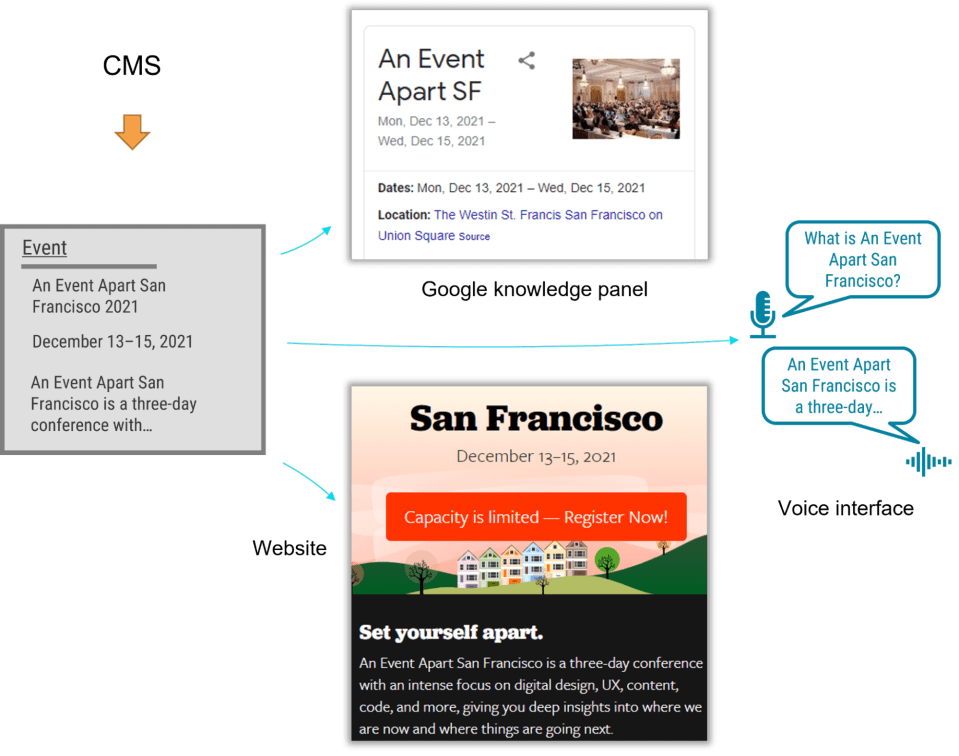
    I recently had the opportunity to lead the CMS implementation for a Fortune 500 company. The client was excited by the benefits of an omnichannel content strategy, including content reuse, multichannel marketing, and robot delivery—designing content to be intelligible to bots, Google knowledge panels, snippets, and voice user interfaces. 

    A content model is a critical foundation for an omnichannel content strategy, and for our content to be understood by multiple systems, the model needed semantic types—types named according to their meaning instead of their presentation. Our goal was to let authors create content and reuse it wherever it was relevant. But as the project proceeded, I realized that supporting content reuse at the scale that my customer needed required the whole team to recognize a new pattern.

    Despite our best intentions, we kept drawing from what we were more familiar with: design systems. Unlike web-focused content strategies, an omnichannel content strategy can’t rely on WYSIWYG tools for design and layout. Our tendency to approach the content model with our familiar design-system thinking constantly led us to veer away from one of the primary purposes of a content model: delivering content to audiences on multiple marketing channels.

    Two essential principles for an effective content model

    We needed to help our designers, developers, and stakeholders understand that we were doing something very different from their prior web projects, where it was natural for everyone to think about content as visual building blocks fitting into layouts. The previous approach was not only more familiar but also more intuitive—at least at first—because it made the designs feel more tangible. We discovered two principles that helped the team understand how a content model differs from the design systems that we were used to:

    1. Content models must define semantics instead of layout.
    2. And content models should connect content that belongs together.

    Semantic content models

    A semantic content model uses type and attribute names that reflect the meaning of the content, not how it will be displayed. For example, in a nonsemantic model, teams might create types like teasers, media blocks, and cards. Although these types might make it easy to lay out content, they don’t help delivery channels understand the content’s meaning, which in turn would have opened the door to the content being presented in each marketing channel. In contrast, a semantic content model uses type names like product, service, and testimonial so that each delivery channel can understand the content and use it as it sees fit. 

    When you’re creating a semantic content model, a great place to start is to look over the types and properties defined by Schema.org, a community-driven resource for type definitions that are intelligible to platforms like Google search.

    A semantic content model has several benefits:

    • Even if your team doesn’t care about omnichannel content, a semantic content model decouples content from its presentation so that teams can evolve the website’s design without needing to refactor its content. In this way, content can withstand disruptive website redesigns. 
    • A semantic content model also provides a competitive edge. By adding structured data based on Schema.org’s types and properties, a website can provide hints to help Google understand the content, display it in search snippets or knowledge panels, and use it to answer voice-interface user questions. Potential visitors could discover your content without ever setting foot in your website.
    • Beyond those practical benefits, you’ll also need a semantic content model if you want to deliver omnichannel content. To use the same content in multiple marketing channels, delivery channels need to be able to understand it. For example, if your content model were to provide a list of questions and answers, it could easily be rendered on a frequently asked questions (FAQ) page, but it could also be used in a voice interface or by a bot that answers common questions.

    For example, using a semantic content model for articles, events, people, and locations lets A List Apart provide cleanly structured data for search engines so that users can read the content on the website, in Google knowledge panels, and even with hypothetical voice interfaces in the future.

    Content models that connect

    After struggling to describe what makes a good content model, I’ve come to realize that the best models are those that are semantic and that also connect related content components (such as a FAQ item’s question and answer pair), instead of slicing up related content across disparate content components. A good content model connects content that should remain together so that multiple delivery channels can use it without needing to first put those pieces back together.

    Think about writing an article or essay. An article’s meaning and usefulness depends upon its parts being kept together. Would one of the headings or paragraphs be meaningful on their own without the context of the full article? On our project, our familiar design-system thinking often led us to want to create content models that would slice content into disparate chunks to fit the web-centric layout. This had a similar impact to an article that were to have been separated from its headline. Because we were slicing content into standalone pieces based on layout, content that belonged together became difficult to manage and nearly impossible for multiple delivery channels to understand.

    To illustrate, let’s look at how connecting related content applies in a real-world scenario. The design team for our customer presented a complex layout for a software product page that included multiple tabs and sections. Our instincts were to follow suit with the content model. Shouldn’t we make it as easy and as flexible as possible to add any number of tabs in the future?

    Because our design-system instincts were so familiar, it felt like we had needed a content type called “tab section” so that multiple tab sections could be added to a page. Each tab section would display various types of content. One tab might provide the software’s overview or its specifications. Another tab might provide a list of resources. 

    Our inclination to break down the content model into “tab section” pieces would have led to an unnecessarily complex model and a cumbersome editing experience, and it would have also created content that couldn’t have been understood by additional delivery channels. For example, how would another system have been able to tell which “tab section” referred to a product’s specifications or its resource list—would that other system have to have resorted to counting tab sections and content blocks? This would have prevented the tabs from ever being reordered, and it would have required adding logic in every other delivery channel to interpret the design system’s layout. Furthermore, if the customer were to have no longer wanted to display this content in a tab layout, it would have been tedious to migrate to a new content model to reflect the new page redesign.

    We had a breakthrough when we discovered that our customer had a specific purpose in mind for each tab: it would reveal specific information such as the software product’s overview, specifications, related resources, and pricing. Once implementation began, our inclination to focus on what’s visual and familiar had obscured the intent of the designs. With a little digging, it didn’t take long to realize that the concept of tabs wasn’t relevant to the content model. The meaning of the content that they were planning to display in the tabs was what mattered.

    In fact, the customer could have decided to display this content in a different way—without tabs—somewhere else. This realization prompted us to define content types for the software product based on the meaningful attributes that the customer had wanted to render on the web. There were obvious semantic attributes like name and description as well as rich attributes like screenshots, software requirements, and feature lists. The software’s product information stayed together because it wasn’t sliced across separate components like “tab sections” that were derived from the content’s presentation. Any delivery channel—including future ones—could understand and present this content.

    Conclusion

    In this omnichannel marketing project, we discovered that the best way to keep our content model on track was to ensure that it was semantic (with type and attribute names that reflected the meaning of the content) and that it kept content together that belonged together (instead of fragmenting it). These two concepts curtailed our temptation to shape the content model based on the design. So if you’re working on a content model to support an omnichannel content strategy—or even if you just want to make sure that Google and other interfaces understand your content—remember:

    • A design system isn’t a content model. Team members may be tempted to conflate them and to make your content model mirror your design system, so you should protect the semantic value and contextual structure of the content strategy during the entire implementation process. This will let every delivery channel consume the content without needing a magic decoder ring.
    • If your team is struggling to make this transition, you can still reap some of the benefits by using Schema.org–based structured data in your website. Even if additional delivery channels aren’t on the immediate horizon, the benefit to search engine optimization is a compelling reason on its own.
    • Additionally, remind the team that decoupling the content model from the design will let them update the designs more easily because they won’t be held back by the cost of content migrations. They’ll be able to create new designs without the obstacle of compatibility between the design and the content, and ​they’ll be ready for the next big thing. 

    By rigorously advocating for these principles, you’ll help your team treat content the way that it deserves—as the most critical asset in your user experience and the best way to connect with your audience.

  • Design for Safety, An Excerpt

    Design for Safety, An Excerpt

    Antiracist economist Kim Crayton says that “intention without strategy is chaos.” We’ve discussed how our biases, assumptions, and inattention toward marginalized and vulnerable groups lead to dangerous and unethical tech—but what, specifically, do we need to do to fix it? The intention to make our tech safer is not enough; we need a strategy.

    This chapter will equip you with that plan of action. It covers how to integrate safety principles into your design work in order to create tech that’s safe, how to convince your stakeholders that this work is necessary, and how to respond to the critique that what we actually need is more diversity. (Spoiler: we do, but diversity alone is not the antidote to fixing unethical, unsafe tech.)

    The process for inclusive safety

    When you are designing for safety, your goals are to:

    • identify ways your product can be used for abuse,
    • design ways to prevent the abuse, and
    • provide support for vulnerable users to reclaim power and control.

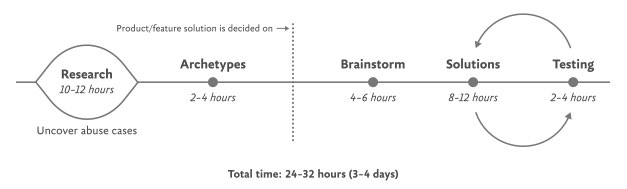
    The Process for Inclusive Safety is a tool to help you reach those goals (Fig 5.1). It’s a methodology I created in 2018 to capture the various techniques I was using when designing products with safety in mind. Whether you are creating an entirely new product or adding to an existing feature, the Process can help you make your product safe and inclusive. The Process includes five general areas of action:

    • Conducting research
    • Creating archetypes
    • Brainstorming problems
    • Designing solutions
    • Testing for safety

    The Process is meant to be flexible—it won’t make sense for teams to implement every step in some situations. Use the parts that are relevant to your unique work and context; this is meant to be something you can insert into your existing design practice.

    And once you use it, if you have an idea for making it better or simply want to provide context of how it helped your team, please get in touch with me. It’s a living document that I hope will continue to be a useful and realistic tool that technologists can use in their day-to-day work.

    If you’re working on a product specifically for a vulnerable group or survivors of some form of trauma, such as an app for survivors of domestic violence, sexual assault, or drug addiction, be sure to read Chapter 7, which covers that situation explicitly and should be handled a bit differently. The guidelines here are for prioritizing safety when designing a more general product that will have a wide user base (which, we already know from statistics, will include certain groups that should be protected from harm). Chapter 7 is focused on products that are specifically for vulnerable groups and people who have experienced trauma.

    Step 1: Conduct research

    Design research should include a broad analysis of how your tech might be weaponized for abuse as well as specific insights into the experiences of survivors and perpetrators of that type of abuse. At this stage, you and your team will investigate issues of interpersonal harm and abuse, and explore any other safety, security, or inclusivity issues that might be a concern for your product or service, like data security, racist algorithms, and harassment.

    Broad research

    Your project should begin with broad, general research into similar products and issues around safety and ethical concerns that have already been reported. For example, a team building a smart home device would do well to understand the multitude of ways that existing smart home devices have been used as tools of abuse. If your product will involve AI, seek to understand the potentials for racism and other issues that have been reported in existing AI products. Nearly all types of technology have some kind of potential or actual harm that’s been reported on in the news or written about by academics. Google Scholar is a useful tool for finding these studies.

    Specific research: Survivors

    When possible and appropriate, include direct research (surveys and interviews) with people who are experts in the forms of harm you have uncovered. Ideally, you’ll want to interview advocates working in the space of your research first so that you have a more solid understanding of the topic and are better equipped to not retraumatize survivors. If you’ve uncovered possible domestic violence issues, for example, the experts you’ll want to speak with are survivors themselves, as well as workers at domestic violence hotlines, shelters, other related nonprofits, and lawyers.

    Especially when interviewing survivors of any kind of trauma, it is important to pay people for their knowledge and lived experiences. Don’t ask survivors to share their trauma for free, as this is exploitative. While some survivors may not want to be paid, you should always make the offer in the initial ask. An alternative to payment is to donate to an organization working against the type of violence that the interviewee experienced. We’ll talk more about how to appropriately interview survivors in Chapter 6.

    Specific research: Abusers

    It’s unlikely that teams aiming to design for safety will be able to interview self-proclaimed abusers or people who have broken laws around things like hacking. Don’t make this a goal; rather, try to get at this angle in your general research. Aim to understand how abusers or bad actors weaponize technology to use against others, how they cover their tracks, and how they explain or rationalize the abuse.

    Step 2: Create archetypes

    Once you’ve finished conducting your research, use your insights to create abuser and survivor archetypes. Archetypes are not personas, as they’re not based on real people that you interviewed and surveyed. Instead, they’re based on your research into likely safety issues, much like when we design for accessibility: we don’t need to have found a group of blind or low-vision users in our interview pool to create a design that’s inclusive of them. Instead, we base those designs on existing research into what this group needs. Personas typically represent real users and include many details, while archetypes are broader and can be more generalized.

    The abuser archetype is someone who will look at the product as a tool to perform harm (Fig 5.2). They may be trying to harm someone they don’t know through surveillance or anonymous harassment, or they may be trying to control, monitor, abuse, or torment someone they know personally.

    The survivor archetype is someone who is being abused with the product. There are various situations to consider in terms of the archetype’s understanding of the abuse and how to put an end to it: Do they need proof of abuse they already suspect is happening, or are they unaware they’ve been targeted in the first place and need to be alerted (Fig 5.3)?

    You may want to make multiple survivor archetypes to capture a range of different experiences. They may know that the abuse is happening but not be able to stop it, like when an abuser locks them out of IoT devices; or they know it’s happening but don’t know how, such as when a stalker keeps figuring out their location (Fig 5.4). Include as many of these scenarios as you need to in your survivor archetype. You’ll use these later on when you design solutions to help your survivor archetypes achieve their goals of preventing and ending abuse.

    It may be useful for you to create persona-like artifacts for your archetypes, such as the three examples shown. Instead of focusing on the demographic information we often see in personas, focus on their goals. The goals of the abuser will be to carry out the specific abuse you’ve identified, while the goals of the survivor will be to prevent abuse, understand that abuse is happening, make ongoing abuse stop, or regain control over the technology that’s being used for abuse. Later, you’ll brainstorm how to prevent the abuser’s goals and assist the survivor’s goals.

    And while the “abuser/survivor” model fits most cases, it doesn’t fit all, so modify it as you need to. For example, if you uncovered an issue with security, such as the ability for someone to hack into a home camera system and talk to children, the malicious hacker would get the abuser archetype and the child’s parents would get survivor archetype.

    Step 3: Brainstorm problems

    After creating archetypes, brainstorm novel abuse cases and safety issues. “Novel” means things not found in your research; you’re trying to identify completely new safety issues that are unique to your product or service. The goal with this step is to exhaust every effort of identifying harms your product could cause. You aren’t worrying about how to prevent the harm yet—that comes in the next step.

    How could your product be used for any kind of abuse, outside of what you’ve already identified in your research? I recommend setting aside at least a few hours with your team for this process.

    If you’re looking for somewhere to start, try doing a Black Mirror brainstorm. This exercise is based on the show Black Mirror, which features stories about the dark possibilities of technology. Try to figure out how your product would be used in an episode of the show—the most wild, awful, out-of-control ways it could be used for harm. When I’ve led Black Mirror brainstorms, participants usually end up having a good deal of fun (which I think is great—it’s okay to have fun when designing for safety!). I recommend time-boxing a Black Mirror brainstorm to half an hour, and then dialing it back and using the rest of the time thinking of more realistic forms of harm.

    After you’ve identified as many opportunities for abuse as possible, you may still not feel confident that you’ve uncovered every potential form of harm. A healthy amount of anxiety is normal when you’re doing this kind of work. It’s common for teams designing for safety to worry, “Have we really identified every possible harm? What if we’ve missed something?” If you’ve spent at least four hours coming up with ways your product could be used for harm and have run out of ideas, go to the next step.

    It’s impossible to guarantee you’ve thought of everything; instead of aiming for 100 percent assurance, recognize that you’ve taken this time and have done the best you can, and commit to continuing to prioritize safety in the future. Once your product is released, your users may identify new issues that you missed; aim to receive that feedback graciously and course-correct quickly.

    Step 4: Design solutions

    At this point, you should have a list of ways your product can be used for harm as well as survivor and abuser archetypes describing opposing user goals. The next step is to identify ways to design against the identified abuser’s goals and to support the survivor’s goals. This step is a good one to insert alongside existing parts of your design process where you’re proposing solutions for the various problems your research uncovered.

    Some questions to ask yourself to help prevent harm and support your archetypes include:

    • Can you design your product in such a way that the identified harm cannot happen in the first place? If not, what roadblocks can you put up to prevent the harm from happening?
    • How can you make the victim aware that abuse is happening through your product?
    • How can you help the victim understand what they need to do to make the problem stop?
    • Can you identify any types of user activity that would indicate some form of harm or abuse? Could your product help the user access support?

    In some products, it’s possible to proactively recognize that harm is happening. For example, a pregnancy app might be modified to allow the user to report that they were the victim of an assault, which could trigger an offer to receive resources for local and national organizations. This sort of proactiveness is not always possible, but it’s worth taking a half hour to discuss if any type of user activity would indicate some form of harm or abuse, and how your product could assist the user in receiving help in a safe manner.

    That said, use caution: you don’t want to do anything that could put a user in harm’s way if their devices are being monitored. If you do offer some kind of proactive help, always make it voluntary, and think through other safety issues, such as the need to keep the user in-app in case an abuser is checking their search history. We’ll walk through a good example of this in the next chapter.

    Step 5: Test for safety

    The final step is to test your prototypes from the point of view of your archetypes: the person who wants to weaponize the product for harm and the victim of the harm who needs to regain control over the technology. Just like any other kind of product testing, at this point you’ll aim to rigorously test out your safety solutions so that you can identify gaps and correct them, validate that your designs will help keep your users safe, and feel more confident releasing your product into the world.

    Ideally, safety testing happens along with usability testing. If you’re at a company that doesn’t do usability testing, you might be able to use safety testing to cleverly perform both; a user who goes through your design attempting to weaponize the product against someone else can also be encouraged to point out interactions or other elements of the design that don’t make sense to them.

    You’ll want to conduct safety testing on either your final prototype or the actual product if it’s already been released. There’s nothing wrong with testing an existing product that wasn’t designed with safety goals in mind from the onset—“retrofitting” it for safety is a good thing to do.

    Remember that testing for safety involves testing from the perspective of both an abuser and a survivor, though it may not make sense for you to do both. Alternatively, if you made multiple survivor archetypes to capture multiple scenarios, you’ll want to test from the perspective of each one.

    As with other sorts of usability testing, you as the designer are most likely too close to the product and its design by this point to be a valuable tester; you know the product too well. Instead of doing it yourself, set up testing as you would with other usability testing: find someone who is not familiar with the product and its design, set the scene, give them a task, encourage them to think out loud, and observe how they attempt to complete it.

    Abuser testing

    The goal of this testing is to understand how easy it is for someone to weaponize your product for harm. Unlike with usability testing, you want to make it impossible, or at least difficult, for them to achieve their goal. Reference the goals in the abuser archetype you created earlier, and use your product in an attempt to achieve them.

    For example, for a fitness app with GPS-enabled location features, we can imagine that the abuser archetype would have the goal of figuring out where his ex-girlfriend now lives. With this goal in mind, you’d try everything possible to figure out the location of another user who has their privacy settings enabled. You might try to see her running routes, view any available information on her profile, view anything available about her location (which she has set to private), and investigate the profiles of any other users somehow connected with her account, such as her followers.

    If by the end of this you’ve managed to uncover some of her location data, despite her having set her profile to private, you know now that your product enables stalking. Your next step is to go back to step 4 and figure out how to prevent this from happening. You may need to repeat the process of designing solutions and testing them more than once.

    Survivor testing

    Survivor testing involves identifying how to give information and power to the survivor. It might not always make sense based on the product or context. Thwarting the attempt of an abuser archetype to stalk someone also satisfies the goal of the survivor archetype to not be stalked, so separate testing wouldn’t be needed from the survivor’s perspective.

    However, there are cases where it makes sense. For example, for a smart thermostat, a survivor archetype’s goals would be to understand who or what is making the temperature change when they aren’t doing it themselves. You could test this by looking for the thermostat’s history log and checking for usernames, actions, and times; if you couldn’t find that information, you would have more work to do in step 4.

    Another goal might be regaining control of the thermostat once the survivor realizes the abuser is remotely changing its settings. Your test would involve attempting to figure out how to do this: are there instructions that explain how to remove another user and change the password, and are they easy to find? This might again reveal that more work is needed to make it clear to the user how they can regain control of the device or account.

    Stress testing

    To make your product more inclusive and compassionate, consider adding stress testing. This concept comes from Design for Real Life by Eric Meyer and Sara Wachter-Boettcher. The authors pointed out that personas typically center people who are having a good day—but real users are often anxious, stressed out, having a bad day, or even experiencing tragedy. These are called “stress cases,” and testing your products for users in stress-case situations can help you identify places where your design lacks compassion. Design for Real Life has more details about what it looks like to incorporate stress cases into your design as well as many other great tactics for compassionate design.