Blog

  • Opportunities for AI in Accessibility

    Opportunities for AI in Accessibility

    In reading Joe Dolson’s recent piece on the intersection of AI and accessibility, I absolutely appreciated the skepticism that he has for AI in general as well as for the ways that many have been using it. In fact, I’m very skeptical of AI myself, despite my role at Microsoft as an accessibility innovation strategist who helps run the AI for Accessibility grant program. As with any tool, AI can be used in very constructive, inclusive, and accessible ways; and it can also be used in destructive, exclusive, and harmful ones. And there are a ton of uses somewhere in the mediocre middle as well.

    I’d like you to consider this a “yes… and” piece to complement Joe’s post. I’m not trying to refute any of what he’s saying but rather provide some visibility to projects and opportunities where AI can make meaningful differences for people with disabilities. To be clear, I’m not saying that there aren’t real risks or pressing issues with AI that need to be addressed—there are, and we’ve needed to address them, like, yesterday—but I want to take a little time to talk about what’s possible in hopes that we’ll get there one day.

    Alternative text

    Joe’s piece spends a lot of time talking about computer-vision models generating alternative text. He highlights a ton of valid issues with the current state of things. And while computer-vision models continue to improve in the quality and richness of detail in their descriptions, their results aren’t great. As he rightly points out, the current state of image analysis is pretty poor—especially for certain image types—in large part because current AI systems examine images in isolation rather than within the contexts that they’re in (which is a consequence of having separate “foundation” models for text analysis and image analysis). Today’s models aren’t trained to distinguish between images that are contextually relevant (that should probably have descriptions) and those that are purely decorative (which might not need a description) either. Still, I still think there’s potential in this space.

    As Joe mentions, human-in-the-loop authoring of alt text should absolutely be a thing. And if AI can pop in to offer a starting point for alt text—even if that starting point might be a prompt saying What is this BS? That’s not right at all… Let me try to offer a starting point—I think that’s a win.

    Taking things a step further, if we can specifically train a model to analyze image usage in context, it could help us more quickly identify which images are likely to be decorative and which ones likely require a description. That will help reinforce which contexts call for image descriptions and it’ll improve authors’ efficiency toward making their pages more accessible.

    While complex images—like graphs and charts—are challenging to describe in any sort of succinct way (even for humans), the image example shared in the GPT4 announcement points to an interesting opportunity as well. Let’s suppose that you came across a chart whose description was simply the title of the chart and the kind of visualization it was, such as: Pie chart comparing smartphone usage to feature phone usage among US households making under $30,000 a year. (That would be a pretty awful alt text for a chart since that would tend to leave many questions about the data unanswered, but then again, let’s suppose that that was the description that was in place.) If your browser knew that that image was a pie chart (because an onboard model concluded this), imagine a world where users could ask questions like these about the graphic:

    • Do more people use smartphones or feature phones?
    • How many more?
    • Is there a group of people that don’t fall into either of these buckets?
    • How many is that?

    Setting aside the realities of large language model (LLM) hallucinations—where a model just makes up plausible-sounding “facts”—for a moment, the opportunity to learn more about images and data in this way could be revolutionary for blind and low-vision folks as well as for people with various forms of color blindness, cognitive disabilities, and so on. It could also be useful in educational contexts to help people who can see these charts, as is, to understand the data in the charts.

    Taking things a step further: What if you could ask your browser to simplify a complex chart? What if you could ask it to isolate a single line on a line graph? What if you could ask your browser to transpose the colors of the different lines to work better for form of color blindness you have? What if you could ask it to swap colors for patterns? Given these tools’ chat-based interfaces and our existing ability to manipulate images in today’s AI tools, that seems like a possibility.

    Now imagine a purpose-built model that could extract the information from that chart and convert it to another format. For example, perhaps it could turn that pie chart (or better yet, a series of pie charts) into more accessible (and useful) formats, like spreadsheets. That would be amazing!

    Matching algorithms

    Safiya Umoja Noble absolutely hit the nail on the head when she titled her book Algorithms of Oppression. While her book was focused on the ways that search engines reinforce racism, I think that it’s equally true that all computer models have the potential to amplify conflict, bias, and intolerance. Whether it’s Twitter always showing you the latest tweet from a bored billionaire, YouTube sending us into a Q-hole, or Instagram warping our ideas of what natural bodies look like, we know that poorly authored and maintained algorithms are incredibly harmful. A lot of this stems from a lack of diversity among the people who shape and build them. When these platforms are built with inclusively baked in, however, there’s real potential for algorithm development to help people with disabilities.

    Take Mentra, for example. They are an employment network for neurodivergent people. They use an algorithm to match job seekers with potential employers based on over 75 data points. On the job-seeker side of things, it considers each candidate’s strengths, their necessary and preferred workplace accommodations, environmental sensitivities, and so on. On the employer side, it considers each work environment, communication factors related to each job, and the like. As a company run by neurodivergent folks, Mentra made the decision to flip the script when it came to typical employment sites. They use their algorithm to propose available candidates to companies, who can then connect with job seekers that they are interested in; reducing the emotional and physical labor on the job-seeker side of things.

    When more people with disabilities are involved in the creation of algorithms, that can reduce the chances that these algorithms will inflict harm on their communities. That’s why diverse teams are so important.

    Imagine that a social media company’s recommendation engine was tuned to analyze who you’re following and if it was tuned to prioritize follow recommendations for people who talked about similar things but who were different in some key ways from your existing sphere of influence. For example, if you were to follow a bunch of nondisabled white male academics who talk about AI, it could suggest that you follow academics who are disabled or aren’t white or aren’t male who also talk about AI. If you took its recommendations, perhaps you’d get a more holistic and nuanced understanding of what’s happening in the AI field. These same systems should also use their understanding of biases about particular communities—including, for instance, the disability community—to make sure that they aren’t recommending any of their users follow accounts that perpetuate biases against (or, worse, spewing hate toward) those groups.

    Other ways that AI can helps people with disabilities

    If I weren’t trying to put this together between other tasks, I’m sure that I could go on and on, providing all kinds of examples of how AI could be used to help people with disabilities, but I’m going to make this last section into a bit of a lightning round. In no particular order:

    • Voice preservation. You may have seen the VALL-E paper or Apple’s Global Accessibility Awareness Day announcement or you may be familiar with the voice-preservation offerings from Microsoft, Acapela, or others. It’s possible to train an AI model to replicate your voice, which can be a tremendous boon for people who have ALS (Lou Gehrig’s disease) or motor-neuron disease or other medical conditions that can lead to an inability to talk. This is, of course, the same tech that can also be used to create audio deepfakes, so it’s something that we need to approach responsibly, but the tech has truly transformative potential.
    • Voice recognition. Researchers like those in the Speech Accessibility Project are paying people with disabilities for their help in collecting recordings of people with atypical speech. As I type, they are actively recruiting people with Parkinson’s and related conditions, and they have plans to expand this to other conditions as the project progresses. This research will result in more inclusive data sets that will let more people with disabilities use voice assistants, dictation software, and voice-response services as well as control their computers and other devices more easily, using only their voice.
    • Text transformation. The current generation of LLMs is quite capable of adjusting existing text content without injecting hallucinations. This is hugely empowering for people with cognitive disabilities who may benefit from text summaries or simplified versions of text or even text that’s prepped for Bionic Reading.

    The importance of diverse teams and data

    We need to recognize that our differences matter. Our lived experiences are influenced by the intersections of the identities that we exist in. These lived experiences—with all their complexities (and joys and pain)—are valuable inputs to the software, services, and societies that we shape. Our differences need to be represented in the data that we use to train new models, and the folks who contribute that valuable information need to be compensated for sharing it with us. Inclusive data sets yield more robust models that foster more equitable outcomes.

    Want a model that doesn’t demean or patronize or objectify people with disabilities? Make sure that you have content about disabilities that’s authored by people with a range of disabilities, and make sure that that’s well represented in the training data.

    Want a model that doesn’t use ableist language? You may be able to use existing data sets to build a filter that can intercept and remediate ableist language before it reaches readers. That being said, when it comes to sensitivity reading, AI models won’t be replacing human copy editors anytime soon. 

    Want a coding copilot that gives you accessible recommendations from the jump? Train it on code that you know to be accessible.


    I have no doubt that AI can and will harm people… today, tomorrow, and well into the future. But I also believe that we can acknowledge that and, with an eye towards accessibility (and, more broadly, inclusion), make thoughtful, considerate, and intentional changes in our approaches to AI that will reduce harm over time as well. Today, tomorrow, and well into the future.


    Many thanks to Kartik Sawhney for helping me with the development of this piece, Ashley Bischoff for her invaluable editorial assistance, and, of course, Joe Dolson for the prompt.

  • The Wax and the Wane of the Web

    The Wax and the Wane of the Web

    I offer a single bit of advice to friends and family when they become new parents: When you start to think that you’ve got everything figured out, everything will change. Just as you start to get the hang of feedings, diapers, and regular naps, it’s time for solid food, potty training, and overnight sleeping. When you figure those out, it’s time for preschool and rare naps. The cycle goes on and on.

    The same applies for those of us working in design and development these days. Having worked on the web for almost three decades at this point, I’ve seen the regular wax and wane of ideas, techniques, and technologies. Each time that we as developers and designers get into a regular rhythm, some new idea or technology comes along to shake things up and remake our world.

    How we got here

    I built my first website in the mid-’90s. Design and development on the web back then was a free-for-all, with few established norms. For any layout aside from a single column, we used table elements, often with empty cells containing a single pixel spacer GIF to add empty space. We styled text with numerous font tags, nesting the tags every time we wanted to vary the font style. And we had only three or four typefaces to choose from: Arial, Courier, or Times New Roman. When Verdana and Georgia came out in 1996, we rejoiced because our options had nearly doubled. The only safe colors to choose from were the 216 “web safe” colors known to work across platforms. The few interactive elements (like contact forms, guest books, and counters) were mostly powered by CGI scripts (predominantly written in Perl at the time). Achieving any kind of unique look involved a pile of hacks all the way down. Interaction was often limited to specific pages in a site.

    The birth of web standards

    At the turn of the century, a new cycle started. Crufty code littered with table layouts and font tags waned, and a push for web standards waxed. Newer technologies like CSS got more widespread adoption by browsers makers, developers, and designers. This shift toward standards didn’t happen accidentally or overnight. It took active engagement between the W3C and browser vendors and heavy evangelism from folks like the Web Standards Project to build standards. A List Apart and books like Designing with Web Standards by Jeffrey Zeldman played key roles in teaching developers and designers why standards are important, how to implement them, and how to sell them to their organizations. And approaches like progressive enhancement introduced the idea that content should be available for all browsers—with additional enhancements available for more advanced browsers. Meanwhile, sites like the CSS Zen Garden showcased just how powerful and versatile CSS can be when combined with a solid semantic HTML structure.

    Server-side languages like PHP, Java, and .NET overtook Perl as the predominant back-end processors, and the cgi-bin was tossed in the trash bin. With these better server-side tools came the first era of web applications, starting with content-management systems (particularly in the blogging space with tools like Blogger, Grey Matter, Movable Type, and WordPress). In the mid-2000s, AJAX opened doors for asynchronous interaction between the front end and back end. Suddenly, pages could update their content without needing to reload. A crop of JavaScript frameworks like Prototype, YUI, and jQuery arose to help developers build more reliable client-side interaction across browsers that had wildly varying levels of standards support. Techniques like image replacement let crafty designers and developers display fonts of their choosing. And technologies like Flash made it possible to add animations, games, and even more interactivity.

    These new technologies, standards, and techniques reinvigorated the industry in many ways. Web design flourished as designers and developers explored more diverse styles and layouts. But we still relied on tons of hacks. Early CSS was a huge improvement over table-based layouts when it came to basic layout and text styling, but its limitations at the time meant that designers and developers still relied heavily on images for complex shapes (such as rounded or angled corners) and tiled backgrounds for the appearance of full-length columns (among other hacks). Complicated layouts required all manner of nested floats or absolute positioning (or both). Flash and image replacement for custom fonts was a great start toward varying the typefaces from the big five, but both hacks introduced accessibility and performance problems. And JavaScript libraries made it easy for anyone to add a dash of interaction to pages, although at the cost of doubling or even quadrupling the download size of simple websites.

    The web as software platform

    The symbiosis between the front end and back end continued to improve, and that led to the current era of modern web applications. Between expanded server-side programming languages (which kept growing to include Ruby, Python, Go, and others) and newer front-end tools like React, Vue, and Angular, we could build fully capable software on the web. Alongside these tools came others, including collaborative version control, build automation, and shared package libraries. What was once primarily an environment for linked documents became a realm of infinite possibilities.

    At the same time, mobile devices became more capable, and they gave us internet access in our pockets. Mobile apps and responsive design opened up opportunities for new interactions anywhere and any time.

    This combination of capable mobile devices and powerful development tools contributed to the waxing of social media and other centralized tools for people to connect and consume. As it became easier and more common to connect with others directly on Twitter, Facebook, and even Slack, the desire for hosted personal sites waned. Social media offered connections on a global scale, with both the good and bad that that entails.

    Want a much more extensive history of how we got here, with some other takes on ways that we can improve? Jeremy Keith wrote “Of Time and the Web.” Or check out the “Web Design History Timeline” at the Web Design Museum. Neal Agarwal also has a fun tour through “Internet Artifacts.”

    Where we are now

    In the last couple of years, it’s felt like we’ve begun to reach another major inflection point. As social-media platforms fracture and wane, there’s been a growing interest in owning our own content again. There are many different ways to make a website, from the tried-and-true classic of hosting plain HTML files to static site generators to content management systems of all flavors. The fracturing of social media also comes with a cost: we lose crucial infrastructure for discovery and connection. Webmentions, RSS, ActivityPub, and other tools of the IndieWeb can help with this, but they’re still relatively underimplemented and hard to use for the less nerdy. We can build amazing personal websites and add to them regularly, but without discovery and connection, it can sometimes feel like we may as well be shouting into the void.

    Browser support for CSS, JavaScript, and other standards like web components has accelerated, especially through efforts like Interop. New technologies gain support across the board in a fraction of the time that they used to. I often learn about a new feature and check its browser support only to find that its coverage is already above 80 percent. Nowadays, the barrier to using newer techniques often isn’t browser support but simply the limits of how quickly designers and developers can learn what’s available and how to adopt it.

    Today, with a few commands and a couple of lines of code, we can prototype almost any idea. All the tools that we now have available make it easier than ever to start something new. But the upfront cost that these frameworks may save in initial delivery eventually comes due as upgrading and maintaining them becomes a part of our technical debt.

    If we rely on third-party frameworks, adopting new standards can sometimes take longer since we may have to wait for those frameworks to adopt those standards. These frameworks—which used to let us adopt new techniques sooner—have now become hindrances instead. These same frameworks often come with performance costs too, forcing users to wait for scripts to load before they can read or interact with pages. And when scripts fail (whether through poor code, network issues, or other environmental factors), there’s often no alternative, leaving users with blank or broken pages.

    Where do we go from here?

    Today’s hacks help to shape tomorrow’s standards. And there’s nothing inherently wrong with embracing hacks—for now—to move the present forward. Problems only arise when we’re unwilling to admit that they’re hacks or we hesitate to replace them. So what can we do to create the future we want for the web?

    Build for the long haul. Optimize for performance, for accessibility, and for the user. Weigh the costs of those developer-friendly tools. They may make your job a little easier today, but how do they affect everything else? What’s the cost to users? To future developers? To standards adoption? Sometimes the convenience may be worth it. Sometimes it’s just a hack that you’ve grown accustomed to. And sometimes it’s holding you back from even better options.

    Start from standards. Standards continue to evolve over time, but browsers have done a remarkably good job of continuing to support older standards. The same isn’t always true of third-party frameworks. Sites built with even the hackiest of HTML from the ’90s still work just fine today. The same can’t always be said of sites built with frameworks even after just a couple years.

    Design with care. Whether your craft is code, pixels, or processes, consider the impacts of each decision. The convenience of many a modern tool comes at the cost of not always understanding the underlying decisions that have led to its design and not always considering the impact that those decisions can have. Rather than rushing headlong to “move fast and break things,” use the time saved by modern tools to consider more carefully and design with deliberation.

    Always be learning. If you’re always learning, you’re also growing. Sometimes it may be hard to pinpoint what’s worth learning and what’s just today’s hack. You might end up focusing on something that won’t matter next year, even if you were to focus solely on learning standards. (Remember XHTML?) But constant learning opens up new connections in your brain, and the hacks that you learn one day may help to inform different experiments another day.

    Play, experiment, and be weird! This web that we’ve built is the ultimate experiment. It’s the single largest human endeavor in history, and yet each of us can create our own pocket within it. Be courageous and try new things. Build a playground for ideas. Make goofy experiments in your own mad science lab. Start your own small business. There has never been a more empowering place to be creative, take risks, and explore what we’re capable of.

    Share and amplify. As you experiment, play, and learn, share what’s worked for you. Write on your own website, post on whichever social media site you prefer, or shout it from a TikTok. Write something for A List Apart! But take the time to amplify others too: find new voices, learn from them, and share what they’ve taught you.

    Go forth and make

    As designers and developers for the web (and beyond), we’re responsible for building the future every day, whether that may take the shape of personal websites, social media tools used by billions, or anything in between. Let’s imbue our values into the things that we create, and let’s make the web a better place for everyone. Create that thing that only you are uniquely qualified to make. Then share it, make it better, make it again, or make something new. Learn. Make. Share. Grow. Rinse and repeat. Every time you think that you’ve mastered the web, everything will change.

  • To Ignite a Personalization Practice, Run this Prepersonalization Workshop

    To Ignite a Personalization Practice, Run this Prepersonalization Workshop

    Picture this. You’ve joined a squad at your company that’s designing new product features with an emphasis on automation or AI. Or your company has just implemented a personalization engine. Either way, you’re designing with data. Now what? When it comes to designing for personalization, there are many cautionary tales, no overnight successes, and few guides for the perplexed. 

    Between the fantasy of getting it right and the fear of it going wrong—like when we encounter “persofails” in the vein of a company repeatedly imploring everyday consumers to buy additional toilet seats—the personalization gap is real. It’s an especially confounding place to be a digital professional without a map, a compass, or a plan.

    For those of you venturing into personalization, there’s no Lonely Planet and few tour guides because effective personalization is so specific to each organization’s talent, technology, and market position. 

    But you can ensure that your team has packed its bags sensibly.

    There’s a DIY formula to increase your chances for success. At minimum, you’ll defuse your boss’s irrational exuberance. Before the party you’ll need to effectively prepare.

    We call it prepersonalization.

    Behind the music

    Consider Spotify’s DJ feature, which debuted this past year.

    We’re used to seeing the polished final result of a personalization feature. Before the year-end award, the making-of backstory, or the behind-the-scenes victory lap, a personalized feature had to be conceived, budgeted, and prioritized. Before any personalization feature goes live in your product or service, it lives amid a backlog of worthy ideas for expressing customer experiences more dynamically.

    So how do you know where to place your personalization bets? How do you design consistent interactions that won’t trip up users or—worse—breed mistrust? We’ve found that for many budgeted programs to justify their ongoing investments, they first needed one or more workshops to convene key stakeholders and internal customers of the technology. Make yours count.

    ​From Big Tech to fledgling startups, we’ve seen the same evolution up close with our clients. In our experiences with working on small and large personalization efforts, a program’s ultimate track record—and its ability to weather tough questions, work steadily toward shared answers, and organize its design and technology efforts—turns on how effectively these prepersonalization activities play out.

    Time and again, we’ve seen effective workshops separate future success stories from unsuccessful efforts, saving countless time, resources, and collective well-being in the process.

    A personalization practice involves a multiyear effort of testing and feature development. It’s not a switch-flip moment in your tech stack. It’s best managed as a backlog that often evolves through three steps: 

    1. customer experience optimization (CXO, also known as A/B testing or experimentation)
    2. always-on automations (whether rules-based or machine-generated)
    3. mature features or standalone product development (such as Spotify’s DJ experience)

    This is why we created our progressive personalization framework and why we’re field-testing an accompanying deck of cards: we believe that there’s a base grammar, a set of “nouns and verbs” that your organization can use to design experiences that are customized, personalized, or automated. You won’t need these cards. But we strongly recommend that you create something similar, whether that might be digital or physical.

    Set your kitchen timer

    How long does it take to cook up a prepersonalization workshop? The surrounding assessment activities that we recommend including can (and often do) span weeks. For the core workshop, we recommend aiming for two to three days. Here’s a summary of our broader approach along with details on the essential first-day activities.

    The full arc of the wider workshop is threefold:

    1. Kickstart: This sets the terms of engagement as you focus on the opportunity as well as the readiness and drive of your team and your leadership. .
    2. Plan your work: This is the heart of the card-based workshop activities where you specify a plan of attack and the scope of work.
    3. Work your plan: This phase is all about creating a competitive environment for team participants to individually pitch their own pilots that each contain a proof-of-concept project, its business case, and its operating model.

    Give yourself at least a day, split into two large time blocks, to power through a concentrated version of those first two phases.

    Kickstart: Whet your appetite

    We call the first lesson the “landscape of connected experience.” It explores the personalization possibilities in your organization. A connected experience, in our parlance, is any UX requiring the orchestration of multiple systems of record on the backend. This could be a content-management system combined with a marketing-automation platform. It could be a digital-asset manager combined with a customer-data platform.

    Spark conversation by naming consumer examples and business-to-business examples of connected experience interactions that you admire, find familiar, or even dislike. This should cover a representative range of personalization patterns, including automated app-based interactions (such as onboarding sequences or wizards), notifications, and recommenders. We have a catalog of these in the cards. Here’s a list of 142 different interactions to jog your thinking.

    This is all about setting the table. What are the possible paths for the practice in your organization? If you want a broader view, here’s a long-form primer and a strategic framework.

    Assess each example that you discuss for its complexity and the level of effort that you estimate that it would take for your team to deliver that feature (or something similar). In our cards, we divide connected experiences into five levels: functions, features, experiences, complete products, and portfolios. Size your own build here. This will help to focus the conversation on the merits of ongoing investment as well as the gap between what you deliver today and what you want to deliver in the future.

    Next, have your team plot each idea on the following 2×2 grid, which lays out the four enduring arguments for a personalized experience. This is critical because it emphasizes how personalization can not only help your external customers but also affect your own ways of working. It’s also a reminder (which is why we used the word argument earlier) of the broader effort beyond these tactical interventions.

    Each team member should vote on where they see your product or service putting its emphasis. Naturally, you can’t prioritize all of them. The intention here is to flesh out how different departments may view their own upsides to the effort, which can vary from one to the next. Documenting your desired outcomes lets you know how the team internally aligns across representatives from different departments or functional areas.

    The third and final kickstart activity is about naming your personalization gap. Is your customer journey well documented? Will data and privacy compliance be too big of a challenge? Do you have content metadata needs that you have to address? (We’re pretty sure that you do: it’s just a matter of recognizing the relative size of that need and its remedy.) In our cards, we’ve noted a number of program risks, including common team dispositions. Our Detractor card, for example, lists six stakeholder behaviors that hinder progress.

    Effectively collaborating and managing expectations is critical to your success. Consider the potential barriers to your future progress. Press the participants to name specific steps to overcome or mitigate those barriers in your organization. As studies have shown, personalization efforts face many common barriers.

    At this point, you’ve hopefully discussed sample interactions, emphasized a key area of benefit, and flagged key gaps? Good—you’re ready to continue.

    Hit that test kitchen

    Next, let’s look at what you’ll need to bring your personalization recipes to life. Personalization engines, which are robust software suites for automating and expressing dynamic content, can intimidate new customers. Their capabilities are sweeping and powerful, and they present broad options for how your organization can conduct its activities. This presents the question: Where do you begin when you’re configuring a connected experience?

    What’s important here is to avoid treating the installed software like it were a dream kitchen from some fantasy remodeling project (as one of our client executives memorably put it). These software engines are more like test kitchens where your team can begin devising, tasting, and refining the snacks and meals that will become a part of your personalization program’s regularly evolving menu.

    The ultimate menu of the prioritized backlog will come together over the course of the workshop. And creating “dishes” is the way that you’ll have individual team stakeholders construct personalized interactions that serve their needs or the needs of others.

    The dishes will come from recipes, and those recipes have set ingredients.

    Verify your ingredients

    Like a good product manager, you’ll make sure—andyou’ll validate with the right stakeholders present—that you have all the ingredients on hand to cook up your desired interaction (or that you can work out what needs to be added to your pantry). These ingredients include the audience that you’re targeting, content and design elements, the context for the interaction, and your measure for how it’ll come together. 

    This isn’t just about discovering requirements. Documenting your personalizations as a series of if-then statements lets the team: 

    1. compare findings toward a unified approach for developing features, not unlike when artists paint with the same palette; 
    2. specify a consistent set of interactions that users find uniform or familiar; 
    3. and develop parity across performance measurements and key performance indicators too. 

    This helps you streamline your designs and your technical efforts while you deliver a shared palette of core motifs of your personalized or automated experience.

    Compose your recipe

    What ingredients are important to you? Think of a who-what-when-why construct

    • Who are your key audience segments or groups?
    • What kind of content will you give them, in what design elements, and under what circumstances?
    • And for which business and user benefits?

    We first developed these cards and card categories five years ago. We regularly play-test their fit with conference audiences and clients. And we still encounter new possibilities. But they all follow an underlying who-what-when-why logic.

    Here are three examples for a subscription-based reading app, which you can generally follow along with right to left in the cards in the accompanying photo below. 

    1. Nurture personalization: When a guest or an unknown visitor interacts with  a product title, a banner or alert bar appears that makes it easier for them to encounter a related title they may want to read, saving them time.
    2. Welcome automation: When there’s a newly registered user, an email is generated to call out the breadth of the content catalog and to make them a happier subscriber.
    3. Winback automation: Before their subscription lapses or after a recent failed renewal, a user is sent an email that gives them a promotional offer to suggest that they reconsider renewing or to remind them to renew.

    A useful preworkshop activity may be to think through a first draft of what these cards might be for your organization, although we’ve also found that this process sometimes flows best through cocreating the recipes themselves. Start with a set of blank cards, and begin labeling and grouping them through the design process, eventually distilling them to a refined subset of highly useful candidate cards.

    You can think of the later stages of the workshop as moving from recipes toward a cookbook in focus—like a more nuanced customer-journey mapping. Individual “cooks” will pitch their recipes to the team, using a common jobs-to-be-done format so that measurability and results are baked in, and from there, the resulting collection will be prioritized for finished design and delivery to production.

    Better kitchens require better architecture

    Simplifying a customer experience is a complicated effort for those who are inside delivering it. Beware anyone who says otherwise. With that being said,  “Complicated problems can be hard to solve, but they are addressable with rules and recipes.”

    When personalization becomes a laugh line, it’s because a team is overfitting: they aren’t designing with their best data. Like a sparse pantry, every organization has metadata debt to go along with its technical debt, and this creates a drag on personalization effectiveness. Your AI’s output quality, for example, is indeed limited by your IA. Spotify’s poster-child prowess today was unfathomable before they acquired a seemingly modest metadata startup that now powers its underlying information architecture.

    You can definitely stand the heat…

    Personalization technology opens a doorway into a confounding ocean of possible designs. Only a disciplined and highly collaborative approach will bring about the necessary focus and intention to succeed. So banish the dream kitchen. Instead, hit the test kitchen to save time, preserve job satisfaction and security, and safely dispense with the fanciful ideas that originate upstairs of the doers in your organization. There are meals to serve and mouths to feed.

    This workshop framework gives you a fighting shot at lasting success as well as sound beginnings. Wiring up your information layer isn’t an overnight affair. But if you use the same cookbook and shared recipes, you’ll have solid footing for success. We designed these activities to make your organization’s needs concrete and clear, long before the hazards pile up.

    While there are associated costs toward investing in this kind of technology and product design, your ability to size up and confront your unique situation and your digital capabilities is time well spent. Don’t squander it. The proof, as they say, is in the pudding.

  • User Research Is Storytelling

    User Research Is Storytelling

    Ever since I was a boy, I’ve been fascinated with movies. I loved the characters and the excitement—but most of all the stories. I wanted to be an actor. And I believed that I’d get to do the things that Indiana Jones did and go on exciting adventures. I even dreamed up ideas for movies that my friends and I could make and star in. But they never went any further. I did, however, end up working in user experience (UX). Now, I realize that there’s an element of theater to UX—I hadn’t really considered it before, but user research is storytelling. And to get the most out of user research, you need to tell a good story where you bring stakeholders—the product team and decision makers—along and get them interested in learning more.

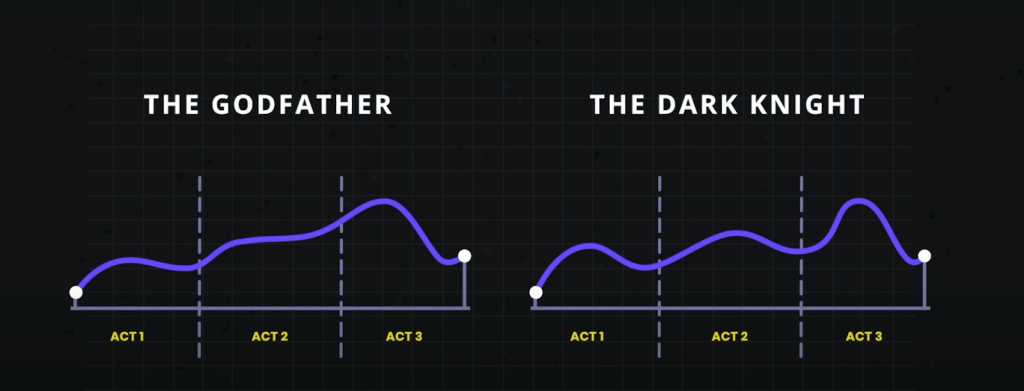
    Think of your favorite movie. More than likely it follows a three-act structure that’s commonly seen in storytelling: the setup, the conflict, and the resolution. The first act shows what exists today, and it helps you get to know the characters and the challenges and problems that they face. Act two introduces the conflict, where the action is. Here, problems grow or get worse. And the third and final act is the resolution. This is where the issues are resolved and the characters learn and change. I believe that this structure is also a great way to think about user research, and I think that it can be especially helpful in explaining user research to others.

    Use storytelling as a structure to do research

    It’s sad to say, but many have come to see research as being expendable. If budgets or timelines are tight, research tends to be one of the first things to go. Instead of investing in research, some product managers rely on designers or—worse—their own opinion to make the “right” choices for users based on their experience or accepted best practices. That may get teams some of the way, but that approach can so easily miss out on solving users’ real problems. To remain user-centered, this is something we should avoid. User research elevates design. It keeps it on track, pointing to problems and opportunities. Being aware of the issues with your product and reacting to them can help you stay ahead of your competitors.

    In the three-act structure, each act corresponds to a part of the process, and each part is critical to telling the whole story. Let’s look at the different acts and how they align with user research.

    Act one: setup

    The setup is all about understanding the background, and that’s where foundational research comes in. Foundational research (also called generative, discovery, or initial research) helps you understand users and identify their problems. You’re learning about what exists today, the challenges users have, and how the challenges affect them—just like in the movies. To do foundational research, you can conduct contextual inquiries or diary studies (or both!), which can help you start to identify problems as well as opportunities. It doesn’t need to be a huge investment in time or money.

    Erika Hall writes about minimum viable ethnography, which can be as simple as spending 15 minutes with a user and asking them one thing: “‘Walk me through your day yesterday.’ That’s it. Present that one request. Shut up and listen to them for 15 minutes. Do your damndest to keep yourself and your interests out of it. Bam, you’re doing ethnography.” According to Hall, [This] will probably prove quite illuminating. In the highly unlikely case that you didn’t learn anything new or useful, carry on with enhanced confidence in your direction.”  

    This makes total sense to me. And I love that this makes user research so accessible. You don’t need to prepare a lot of documentation; you can just recruit participants and do it! This can yield a wealth of information about your users, and it’ll help you better understand them and what’s going on in their lives. That’s really what act one is all about: understanding where users are coming from. 

    Jared Spool talks about the importance of foundational research and how it should form the bulk of your research. If you can draw from any additional user data that you can get your hands on, such as surveys or analytics, that can supplement what you’ve heard in the foundational studies or even point to areas that need further investigation. Together, all this data paints a clearer picture of the state of things and all its shortcomings. And that’s the beginning of a compelling story. It’s the point in the plot where you realize that the main characters—or the users in this case—are facing challenges that they need to overcome. Like in the movies, this is where you start to build empathy for the characters and root for them to succeed. And hopefully stakeholders are now doing the same. Their sympathy may be with their business, which could be losing money because users can’t complete certain tasks. Or maybe they do empathize with users’ struggles. Either way, act one is your initial hook to get the stakeholders interested and invested.

    Once stakeholders begin to understand the value of foundational research, that can open doors to more opportunities that involve users in the decision-making process. And that can guide product teams toward being more user-centered. This benefits everyone—users, the product, and stakeholders. It’s like winning an Oscar in movie terms—it often leads to your product being well received and successful. And this can be an incentive for stakeholders to repeat this process with other products. Storytelling is the key to this process, and knowing how to tell a good story is the only way to get stakeholders to really care about doing more research. 

    This brings us to act two, where you iteratively evaluate a design or concept to see whether it addresses the issues.

    Act two: conflict

    Act two is all about digging deeper into the problems that you identified in act one. This usually involves directional research, such as usability tests, where you assess a potential solution (such as a design) to see whether it addresses the issues that you found. The issues could include unmet needs or problems with a flow or process that’s tripping users up. Like act two in a movie, more issues will crop up along the way. It’s here that you learn more about the characters as they grow and develop through this act. 

    Usability tests should typically include around five participants according to Jakob Nielsen, who found that that number of users can usually identify most of the problems: “As you add more and more users, you learn less and less because you will keep seeing the same things again and again… After the fifth user, you are wasting your time by observing the same findings repeatedly but not learning much new.” 

    There are parallels with storytelling here too; if you try to tell a story with too many characters, the plot may get lost. Having fewer participants means that each user’s struggles will be more memorable and easier to relay to other stakeholders when talking about the research. This can help convey the issues that need to be addressed while also highlighting the value of doing the research in the first place.

    Researchers have run usability tests in person for decades, but you can also conduct usability tests remotely using tools like Microsoft Teams, Zoom, or other teleconferencing software. This approach has become increasingly popular since the beginning of the pandemic, and it works well. You can think of in-person usability tests like going to a play and remote sessions as more like watching a movie. There are advantages and disadvantages to each. In-person usability research is a much richer experience. Stakeholders can experience the sessions with other stakeholders. You also get real-time reactions—including surprise, agreement, disagreement, and discussions about what they’re seeing. Much like going to a play, where audiences get to take in the stage, the costumes, the lighting, and the actors’ interactions, in-person research lets you see users up close, including their body language, how they interact with the moderator, and how the scene is set up.

    If in-person usability testing is like watching a play—staged and controlled—then conducting usability testing in the field is like immersive theater where any two sessions might be very different from one another. You can take usability testing into the field by creating a replica of the space where users interact with the product and then conduct your research there. Or you can go out to meet users at their location to do your research. With either option, you get to see how things work in context, things come up that wouldn’t have in a lab environment—and conversion can shift in entirely different directions. As researchers, you have less control over how these sessions go, but this can sometimes help you understand users even better. Meeting users where they are can provide clues to the external forces that could be affecting how they use your product. In-person usability tests provide another level of detail that’s often missing from remote usability tests. 

    That’s not to say that the “movies”—remote sessions—aren’t a good option. Remote sessions can reach a wider audience. They allow a lot more stakeholders to be involved in the research and to see what’s going on. And they open the doors to a much wider geographical pool of users. But with any remote session there is the potential of time wasted if participants can’t log in or get their microphone working. 

    The benefit of usability testing, whether remote or in person, is that you get to see real users interact with the designs in real time, and you can ask them questions to understand their thought processes and grasp of the solution. This can help you not only identify problems but also glean why they’re problems in the first place. Furthermore, you can test hypotheses and gauge whether your thinking is correct. By the end of the sessions, you’ll have a much clearer picture of how usable the designs are and whether they work for their intended purposes. Act two is the heart of the story—where the excitement is—but there can be surprises too. This is equally true of usability tests. Often, participants will say unexpected things, which change the way that you look at things—and these twists in the story can move things in new directions. 

    Unfortunately, user research is sometimes seen as expendable. And too often usability testing is the only research process that some stakeholders think that they ever need. In fact, if the designs that you’re evaluating in the usability test aren’t grounded in a solid understanding of your users (foundational research), there’s not much to be gained by doing usability testing in the first place. That’s because you’re narrowing the focus of what you’re getting feedback on, without understanding the users’ needs. As a result, there’s no way of knowing whether the designs might solve a problem that users have. It’s only feedback on a particular design in the context of a usability test.  

    On the other hand, if you only do foundational research, while you might have set out to solve the right problem, you won’t know whether the thing that you’re building will actually solve that. This illustrates the importance of doing both foundational and directional research. 

    In act two, stakeholders will—hopefully—get to watch the story unfold in the user sessions, which creates the conflict and tension in the current design by surfacing their highs and lows. And in turn, this can help motivate stakeholders to address the issues that come up.

    Act three: resolution

    While the first two acts are about understanding the background and the tensions that can propel stakeholders into action, the third part is about resolving the problems from the first two acts. While it’s important to have an audience for the first two acts, it’s crucial that they stick around for the final act. That means the whole product team, including developers, UX practitioners, business analysts, delivery managers, product managers, and any other stakeholders that have a say in the next steps. It allows the whole team to hear users’ feedback together, ask questions, and discuss what’s possible within the project’s constraints. And it lets the UX research and design teams clarify, suggest alternatives, or give more context behind their decisions. So you can get everyone on the same page and get agreement on the way forward.

    This act is mostly told in voiceover with some audience participation. The researcher is the narrator, who paints a picture of the issues and what the future of the product could look like given the things that the team has learned. They give the stakeholders their recommendations and their guidance on creating this vision.

    Nancy Duarte in the Harvard Business Review offers an approach to structuring presentations that follow a persuasive story. “The most effective presenters use the same techniques as great storytellers: By reminding people of the status quo and then revealing the path to a better way, they set up a conflict that needs to be resolved,” writes Duarte. “That tension helps them persuade the audience to adopt a new mindset or behave differently.”

    This type of structure aligns well with research results, and particularly results from usability tests. It provides evidence for “what is”—the problems that you’ve identified. And “what could be”—your recommendations on how to address them. And so on and so forth.

    You can reinforce your recommendations with examples of things that competitors are doing that could address these issues or with examples where competitors are gaining an edge. Or they can be visual, like quick mockups of how a new design could look that solves a problem. These can help generate conversation and momentum. And this continues until the end of the session when you’ve wrapped everything up in the conclusion by summarizing the main issues and suggesting a way forward. This is the part where you reiterate the main themes or problems and what they mean for the product—the denouement of the story. This stage gives stakeholders the next steps and hopefully the momentum to take those steps!

    While we are nearly at the end of this story, let’s reflect on the idea that user research is storytelling. All the elements of a good story are there in the three-act structure of user research: 

    • Act one: You meet the protagonists (the users) and the antagonists (the problems affecting users). This is the beginning of the plot. In act one, researchers might use methods including contextual inquiry, ethnography, diary studies, surveys, and analytics. The output of these methods can include personas, empathy maps, user journeys, and analytics dashboards.
    • Act two: Next, there’s character development. There’s conflict and tension as the protagonists encounter problems and challenges, which they must overcome. In act two, researchers might use methods including usability testing, competitive benchmarking, and heuristics evaluation. The output of these can include usability findings reports, UX strategy documents, usability guidelines, and best practices.
    • Act three: The protagonists triumph and you see what a better future looks like. In act three, researchers may use methods including presentation decks, storytelling, and digital media. The output of these can be: presentation decks, video clips, audio clips, and pictures. 

    The researcher has multiple roles: they’re the storyteller, the director, and the producer. The participants have a small role, but they are significant characters (in the research). And the stakeholders are the audience. But the most important thing is to get the story right and to use storytelling to tell users’ stories through research. By the end, the stakeholders should walk away with a purpose and an eagerness to resolve the product’s ills. 

    So the next time that you’re planning research with clients or you’re speaking to stakeholders about research that you’ve done, think about how you can weave in some storytelling. Ultimately, user research is a win-win for everyone, and you just need to get stakeholders interested in how the story ends.

  • Why Storytelling is the Most Powerful Business Skill (and How to Master It)

    Why Storytelling is the Most Powerful Business Skill (and How to Master It)

    Why Storytelling is the Most Powerful Business Skill (and How to Master It) written by John Jantsch read more at Duct Tape Marketing

    The Duct Tape Marketing Podcast with Mike Ganino In this episode of the Duct Tape Marketing Podcast, I interviewed Mike Ganino, a keynote speaker, storytelling expert, and the author of Make a Scene. Mike has helped shape viral TEDx talks, launch bestselling books, and coach leaders at Disney, Netflix, and Adobe to become dynamic, magnetic […]

    Why Storytelling is the Most Powerful Business Skill (and How to Master It) written by John Jantsch read more at Duct Tape Marketing

    The Duct Tape Marketing Podcast with Mike Ganino

    In this episode of the Duct Tape Marketing Podcast, I interviewed Mike Ganino, a keynote speaker, storytelling expert, and the author of Make a Scene. Mike has helped shape viral TEDx talks, launch bestselling books, and coach leaders at Disney, Netflix, and Adobe to become dynamic, magnetic performers.

    During our conversation, Mike shared why storytelling is not just a tool but a fundamental business skill that can transform public speaking, business communication, and leadership. He emphasized that while many professionals understand the importance of storytelling, few know how to craft engaging narratives that captivate audiences. By focusing on stage presence, storytelling techniques, and audience engagement, business leaders, marketers, and speakers can elevate their executive communication and brand storytelling to drive deeper connections and influence.

    Mike Ganino’s insights prove that mastering storytelling techniques isn’t just for keynote speakers—it’s an essential skill for anyone in business communication, executive leadership, and brand storytelling. By refining public speaking tips, presentation skills, and speaker coaching, professionals can become more persuasive, engaging, and memorable in any business setting.

    Key Takeaways:

    • Storytelling is a Business Superpower – Whether in public speaking, marketing, or leadership, compelling stories create emotional connections and make ideas memorable.
    • Start with a Scene – Great stories don’t always begin at the beginning. Mike advises speakers to drop the audience into a scene to create instant engagement.
    • Performance Matters – Beyond words, stage presence, voice modulation, and body language are key factors in delivering a powerful message.
    • Mastering Public Speaking – Effective speakers understand how to use storytelling frameworks to enhance presentation skills and keep audiences engaged.
    • Storytelling in Leadership Communication – Executives can use storytelling to inspire teams, navigate change, and build trust, making it a critical tool for business storytelling.
    • Practice in Low-Stakes Settings – Before taking the stage, hone your storytelling skills in meetings, presentations, and marketing content to build confidence and clarity.

    Chapters:

    • [00:09] Introducing Mike Ganino
    • [00:57] Why is Storytelling a Hot Topic?
    • [02:09] What Draws Us to Storytelling?
    • [03:29] What Does Make a Scene Mean?
    • [05:44] Are There Any Rules to Storytelling?
    • [07:15] What if You’re Not Good at Storytelling?
    • [09:12] Benefits of Being a Good Storyteller
    • [12:45] Performance in Storytelling
    • [15:32] How to Get Better at Storytelling
    • [17:31] Do Different Platforms Need Different Approaches?

    More About Mike Ganino: 

    John Jantsch (00:00.855)

    Hello and welcome to another episode of the Duck Tape Marketing Podcast. This is John Jantsch. My guest today is Mike Ganino. He’s a creative force behind some of the world’s most compelling speakers and thought leaders. As a keynote director, he’s helped shape viral TEDx talks, launch bestselling books, and transform leaders at Disney, Netflix, and Adobe into magnetic performers.

    He’s the author of the number one international bestseller we’re going to talk about today, Make a Scene, storytelling stage presence and the art of being unforgettable in every spotlight. So Mike, welcome to the show.

    Mike Ganino (00:35.234)

    Thanks, thanks for having me.

    John Jantsch (00:37.175)

    So do magnetic people like stick to stuff?

    Mike Ganino (00:39.852)

    Yeah, yeah, yeah, they just walk around and like they attach themselves to like warehouses and cars and it’s a good life.

    John Jantsch (00:45.015)

    I’m sorry, I couldn’t help myself. That was terrible. All right. So storytelling hot topic. I bet you now we’re only one month into the year, but I know I’ve done at least one other show on storytelling. So two things. Why do you think so? And it’s such a hot topic. And, and I suppose the follow-up to that is like, what are you bringing that’s different?

    Mike Ganino (01:08.686)

    It’s such a hot topic because like it fundamentally makes sense. We get it. see, you know, storytellers, whether we’re watching someone on stage or we’re watching a movie, we’re watching a play, we’re reading fiction, we get that storytelling does something to us. And I think that there’s an element of it that the reason why it’s this kind of like, it’s coming up and it’s coming up again and it’s coming up again is because so much of the education around it out there focuses on the fact that like storytelling is important.

    you should be storytelling, everyone has a story, but not very many people are actually saying, how do you make a story interesting? Where do you actually start? And for me, that’s what I hope I’m bringing that’s not new, but is definitely different than, know, and I have so many of the books on like the psychology of it, the neuroscience of it, the history of it, but like, how do you actually, what’s the first thing out of your mouth? There’s not a lot of great resources on that.

    John Jantsch (01:43.233)

    Yeah. Yeah.

    John Jantsch (01:55.212)

    Yeah.

    John Jantsch (02:01.781)

    Yeah. You know what I’m always fascinated with? I read a lot of stuff, probably verges on anthropology. And you know, that storytelling was it. Like that’s where it started. Right? I mean, that was the only way to communicate necessarily. And you, you told stories to stay out of being eaten. You told stories, you know, where the food was, you told stories about, know, who not to trust on the road. you know, is, is that sort of in our DNA kind of why you think storytelling, you know,

    part of what makes storytelling so natural.

    Mike Ganino (02:34.49)

    I so. mean, I think, and I think there’s probably plenty of books out there that talk about that exact thing of like, is by, but, we are like wired. Like in a make a scene, wrote about how so much that we could be learning about how to tell more effective stories is about how to trigger a dopamine response from the audience in that anticipation of reward in your story. And so I don’t know our, our, you know, body chemicals respond to wanting to know what happens next and needing a solution. It’s like,

    when you sit down and you watch an episode of Law and Order SVU and your brain, even though you’ve maybe seen it 27 times, you’re just like, ooh, I’ve got to watch this episode again, because we want to know what happens next. We want to understand and feel that. And so, yeah, I think it’s somewhere in there.

    John Jantsch (03:17.879)

    And then six hours later, you’re like, I better go do something else. So it’s in the title, Make a Scene. So, you know, what do you mean by that? Other than it, you know, cleverly works with the basis of storytelling as a scene, right? But there’s also you can also interpret that as, you know, somebody is making a scene, you know, in a maybe not altogether positive way. So where are you trying to what line are you trying to strap?

    Mike Ganino (03:47.73)

    I think both, you the idea was that it had that double meaning that often my storytelling advice for people is start in a scene. A lot of times what we hear, we hear this bad advice again of like, start at the beginning. And it’s like, well, maybe not, maybe we don’t need to start at the beginning or we’ll hear that we need lots of exposition or a great story, you know, has X, Y, Z in it. And most of the time, my advice to people is, can you just make a scene for me? Like if I’m the director of this film that you’re creating,

    What would I put in front of the camera? And if the first thing out of your mouth doesn’t help me decide what I would film, then we’re probably in summary and not in story yet. So make a scene is literally my storytelling advice. And then secondarily, I just think there’s so many people that have read so many books about all the things they shouldn’t do when public speaking or going on video, get rid of your isms and change the way you sound and try to sound deeper, try to sound less shrill. Don’t move your hands too much.

    get rid of all of your ums, that I thought, what if we just had a book that was like, all of that can actually be quite effective. And when we see someone do it who is effective, we don’t worry about how many times they said at all.

    John Jantsch (04:52.595)

    F

    John Jantsch (04:59.511)

    Yeah, I saw somebody that I think was one of the most impactful talks I’ve heard. And he leaned against the podium most of the time. But there was something about it worked for him. Yeah, yeah.

    Mike Ganino (05:14.872)

    breaks all the rules. In the book I wrote about Monica Lewinsky when she did her TED talk several years ago, she’s one of the only people ever in the history of that to have a podium in front of her on the red dot. But it was a device. And at the end, she stepped out from behind it as like taking back her identity. And so that even is don’t stand behind a podium. No one at TED is allowed to stand behind a podium, except you can sometimes if you know how to break the rule.

    John Jantsch (05:27.084)

    Yeah.

    John Jantsch (05:39.223)

    Yeah. So this is dangerous. Is there a definition of great story or great storytelling? Is there a framework? there rules? is there, you got to have this and this and this. mean, that was about eight questions. So take it anywhere you want, but.

    Mike Ganino (05:55.654)

    I think the ultimate measurement of a story, and this is why even in the book, I don’t go through all of these, like, here’s the one framework you need, because you could find 20 examples of that not working. And I think so many people have lost themselves trying to do the like, I need to tell a hero’s journey. And then all of a sudden you’re like lost in the dark soul of your night and you don’t know where you are or what side, and you’re like, I just wanted to tell them. But Yoda’s there, I think.

    John Jantsch (06:18.113)

    But Yoda shows up at least. mean so…

    Mike Ganino (06:21.058)

    goodness, know, Dios y machina, he’s gonna save us. But I think that, again, all of the, can the frameworks work? Sure. But I’ve got 30 books on screenplay writing over here. And if all of the frameworks worked, every single movie would be a runaway hit. It’s not. I think the measurement of story is, is the pacing correct? That the audience is kind of like, wants to know what happens next, that they’re never saying, maybe they’re saying to themselves,

    I can’t wait to see where this is going versus where is this going? You want the first version not the second. Does it cause an emotional response? Do they hate things? Do they love things? Do they feel things? I think those are ultimately the measurements. And when we start to look at storytelling and measure, did you have five acts? Did you have seven beats? Did you have this? We’re measuring the wrong thing instead of measuring what was the audience’s feeling from what they had. Did it do its job?

    John Jantsch (06:53.047)

    Yeah.

    John Jantsch (07:11.777)

    Yeah.

    John Jantsch (07:18.561)

    So I’m not sure if you work with these people, but there are certainly people out there probably listening who say, I’m just not good at story or I’m not as natural born story. Cause you, we’ve all met somebody you’re like that could talk all day long, you know, tell stories from their youth, you know, all day long. But a lot of people just, just really hesitate. I mean, it’s the same with getting on stage period, but you know, when you, when, somebody says I’m not a good storyteller, what do you do with that person?

    Mike Ganino (07:30.422)

    Yeah

    Mike Ganino (07:46.402)

    I generally ask them questions. Like when I have a client who says, I’m not a good storyteller. Like when I work with a lot of executives who are going to have to go out and speak to their company or speak at a convention or conference. And they’ve been sent to me usually by their like chief communications officer to say, help them be less boring. And I say, great, tell me some stories. I’m not a good storyteller. I just stick to the facts. My general thing is great. So the thing that you just told me, you just told me that AI is a great solution for small businesses. How do you know that to be true?

    Where have you seen that to be true? I ask questions like that that are like, show me some of your personal experience with it. And that almost always gets them to be able to tell a story. Now, we need to shape it. We need to kind of clean it up a little bit, but it gets them to realize that they actually can tell stories. The issue is that they’re measuring themselves against like Steven Spielberg or Mel Robbins or something like that. And it’s like, we don’t have to all have the story of an astronaut who was in space. We can have just a, happened on a Tuesday story.

    John Jantsch (08:24.171)

    Yeah,

    John Jantsch (08:30.806)

    Yeah.

    Mike Ganino (08:44.61)

    that is a metaphor or just an example, if you know how to tell it. And usually that’s my way in with people who say, I’m not a storyteller. say, cool, no problem. That’s certainly a strange job to have anyway. Like there’s not a lot of people who get paid well being a storyteller. So don’t worry about that. But can you tell me how you know the thing that you just said is true? When did you see that? How’d you learn it? And we started locking stories out.

    John Jantsch (09:05.929)

    a little Byron Katie. I don’t know if you’re familiar with her work, but, but it the essence of that. Can you know that that’s true? Yeah, that’s so, so, you know, a lot of people naturally think, especially you work with speakers who are on stages, but storytelling is a part of life, right? It’s a story of, it’s certainly a part of a lot of elements of business. So, you know, how do you get somebody to start realizing that?

    Mike Ganino (09:08.278)

    Yes. Yeah, the questions, right? Like, how do you know that to be true? I’ve read that book.

    John Jantsch (09:34.251)

    They don’t have to want to be a paid speaker to be better at storytelling.

    Mike Ganino (09:38.862)

    It’s really that idea of if you’re, I think there’s very few people whose job is not to communicate with others and very few people whose job is not to get others to see something the way they want them to see it. And that doesn’t mean it has to be some persuasive, like you’ll change your mind, but like, I just want you to understand the situation the way that I do. And a story is often a very effective way to help them see it or say, oh, that’s interesting. Yeah, I didn’t think of it in that situation or scenario in a way that the data or facts alone couldn’t do. And so,

    When I’ve worked with organizations like Disney or Adobe and Netflix, Caesars Entertainment, it’s helping them see that like, helping the audience understand the situation they’re in. If they’re in a sales meeting, if they’re a leadership at an all hands trying to convince the team that we have to like, know, buckle the purse straps a little bit, cause things are going to get tough. The most effective way to help them understand the situation is to put it into a narrative that they can say, I get that. I kind of, I don’t like it, but I see where you’re coming from. That makes sense now. Or.

    I understand how the analogy you used about, you know, your grandma growing up is exactly like the situation we face. Okay, cool. I’m with you now. And so it’s helping them realize that all of those instances are times where a story could do a lot of the heavy lifting that a whole bunch of facts would have to do.

    John Jantsch (10:54.293)

    Yeah. And I think sometimes like in a sales environment, right? Stories are kind of disarming, right? We’re all of a sudden, we’re listening to the story. We’re building rapport. We’re building trust rather than being sold to. Do you think that, and you know, we’re 10 minutes in, I’m going to mention AI for the first time. Although I think you did earlier. I feel like, do you feel like I should ask you that storytelling is actually going to be a differentiator?

    Mike Ganino (11:13.974)

    I did, yeah.

    John Jantsch (11:23.957)

    You know, because AI doesn’t know my story. It never will. I mean, it might make up some stuff, but you know, my true authentic story that somebody might relate to is probably all I’ve got left, isn’t it?

    Mike Ganino (11:35.928)

    Yeah, and your takeaway from the things you experienced. So even if it’s not like your origin story, because sometimes people get lost with that of like, need my story. And I think, I don’t even know what my story is, but I got a whole bunch of them that helped me do my job every day. And I think that that’s the thing that AI can’t get. It could probably at some point learn something. We can shove enough blockbuster screenplays in there to work, but also we’re dealing with human feelings on the other side. So as soon as it starts to work, it’s going to start to not work anymore.

    John Jantsch (11:48.519)

    You

    John Jantsch (12:05.473)

    Yeah.

    Mike Ganino (12:05.75)

    And so those little stories of something you saw yesterday when you went to drop your kid off at school that made you think about something, AI will never know that because it’s always going to be lagging. It’s always going to be behind. And so I think that our ability to communicate in a way that actually makes people feel something, if we go back to like, how do you measure a story? Well, did it elicit a feeling in the person that is going to be such a differentiator because

    We have all of the news of the day, all the history of the world, anything we want to find. You could even have AI. I’ve seen people do it like, know, pop in there and say like, here’s my goals for my business this year. What should I do? It can do all of that work, but it cannot do that storytelling piece of connecting something you experienced and almost holding it out. And I don’t remember who originally said this of like, hey, have you ever felt this way too? That is going to be such a differentiator, I think.

    John Jantsch (12:59.671)

    How big a part is the performance part? So the story or the words, the way you express the expression, but you know, how you act on stage, your body language, how you use your voice, your hands. I’m trying to gesture right now. But so how much of that is what really takes a good story over the top?

    Mike Ganino (13:21.816)

    I think a huge percentage of it, you know, in the book I talk about these five stage languages, which are the five ways that an audience interprets and understands our full meaning, right? The first one is verbal, the words you choose, the stories you tell, all those things. The second one is voice. Just the way that we sound signals to the audience how to feel. If, you know, I was working with someone recently, an executive, a chief marketing officer, and she was getting asked to go speak more frequently, and the feedback she’d gotten is that her voice was difficult to listen to.

    And when we got on a call, we started working together. It’s that the whole time she was really up here this whole time speaking like this. And she thought, this is just how I sound. But she also was holding her chest. She wasn’t breathing. She was gasping for air. And all of those are defensive mechanisms. All of those are learned behaviors. And so we did some exercises just to have her kind of like drop her, her larynx a little bit, which is going to make your voice sound a little more grounded. And she was even shocked of like, is that me? And it’s like, yeah, you haven’t heard that voice in a long time because

    John Jantsch (14:14.07)

    Mm-hmm.

    Mike Ganino (14:19.98)

    You have been on guard probably for lots of valid reasons, your childhood, your I don’t know what, who told you what? But we show up in this world physically and vocally shaped by everything that’s happened to us. And then we think that all we need to do to be an effective communicator is put the words in the right order and stop saying But the sound of our voice is actually what the audience hears, not even fully the words, the pacing of our voice, the speed at which we do. If we’re on stage, I had this recently, I was reviewing someone’s video.

    and the physical language is the third one. So verbal, voice, physical. And he was trying to have this moment where he was saying to his team, know, trust me, I’m with you, but he was moving backwards from them on stage. And I said, that is a signal to them of you’re hiding something, something isn’t right. And you’ve seen it before too, like, right? Like someone with a hand in their pocket. I think in the book, I use the example of Nixon and Kennedy. And when seen on TV, that debate that they had that was aired, Kennedy,

    John Jantsch (15:01.662)

    Right, right.

    Mike Ganino (15:19.518)

    overwhelmingly won because he looked calmer, he was tan from a resuscitation. Nixon had just had surgery and was sick and sweaty and pale and looked thin in his suit. But when people listened to it, they thought Nixon won because he had that more gravitas voice, that more distinguished voice. And so the way that we look, sound and move is not, we cannot separate it from the message we communicate to an audience. We simply can’t. It is a core part of what they take away from us.

    John Jantsch (15:31.915)

    Yeah.

    John Jantsch (15:48.993)

    So for somebody that just hasn’t done much of it wants to get started. mean, somebody comes to you and says, Hey, I’m, I’m in this new role or whatever it is, and I need to be doing a lot more. need a coach for this. mean, what are the free throws? Like what’s the, what’s the thing you have them do that is practice.

    Mike Ganino (16:06.882)

    The easy thing is to say, are all the low stakes places where you can try some of this on that like won’t matter? if you have a, I just did this with a chief finance officer. He was like, hey, I want to be a better communicator. I’m getting asked to speak at X, Y, and Z, go on podcasts. Their PR people are trying to get him onto like MSNBC to be, you know, a talking head in these places because it’s helpful to their business. And he said, so how do I practice? Do I get ready for that show? And I said, well, you don’t.

    John Jantsch (16:09.9)

    Yeah.

    Mike Ganino (16:33.762)

    get ready and the first time you deliver anything is in front of the real live audience where the stakes are super high and your nerves are going to take over. What kind of meetings do you have every week? Can you start off the meeting with some kind of story or metaphor that helps the team understand something? When are you going to go into a board meeting, which is relatively, you know, something a CFO does all the time, so not super high stakes, and how can you help them understand a situation that’s going on or

    where some kind of money is being allocated using a story. How can you play with, for him, some of what we’re working on with his physicality and his ability to smile and soften his face on camera, because it all came across very harsh. So said, those are all things that you can, on your next Zoom call with your team, be more aware of how are you looking at the camera? How are you leveraging and playing with your voice? How are you using your physicality? And so,

    All of those places are spots where we can test things. You know, even for me, so many ideas in the book are things that I’ve tested through group coaching calls with my clients, through live workshops with my clients, through being on podcasts like this and trying out different stories and seeing what resonates and saying, ooh, people seem to like that and mention it back to me. I ought to put that in a book, you know, which is the more high stakes version of doing a podcast or a group coaching Zoom call.

    John Jantsch (17:49.675)

    Yeah, you alluded to the Zoom call. I mean, we are on a lot of formats now, right? We’re on stages, but we’re also doing our own video. We are doing virtual presentations. We’re on podcasts. Do we need different stories, different approach, you know, for each of those?

    Mike Ganino (18:08.482)

    I think that the stories probably have some universalness to them. Maybe they’re told slightly differently because the context, you know, if you’re on a stage telling a story versus, and it’s part of a bigger insight in a keynote, that might be different than if you’re on a Zoom call with your team. But the medium definitely changes it. for folks, one of the big things that people get wrong with having the camera is they want to be looking at the audience, to see the audience on their little Zoom camera, on the little Zoom screens to connect with them.

    But there’s a flaw in that for a couple of reasons. One is we have no idea what they’re looking at. And so someone makes a grimace. Well, they could be watching a TikTok that upset them, or they could have gotten a text message from someone. We have no idea. And then we respond to that thinking, I’m boring. Versus when we’re on camera, our job is to have a relationship with the piece of glass in front of us, to be able to look through the lens and to have enough energy that this thing that absorbs these cameras absorbs so much of our energy that we can still.

    deliver what we want without being obsessed of having a live audience like we would on stage. So I think that the stories can have, you if you’ve got three or four good stories that work in your business to set it up, like you probably don’t need a whole bunch more, but understanding the difference of telling them in a, a stage, in a boardroom, sitting around a table, in an interview with someone or telling it to a camera and even here, right? The difference between doing it for

    John Jantsch (19:17.483)

    Yeah, yeah.

    Mike Ganino (19:31.98)

    social media versus doing it in a group coaching call. All of those are different mediums. And so that’s where you can leverage, know, voice can be different. Physicality can be different.

    John Jantsch (19:39.319)

    Right, right, right. Yeah, wouldn’t use your big booming projection voice with five people in a boardroom, right? You’d freak them out. You know, one of the things I, my one little tip, and you probably tell this to people all the time, but when I do, especially group Zoom calls, I turn my view off, camera view off, because I find myself looking at myself and I may be way over there at the corner of the screen as opposed to, then once that’s off, all there’s left to look at is the camera.

    Mike Ganino (19:46.956)

    Yeah, yeah.

    Mike Ganino (19:58.54)

    Yes. Yeah. Yeah.

    Mike Ganino (20:08.62)

    Yeah, you know what I have? got this, I got an Elgato teleprompter and I have it on the front of my camera with the zoom screen of the person I’m talking to. So I actually am just seeing you right now through the glass and it’s quite helpful.

    John Jantsch (20:09.047)

    I

    John Jantsch (20:20.277)

    Yeah. Yeah. Yeah. Right. Yeah. Yeah. Yeah. Cause you have to look at the camera at the same time. Yeah. Absolutely. Yeah. I also have, this little, Plexo glass, camera holder. And so what it does is it, can put my camera in it and then I can move the camera anywhere I want. you know, it’s just one of those little screen, you know, those cameras you’d put on a screen. but I can, I can move it around that way. So, it’s really nice for doing a lot of that as well.

    Mike Ganino (20:39.622)

    nice.

    Mike Ganino (20:44.12)

    Yeah.

    Mike Ganino (20:49.24)

    fun.

    John Jantsch (20:50.379)

    Well, Mike, I appreciate you taking a moment to stop by the Duct Tape Marketing Podcast. Where would you invite people to find out more about your work and obviously find a copy of Make A Scene?

    Mike Ganino (20:59.756)

    Yeah, I’m easy. Once you figure out how to spell Ganino, I’m usually the one you’re going to find. So G-A-N-I-N-O, Mikeganino.com. The book and all the information about it is at Mikeganino.com slash book. And it’s wherever you like to get your books. We’ve got it everywhere for you.

    John Jantsch (21:14.123)

    Awesome. Well, again, I appreciate you stopping by. Hopefully we’ll run into you one of these days soon out there on the road.

    Mike Ganino (21:19.224)

    Thanks for having me.

    John Jantsch (21:22.999)

    Okay, you’re supposed to get a little…

    powered by


  • The 15 Best Office Episodes Ranked

    The 15 Best Office Episodes Ranked

    Not usually do TV remakes surpass the caliber of the classic television show they were based on. But then again, the American remake of The Office made a habit of making the unpredictable a normal occurrence, be it in the form of random lip-sync music videos, botched safety training lectures, or terrifyingly realistic fire ]… ]

    The 15 Best Business Episodes Ranked arose first on Den of Geek.

    This article contains spoilers for Captain America: Brave New World.

    Doomsday is coming. You know it. I know it. And today, thanks to the Leader, Captain America knows it to.

    In the hapless post-credit field for Captain America: Brave New World, criminal Samuel Sterns offers a reminder to Sam Wilson, one that points to the next Avengers movie and, probably, the close of the MCU as we know it.

    Captain America 4&#8217, s Post-Credit Field Explained

    Sam Wilson is no Steve Rogers, as the selling for Captain America: Brave New World loves to tell us. And that &#8217, s a good thing. Sam&#8217’s history as a consultant is used by Brave New World to transform him into a Captain America who prefers to talk things up with villains over punching them in the face.

    So it &#8217, s no surprise when Brave New World ends with Sam visiting Thaddeus Ross, no longer in Red Hulk kind, in jail on the Raft. Nor is it a wonder when he also drops by the body of Samuel Sterns, the movie&#8217, s great poor, a gamma-radiated supergenius called the Leader.

    Yet though he&#8217, s been defeated, Sterns cannot help but moan, getting a one-up over Sam by showing off his knowledge. Sterns congratulates Sam and his other soldiers on their efforts to end the world. But then he reveals the results of his estimates. &#8220, Do you think this is the only earth? &#8221, Sterns asks. &#8220, We&#8217, ill see what happens when you have to defend this position &#8230, from the others. &#8221,

    On one hand, Sterns &#8217, s reveal is a bit of a let down. We&#8217, have known that there are other kingdoms. Pop society is choking on multiverses. Heck, this present period of the MCU is part of the Universe Story, a story that includes Spider-Man: No Method Home, Doctor Strange in the Multiverse of Madness, and Deadpool &amp, Wolverine. The Leader&#8217, s reveal seems clear and Sam seems decrease on the uptake around, even if there&#8217, s no cause for most people on the perfect truth Earth-616 to know about these kingdoms.

    On the other, Stern&#8217, s caution is n&#8217, t just that there are other worlds. Additionally, it &#8217 is noted that there are heroes who would protect these various worlds because they are a risk. That makes more of a particular reference to the 2015 Marvel Comics Secret Wars storyline, which will serve as the inspiration for the upcoming two Avengers movies, Doomsday and Secret Wars.

    cnx. command. push ( function ( ) {cnx ( {playerId:” 106e33c0-3911-473c-b599-b1426db57530″, }). render ( “0270c398a82f44f49c23c16122516796” ), }),

    Uncovering the Key War

    Key Wars, which was written by Jonathan Hickman, basically begins with his Fantastic Four operate in 2009, moves up through his work on Avengers and New Avengers in 2013, and wraps up with Key Wars in 2015. In a situation where Earths from two different challenges start to step into one another, Reed Richards describes an &#8220, Incursion, &#8221, interplanetary conflict. The Earths and their respective worlds are destroyed after each intrusion lasts eight days.

    The New Avengers sections of the Key Wars story deals with attempts by the Illuminati of Earth-616&#8212, a key group of prominent people that includes Richards, Iron Man, Namor, Black Panther, Doctor Strange, Black Bolt of the Inhumans, and Beast/Professor X of the X-Men&#8212, to save their world. Along the way, the party encounters both real-world heroes and villains who want to save their own planet. The fervent Illuminati later follow suit, attacking other realities to conserve Earth-616, despite initially abusing the idea.

    New Avengers is a dark history, one filled with a creeping horror that &#8217, s more threatening than anything the MCU has done before. But we&#8217, ve now heard allusion to attacks before, in Doctor Strange in the Multiverse of Madness. Not only do the Illuminati of Earth-838 featured in that film refer to incursions, but the post credit scene finds Clea ( Charlize Theron ) arriving to recruit Strange in a battle against the Incursions.

    Also, the title of the next Avengers video suggests that the MCU soldiers will deal with the attacks in a manner equivalent to that of the Marvel Comics &#8217, soldiers. Most of the heroes in Avengers and New Avengers ‘ final issues either accept their unavoidable ending or pass away trying to avoid it. Only one hero and one villain can see the solution. With the help of the all-powerful Molecule Man, Doctor Strange and Doctor Doom take the fight to the Beyonders, the god-like architects of the multiverse.

    The trio battles the Beyonders until they finally lose their incredible abilities. Strange hesitates to take on such amazing power, but Doom does not. He redescribes the universe and transforms it into God by recreating it.

    The final Secret Wars installment follows Reed Richards and other heroes ‘ battles to restore things to how they were in Doom&#8217’s reign as God Emperor of a newly designed Marvel Universe.

    Preparing for Doomsday

    Given the Leader&#8217, s warning, it sounds like Avengers: Doomsday will show Marvel&#8217, s heroes fighting with those of other realities, all trying to protect their Earth from the incursions. And like in the comics, Robert Downey Jr., who plays Doctor Doom, will make an outrageous choice to remake his universe.

    If that &#8217, s the case, Earth &#8217, s Mightiest Heroes will face their greatest battle yet in Avengers: Secret Wars. The Leader should have given Sam the warning right away so he can begin assembling his Avengers and possibly fixing things.

    Captain America: Brave New World is now in theaters.

    The first post Captain America Brave New World Post-Credits Scene Just Set Up Avengers: Doomsday was a response to this story on Den of Geek.

  • Cobra Kai Ending Explained: Did Netflix Just Tease Another Massive Franchise Reboot?

    Cobra Kai Ending Explained: Did Netflix Just Tease Another Massive Franchise Reboot?

    Cobra Kai time 6 portion 3 has significant spoilers in this article. In a tuna restaurant, Cobra Kai’s last scene occurs. We can only conclude that the restaurant is Kitada Sushi because this show has earned its black buckle throughout the series by hiding Easter eggs. Kitada is ]… ]

    The article Cobra Kai Ending Explained: Did Netflix Only Tickle Another Large Franchise Relaunch? second appeared on Den of Geek.

    This article contains spoilers for Captain America: Brave New World.

    Doomsday is coming. You know it. I know it. And today, thanks to the Leader, Captain America knows it to.

    In the hapless post-credit field for Captain America: Brave New World, criminal Samuel Sterns offers a reminder to Sam Wilson, one that points to the next Avengers movie and, probably, the close of the MCU as we know it.

    Captain America 4&#8217, s Post-Credit Field Explained

    Sam Wilson is no Steve Rogers, as the selling for Captain America: Brave New World loves to tell us. And that &#8217, s a good thing. Sam&#8217’s history as a therapist is used by Brave New World to transform him into a Captain America who prefers to talk things up with villains over punching them in the face.

    So it &#8217, s no surprise when Brave New World ends with Sam visiting Thaddeus Ross, no longer in Red Hulk kind, in jail on the Raft. Nor is it a wonder when he also drops by the body of Samuel Sterns, the movie&#8217, s great poor, a gamma-radiated supergenius called the Leader.

    Yet though he&#8217, s been defeated, Sterns cannot help but moan, getting a one-up over Sam by showing off his knowledge. Sterns congratulates Sam and his friend soldiers on their efforts to end the world. But then he reveals the results of his estimates. &#8220, Do you think this is the only earth? &#8221, Sterns asks. &#8220, We&#8217, ill see what happens when you have to defend this position &#8230, from the others. &#8221,

    On one hand, Sterns &#8217, s reveal is a bit of a let down. We&#8217, have known that there are other kingdoms. Pop tradition is choking on multiverses. Heck, this present period of the MCU is part of the Universe Story, a story that includes Spider-Man: No Method Home, Doctor Strange in the Multiverse of Madness, and Deadpool &amp, Wolverine. The Leader&#8217, s reveal seems clear and Sam seems decrease on the uptake around, even if there&#8217, s no cause for most people on the perfect truth Earth-616 to know about these kingdoms.

    On the other, Stern&#8217, s caution is n&#8217, t just that there are different worlds. Additionally, it &#8217 demonstrates that these other worlds are a risk and that there are heroes who may fight against them. That makes more of a particular reference to the 2015 Marvel Comics Secret Wars storyline, which will serve as the inspiration for the upcoming two Avengers movies, Doomsday and Key Wars.

    cnx. powershell. push ( function ( ) {cnx ( {playerId:” 106e33c0-3911-473c-b599-b1426db57530″, }). render ( “0270c398a82f44f49c23c16122516796” ), }),

    Uncovering the Secret War

    Secret Wars, which was written by Jonathan Hickman, really begins with his Fantastic Four operate in 2009, moves up through his work on Avengers and New Avengers in 2013, and wraps up with Key Wars in 2015. In a crisis where Earths from two different realities start to step into one space, Reed Richards describes an &#8220, Incursion, &#8221, interplanetary conflict. The Earths and their individual planets are destroyed after each invasion lasts eight days.

    The New Avengers sections of the Key Wars story deals with attempts by the Illuminati of Earth-616&#8212, a key group of prominent people that includes Richards, Iron Man, Namor, Black Panther, Doctor Strange, Black Bolt of the Inhumans, and Beast/Professor X of the X-Men&#8212, to save their world. Along the way, the party encounters both good and evil people from other worlds who want to annihilate our planet to save their own. Although originally opposed to the idea, the determined Illuminati later follow suit and launch attacks on other worlds to save Earth-616.

    New Avengers is a grim story, one filled with a creeping horror that &#8217, s more threatening than anything the MCU has done before. But we&#8217, ve now heard allusion to attacks before, in Doctor Strange in the Multiverse of Madness. Not only do the Illuminati of Earth-838 featured in that film refer to incursions, but the post credit scene finds Clea ( Charlize Theron ) arriving to recruit Strange in a battle against the Incursions.

    Also, the title of the next Avengers video suggests that the MCU soldiers will cope with the attacks in a way similar to that of the Marvel Comics &#8217, soldiers. Most of the soldiers in Avengers and New Avengers ‘ last issues either accept their unavoidable ending or pass away trying to avoid it. Just one warrior and one criminal can see the solution. With the help of the all-powerful Molecule Guy, Doctor Strange and Doctor Doom take the fight to the Beyonders, the god-like builders of the world.

    The pair defeats the Beyonders to the point where they lose their extraordinary abilities. Doom does no accept such great strength while Odd does, but he does. He recreates the planet to make himself God and uses it to save our planet.

    The final installment of the Secret Wars series follows Reed Richards and other soldiers ‘ battles to restore points to how they were in Doom&#8217’s tenure as God Emperor of a newly designed Marvel Universe.

    Preparing for Doomsday

    Given the Leader&#8217, s warning, it sounds like Avengers: Doomsday did show Marvel&#8217, s soldiers fighting with those of other challenges, all trying to protect their Earth from the attacks. And like the cartoons, Doctor Doom ( played by Robert Downey Jr. ) will create an outrageous choice to save his world while remaking it in his own image.

    If that &#8217, s the circumstance, Earth &#8217, s Mightiest Heroes does face their greatest challenge yet in Avengers: Key War. The Leader should have given Sam the warning right away so he can begin assembling his Avengers and perhaps fixing items.

    Captain America: Brave New World is now in venues.

    The first postCaptain America Brave New World Post-Credits Scene Really Set Up Avengers: Doomsday was a Den of Geek article.

  • Avowed Is a Great Borderlands Game Role-Playing as an Obsidian RPG

    Avowed Is a Great Borderlands Game Role-Playing as an Obsidian RPG

    When I watched an earlier variant of Avowed in November, I became determined to discover what kind of activity Obsidian Entertainment was attempting to produce. Avowed appears to have all the qualities that made Stone one of the best RPG builders of all time. It’s also set in their Columns of Eternity world, the setting ]…]

    The first article on Den of Geek was Avowed Is a Great Borderlands Game Role-Playing as an Obsidian RPG.

    This article contains spoilers for Captain America: Brave New World.

    Doomsday is coming. You know it. I know it. And today, thanks to the Leader, Captain America knows it to.

    In the hapless post-credit field for Captain America: Brave New World, criminal Samuel Sterns offers a reminder to Sam Wilson, one that points to the next Avengers movie and, probably, the close of the MCU as we know it.

    Captain America 4&#8217, s Post-Credit Image Explained

    Sam Wilson is no Steve Rogers, as Capt. America: Brave New World‘s selling team loves to tell us. And that &#8217, s a good thing. Sam&#8217 ;s history as a counselor is used by Brave New World to transform him into a Captain America who prefers to talk things out with baddies over punching them in the face.

    So it &#8217, s no wonder when Brave New World ends with Sam visiting Thaddeus Ross, no longer in Dark Hulk kind, in prison on the Raft. Nor is it a wonder when he also drops by the body of Samuel Sterns, the movie&#8217, s great poor, a gamma-radiated supergenius called the Leader.

    Yet though he&#8217, s been defeated, Sterns cannot help but moan, getting a one-up over Sam by showing off his knowledge. Sterns congratulates Sam and his other soldiers on their efforts to end the world. But then he reveals the results of his estimates. &#8220, Do you think this is the only earth? &#8221, Sterns asks. &#8220, We&#8217, ill see what happens when you have to protect this position &#8230, from the others. &#8221,

    On one hand, Sterns &#8217, s reveal is a bit of a let down. We&#8217, have known that there are other kingdoms. Pop tradition is choking on multiverses. Heck, this present period of the MCU is part of the Universe Story, a story that includes Spider-Man: No Method Home, Doctor Strange in the Multiverse of Madness, and Deadpool &amp, Wolverine. The Leader&#8217, s reveal seems clear and Sam seems decrease on the uptake around, even if there&#8217, s no cause for most people on the perfect truth Earth-616 to know about these kingdoms.

    On the other, Stern&#8217, s caution is n&#8217, t just that there are different worlds. Additionally, it &#8217 is important to note that these other worlds are a risk and that there are heroes who may fight against them. That is a more precise research to the Underground Wars narrative that Marvel Comics released in 2015, the narrative that will shape the future two Avengers movies, Doomsday and Secret Wars.

    cnx. powershell. push ( function ( ) {cnx ( {playerId:” 106e33c0-3911-473c-b599-b1426db57530″, }). render ( “0270c398a82f44f49c23c16122516796” ), }),

    Uncovering the Key War

    Secret Wars, which was written by Jonathan Hickman, really begins with his Fantastic Four operate in 2009, moves up through his work on Avengers and New Avengers in 2013, and wraps up with Key Wars in 2015. In a crisis where Earths from two different realities start to step into one space, Reed Richards describes an &#8220, Incursion, &#8221, interplanetary conflict. After eight hours, the Rocks and their respective worlds are destroyed after each invasion.

    The New Avengers sections of the Key Wars story deals with attempts by the Illuminati of Earth-616&#8212, a key group of prominent people that includes Richards, Iron Man, Namor, Black Panther, Doctor Strange, Black Bolt of the Inhumans, and Beast/Professor X of the X-Men&#8212, to save their world. Along the way, the class encounters both good and evil people from other worlds who want to annihilate our planet to save their own. Although first opposed to the idea, the determined Illuminati finally follow suit and launch attacks on other worlds to save Earth-616.

    New Avengers is a dark history, one filled with a creeping horror that &#8217, s more threatening than anything the MCU has done before. But we&#8217, ve now heard allusion to attacks before, in Doctor Strange in the Multiverse of Madness. Not only do the Illuminati of Earth-838 featured in that film refer to incursions, but the post credit scene finds Clea ( Charlize Theron ) arriving to recruit Strange in a battle against the Incursions.

    Also, the title of the next Avengers video suggests that the MCU soldiers will cope with the attacks in a way similar to that of the Marvel Comics &#8217, soldiers. Most of the heroes in the last issues of Avengers and New Avengers either accept their unavoidable close or pass away trying to avoid it. One warrior and one monster are able to see the solution. With the help of the all-powerful Molecule Guy, Doctor Strange and Doctor Doom take the fight to the Beyonders, the god-like builders of the world.

    The pair battles the Beyonders until they finally lose their extraordinary abilities. Doom does not accept such great strength while Strange does, but he does. He recreates the universe to make himself God and uses it to save our universe.

    The final installment of the Secret Wars series follows Reed Richards and other heroes ‘ battles to restore the world to its former glory in the hands of Doom&#8217’s newly designed Marvel Universe.

    Preparing for Doomsday

    Given the Leader&#8217, s warning, it sounds like Avengers: Doomsday will show Marvel&#8217, s heroes fighting with those of other realities, all trying to protect their Earth from the incursions. And like in the comics, Robert Downey Jr., who plays Doctor Doom, will make an outrageous choice to remake his universe.

    If that &#8217, s the case, Earth &#8217, s Mightiest Heroes will face their greatest battle yet in Avengers: Secret Wars. The Leader should have given Sam the warning right away so he can begin assembling his Avengers and possibly fixing things.

    Captain America: Brave New World is now in theaters.

    The first post Captain America Brave New World Post-Credits Scene Just Set Up Avengers: Doomsday was a response to this story on Den of Geek.

  • House of the Dragon Season 3 Will Make Up for Season 2’s Biggest Mistake

    House of the Dragon Season 3 Will Make Up for Season 2’s Biggest Mistake

    The closing minutes of House of the Dragon’s next year couldn’t probably laid a more spectacular field. Old childhood friends-turned-enemies Queen Alicent ( Olivia Cooke ) and Queen Rhaenyra ( EmmaD’Arcy ) stand together atop Dragonstone, having just reached the ultimate Faustian bargain to trade a son for a son and a kingdom for a daughter. The armies ]… ]

    The first article on Den of Geek was House of the Dragon Season 3 Will Make Up for Time 2’s Biggest Mistake.

    This article contains spoilers for Captain America: Brave New World.

    Doomsday is coming. You know it. I know it. And today, thanks to the Leader, Captain America knows it to.

    In the hapless post-credit field for Captain America: Brave New World, criminal Samuel Sterns offers a reminder to Sam Wilson, one that points to the next Avengers movie and, probably, the close of the MCU as we know it.

    Captain America 4&#8217, s Post-Credit Field Explained

    Sam Wilson is no Steve Rogers, as the selling for Captain America: Brave New World often reminds us. And that &#8217, s a good thing. Sam&#8217 ;s history as a counselor is used by Brave New World to transform him into a Captain America who prefers to talk things up with villains over punching them in the face.

    So it &#8217, s no surprise when Brave New World ends with Sam visiting Thaddeus Ross, no longer in Red Hulk kind, in jail on the Raft. Nor is it a wonder when he also drops by the body of Samuel Sterns, the movie&#8217, s great poor, a gamma-radiated supergenius called the Leader.

    Yet though he&#8217, s been defeated, Sterns cannot help but moan, getting a one-up over Sam by showing off his knowledge. Sterns congratulates Sam and his other soldiers on their efforts to end the world. But then he reveals the results of his equations. &#8220, Do you think this is the only earth? &#8221, Sterns asks. &#8220, We&#8217, ill see what happens when you have to defend this position &#8230, from the others. &#8221,

    On one hand, Sterns &#8217, s reveal is a bit of a let down. We&#8217, have known that there are other kingdoms. Pop tradition is choking on multiverses. Heck, this present period of the MCU is part of the Universe Story, a story that includes Spider-Man: No Method Home, Doctor Strange in the Multiverse of Madness, and Deadpool &amp, Wolverine. The Leader&#8217, s reveal seems clear and Sam seems decrease on the uptake around, even if there&#8217, s no cause for most people on the perfect truth Earth-616 to know about these kingdoms.

    On the other, Stern&#8217, s caution is n&#8217, t just that there are other worlds. Additionally, it &#8217 is important to note that these other universes are a risk and that there are heroes who would fight against them. That makes more of a particular reference to the 2015 Marvel Comics Secret Wars storyline, which will serve as the inspiration for the upcoming two Avengers movies, Doomsday and Key Wars.

    cnx. command. push ( function ( ) {cnx ( {playerId:” 106e33c0-3911-473c-b599-b1426db57530″, }). render ( “0270c398a82f44f49c23c16122516796” ), }),

    Uncovering the Key War

    Secret Wars, which was written by Jonathan Hickman, really begins with his Fantastic Four operate in 2009, moves up through his work on Avengers and New Avengers in 2013, and wraps up with Key Wars in 2015. In a crisis where Earths from two different realities start to cycle into one space, Reed Richards describes an &#8220, Incursion, &#8221, interplanetary conflict. After eight hours, the Rocks and their respective worlds are destroyed after each invasion.

    The New Avengers sections of the Key Wars story deals with attempts by the Illuminati of Earth-616&#8212, a key group of prominent people that includes Richards, Iron Man, Namor, Black Panther, Doctor Strange, Black Bolt of the Inhumans, and Beast/Professor X of the X-Men&#8212, to save their world. Along the way, the party encounters both real-world heroes and villains who want to annihilate our planet to save their own. The hungry Illuminati later follow suit, starting attacks on additional realities to save Earth-616, despite first abhorring the idea.

    New Avengers is a grim story, one filled with a creeping horror that &#8217, s more threatening than anything the MCU has done before. But we&#8217, ve now heard allusion to attacks before, in Doctor Strange in the Multiverse of Madness. Not only do the Illuminati of Earth-838 featured in that film refer to incursions, but the post credit scene finds Clea ( Charlize Theron ) arriving to recruit Strange in a battle against the Incursions.

    Also, the title of the next Avengers video suggests that the MCU soldiers will cope with the attacks in a way similar to that of the Marvel Comics &#8217, soldiers. Most of the heroes in Avengers and New Avengers either accept their unavoidable ending or pass away trying to avoid it. One hero and one villain are able to see the solution. With the help of the all-powerful Molecule Man, Doctor Strange and Doctor Doom take the fight to the Beyonders, the god-like architects of the multiverse.

    The trio defeats the Beyonders to the point where they lose their incredible abilities. Strange hesitates to take on such amazing power, but Doom does not. He rediscovers the universe and uses it to transform himself into God. He takes the power and saves ours.

    The final Secret Wars installment follows Reed Richards and other heroes ‘ battles to restore things to how they were in Doom&#8217’s reign as God Emperor of a newly designed Marvel Universe.

    Preparing for Doomsday

    Given the Leader&#8217, s warning, it sounds like Avengers: Doomsday will show Marvel&#8217, s heroes fighting with those of other realities, all trying to protect their Earth from the incursions. And like in the comics, Robert Downey Jr., who plays Doctor Doom, will make an outrageous choice to remake his universe.

    If that &#8217, s the case, Earth &#8217, s Mightiest Heroes will face their greatest battle yet in Avengers: Secret Wars. The Leader should have given Sam the warning right away so he can begin assembling his Avengers and possibly fixing things.

    Captain America: Brave New World is now in theaters.

    The first postCaptain America Brave New World Post-Credits Scene Just Set Up Avengers: Doomsday was a Den of Geek post.

  • Chaos at Diamond Distributors Signals the End of an Era for the Comic Book Industry

    Chaos at Diamond Distributors Signals the End of an Era for the Comic Book Industry

    Probably lost in the move of…all the…everything…going on in the world in the past few months …is the probable end of an era for cartoons. For 20 years, the only way for comic shops to get their comics was through Diamond Comic Distributors, Inc., the Baltimore-based company that once served as the sole warehouse and supplier ]… ]

    The second post Conflict at Diamond Distributors Signs the Comic Book Industry’s Ending appeared first on Den of Geek.

    This article contains spoilers for Captain America: Brave New World.

    Doomsday is coming. You know it. I know it. And today, thanks to the Leader, Captain America knows it to.

    In the hapless post-credit field for Captain America: Brave New World, criminal Samuel Sterns offers a reminder to Sam Wilson, one that points to the next Avengers movie and, probably, the close of the MCU as we know it.

    Captain America 4&#8217, s Post-Credit Field Explained

    Sam Wilson is no Steve Rogers, as the selling for Captain America: Brave New World often reminds us. And that &#8217, s a good thing. Sam&#8217 ;s history as a counselor is used by Brave New World to transform him into a Captain America who prefers to talk things up with villains over punching them in the face.

    So it &#8217, s no wonder when Brave New World ends with Sam visiting Thaddeus Ross, no longer in Dark Hulk kind, in prison on the Raft. Nor is it a wonder when he also drops by the body of Samuel Sterns, the movie&#8217, s great poor, a gamma-radiated supergenius called the Leader.

    Yet though he&#8217, s been defeated, Sterns cannot help but moan, getting a one-up over Sam by showing off his knowledge. For the work they did to save the world, Sam and his other soldiers are commended by Sterns. But then he reveals the results of his estimates. &#8220, Do you think this is the only earth? &#8221, Sterns asks. &#8220, We&#8217, ill see what happens when you have to defend this position &#8230, from the others. &#8221,

    On one hand, Sterns &#8217, s reveal is a bit of a let down. We&#8217, have known that there are other universes. Pop tradition is choking on multiverses. Heck, this present period of the MCU is part of the Universe Story, a story that includes Spider-Man: No Method Home, Doctor Strange in the Multiverse of Madness, and Deadpool &amp, Wolverine. The Leader&#8217, s reveal seems clear and Sam seems decrease on the uptake around, even if there&#8217, s no cause for most people on the perfect truth Earth-616 to know about these kingdoms.

    On the other, Stern&#8217, s caution is n&#8217, t just that there are other worlds. Additionally, it &#8217 is important to note that these other worlds are a risk and that there are heroes who would fight against them. That makes a more in-depth comparison to the Secret War story, which was published by Marvel Comics in 2015, and that will serve as inspiration for the next two Avengers movies, Doomsday and Secret Wars.

    cnx. powershell. push ( function ( ) {cnx ( {playerId:” 106e33c0-3911-473c-b599-b1426db57530″, }). render ( “0270c398a82f44f49c23c16122516796” ), }),

    Uncovering the Surprise War

    Secret Wars, which was written by Jonathan Hickman, really begins with his Fantastic Four operate in 2009, moves up through his work on Avengers and New Avengers in 2013, and wraps up with Key Wars in 2015. In a situation where Earths from two different challenges start to step into one another, Reed Richards describes an &#8220, Incursion, &#8221, interplanetary conflict. After eight hours, the Planets and their respective worlds are destroyed after each invasion.

    The New Avengers sections of the Key Wars story deals with attempts by the Illuminati of Earth-616&#8212, a key group of prominent people that includes Richards, Iron Man, Namor, Black Panther, Doctor Strange, Black Bolt of the Inhumans, and Beast/Professor X of the X-Men&#8212, to save their world. Along the way, the team encounters both good and evil people from other worlds who want to annihilate our planet to save their own. Although first opposed to the idea, the determined Illuminati finally follow suit and launch attacks on other worlds to save Earth-616.

    New Avengers is a grim story, one filled with a creeping horror that &#8217, s more threatening than anything the MCU has done before. But we&#8217, ve now heard allusion to attacks before, in Doctor Strange in the Multiverse of Madness. Not only do the Illuminati of Earth-838 featured in that film refer to incursions, but the post credit scene finds Clea ( Charlize Theron ) arriving to recruit Strange in a battle against the Incursions.

    Also, the title of the next Avengers video suggests that the MCU soldiers will cope with the attacks in a way similar to that of the Marvel Comics &#8217, soldiers. Most of the heroes in the last issues of Avengers and New Avengers either accept their unavoidable close or pass away trying to avoid it. One warrior and one criminal are able to see the solution. With the help of the all-powerful Molecule Guy, Doctor Strange and Doctor Doom take the fight to the Beyonders, the god-like engineers of the world.

    The pair defeats the Beyonders to the point where they lose their extraordinary abilities. Unusual tries to use such amazing energy, but Doom does never. He recreates the world to make himself God and uses it to save our planet.

    The final installment of the Secret Wars series follows Reed Richards and other soldiers ‘ battles to restore points to how they were in Doom&#8217’s tenure as God Emperor of a newly designed Marvel Universe.

    Preparing for Doomsday

    Given the Leader&#8217, s warning, it sounds like Avengers: Doomsday did show Marvel&#8217, s soldiers fighting with those of other challenges, all trying to protect their Earth from the attacks. And like in the cartoons, Robert Downey Jr., who plays Doctor Doom, may create an outrageous choice to remake his world.

    If that &#8217, s the circumstance, Earth &#8217, s Mightiest Heroes may face their greatest challenge yet in Avengers: Key War. The Leader should have given Sam the warning right away so he can begin assembling his Avengers and perhaps fixing issues.

    Captain America: Brave New World is now in venues.

    The first postCaptain America Brave New World Post-Credits Scene Really Set Up Avengers: Doomsday was a Den of Geek article.