Blog

  • 6 Marketing Trends You Need to Focus on in 2026

    6 Marketing Trends You Need to Focus on in 2026

    6 Marketing Trends You Need to Focus on in 2026 written by John Jantsch read more at Duct Tape Marketing

    Catch the full episode: Episode Overview In this solo episode of the Duct Tape Marketing Podcast, host John Jantsch shares six marketing trends he believes will shape 2026. Rather than speculative predictions, John focuses on developments that are already in motion and gaining momentum. He offers practical advice for businesses—especially local businesses—on how to leverage […]

    6 Marketing Trends You Need to Focus on in 2026 written by John Jantsch read more at Duct Tape Marketing

    Catch the full episode:

    john jantsch (1)Episode Overview

    In this solo episode of the Duct Tape Marketing Podcast, host John Jantsch shares six marketing trends he believes will shape 2026. Rather than speculative predictions, John focuses on developments that are already in motion and gaining momentum. He offers practical advice for businesses—especially local businesses—on how to leverage these trends for growth and visibility.

    About the Host

    John Jantsch is a marketing consultant, author, and creator of Duct Tape Marketing. With decades of experience helping small businesses grow, John is known for breaking down complex marketing concepts into actionable strategies. He hosts the Duct Tape Marketing Podcast to share insights, trends, and real-world advice for business owners and marketers.

    Key Takeaways & Timestamped Highlights

    00:00 – Introduction to the 2026 Trends

    John sets expectations: these are not radical predictions, but important trends gaining traction that marketers should be preparing for.

    01:30 – Trend #1: The Local Advantage Gets Louder

    Local SEO and Google Business Profiles remain critical for local businesses. John emphasizes using your profile as a publishing platform—not just a directory listing—to enhance visibility in local search results. Ensure images, services, posts, reviews, and engagement are optimized. Local directories beyond Google can also influence local search signals.

    03:48 – Trend #2: Real Is the New Viral

    Authenticity wins. AI-generated content increases noise, but real, human stories, behind-the-scenes content, and genuine client experiences cut through the clutter. Avoid stock photos and generic messaging; share what only you can share.

    06:13 – Trend #3: Mischief as a Marketing Strategy

    Creative, unexpected, and offline experiences can generate buzz. Think handwritten notes, spontaneous events, unconventional collaborations, or local street team activities. These experiences fuel word-of-mouth and online amplification.

    07:43 – Trend #4: Retention Is the New Acquisition

    Retention and lifecycle marketing unlock profit. Instead of allocating most budget to new customer acquisition, prioritize onboarding, upsells, referrals, and reactivation. Loyal customers are a key source of sustainable revenue.

    10:11 – Trend #5: The Rise of Trust Brokers

    Move beyond big influencers. Micro-influencers and niche creators—trust brokers—hold sway within tightly engaged communities. Build long-term, reciprocal relationships rather than one-off sponsored posts.

    11:30 – Trend #6: Be the Answer

    Search is evolving from keyword ranking to fulfilling user intent. Produce content that genuinely answers questions, solves problems, and assists your ideal customer. Useful content attracts engaged visitors rather than fleeting traffic.

    Memorable Quotes from the Episode

    “If everything from your organization starts to sound like it came from a robot, you’re going to have trouble standing out.”

    “Retention isn’t just a marketing technique, it’s where the real money hides in most businesses.”

    “Be the answer. Give people content that actually helps them solve problems.”

    Actionable Strategies From the Episode

    • Audit and update your Google Business Profile this week—treat it as an active content channel.
    • Commit to publishing at least one piece of authentic, behind-the-scenes content weekly.
    • Brainstorm one unexpected offline marketing activity each quarter to spark word-of-mouth.
    • Evaluate your customer journey—identify retention opportunities and lifecycle touchpoints.
    • Identify 3–5 niche creators aligned with your audience and develop partnership ideas.
    • Create content that answers real customer questions rather than chasing search algorithms.

    Connect with John Jantsch

    Visit the Duct Tape Marketing website for additional resources, tools, and episode archives. Follow John on LinkedIn for daily insights into marketing strategy and trends.


  • Industry Season 4 Is HBO’s Image Adjustment Service for TV Actors

    Industry Season 4 Is HBO’s Image Adjustment Service for TV Actors

    This article contains spoilers for Industry season 4 episode 1… and the Stranger Things finale, funnily enough. When it comes to acting talent, Industry boasts a pretty deep bench. Through its first three seasons, the HBO financial drama about London stockbrokers has enjoyed the presence of burgeoning stars like mononymic Instagram genius Myha’la, erstwhile Amy […]

    The post Industry Season 4 Is HBO’s Image Adjustment Service for TV Actors appeared first on Den of Geek.

    When you think about it, the Mummy is a weird horror movie monster. Dracula? Wolf Man? The Creature from the Black Lagoon? All those make sense, with their teeth and their claws. But the mummy is a dead guy in bandages, who chases you really, really slowly if you dig him up. How bad is that? The most famous Mummy movies handle that problem by making horror secondary to other genres, a gothic romance in 1932 and Indiana Jones style adventure in 1999.

    But if the first trailer for Lee Cronin’s The Mummy is any indication, the Irish director of Evil Dead Rise isn’t having any of that. The 65-second long teaser for the new Blumhouse flick is all Texas Chainsaw Massacre-style flash bulks and sharp noises, set to the sound of someone chanting in a foreign language that may not be “Klaatu barada nikto” but it sure is close. There’s even a kid smashing in his face with an intensity that would make the Philippou brothers jealous. The teaser ends with the question “What happened to Katie?” indicating that Cronin’s take will be neither romance nor adventure, but pure terror.

    While the director has his name in the title probably to distinguish this picture from the fourth entry in the Brendan Fraser Mummy series, which is currently in pre-production, it also serves to underscore how different Cronin’s take seems to be. The director established himself as an expert in creeping family-based horror with his 2019 debut The Hole in the Ground, and then supercharged in 2023 with Evil Dead Rise.

    cnx.cmd.push(function() {
    cnx({
    playerId: “106e33c0-3911-473c-b599-b1426db57530”,

    }).render(“0270c398a82f44f49c23c16122516796”);
    });

    With The Mummy, Cronin plans to add some new tools to his horror kit. “The movie itself really is a mystery and it’s a puzzle box, which was part of my draw towards it,” he told IGN. “I think for me what’s really interesting and exciting, certainly even from childhood and being drawn towards Egyptian lore and that entire world, is the secrets that exist and the hidden things. So the movie that I wanted to make was reflective of that idea of deep, buried secrets and things we may not know about. This movie is coming from a very different place, and it’s not even a reinvention of mummy lore; it’s looking into darker places and doing something different with what we think we might already know.”

    Yet, when it came time for him to cite his influences, Cronin emphasized neither the 1932 nor the 1999 movies, but rather two more recent clips. “It’s an insane mashup to suggest, but [this film is] almost one part Poltergeist and one part Seven,” Cronin told IGN; “but put through my lens and the way that I like to entertain people.”

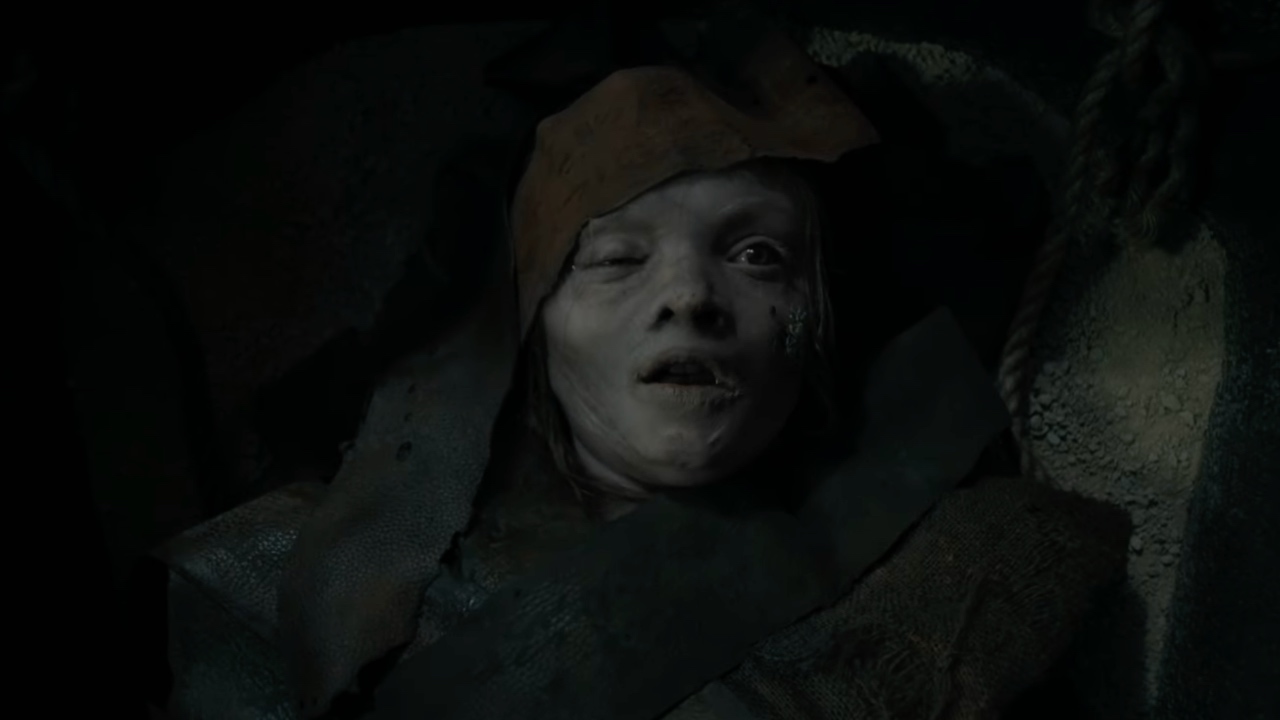
    Unlikely as that mash-up might seem, it does make a certain sense, especially when, as Cronin put it, put through his lens. Families, secrets, and arcane puzzles all play some part in both of Cronin’s previous films and the two blockbusters he cites. Moreover, we can see how they play out in the trailer, with shots of a coffin being uncovered and gauzy strips covered with writing, as well as the central question about the missing Katie.

    Will those combinations make for an entertaining movie, as Cronin hopes? We can’t tell for sure from the trailer, but one thing is clear. This is going to be one truly scary Mummy movie.

    Lee Cronin’s The Mummy arrives in theaters on April 17, 2026.

    The post Lee Cronin’s The Mummy Trailer Remembers These Things Are Supposed to Be Scary appeared first on Den of Geek.

  • His & Hers: The Final Twist of This Netflix Show Is Worth Waiting For

    His & Hers: The Final Twist of This Netflix Show Is Worth Waiting For

    This article contains spoilers for His & Hers. Netflix’s latest thriller series, His & Hers, has one hell of a final twist. Based on Alice Feeney’s 2020 novel of the same name, the adaptation has received mixed reviews from critics, but it’s hard not to be impressed by its shocking ending, which arrives after everything […]

    The post His & Hers: The Final Twist of This Netflix Show Is Worth Waiting For appeared first on Den of Geek.

    When you think about it, the Mummy is a weird horror movie monster. Dracula? Wolf Man? The Creature from the Black Lagoon? All those make sense, with their teeth and their claws. But the mummy is a dead guy in bandages, who chases you really, really slowly if you dig him up. How bad is that? The most famous Mummy movies handle that problem by making horror secondary to other genres, a gothic romance in 1932 and Indiana Jones style adventure in 1999.

    But if the first trailer for Lee Cronin’s The Mummy is any indication, the Irish director of Evil Dead Rise isn’t having any of that. The 65-second long teaser for the new Blumhouse flick is all Texas Chainsaw Massacre-style flash bulks and sharp noises, set to the sound of someone chanting in a foreign language that may not be “Klaatu barada nikto” but it sure is close. There’s even a kid smashing in his face with an intensity that would make the Philippou brothers jealous. The teaser ends with the question “What happened to Katie?” indicating that Cronin’s take will be neither romance nor adventure, but pure terror.

    While the director has his name in the title probably to distinguish this picture from the fourth entry in the Brendan Fraser Mummy series, which is currently in pre-production, it also serves to underscore how different Cronin’s take seems to be. The director established himself as an expert in creeping family-based horror with his 2019 debut The Hole in the Ground, and then supercharged in 2023 with Evil Dead Rise.

    cnx.cmd.push(function() {
    cnx({
    playerId: “106e33c0-3911-473c-b599-b1426db57530”,

    }).render(“0270c398a82f44f49c23c16122516796”);
    });

    With The Mummy, Cronin plans to add some new tools to his horror kit. “The movie itself really is a mystery and it’s a puzzle box, which was part of my draw towards it,” he told IGN. “I think for me what’s really interesting and exciting, certainly even from childhood and being drawn towards Egyptian lore and that entire world, is the secrets that exist and the hidden things. So the movie that I wanted to make was reflective of that idea of deep, buried secrets and things we may not know about. This movie is coming from a very different place, and it’s not even a reinvention of mummy lore; it’s looking into darker places and doing something different with what we think we might already know.”

    Yet, when it came time for him to cite his influences, Cronin emphasized neither the 1932 nor the 1999 movies, but rather two more recent clips. “It’s an insane mashup to suggest, but [this film is] almost one part Poltergeist and one part Seven,” Cronin told IGN; “but put through my lens and the way that I like to entertain people.”

    Unlikely as that mash-up might seem, it does make a certain sense, especially when, as Cronin put it, put through his lens. Families, secrets, and arcane puzzles all play some part in both of Cronin’s previous films and the two blockbusters he cites. Moreover, we can see how they play out in the trailer, with shots of a coffin being uncovered and gauzy strips covered with writing, as well as the central question about the missing Katie.

    Will those combinations make for an entertaining movie, as Cronin hopes? We can’t tell for sure from the trailer, but one thing is clear. This is going to be one truly scary Mummy movie.

    Lee Cronin’s The Mummy arrives in theaters on April 17, 2026.

    The post Lee Cronin’s The Mummy Trailer Remembers These Things Are Supposed to Be Scary appeared first on Den of Geek.

  • Charlie Heaton Shares His Take on That Stranger Things Breakup

    Charlie Heaton Shares His Take on That Stranger Things Breakup

    This article contains spoilers for the final season of Stranger Things. Charlie Heaton, who starred as Jonathan Byers in Netflix’s hit sci-fi show Stranger Things, has recently opened up about one of the most debated moments in its fifth and final season: the breakdown of the relationship between his character and Nancy Wheeler (played by […]

    The post Charlie Heaton Shares His Take on That Stranger Things Breakup appeared first on Den of Geek.

    When you think about it, the Mummy is a weird horror movie monster. Dracula? Wolf Man? The Creature from the Black Lagoon? All those make sense, with their teeth and their claws. But the mummy is a dead guy in bandages, who chases you really, really slowly if you dig him up. How bad is that? The most famous Mummy movies handle that problem by making horror secondary to other genres, a gothic romance in 1932 and Indiana Jones style adventure in 1999.

    But if the first trailer for Lee Cronin’s The Mummy is any indication, the Irish director of Evil Dead Rise isn’t having any of that. The 65-second long teaser for the new Blumhouse flick is all Texas Chainsaw Massacre-style flash bulks and sharp noises, set to the sound of someone chanting in a foreign language that may not be “Klaatu barada nikto” but it sure is close. There’s even a kid smashing in his face with an intensity that would make the Philippou brothers jealous. The teaser ends with the question “What happened to Katie?” indicating that Cronin’s take will be neither romance nor adventure, but pure terror.

    While the director has his name in the title probably to distinguish this picture from the fourth entry in the Brendan Fraser Mummy series, which is currently in pre-production, it also serves to underscore how different Cronin’s take seems to be. The director established himself as an expert in creeping family-based horror with his 2019 debut The Hole in the Ground, and then supercharged in 2023 with Evil Dead Rise.

    cnx.cmd.push(function() {
    cnx({
    playerId: “106e33c0-3911-473c-b599-b1426db57530”,

    }).render(“0270c398a82f44f49c23c16122516796”);
    });

    With The Mummy, Cronin plans to add some new tools to his horror kit. “The movie itself really is a mystery and it’s a puzzle box, which was part of my draw towards it,” he told IGN. “I think for me what’s really interesting and exciting, certainly even from childhood and being drawn towards Egyptian lore and that entire world, is the secrets that exist and the hidden things. So the movie that I wanted to make was reflective of that idea of deep, buried secrets and things we may not know about. This movie is coming from a very different place, and it’s not even a reinvention of mummy lore; it’s looking into darker places and doing something different with what we think we might already know.”

    Yet, when it came time for him to cite his influences, Cronin emphasized neither the 1932 nor the 1999 movies, but rather two more recent clips. “It’s an insane mashup to suggest, but [this film is] almost one part Poltergeist and one part Seven,” Cronin told IGN; “but put through my lens and the way that I like to entertain people.”

    Unlikely as that mash-up might seem, it does make a certain sense, especially when, as Cronin put it, put through his lens. Families, secrets, and arcane puzzles all play some part in both of Cronin’s previous films and the two blockbusters he cites. Moreover, we can see how they play out in the trailer, with shots of a coffin being uncovered and gauzy strips covered with writing, as well as the central question about the missing Katie.

    Will those combinations make for an entertaining movie, as Cronin hopes? We can’t tell for sure from the trailer, but one thing is clear. This is going to be one truly scary Mummy movie.

    Lee Cronin’s The Mummy arrives in theaters on April 17, 2026.

    The post Lee Cronin’s The Mummy Trailer Remembers These Things Are Supposed to Be Scary appeared first on Den of Geek.

  • The Running Man Will Find its Real Audience on Streaming

    The Running Man Will Find its Real Audience on Streaming

    After an underwhelming theatrical run and mixed reviews, Edgar Wright’s adaptation of Stephen King’s 1982 novel The Running Man hits streaming this week on Paramount+, where it’s likely to find a more forgiving audience. The satirical sci-fi action flick stars Glen Powell (Twisters) as Ben Richards, a struggling laborer who enters a deadly TV game […]

    The post The Running Man Will Find its Real Audience on Streaming appeared first on Den of Geek.

    When you think about it, the Mummy is a weird horror movie monster. Dracula? Wolf Man? The Creature from the Black Lagoon? All those make sense, with their teeth and their claws. But the mummy is a dead guy in bandages, who chases you really, really slowly if you dig him up. How bad is that? The most famous Mummy movies handle that problem by making horror secondary to other genres, a gothic romance in 1932 and Indiana Jones style adventure in 1999.

    But if the first trailer for Lee Cronin’s The Mummy is any indication, the Irish director of Evil Dead Rise isn’t having any of that. The 65-second long teaser for the new Blumhouse flick is all Texas Chainsaw Massacre-style flash bulks and sharp noises, set to the sound of someone chanting in a foreign language that may not be “Klaatu barada nikto” but it sure is close. There’s even a kid smashing in his face with an intensity that would make the Philippou brothers jealous. The teaser ends with the question “What happened to Katie?” indicating that Cronin’s take will be neither romance nor adventure, but pure terror.

    While the director has his name in the title probably to distinguish this picture from the fourth entry in the Brendan Fraser Mummy series, which is currently in pre-production, it also serves to underscore how different Cronin’s take seems to be. The director established himself as an expert in creeping family-based horror with his 2019 debut The Hole in the Ground, and then supercharged in 2023 with Evil Dead Rise.

    cnx.cmd.push(function() {
    cnx({
    playerId: “106e33c0-3911-473c-b599-b1426db57530”,

    }).render(“0270c398a82f44f49c23c16122516796”);
    });

    With The Mummy, Cronin plans to add some new tools to his horror kit. “The movie itself really is a mystery and it’s a puzzle box, which was part of my draw towards it,” he told IGN. “I think for me what’s really interesting and exciting, certainly even from childhood and being drawn towards Egyptian lore and that entire world, is the secrets that exist and the hidden things. So the movie that I wanted to make was reflective of that idea of deep, buried secrets and things we may not know about. This movie is coming from a very different place, and it’s not even a reinvention of mummy lore; it’s looking into darker places and doing something different with what we think we might already know.”

    Yet, when it came time for him to cite his influences, Cronin emphasized neither the 1932 nor the 1999 movies, but rather two more recent clips. “It’s an insane mashup to suggest, but [this film is] almost one part Poltergeist and one part Seven,” Cronin told IGN; “but put through my lens and the way that I like to entertain people.”

    Unlikely as that mash-up might seem, it does make a certain sense, especially when, as Cronin put it, put through his lens. Families, secrets, and arcane puzzles all play some part in both of Cronin’s previous films and the two blockbusters he cites. Moreover, we can see how they play out in the trailer, with shots of a coffin being uncovered and gauzy strips covered with writing, as well as the central question about the missing Katie.

    Will those combinations make for an entertaining movie, as Cronin hopes? We can’t tell for sure from the trailer, but one thing is clear. This is going to be one truly scary Mummy movie.

    Lee Cronin’s The Mummy arrives in theaters on April 17, 2026.

    The post Lee Cronin’s The Mummy Trailer Remembers These Things Are Supposed to Be Scary appeared first on Den of Geek.

  • Godzilla Minus Zero Deserves a Full Theatrical Push

    Godzilla Minus Zero Deserves a Full Theatrical Push

    Godzilla is the King of the Monsters, on that we can all agree. But which Godzilla are we talking about? Just limiting to the past few years, there are two Godzillas in the mix. There’s the Godzilla in the MonsterVerse franchise, the American series produced by Legendary Pictures that began with 2014’s Godzilla and have […]

    The post Godzilla Minus Zero Deserves a Full Theatrical Push appeared first on Den of Geek.

    When you think about it, the Mummy is a weird horror movie monster. Dracula? Wolf Man? The Creature from the Black Lagoon? All those make sense, with their teeth and their claws. But the mummy is a dead guy in bandages, who chases you really, really slowly if you dig him up. How bad is that? The most famous Mummy movies handle that problem by making horror secondary to other genres, a gothic romance in 1932 and Indiana Jones style adventure in 1999.

    But if the first trailer for Lee Cronin’s The Mummy is any indication, the Irish director of Evil Dead Rise isn’t having any of that. The 65-second long teaser for the new Blumhouse flick is all Texas Chainsaw Massacre-style flash bulks and sharp noises, set to the sound of someone chanting in a foreign language that may not be “Klaatu barada nikto” but it sure is close. There’s even a kid smashing in his face with an intensity that would make the Philippou brothers jealous. The teaser ends with the question “What happened to Katie?” indicating that Cronin’s take will be neither romance nor adventure, but pure terror.

    While the director has his name in the title probably to distinguish this picture from the fourth entry in the Brendan Fraser Mummy series, which is currently in pre-production, it also serves to underscore how different Cronin’s take seems to be. The director established himself as an expert in creeping family-based horror with his 2019 debut The Hole in the Ground, and then supercharged in 2023 with Evil Dead Rise.

    cnx.cmd.push(function() {
    cnx({
    playerId: “106e33c0-3911-473c-b599-b1426db57530”,

    }).render(“0270c398a82f44f49c23c16122516796”);
    });

    With The Mummy, Cronin plans to add some new tools to his horror kit. “The movie itself really is a mystery and it’s a puzzle box, which was part of my draw towards it,” he told IGN. “I think for me what’s really interesting and exciting, certainly even from childhood and being drawn towards Egyptian lore and that entire world, is the secrets that exist and the hidden things. So the movie that I wanted to make was reflective of that idea of deep, buried secrets and things we may not know about. This movie is coming from a very different place, and it’s not even a reinvention of mummy lore; it’s looking into darker places and doing something different with what we think we might already know.”

    Yet, when it came time for him to cite his influences, Cronin emphasized neither the 1932 nor the 1999 movies, but rather two more recent clips. “It’s an insane mashup to suggest, but [this film is] almost one part Poltergeist and one part Seven,” Cronin told IGN; “but put through my lens and the way that I like to entertain people.”

    Unlikely as that mash-up might seem, it does make a certain sense, especially when, as Cronin put it, put through his lens. Families, secrets, and arcane puzzles all play some part in both of Cronin’s previous films and the two blockbusters he cites. Moreover, we can see how they play out in the trailer, with shots of a coffin being uncovered and gauzy strips covered with writing, as well as the central question about the missing Katie.

    Will those combinations make for an entertaining movie, as Cronin hopes? We can’t tell for sure from the trailer, but one thing is clear. This is going to be one truly scary Mummy movie.

    Lee Cronin’s The Mummy arrives in theaters on April 17, 2026.

    The post Lee Cronin’s The Mummy Trailer Remembers These Things Are Supposed to Be Scary appeared first on Den of Geek.

  • Did the Golden Globes Hurt Sinners’ Oscar Chances?

    Did the Golden Globes Hurt Sinners’ Oscar Chances?

    The morning after the 83rd annual Golden Globes Awards has set a media narrative that could define the next month of awards shows: this is the year of One Battle After Another or Hamnet, at least per an organization that gave both the title “Best Picture,” with the dubious claim of Paul Thomas Anderson’s tense, […]

    The post Did the Golden Globes Hurt Sinners’ Oscar Chances? appeared first on Den of Geek.

    When you think about it, the Mummy is a weird horror movie monster. Dracula? Wolf Man? The Creature from the Black Lagoon? All those make sense, with their teeth and their claws. But the mummy is a dead guy in bandages, who chases you really, really slowly if you dig him up. How bad is that? The most famous Mummy movies handle that problem by making horror secondary to other genres, a gothic romance in 1932 and Indiana Jones style adventure in 1999.

    But if the first trailer for Lee Cronin’s The Mummy is any indication, the Irish director of Evil Dead Rise isn’t having any of that. The 65-second long teaser for the new Blumhouse flick is all Texas Chainsaw Massacre-style flash bulks and sharp noises, set to the sound of someone chanting in a foreign language that may not be “Klaatu barada nikto” but it sure is close. There’s even a kid smashing in his face with an intensity that would make the Philippou brothers jealous. The teaser ends with the question “What happened to Katie?” indicating that Cronin’s take will be neither romance nor adventure, but pure terror.

    While the director has his name in the title probably to distinguish this picture from the fourth entry in the Brendan Fraser Mummy series, which is currently in pre-production, it also serves to underscore how different Cronin’s take seems to be. The director established himself as an expert in creeping family-based horror with his 2019 debut The Hole in the Ground, and then supercharged in 2023 with Evil Dead Rise.

    cnx.cmd.push(function() {
    cnx({
    playerId: “106e33c0-3911-473c-b599-b1426db57530”,

    }).render(“0270c398a82f44f49c23c16122516796”);
    });

    With The Mummy, Cronin plans to add some new tools to his horror kit. “The movie itself really is a mystery and it’s a puzzle box, which was part of my draw towards it,” he told IGN. “I think for me what’s really interesting and exciting, certainly even from childhood and being drawn towards Egyptian lore and that entire world, is the secrets that exist and the hidden things. So the movie that I wanted to make was reflective of that idea of deep, buried secrets and things we may not know about. This movie is coming from a very different place, and it’s not even a reinvention of mummy lore; it’s looking into darker places and doing something different with what we think we might already know.”

    Yet, when it came time for him to cite his influences, Cronin emphasized neither the 1932 nor the 1999 movies, but rather two more recent clips. “It’s an insane mashup to suggest, but [this film is] almost one part Poltergeist and one part Seven,” Cronin told IGN; “but put through my lens and the way that I like to entertain people.”

    Unlikely as that mash-up might seem, it does make a certain sense, especially when, as Cronin put it, put through his lens. Families, secrets, and arcane puzzles all play some part in both of Cronin’s previous films and the two blockbusters he cites. Moreover, we can see how they play out in the trailer, with shots of a coffin being uncovered and gauzy strips covered with writing, as well as the central question about the missing Katie.

    Will those combinations make for an entertaining movie, as Cronin hopes? We can’t tell for sure from the trailer, but one thing is clear. This is going to be one truly scary Mummy movie.

    Lee Cronin’s The Mummy arrives in theaters on April 17, 2026.

    The post Lee Cronin’s The Mummy Trailer Remembers These Things Are Supposed to Be Scary appeared first on Den of Geek.

  • Latest Wonder Man Teaser Hints at a Major Thunderbolts* Connection

    Latest Wonder Man Teaser Hints at a Major Thunderbolts* Connection

    In the pages of Marvel Comics, Simon Williams has gone through a lot. As Wonder Man, he gets duped into fighting the Avengers in his first appearance, he dies sacrificing himself as atonement, regularly becomes an incorporeal creature of ionic energy upon his resurrection, has an acting career filled with disappointment, and often serves on […]

    The post Latest Wonder Man Teaser Hints at a Major Thunderbolts* Connection appeared first on Den of Geek.

    When you think about it, the Mummy is a weird horror movie monster. Dracula? Wolf Man? The Creature from the Black Lagoon? All those make sense, with their teeth and their claws. But the mummy is a dead guy in bandages, who chases you really, really slowly if you dig him up. How bad is that? The most famous Mummy movies handle that problem by making horror secondary to other genres, a gothic romance in 1932 and Indiana Jones style adventure in 1999.

    But if the first trailer for Lee Cronin’s The Mummy is any indication, the Irish director of Evil Dead Rise isn’t having any of that. The 65-second long teaser for the new Blumhouse flick is all Texas Chainsaw Massacre-style flash bulks and sharp noises, set to the sound of someone chanting in a foreign language that may not be “Klaatu barada nikto” but it sure is close. There’s even a kid smashing in his face with an intensity that would make the Philippou brothers jealous. The teaser ends with the question “What happened to Katie?” indicating that Cronin’s take will be neither romance nor adventure, but pure terror.

    While the director has his name in the title probably to distinguish this picture from the fourth entry in the Brendan Fraser Mummy series, which is currently in pre-production, it also serves to underscore how different Cronin’s take seems to be. The director established himself as an expert in creeping family-based horror with his 2019 debut The Hole in the Ground, and then supercharged in 2023 with Evil Dead Rise.

    cnx.cmd.push(function() {
    cnx({
    playerId: “106e33c0-3911-473c-b599-b1426db57530”,

    }).render(“0270c398a82f44f49c23c16122516796”);
    });

    With The Mummy, Cronin plans to add some new tools to his horror kit. “The movie itself really is a mystery and it’s a puzzle box, which was part of my draw towards it,” he told IGN. “I think for me what’s really interesting and exciting, certainly even from childhood and being drawn towards Egyptian lore and that entire world, is the secrets that exist and the hidden things. So the movie that I wanted to make was reflective of that idea of deep, buried secrets and things we may not know about. This movie is coming from a very different place, and it’s not even a reinvention of mummy lore; it’s looking into darker places and doing something different with what we think we might already know.”

    Yet, when it came time for him to cite his influences, Cronin emphasized neither the 1932 nor the 1999 movies, but rather two more recent clips. “It’s an insane mashup to suggest, but [this film is] almost one part Poltergeist and one part Seven,” Cronin told IGN; “but put through my lens and the way that I like to entertain people.”

    Unlikely as that mash-up might seem, it does make a certain sense, especially when, as Cronin put it, put through his lens. Families, secrets, and arcane puzzles all play some part in both of Cronin’s previous films and the two blockbusters he cites. Moreover, we can see how they play out in the trailer, with shots of a coffin being uncovered and gauzy strips covered with writing, as well as the central question about the missing Katie.

    Will those combinations make for an entertaining movie, as Cronin hopes? We can’t tell for sure from the trailer, but one thing is clear. This is going to be one truly scary Mummy movie.

    Lee Cronin’s The Mummy arrives in theaters on April 17, 2026.

    The post Lee Cronin’s The Mummy Trailer Remembers These Things Are Supposed to Be Scary appeared first on Den of Geek.

  • Lee Cronin’s The Mummy Trailer Remembers These Things Are Supposed to Be Scary

    Lee Cronin’s The Mummy Trailer Remembers These Things Are Supposed to Be Scary

    When you think about it, the Mummy is a weird horror movie monster. Dracula? Wolf Man? The Creature from the Black Lagoon? All those make sense, with their teeth and their claws. But the mummy is a dead guy in bandages, who chases you really, really slowly if you dig him up. How bad is […]

    The post Lee Cronin’s The Mummy Trailer Remembers These Things Are Supposed to Be Scary appeared first on Den of Geek.

    When you think about it, the Mummy is a weird horror movie monster. Dracula? Wolf Man? The Creature from the Black Lagoon? All those make sense, with their teeth and their claws. But the mummy is a dead guy in bandages, who chases you really, really slowly if you dig him up. How bad is that? The most famous Mummy movies handle that problem by making horror secondary to other genres, a gothic romance in 1932 and Indiana Jones style adventure in 1999.

    But if the first trailer for Lee Cronin’s The Mummy is any indication, the Irish director of Evil Dead Rise isn’t having any of that. The 65-second long teaser for the new Blumhouse flick is all Texas Chainsaw Massacre-style flash bulks and sharp noises, set to the sound of someone chanting in a foreign language that may not be “Klaatu barada nikto” but it sure is close. There’s even a kid smashing in his face with an intensity that would make the Philippou brothers jealous. The teaser ends with the question “What happened to Katie?” indicating that Cronin’s take will be neither romance nor adventure, but pure terror.

    While the director has his name in the title probably to distinguish this picture from the fourth entry in the Brendan Fraser Mummy series, which is currently in pre-production, it also serves to underscore how different Cronin’s take seems to be. The director established himself as an expert in creeping family-based horror with his 2019 debut The Hole in the Ground, and then supercharged in 2023 with Evil Dead Rise.

    cnx.cmd.push(function() {
    cnx({
    playerId: “106e33c0-3911-473c-b599-b1426db57530”,

    }).render(“0270c398a82f44f49c23c16122516796”);
    });

    With The Mummy, Cronin plans to add some new tools to his horror kit. “The movie itself really is a mystery and it’s a puzzle box, which was part of my draw towards it,” he told IGN. “I think for me what’s really interesting and exciting, certainly even from childhood and being drawn towards Egyptian lore and that entire world, is the secrets that exist and the hidden things. So the movie that I wanted to make was reflective of that idea of deep, buried secrets and things we may not know about. This movie is coming from a very different place, and it’s not even a reinvention of mummy lore; it’s looking into darker places and doing something different with what we think we might already know.”

    Yet, when it came time for him to cite his influences, Cronin emphasized neither the 1932 nor the 1999 movies, but rather two more recent clips. “It’s an insane mashup to suggest, but [this film is] almost one part Poltergeist and one part Seven,” Cronin told IGN; “but put through my lens and the way that I like to entertain people.”

    Unlikely as that mash-up might seem, it does make a certain sense, especially when, as Cronin put it, put through his lens. Families, secrets, and arcane puzzles all play some part in both of Cronin’s previous films and the two blockbusters he cites. Moreover, we can see how they play out in the trailer, with shots of a coffin being uncovered and gauzy strips covered with writing, as well as the central question about the missing Katie.

    Will those combinations make for an entertaining movie, as Cronin hopes? We can’t tell for sure from the trailer, but one thing is clear. This is going to be one truly scary Mummy movie.

    Lee Cronin’s The Mummy arrives in theaters on April 17, 2026.

    The post Lee Cronin’s The Mummy Trailer Remembers These Things Are Supposed to Be Scary appeared first on Den of Geek.

  • Designing for the Unexpected

    Designing for the Unexpected

    I’m not sure when I first heard this quote, but it’s something that has stayed with me over the years. How do you create services for situations you can’t imagine? Or design products that work on devices yet to be invented?

    Flash, Photoshop, and responsive design

    When I first started designing websites, my go-to software was Photoshop. I created a 960px canvas and set about creating a layout that I would later drop content in. The development phase was about attaining pixel-perfect accuracy using fixed widths, fixed heights, and absolute positioning.

    Ethan Marcotte’s talk at An Event Apart and subsequent article “Responsive Web Design” in A List Apart in 2010 changed all this. I was sold on responsive design as soon as I heard about it, but I was also terrified. The pixel-perfect designs full of magic numbers that I had previously prided myself on producing were no longer good enough.

    The fear wasn’t helped by my first experience with responsive design. My first project was to take an existing fixed-width website and make it responsive. What I learned the hard way was that you can’t just add responsiveness at the end of a project. To create fluid layouts, you need to plan throughout the design phase.

    A new way to design

    Designing responsive or fluid sites has always been about removing limitations, producing content that can be viewed on any device. It relies on the use of percentage-based layouts, which I initially achieved with native CSS and utility classes:

    .column-span-6 {
      width: 49%;
      float: left;
      margin-right: 0.5%;
      margin-left: 0.5%;
    }
    
    
    .column-span-4 {
      width: 32%;
      float: left;
      margin-right: 0.5%;
      margin-left: 0.5%;
    }
    
    .column-span-3 {
      width: 24%;
      float: left;
      margin-right: 0.5%;
      margin-left: 0.5%;
    }

    Then with Sass so I could take advantage of @includes to re-use repeated blocks of code and move back to more semantic markup:

    .logo {
      @include colSpan(6);
    }
    
    .search {
      @include colSpan(3);
    }
    
    .social-share {
      @include colSpan(3);
    }

    Media queries

    The second ingredient for responsive design is media queries. Without them, content would shrink to fit the available space regardless of whether that content remained readable (The exact opposite problem occurred with the introduction of a mobile-first approach).

    Media queries prevented this by allowing us to add breakpoints where the design could adapt. Like most people, I started out with three breakpoints: one for desktop, one for tablets, and one for mobile. Over the years, I added more and more for phablets, wide screens, and so on. 

    For years, I happily worked this way and improved both my design and front-end skills in the process. The only problem I encountered was making changes to content, since with our Sass grid system in place, there was no way for the site owners to add content without amending the markup—something a small business owner might struggle with. This is because each row in the grid was defined using a div as a container. Adding content meant creating new row markup, which requires a level of HTML knowledge.

    Row markup was a staple of early responsive design, present in all the widely used frameworks like Bootstrap and Skeleton.

    1 of 7
    2 of 7
    3 of 7
    4 of 7
    5 of 7
    6 of 7
    7 of 7

    Another problem arose as I moved from a design agency building websites for small- to medium-sized businesses, to larger in-house teams where I worked across a suite of related sites. In those roles I started to work much more with reusable components. 

    Our reliance on media queries resulted in components that were tied to common viewport sizes. If the goal of component libraries is reuse, then this is a real problem because you can only use these components if the devices you’re designing for correspond to the viewport sizes used in the pattern library—in the process not really hitting that “devices that don’t yet exist”  goal.

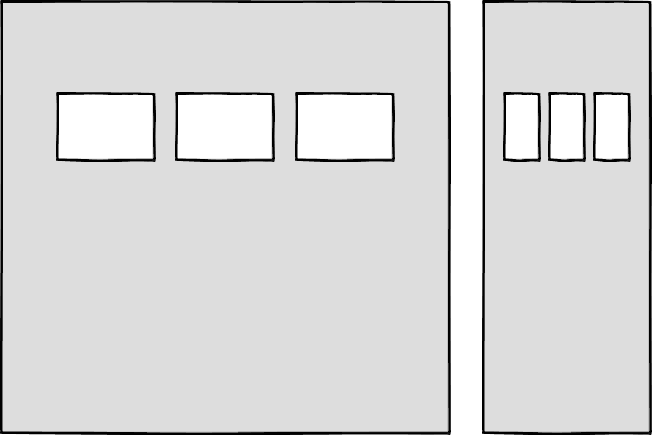
    Then there’s the problem of space. Media queries allow components to adapt based on the viewport size, but what if I put a component into a sidebar, like in the figure below?

    Container queries: our savior or a false dawn?

    Container queries have long been touted as an improvement upon media queries, but at the time of writing are unsupported in most browsers. There are JavaScript workarounds, but they can create dependency and compatibility issues. The basic theory underlying container queries is that elements should change based on the size of their parent container and not the viewport width, as seen in the following illustrations.

    One of the biggest arguments in favor of container queries is that they help us create components or design patterns that are truly reusable because they can be picked up and placed anywhere in a layout. This is an important step in moving toward a form of component-based design that works at any size on any device.

    In other words, responsive components to replace responsive layouts.

    Container queries will help us move from designing pages that respond to the browser or device size to designing components that can be placed in a sidebar or in the main content, and respond accordingly.

    My concern is that we are still using layout to determine when a design needs to adapt. This approach will always be restrictive, as we will still need pre-defined breakpoints. For this reason, my main question with container queries is, How would we decide when to change the CSS used by a component? 

    A component library removed from context and real content is probably not the best place for that decision. 

    As the diagrams below illustrate, we can use container queries to create designs for specific container widths, but what if I want to change the design based on the image size or ratio?

    In this example, the dimensions of the container are not what should dictate the design; rather, the image is.

    It’s hard to say for sure whether container queries will be a success story until we have solid cross-browser support for them. Responsive component libraries would definitely evolve how we design and would improve the possibilities for reuse and design at scale. But maybe we will always need to adjust these components to suit our content.

    CSS is changing

    Whilst the container query debate rumbles on, there have been numerous advances in CSS that change the way we think about design. The days of fixed-width elements measured in pixels and floated div elements used to cobble layouts together are long gone, consigned to history along with table layouts. Flexbox and CSS Grid have revolutionized layouts for the web. We can now create elements that wrap onto new rows when they run out of space, not when the device changes.

    .wrapper {
      display: grid;
      grid-template-columns: repeat(auto-fit, 450px);
      gap: 10px;
    }

    The repeat() function paired with auto-fit or auto-fill allows us to specify how much space each column should use while leaving it up to the browser to decide when to spill the columns onto a new line. Similar things can be achieved with Flexbox, as elements can wrap over multiple rows and “flex” to fill available space. 

    .wrapper {
      display: flex;
      flex-wrap: wrap;
      justify-content: space-between;
    }
    
    .child {
      flex-basis: 32%;
      margin-bottom: 20px;
    }

    The biggest benefit of all this is you don’t need to wrap elements in container rows. Without rows, content isn’t tied to page markup in quite the same way, allowing for removals or additions of content without additional development.

    This is a big step forward when it comes to creating designs that allow for evolving content, but the real game changer for flexible designs is CSS Subgrid. 

    Remember the days of crafting perfectly aligned interfaces, only for the customer to add an unbelievably long header almost as soon as they’re given CMS access, like the illustration below?

    Subgrid allows elements to respond to adjustments in their own content and in the content of sibling elements, helping us create designs more resilient to change.

    .wrapper {
      display: grid;
      grid-template-columns: repeat(auto-fit, minmax(150px, 1fr));
         grid-template-rows: auto 1fr auto;
      gap: 10px;
    }
    
    .sub-grid {
      display: grid;
      grid-row: span 3;
      grid-template-rows: subgrid; /* sets rows to parent grid */
    }

    CSS Grid allows us to separate layout and content, thereby enabling flexible designs. Meanwhile, Subgrid allows us to create designs that can adapt in order to suit morphing content. Subgrid at the time of writing is only supported in Firefox but the above code can be implemented behind an @supports feature query. 

    Intrinsic layouts 

    I’d be remiss not to mention intrinsic layouts, the term created by Jen Simmons to describe a mixture of new and old CSS features used to create layouts that respond to available space. 

    Responsive layouts have flexible columns using percentages. Intrinsic layouts, on the other hand, use the fr unit to create flexible columns that won’t ever shrink so much that they render the content illegible.

    fr units is a way to say I want you to distribute the extra space in this way, but…don’t ever make it smaller than the content that’s inside of it.

    —Jen Simmons, “Designing Intrinsic Layouts”

    Intrinsic layouts can also utilize a mixture of fixed and flexible units, allowing the content to dictate the space it takes up.

    What makes intrinsic design stand out is that it not only creates designs that can withstand future devices but also helps scale design without losing flexibility. Components and patterns can be lifted and reused without the prerequisite of having the same breakpoints or the same amount of content as in the previous implementation. 

    We can now create designs that adapt to the space they have, the content within them, and the content around them. With an intrinsic approach, we can construct responsive components without depending on container queries.

    Another 2010 moment?

    This intrinsic approach should in my view be every bit as groundbreaking as responsive web design was ten years ago. For me, it’s another “everything changed” moment. 

    But it doesn’t seem to be moving quite as fast; I haven’t yet had that same career-changing moment I had with responsive design, despite the widely shared and brilliant talk that brought it to my attention. 

    One reason for that could be that I now work in a large organization, which is quite different from the design agency role I had in 2010. In my agency days, every new project was a clean slate, a chance to try something new. Nowadays, projects use existing tools and frameworks and are often improvements to existing websites with an existing codebase. 

    Another could be that I feel more prepared for change now. In 2010 I was new to design in general; the shift was frightening and required a lot of learning. Also, an intrinsic approach isn’t exactly all-new; it’s about using existing skills and existing CSS knowledge in a different way. 

    You can’t framework your way out of a content problem

    Another reason for the slightly slower adoption of intrinsic design could be the lack of quick-fix framework solutions available to kick-start the change. 

    Responsive grid systems were all over the place ten years ago. With a framework like Bootstrap or Skeleton, you had a responsive design template at your fingertips.

    Intrinsic design and frameworks do not go hand in hand quite so well because the benefit of having a selection of units is a hindrance when it comes to creating layout templates. The beauty of intrinsic design is combining different units and experimenting with techniques to get the best for your content.

    And then there are design tools. We probably all, at some point in our careers, used Photoshop templates for desktop, tablet, and mobile devices to drop designs in and show how the site would look at all three stages.

    How do you do that now, with each component responding to content and layouts flexing as and when they need to? This type of design must happen in the browser, which personally I’m a big fan of. 

    The debate about “whether designers should code” is another that has rumbled on for years. When designing a digital product, we should, at the very least, design for a best- and worst-case scenario when it comes to content. To do this in a graphics-based software package is far from ideal. In code, we can add longer sentences, more radio buttons, and extra tabs, and watch in real time as the design adapts. Does it still work? Is the design too reliant on the current content?

    Personally, I look forward to the day intrinsic design is the standard for design, when a design component can be truly flexible and adapt to both its space and content with no reliance on device or container dimensions.

    Content first 

    Content is not constant. After all, to design for the unknown or unexpected we need to account for content changes like our earlier Subgrid card example that allowed the cards to respond to adjustments to their own content and the content of sibling elements.

    Thankfully, there’s more to CSS than layout, and plenty of properties and values can help us put content first. Subgrid and pseudo-elements like ::first-line and ::first-letter help to separate design from markup so we can create designs that allow for changes.

    Instead of old markup hacks like this—

    First line of text with different styling...

    —we can target content based on where it appears.

    .element::first-line {
      font-size: 1.4em;
    }
    
    .element::first-letter {
      color: red;
    }

    Much bigger additions to CSS include logical properties, which change the way we construct designs using logical dimensions (start and end) instead of physical ones (left and right), something CSS Grid also does with functions like min(), max(), and clamp().

    This flexibility allows for directional changes according to content, a common requirement when we need to present content in multiple languages. In the past, this was often achieved with Sass mixins but was often limited to switching from left-to-right to right-to-left orientation.

    In the Sass version, directional variables need to be set.

    $direction: rtl;
    $opposite-direction: ltr;
    
    $start-direction: right;
    $end-direction: left;

    These variables can be used as values—

    body {
      direction: $direction;
      text-align: $start-direction;
    }

    —or as properties.

    margin-#{$end-direction}: 10px;
    padding-#{$start-direction}: 10px;

    However, now we have native logical properties, removing the reliance on both Sass (or a similar tool) and pre-planning that necessitated using variables throughout a codebase. These properties also start to break apart the tight coupling between a design and strict physical dimensions, creating more flexibility for changes in language and in direction.

    margin-block-end: 10px;
    padding-block-start: 10px;

    There are also native start and end values for properties like text-align, which means we can replace text-align: right with text-align: start.

    Like the earlier examples, these properties help to build out designs that aren’t constrained to one language; the design will reflect the content’s needs.

    Fixed and fluid 

    We briefly covered the power of combining fixed widths with fluid widths with intrinsic layouts. The min() and max() functions are a similar concept, allowing you to specify a fixed value with a flexible alternative. 

    For min() this means setting a fluid minimum value and a maximum fixed value.

    .element {
      width: min(50%, 300px);
    }

    The element in the figure above will be 50% of its container as long as the element’s width doesn’t exceed 300px.

    For max() we can set a flexible max value and a minimum fixed value.

    .element {
      width: max(50%, 300px);
    }

    Now the element will be 50% of its container as long as the element’s width is at least 300px. This means we can set limits but allow content to react to the available space. 

    The clamp() function builds on this by allowing us to set a preferred value with a third parameter. Now we can allow the element to shrink or grow if it needs to without getting to a point where it becomes unusable.

    .element {
      width: clamp(300px, 50%, 600px);
    }

    This time, the element’s width will be 50% (the preferred value) of its container but never less than 300px and never more than 600px.

    With these techniques, we have a content-first approach to responsive design. We can separate content from markup, meaning the changes users make will not affect the design. We can start to future-proof designs by planning for unexpected changes in language or direction. And we can increase flexibility by setting desired dimensions alongside flexible alternatives, allowing for more or less content to be displayed correctly.

    Situation first

    Thanks to what we’ve discussed so far, we can cover device flexibility by changing our approach, designing around content and space instead of catering to devices. But what about that last bit of Jeffrey Zeldman’s quote, “…situations you haven’t imagined”?

    It’s a very different thing to design for someone seated at a desktop computer as opposed to someone using a mobile phone and moving through a crowded street in glaring sunshine. Situations and environments are hard to plan for or predict because they change as people react to their own unique challenges and tasks.

    This is why choice is so important. One size never fits all, so we need to design for multiple scenarios to create equal experiences for all our users.

    Thankfully, there is a lot we can do to provide choice.

    Responsible design 

    “There are parts of the world where mobile data is prohibitively expensive, and where there is little or no broadband infrastructure.”

    I Used the Web for a Day on a 50 MB Budget

    Chris Ashton

    One of the biggest assumptions we make is that people interacting with our designs have a good wifi connection and a wide screen monitor. But in the real world, our users may be commuters traveling on trains or other forms of transport using smaller mobile devices that can experience drops in connectivity. There is nothing more frustrating than a web page that won’t load, but there are ways we can help users use less data or deal with sporadic connectivity.

    The srcset attribute allows the browser to decide which image to serve. This means we can create smaller ‘cropped’ images to display on mobile devices in turn using less bandwidth and less data.

    Image alt text

    The preload attribute can also help us to think about how and when media is downloaded. It can be used to tell a browser about any critical assets that need to be downloaded with high priority, improving perceived performance and the user experience. 


    There’s also native lazy loading, which indicates assets that should only be downloaded when they are needed.

    …

    With srcset, preload, and lazy loading, we can start to tailor a user’s experience based on the situation they find themselves in. What none of this does, however, is allow the user themselves to decide what they want downloaded, as the decision is usually the browser’s to make. 

    So how can we put users in control?

    The return of media queries 

    Media queries have always been about much more than device sizes. They allow content to adapt to different situations, with screen size being just one of them.

    We’ve long been able to check for media types like print and speech and features such as hover, resolution, and color. These checks allow us to provide options that suit more than one scenario; it’s less about one-size-fits-all and more about serving adaptable content. 

    As of this writing, the Media Queries Level 5 spec is still under development. It introduces some really exciting queries that in the future will help us design for multiple other unexpected situations.

    For example, there’s a light-level feature that allows you to modify styles if a user is in sunlight or darkness. Paired with custom properties, these features allow us to quickly create designs or themes for specific environments.

    @media (light-level: normal) {
      --background-color: #fff;
      --text-color: #0b0c0c;  
    }
    
    @media (light-level: dim) {
      --background-color: #efd226;
      --text-color: #0b0c0c;
    }

    Another key feature of the Level 5 spec is personalization. Instead of creating designs that are the same for everyone, users can choose what works for them. This is achieved by using features like prefers-reduced-data, prefers-color-scheme, and prefers-reduced-motion, the latter two of which already enjoy broad browser support. These features tap into preferences set via the operating system or browser so people don’t have to spend time making each site they visit more usable. 

    Media queries like this go beyond choices made by a browser to grant more control to the user.

    Expect the unexpected

    In the end, the one thing we should always expect is for things to change. Devices in particular change faster than we can keep up, with foldable screens already on the market.

    We can’t design the same way we have for this ever-changing landscape, but we can design for content. By putting content first and allowing that content to adapt to whatever space surrounds it, we can create more robust, flexible designs that increase the longevity of our products. 

    A lot of the CSS discussed here is about moving away from layouts and putting content at the heart of design. From responsive components to fixed and fluid units, there is so much more we can do to take a more intrinsic approach. Even better, we can test these techniques during the design phase by designing in-browser and watching how our designs adapt in real-time.

    When it comes to unexpected situations, we need to make sure our products are usable when people need them, whenever and wherever that might be. We can move closer to achieving this by involving users in our design decisions, by creating choice via browsers, and by giving control to our users with user-preference-based media queries. 

    Good design for the unexpected should allow for change, provide choice, and give control to those we serve: our users themselves.